

Ragdoll is an extremely popular domestic cat breed known for its gentleness, attachment to humans, and beautiful appearance. This article presents a complete portrait of the Ragdoll: from history and physical features to temperament, grooming, health, and pros and cons—everything you should know before choosing this breed.
Get to know the Ragdoll cat breed! Check the character, appearance, grooming requirements, health concerns, and advantages and disadvantages. Find out if the Ragdoll is the perfect cat for you!
Table of Contents
- Ragdoll – Breed Description and History
- Ragdoll Appearance and Physical Characteristics
- Ragdoll Cat Character and Temperament
- Grooming and Care for Ragdoll Cats
- Health and Most Common Breed Issues
- Who Is the Ragdoll For? Breed Pros and Cons
Ragdoll – Breed Description and History
The Ragdoll is a relatively young yet extremely distinctive cat breed that has quickly gained widespread popularity worldwide. The mere appearance of a Ragdoll is eye-catching: it’s a large, massive cat with an elongated build and impressive musculature, yet with harmonious proportions so it never looks clumsy. Adult males can weigh up to 7–9 kg, females usually 4.5–6.5 kg, achieving full size and weight only around 3–4 years of age, which is typical for slow-maturing breeds. The Ragdoll head has a broad wedge shape with rounded contours and a well-marked but not too sharp profile. The eyes are large, oval, and always in shades of intense blue—one of the breed’s most recognizable features. Medium-sized ears, slightly rounded at the tips, are set wide and gently forward, giving the cat a gentle and attentive expression. The Ragdoll’s coat is semi-long, silky, soft, and lacks the heavy, dense undercoat common to many other long-haired breeds, which means it mats less and is comparatively easy to groom. To the touch, it feels like a delicate, flowing fabric; combined with this breed’s tendency to relax its muscles when picked up, it inspired the breed’s name (“ragdoll” in English means “cloth doll”). Another characteristic is the pointed pattern—legs, ears, tail, and facial mask are darker than the rest of the body, and color gradually develops with age; kittens are born almost white, and the full colors and contrasts can take up to the third year of life to develop. Three main color patterns are officially recognized: colorpoint (darker points without white markings), mitted (with white “mittens” on the paws and a white chin), and bicolor (with the distinctive white “mask” in an inverted V shape on the face and large white areas on the body). The breed comes in several basic colors such as seal, blue, chocolate, lilac, as well as less typical variations like red, cream, or tortie, often with tabby (lynx) striping, offering a huge variety while maintaining the clearly recognizable Ragdoll type.
The history of the Ragdoll begins in the 1960s in California, and its development is almost as fascinating as the appearance itself. The breed’s originator was American breeder Ann Baker, living in Riverside, who started with an inconspicuous yet charismatic white, semi-long-haired female cat named Josephine. According to accounts, Josephine was a domestic-type cat, resembling the Turkish Angora or Persian, and her offspring stood out with remarkable calmness, a tolerant disposition, and the famous “floppiness” in human arms. Baker, fascinated by these traits, decided to start a planned breeding program, crossing Josephine and her descendants with pointed cats, including males that resembled Burmese and Siamese types, although the precise breed ancestry is not fully documented and remains speculative. Ann Baker herself liked to shroud her breeding in mystery, sometimes inventing colorful and controversial stories about Josephine’s line, leading to many myths but not always helping her reputation among breeders. Nonetheless, early Ragdoll enthusiasts such as Denny and Laura Dayton played a key role in stabilizing the breed and popularizing it beyond Ann Baker’s breeding program. The Daytons developed the first Ragdoll standards, began registering the cats with independent cat associations, and worked towards gaining official recognition from international felinological federations. In 1965, the name “Ragdoll” began to be used, and over subsequent decades, the breed gradually received recognition from various organizations: in 1991, it was accepted by the CFA (Cat Fanciers’ Association) in the US, later by FIFe in Europe and others. Since the 1990s and early 21st century, Ragolls’ popularity has grown rapidly—the cats appeared in breeding programs across the globe, including Poland, where they quickly gained appreciation for their unique nature, stunning looks, and relatively easy coat care. The process of shaping the breed is still carefully controlled: serious breeders select not only for appearance and deep blue eyes but also for health—especially concerning hereditary diseases such as hypertrophic cardiomyopathy (HCM). Thanks to this, the modern Ragdoll combines a controlled heritage, a rich if short history, and a clearly defined standard that distinguishes it among other semi-long-haired breeds, both in cat shows and as loving companions at home.
Ragdoll Appearance and Physical Characteristics
The Ragdoll is one of the most recognizable cat breeds, thanks to its impressive size and extremely harmonious body build. It is a semi-longhaired cat with a strong, muscular torso and well-developed bone structure but retains a sense of softness and “plushiness.” The silhouette is elongated, rectangular, with a wide chest and well-muscled shoulders, giving the cat a massive but proportional appearance. The body length with the tail can be striking, especially in adult males, who are among the largest domestic cats. The legs are medium in length, solid, with large, rounded paws often with tufts of fur between the toes. The Ragdoll has a long, fluffy tail, well-furred along its entire length, which in motion resembles a softly waving plume—it is the extension of the back’s line and should be proportional to the body. The Ragdoll’s head is a broad wedge with rounded contours and no sharp edges. The forehead is slightly convex, and the transition from the forehead to the nose is gentle, with what is known as a “gentle curve,” meaning a soft, unexaggerated break. The chin is strong and well-marked, giving the muzzle a noble look. The medium-sized ears are wide at the base, slightly rounded at the tips, and gently inclined forward, making the cat look curious and friendly. One of their most enchanting features is their eyes—large, oval, wide set, and always in shades of blue. The more intense and deeper the blue, the higher the show standard rating. The eyes’ expression is often described as gentle, trusting, and calm, adding to the sense of a “plush friend.”
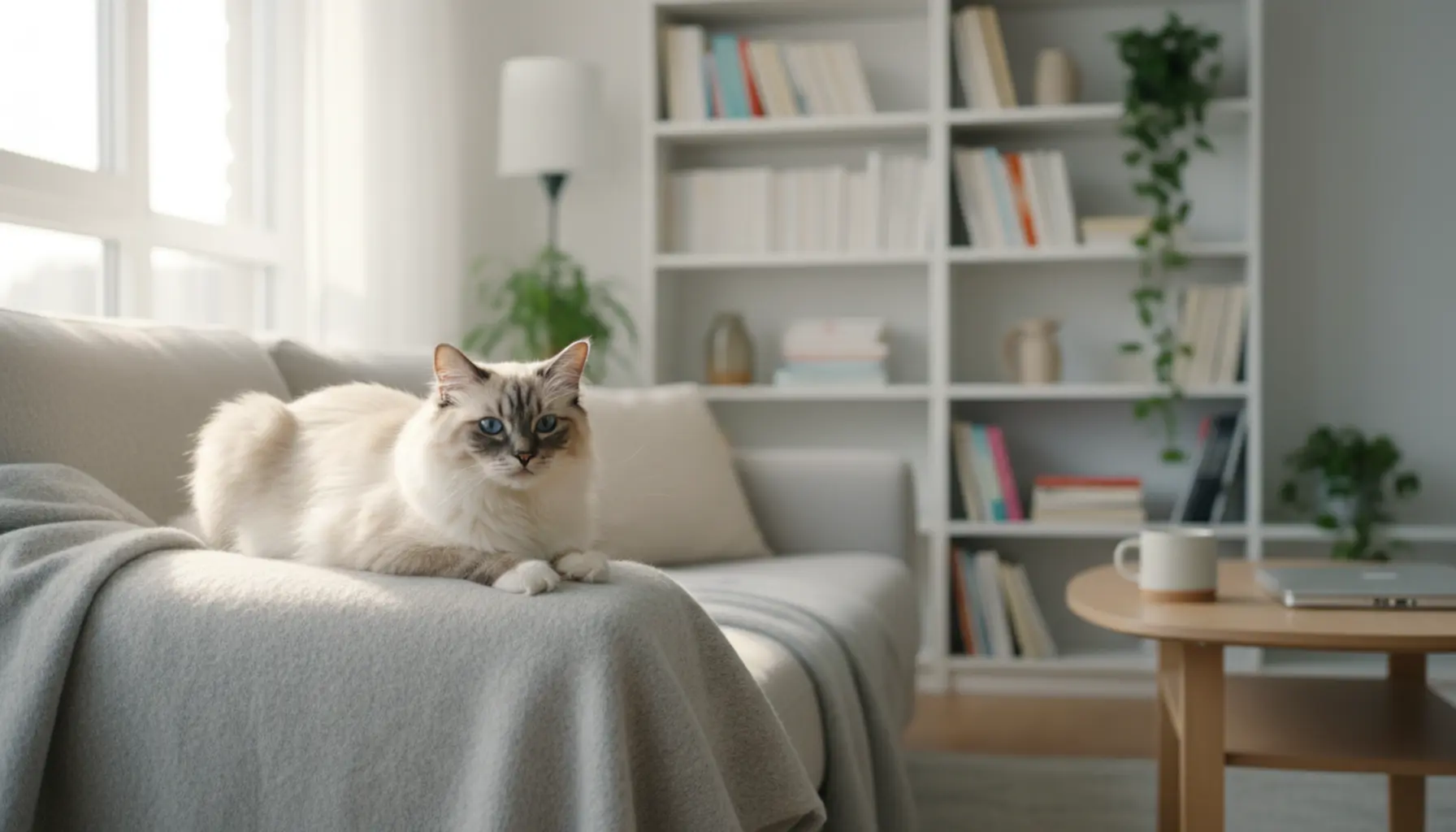
The Ragdoll’s coat is semi-long, very soft and silky to the touch, with a minimal undercoat, so it mats less than typical long-haired breeds. The outer hair falls softly against the body, forming a particularly luxurious mane at the neck and ruff on the chest, giving the cat a slightly “lion-like” look. The hair on the hind legs is longer, resembling bloomers. The fur texture changes with age—kittens usually have shorter, less plush hair, with the full glory of the coat appearing around the second to third year of life. The most characteristic visual feature is the pointed coloration, meaning a light body and darker limbs, ears, tail, and facial mask. Interestingly, Ragdoll kittens are born almost white, and their full colors and contrasts develop gradually over the first months and years of life. There are three main pattern types: colorpoint (dark points without white markings), mitted (with white “gloves” on front paws, white socks on hind paws, white chin, and often a white line on the belly), and bicolor (with a distinctive white inverted “V” on the face, white chest, belly, and substantial white on paws and body). Within these patterns, Ragdolls come in many colors such as seal, blue, chocolate, lilac, red, cream, as well as tabby (lynx) and tortoiseshell (tortie) varieties. Each combination gives the Ragdoll a slightly different appearance while maintaining the overall breed elegance. Despite the clear standards, a certain silhouette diversity is observed—some individuals are more massive and broad, others more delicate and slender, largely due to the influence of breeding lines. Another characteristic is the Ragdoll’s “floppy” posture, which inspired the breed’s name: when picked up, they often relax their muscles and allow themselves to be comfortably carried, making them appear even bigger and fluffier. All these features—size, build, head shape, eye color, and the specific coat patterns—combine to create the Ragdoll’s unique, majestic, yet very cuddly look.
Ragdoll Cat Character and Temperament
The Ragdoll is one of the most balanced and gentle cat breeds, often called “dogs in a cat’s body.” These are extremely sociable animals, very attached to their owner and family members. Unlike many independent breeds, the Ragdoll usually does not seek solitude—it likes to be wherever its humans are: the living room, bedroom, and even the bathroom. It often follows its owner step by step, lays down next to them on the couch or desk, and some individuals gladly jump on laps, staying there for a long time. The breed’s name (“ragdoll”) refers to the typical reaction of being picked up—their body relaxes and the cat lets you carry it with ease, a trait less common in other breeds. They are also notably gentle in physical contact: most Ragdolls tolerate petting, brushing, gentle cuddling, or even having their paws or belly touched, provided they were gradually accustomed to it from a young age. This makes them ideal companions for those seeking a “contact” cat who will be a real member of the family rather than just an independent housemate. Ragdolls are known for exceptional patience, making them often recommended for families with children, but it must be emphasized that kids should always be taught to handle cats gently. Their calm temperament means they usually do not react with aggression to unexpected stimuli—they retreat or seek a safe place rather than lash out. They are not conflict-prone cats—usually getting along with other friendly cats and often with dogs, provided there is correct, gradual socialization. Compared to more territorial and dominant breeds, the Ragdoll tends to avoid disputes, which can help maintain harmony in a multi-pet household. On the other hand, their gentle nature can mean they may give way to more assertive animals, so it’s important they’re not at risk of constant stress, food theft, or the loss of hiding places. Ragdolls are also famous for rarely using their claws on people—even in play, they’re noticeably more careful than many other breeds, and when uncomfortable, they usually walk away rather than scratch. However, this doesn’t relieve an owner from their educational role, such as pausing over-excited play to avoid frustration.
Although the Ragdoll is a calm cat, it doesn’t mean it is lazy or inactive. This is an intelligent, curious, and stimulus-seeking breed, but it shows its activity in a more balanced way than typically lively oriental breeds. In everyday life, the Ragdoll often chooses moderate play—enjoying chasing a wand toy, playing with balls, tunnels, or interactive toys for treats, but also equally appreciates long naps next to a human. Many members of the breed learn to fetch toys, respond to their name, and even simple commands, making training and scent games enjoyable together. These cats are usually quiet—their voice is gentle, soft, often surprisingly modest compared to their size. They typically meow when they genuinely need something—attention, food, or an open door—rather than “comment” all day. A very important trait is their relatively low need to patrol territory—they are less prone to escaping, jumping on the tallest cabinets, or obsessively guarding windows. Still, they should never be treated as “safe outdoors cats”: due to their trust towards people and animals, they’re particularly vulnerable to dangers outside. A Ragdoll left alone for long periods can suffer from boredom and loneliness—this breed copes extremely poorly with a lack of company. They are not suited for people who are out all day, unless another animal companion or high engagement upon return home is provided. In isolated conditions, a Ragdoll may become withdrawn, apathetic, or, on the contrary, clingy and demanding constant attention. In human relationships, these cats are usually very loyal and “read” their caretaker’s emotions—they may come close when someone is sad, lie next to them, purr, and gently paw, appearing empathetic. At the same time, they’re relatively easy to manage: thanks to their calm nature, they accept carriage transport, vet visits, or changes in environment much more easily, as long as a familiar person is present and adaptation is gradual. From a future owner’s perspective, it’s vital to remember that their innate trust and tranquility come with great responsibility—a Ragdoll needs a stable, predictable environment, gentle yet consistent upbringing, and daily interactions to fully develop their unique, friendly temperament.
Grooming and Care for Ragdoll Cats
Although the Ragdoll is considered a relatively easy-to-groom breed, its semi-long hair, specific personality, and health predispositions require attentive care. The Ragdoll coat has little undercoat, so it mats less than in many other longhaired breeds, but regular brushing is still necessary to reduce shedding, prevent tangles, and limit hair ingestion (hairballs, or trichobezoars). The best habit is to brush 2–3 times per week, and daily during heavy shedding. Soft bristle brushes, metal combs with rounded teeth, and deshedding tools for semi-longhaired cats work best. Pay special attention to areas behind the ears, under the armpits, on the belly, and at the tail base, where the fur is softer and tangles more easily. Thanks to their calm and easygoing nature, Ragdolls usually accept grooming quickly, especially when paired with rewards and a gentle touch. Daily care should also include eyes, ears, and nails. Most Ragdolls may develop a bit of discharge in the eye corners—just regularly wipe them with a moist cotton pad or a pet wipe, always using a separate one for each eye. Ears should be checked every 1–2 weeks; if clean and dry, they need no intervention, but if wax builds up, use a special cat ear cleaner. Ragdoll claws, as they are strictly indoor cats, wear down only a little, so most need trimming every 3–4 weeks—especially if there are children or elderly in the home. It’s also helpful to accustom your cat to having its mouth checked and paws touched, making future grooming, medication, and veterinary visits much easier. Litter box hygiene is also important—this breed quickly adapts to using a box, but due to their large size, a spacious, sturdy tray with high sides in a quiet, easily accessible spot is needed. Choose litter with good absorption, remove waste regularly, and replace and wash the entire box as recommended; a clean toilet is not only comfort for the cat but a key factor in the prevention of urinary tract diseases.
The Ragdoll, as a calm breed, is less spontaneously active than very lively cats, and combined with their mass can be prone to overweight. Thus, a balanced diet must be combined with proper exercise. The Ragdoll’s diet should consist of high-quality wet food or a mix of good dry and wet, rich in animal protein and with moderate carbohydrates. Portion control should be discussed with a vet, especially during growth phases or if the cat has been neutered, as the slowed metabolism increases the risk of obesity. Fresh water must always be available—many Ragdolls prefer drinking from a fountain rather than a bowl, which helps prevent kidney and bladder problems. In addition to basic food, you can consider supplements (e.g., omega-3 fatty acids for coat and skin support), but always consult a specialist first. Despite their gentle nature, Ragdolls also need daily mental and physical stimulation. Interactive toys, wands, tunnels, multi-level scratching posts, and hunting games help keep them fit, strengthen bonds, and reduce boredom, which for this very sociable breed can lead to apathy or destructive behavior. Safe space matters—a well-secured window and balcony (a catio), a sturdy scratching post for stretching, and soft beds in human-occupied areas. Because of their trust and lack of typical “cat caution,” Ragdolls should not be allowed to roam outside unsupervised—a strictly indoor lifestyle or leash walks in secure areas is best. Essential health care should include regular vet checkups, vaccinations, deworming, parasite control, and periodic blood and urine tests, especially for older cats. Ragdolls are predisposed to certain disorders, such as hypertrophic cardiomyopathy (HCM), so choosing a responsible breeder that performs genetic and cardiac screening is crucial, and in adulthood, routine echocardiograms should be conducted as recommended. The emotional aspect is very important for wellbeing—Ragdolls bond strongly with people and do not tolerate long-term loneliness. Ideal homes are those with people present most of the day or with another friendly cat or calm dog. A steady routine, gentle handling, total absence of shouting or violence, and a rich home environment allow the Ragdoll to develop its balanced, affectionate character and bond deeply with its caretakers.
Health and Most Common Breed Issues
The Ragdoll is considered a relatively healthy and long-lived breed—many live to 14–16 years, and with exemplary care, even longer—but, as with most pedigree bred cats, certain health predispositions should be acknowledged. One of the most significant risks is hypertrophic cardiomyopathy (HCM), a heart muscle disease causing thickening that can lead to heart failure, blood clots, and sudden death. A specific genetic mutation for HCM has been identified in Ragdolls, thus responsible breeders perform DNA and regular echocardiogram tests on breeding cats. As an owner, you should ask to see such results for the kitten’s parents, and, in later life, consider periodic heart scans, especially if signs such as rapid fatigue, breathlessness, mucous membrane cyanosis, or fainting occur. Another important matter is joint problems, mainly hip dysplasia—which, while more common in large dog breeds, can also affect large and heavy Ragdolls. Signs include reluctance to jump, stiffness, limping, or pain when touched. Key prevention is healthy body weight—overweight strains the joints and speeds up degeneration. Other inheritable diseases include a predisposition to kidney conditions such as chronic kidney disease, and in some lines, polycystic kidney disease (PKD), so breeders should regularly screen kidney health (ultrasound, blood and urine tests) and exclude cats with abnormalities. Some Ragdolls show a sensitive digestive tract—prone to diarrhea, vomiting, or food intolerances—therefore, a stable, well-balanced diet and minimal abrupt changes of food are recommended. Routine blood tests (biochemistry and complete blood count every 12–18 months in adults) allow early detection of organ function abnormalities before clinical symptoms appear. Because of their semi-long coat and grooming tendencies, Ragdolls can develop hairballs (trichobezoars); to prevent this, use hairball pastes, functional treats or foods, and maintain regular brushing to reduce hair ingestion.
Health prevention for Ragdolls includes issues common to all pet cats but—given their temperament and lifestyle—are especially important. Ragdolls are usually kept strictly indoors, minimizing the risk of injuries, contagious diseases spread by other animals, and external parasites, but not eliminating them completely—parasite eggs or viruses can be brought in on shoes or clothing. Therefore, regular deworming (as guided by your vet and in line with your cat’s lifestyle) and keeping up with vaccinations for major infectious diseases (panleukopenia, cat flu, rabies if locally required) are recommended. Due to their gentle disposition, Ragdolls often deal worse with pain or discomfort, paradoxically becoming even more apathetic or withdrawn rather than showing obvious signs of illness; owners should note subtle signals such as reduced appetite, avoiding jumping, changes in sleeping places, isolation, increased licking of certain body parts or sudden litter box changes. For obesity prevention—one of the most common diseases in pet cats—it’s crucial to properly feed (portion control, high quality food, rationed treats) and provide daily physical activity, tailored to the cat’s temperament. Ragdolls are not among the liveliest breeds, so owners should encourage movement through hunting-style play (wands, balls, obstacle courses) and arrange their space—multi-level scratching posts, shelves, and hideouts encourage activity. Another important health aspect is dental care: like all cats, Ragdolls can develop tartar, gingivitis, and tooth resorption (FORL). Regular mouth checks, gradual acclimatization to having their teeth cleaned (cat toothpaste, water additives, dental chews), and, when necessary, dental procedures under general anesthesia are important to keep the whole body healthy. Due to their semi-long fur, their skin and coat should be checked for dandruff, dryness, or inflammation—such symptoms may hint at allergies, hormonal problems, or parasites and should not be ignored. For comfort and safety—given their typically low defensive instinct—secure windows and balconies with nets and only use harnesses and leads under direct supervision. Regular vet contact, an individually tailored vaccination and preventive checkups plan, plus close cooperation with a responsible breeder, significantly increase the likelihood that your Ragdoll will remain healthy physically and psychologically for years.
Who Is the Ragdoll For? Breed Pros and Cons
The Ragdoll is a breed that delights with its calmness, gentleness, and attachment to humans but is not suitable for every home. It is the ideal choice for people seeking a highly sociable, balanced cat who puts humans at the center of its world. The Ragdoll will thrive with people working from home, families who spend a lot of time at home, seniors, or couples who value closeness with pets and are willing to give them attention. Thanks to their patience and tolerant approach to touch, they are often recommended for families with children—but only if adults teach the youngest how to be gentle and respect the cat’s boundaries. The Ragdoll is also a good choice for first-time cat owners: their personality is predictable, non-confrontational, and, given proper socialization, they usually adapt easily to new conditions. Due to their friendly attitude toward other pets, Ragdolls are suitable for homes with other calm, non-dominant cats or gentle dogs—they often build harmonious relationships, enjoy sleeping nearby, or playing together, provided the introduction is gradual and supervised. The breed’s main advantages include exceptional sociability—this is a cat that typically does not walk its own path all day, but instead follows its owner around the apartment, observes daily activities, lies close by, and often chooses to nap on or right next to a person. Many enjoy their “soft” nature—a Ragdoll rarely reacts with aggression, typically withdrawing when something is unpleasant. This makes the breed relatively “safe” in daily contact, though this never overrides the need for respect and care. Another strength is the semi-long coat, which, despite its impressive appearance, is relatively easy to maintain: with little undercoat, it is less prone to tangles compared to typical longhairs. For those who appreciate elegant looks and a showy animal, the Ragdoll is a dream come true: large size, blue eyes, and contrasting coat patterns often make it a true home showpiece. Other positives include their moderate activity level—they are not destructive “energy volcanoes,” but rather balanced cats who enjoy short play sessions and long naps; they do well in apartments and do not need a large house or garden. Their intelligence and willingness to cooperate help with learning simple commands, fetch games, or using interactive gadgets—an advantage for those who enjoy building a deeper, activity-based relationship with their cat. An added plus is their generally good tolerance for routine care—a Ragdoll well-acclimated from kittenhood tolerates brushing, nail clipping, and ear checks calmly, making daily care and vet visits less stressful. Their usually stable, non-impulsive temperament also makes them better able to handle changes, such as moving house or having guests over, though support and a safe retreat are always necessary.
Despite their many advantages, the Ragdoll is not a good choice for people who travel a lot, are rarely home, or prefer a maximally independent cat. This is a breed very oriented toward people, suffering greatly from loneliness or boredom—which in some individuals may lead to apathy, sadness, excessive self-grooming, or even behavioral issues. If your home is empty for most of the day, consider a companion animal or an enriched environment (cat trees, shelves, interactive toys); otherwise, this breed may not fully develop its cheerful nature. Another downside may be the breed’s typical health issues—primarily the risk of hypertrophic cardiomyopathy, joint, and kidney diseases. This necessitates carefully choosing a breeder who does genetic and parental health testing and being prepared for regular vet visits and saving for potential specialized treatment. Ragdoll owners should be ready for the fact that responsible care costs (preventive care, high-quality food, cardiac or orthopedic tests if needed) can be higher than for an average non-pedigree cat. Some see shedding as a problem: although the Ragdoll’s coat is relatively manageable, it still sheds, especially in spring and autumn, and light hair is easily visible on furniture and clothing. The breed is not suited for people wanting a free-roaming outdoor cat—due to their trust in people and animals, and a lack of strong protective instinct, the Ragdoll is particularly vulnerable outdoors (dogs, cars, theft). They are best kept strictly indoors or taken outside only on a harness or in a secure enclosure or balcony. Also, their relaxed body and high human trust may mean the cat doesn’t always show discomfort obviously; the owner must learn to read subtle stress signals to avoid overwhelming the animal with touch or too many stimuli. For some, size is also a downside: a large, heavy cat needs a robust scratching post, a bigger litter box, large carriers, and appropriately sized accessories, which adds to expense and space requirements. It’s also worth remembering that their calm demeanor is sometimes mistaken for “low maintenance”—in reality, the Ragdoll requires conscious emotional care, daily interaction, play, and stimulation; thus, people who are very busy, out most of the time, or expect a cat that is entirely self-sufficient and “lives alongside” may feel overwhelmed by this breed’s needs. The Ragdoll’s pros and cons are closely linked to its character: it is a wonderful, affectionate companion for someone seeking a close relationship and willing to integrate the cat into daily life, but not a suitable choice if you want a purely decorative or undemanding pet.
Summary
The Ragdoll is a unique, people-friendly breed that enchants with its calm, looks, and sociable personality. Their grooming needs are fairly simple, and their gentle nature makes them perfect for homes with children and other pets. Although Ragdolls may have specific health needs, proper care significantly extends their life and improves everyday comfort. When considering choosing a cat of this breed, it’s important to assess both the many advantages and possible downsides in order to provide your pet with the best conditions. The Ragdoll is the ideal choice for those wanting a loving and intelligent companion.

