
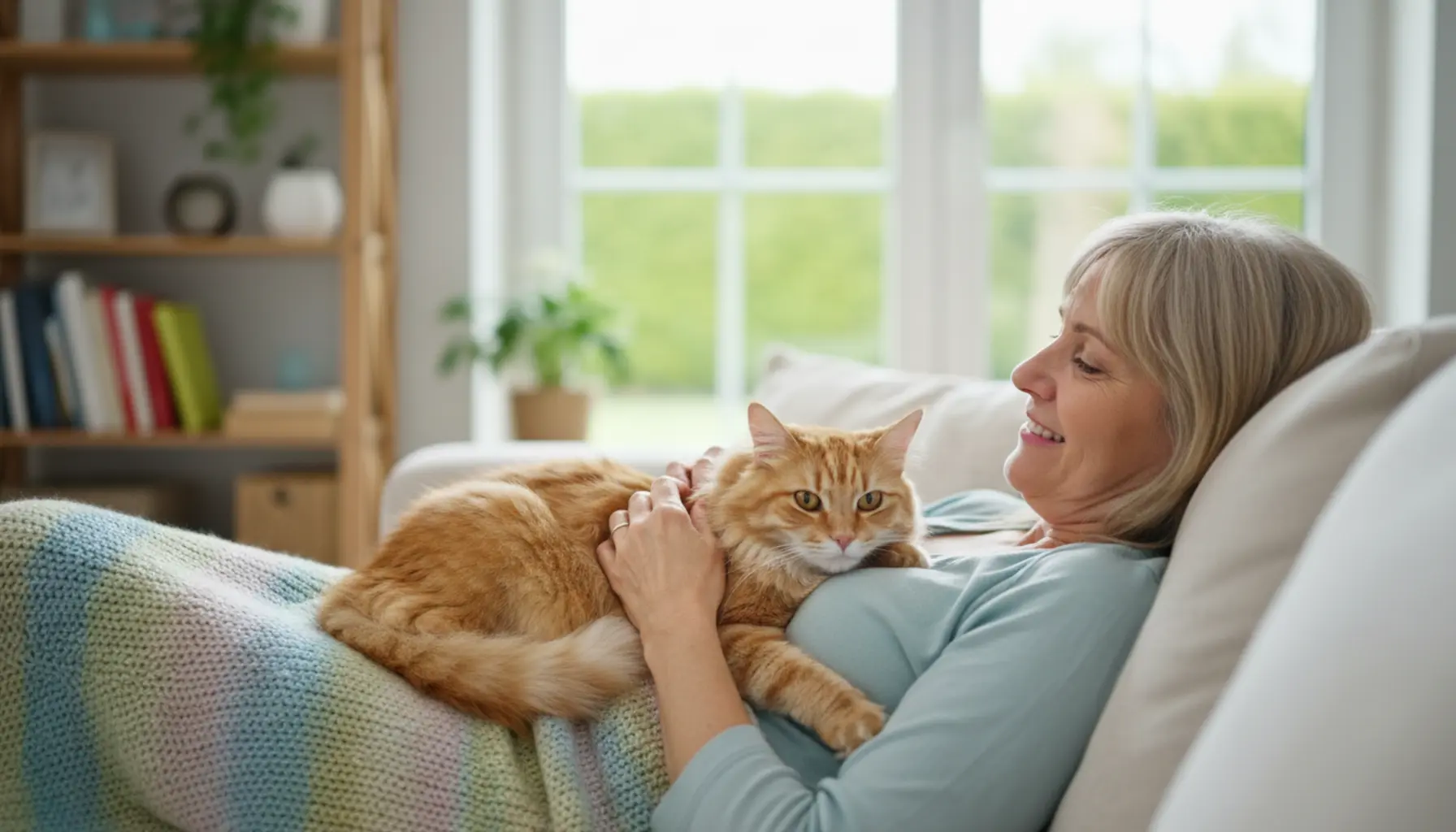
Felinotherapy demonstrates how the relationship between humans and cats can have an extraordinary impact on both mental and physical health. Sessions with a therapy cat reduce stress and support the treatment process for various ailments, from emotional problems to chronic illnesses. Children, adults, and especially seniors benefit from felinotherapy, for whom contact with a cat becomes invaluable support every day.
Table of Contents
- What is Felinotherapy?
- Cats as Extraordinary Therapists
- Health Benefits of the Presence of Cats
- Felinotherapy in Practice
- Impact on Diseases and Disorders
- Application of Felinotherapy for Seniors
What is Felinotherapy?
Felinotherapy is a form of zootherapy in which the main therapeutic role belongs to the cat—not as a “prop” or mascot, but as a full partner in supporting mental and physical health. The name derives from the Latin “felis” (cat) and “therapeia” (treatment), though the actual practice of using cats for health-promoting purposes is much older than modern scientific definitions. Felinotherapy is based on the principle that contact with a properly prepared and socialized cat—its touch, body warmth, steady breathing, and purring—causes changes in the human body on many levels: lowers stress, stabilizes emotions, improves focus and motivation, and supports recovery after physical illnesses. In contrast to spontaneously “petting a cat at home,” felinotherapy is a purposeful, planned process supervised by specialists: therapists, psychologists, special education teachers, or rehabilitation professionals who include the cat in therapeutic programs tailored to the patient’s needs. In practice, this means clear goals (e.g., anxiety reduction, improved communication, motor activation), established working methods (short sessions, manual exercises, playful activities), and regular meetings. Importantly, the cat does not replace traditional psychological therapy or pharmacological treatments but instead complements them, making the overall effect stronger and longer-lasting.
Professional felinotherapy primarily includes two main models: visits by a therapy cat to facilities and so-called therapy supported by the presence of a cat in the patient’s home environment. In the first case, the cat and its handler visit, among others, nursing homes, care centers, hospital wards, hospices, neurological rehabilitation centers, and inclusive schools or kindergartens. Sessions are brief, usually lasting 20–45 minutes, and depend on participants’ physical and psychological status—from passive observation of the cat to active play or brushing fur, which can serve as fine motor exercise. In the second model—when the cat lives with a person in need—felinotherapy involves deliberately including daily activities related to pet care (feeding, brushing, play, building routines) in the therapeutic process, often in cooperation with a psychologist or community therapist. Not every cat is suitable as a “therapy cat.” Animals selected for felinotherapy undergo careful temperament assessment (calm, gentle, receptive to touch and stimuli), then special training for working in various environments, being socialized with people of different ages, and being comfortable with travel. Handlers also ensure regular veterinary check-ups, vaccinations, deworming, and monitor the cat’s emotional state, because animal welfare is a fundamental pillar of this therapy—an overloaded, stressed, or sick cat will not help the patient and may actually increase their fear or anxiety. Notably, felinotherapy is not limited to “pleasant contact with an animal.” In therapeutic terms, it is a structured intervention rooted in the human–cat relationship, described and embedded within defined ethical and sanitary standards. Sessions are documented, goals are assessed over time, allowing adaptation of the program to participants’ evolving needs. Therefore, when we speak of “felinotherapy,” we mean not only an intuitive sense of comfort from a purring cat, but a comprehensive, thoughtful process where the healing power of feline closeness is combined with psychological, pedagogical, and medical expertise.
Cats as Extraordinary Therapists
Cats have fascinated humans for centuries with their independence, mystery, and at the same time their uncanny ability to form deep bonds with their caretakers. In felinotherapy, these features gain special meaning: the cat is not just a “nice addition” to therapy but an active, though non-human, participant in the therapeutic relationship. Its presence brings calm, predictability, and gentle sensory stimulation to the therapy space. Soft fur, rhythmic breathing, and the constant, repetitive sound of purring act as a natural regulator of the nervous system, helping lower cortisol (the stress hormone) and improving well-being. Compared to dogs, cats are generally much less intrusive and less demanding of contact, which for people with sensory sensitivity, social anxiety, or autism spectrum can be an advantage: it is up to the person to initiate contact, and the cat responds with subtle signals of readiness, fostering attentiveness to others’ needs and respect for boundaries. Psychologically, the cat acts as a “safe object”—present but not judging, not commenting, not demanding verbal communication. This allows the patient to express emotions, from anger to sadness, without fearing criticism; the cat’s response is neutral, sometimes soothing, e.g., lying nearby, licking a hand, or simply accompanying in silence. This unconditional, non-judgmental presence is especially valuable in working with people with trauma, low self-esteem, or relationship difficulties. Involving a cat in therapy also helps develop social-emotional skills: by observing the animal’s cues (tail position, ears, movement), patients learn to recognize emotions, regulate their behavior, and adapt to others’ needs. Children and teenagers who struggle to focus during standard sessions often maintain attention much longer with a cat present—they track its movements, discuss it, and the therapist can use this fascination to introduce important topics, strengthen motivation, or conduct psychoeducational exercises. Equally important, a cat “normalizes” the therapy environment, making it feel more like home and less clinical. For those who fear the psychologist’s office or associate it with difficult experiences, seeing a cat sleeping on an armchair symbolizes safety and acceptance, easing the first steps of therapy.
Scientific research confirms many intuitive observations of animal caretakers. Health psychology and medical studies show that contact with a cat can lower blood pressure, improve heart function, reduce anxiety and depression symptoms, while purring is associated with frequencies that may support tissue regeneration and pain relief (this hypothesis is still under study but is increasingly supported by the scientific community). Felinotherapy also leverages the fact that cats excel at observation and responding to subtle changes—intoning moods, emotional tension, or anxiety, and adjusting their behavior: some cats seek more closeness, others keep a gentle distance, but their reactions often help therapists notice patient changes that may not be consciously acknowledged. Importantly, the therapy cat never “works” alone—the animal is always accompanied by a qualified felinotherapist or specialist (psychologist, educator, occupational therapist) who plans the session, ensures safety and comfort, and interprets the cat’s behavior in the context of therapy goals. This approach allows matching the form of cat contact to each individual: for some, calm petting and purring, for others shared play or basic care activities such as brushing or preparing water. These seemingly minor actions have significant therapeutic potential, especially for seniors, people with dementia, or those rehabilitating post-injury—they involve fine motor skills, challenge coordination, strengthen a sense of agency and usefulness (“I am needed, someone counts on me”). At the same time, a cat’s nature and its ability to simply exist “here and now” becomes a living metaphor for mindfulness: observing its focused attention on a sunbeam, a speck on the floor, or a sound outside can help patients understand the idea of being present, without ruminating on the past or fearing the future. Thus, cats in felinotherapy not only soothe and ease negative emotions but also inspire a changed way of living, quietly yet effectively supporting both psychological and physical healing.
Health Benefits of the Presence of Cats
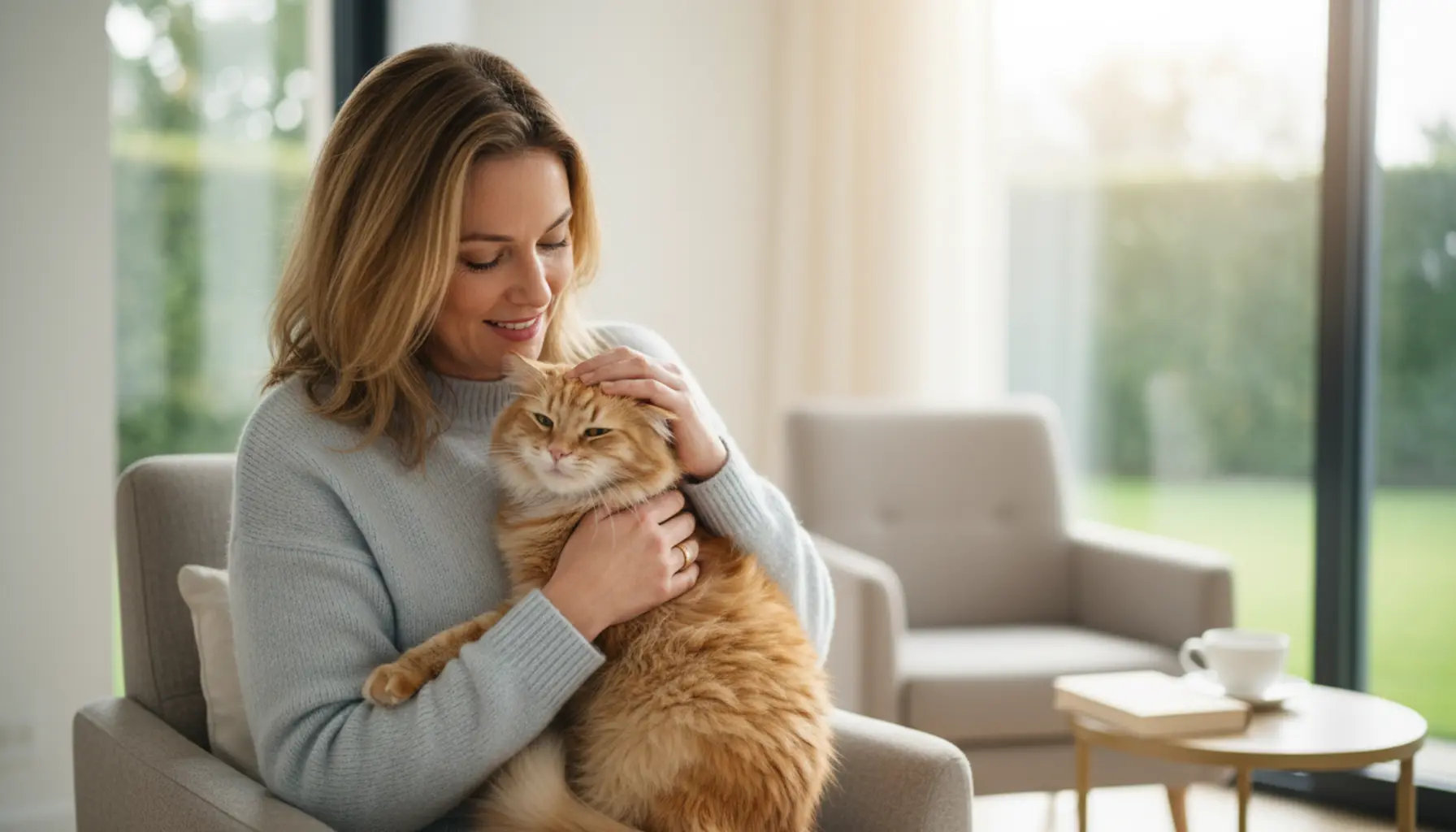
The presence of a cat influences the human body on many levels—from regulation of the nervous and hormonal systems to support in coping with chronic diseases. Even the ritual of petting a cat acts as a natural “switch-off” for tension: repetitive, rhythmic movements, the softness of fur, and the animal’s warmth stimulate the parasympathetic nervous system, responsible for relaxation and regeneration. As a result, cortisol (the stress hormone) decreases and levels of oxytocin, serotonin, and dopamine—neurotransmitters connected with bonding, safety, and pleasure—increase. Studies observe that people who regularly interact with cats have lower blood pressure in stressful situations, report fewer tension headaches, and fall asleep more easily. Especially for people with anxiety disorders or chronic fatigue, the calm and predictable presence of a cat can serve as a “biological regulator,” helping to mitigate somatic symptoms of stress—rapid breathing, heart palpitations, a tight stomach. Importantly, a cat does not require constant active interaction, allowing patients to self-regulate the intensity of contact: from passive observation, sitting nearby, up to cuddling and play, which is especially important for people with low physical endurance or sensory sensitivity.
Prolonged contact with a cat also influences physical and social well-being. Maintaining a daily routine—feeding, brushing, cleaning the litter box, occasionally active play—motivates regular movement, which is valuable for seniors, those undergoing recovery, or with reduced mobility. Even moderate activity such as bending down, following the cat around, or picking up toys helps maintain joint flexibility, balance, and coordination. Caring for a cat also strengthens a sense of agency and responsibility—the owner or patient realizes someone depends on them, counteracting feelings of uselessness and isolation especially in depression. Studies emphasize that cat ownership is a protective factor against loneliness, especially among the elderly, widows/widowers, and those who for various reasons have withdrawn from social life. Cats, as “relationship bridges”, facilitate conversation—sharing stories about the animal, vet visits, or exchanging tips among caretakers provide a reason to interact with others, limiting the risk of social isolation. A cat’s presence also influences emotion regulation and psychological resilience: watching its peaceful sleep, grooming rituals, or play introduces mindfulness, anchors a person in the present, and helps break the spiral of intrusive thoughts. For people who have experienced trauma or personality disorders, contact with a cat can provide a safe way to practice trust and closeness—the animal neither judges nor brings up past mistakes, yet clearly communicates its boundaries, teaching respect for one’s own and others’ needs. Even just listening to a cat’s purr, whose vibration frequency (usually 25–150 Hz) according to some studies may aid tissue regeneration and pain relief, acts as a natural “sonic lullaby” for the nervous system. The presence of a cat can thus genuinely support healing processes—from improved sleep and appetite, stabilized mood, to better management of chronic pain, diabetes, heart disease, or hypertension, where stress reduction and a sense of emotional support play a key role.
Felinotherapy in Practice
Felinotherapy in practice is a carefully planned process that begins with assessing the patient’s needs and ends with the systematic evaluation of the effects of working with a cat. First, there is a consultation with a therapist or specialist (psychologist, special education teacher, physiotherapist, occupational therapist) who analyzes the patient’s health, limitations, and goals: this may be anxiety reduction, improved concentration, motivation for movement, developing communication, or building a sense of security. Based on this, the form of felinotherapy is selected—visits by a cat to facilities (nursing homes, schools, hospitals, rehabilitation centers, children’s homes) or home sessions. Schedules are arranged to accommodate both the patients’ daily rhythm and the welfare of the cat, who should not work too long or too often. A typical session lasts from 20 to 45 minutes, rarely up to an hour, taking place once or several times a week depending on therapy objectives and the patient’s ability. The session area is prepared to be calm, predictable, and safe: unnecessary stimuli are removed, cables and sharp edges are secured, and a “retreat zone” for the cat is provided—a bed, scratcher, or house where the cat can rest if it feels tired or stressed. Preparing participants is also paramount: before first contact, cat-handling rules are explained, as well as how to recognize feline discomfort signals (tail flicking, flattened ears, hissing) and how to respond, minimizing misunderstandings and building patients’ confidence. Sessions include a leading felinotherapist and often the cat’s handler, sometimes also medical or care personnel familiar with the patient, helping tailor exercises to their physical and mental condition. Activities are diverse: from passive contact (observing the cat, listening to purring, touch) to tasks requiring more involvement, such as brushing, feeding, throwing toys, setting obstacle courses, or manual exercises during grooming and play. The gentle, warm weight of a cat on the lap prompts body awareness, posture, and breath work, while petting provides opportunities to practice coordination, grip strength, and hand movement range, especially for those in rehabilitation. The therapist observes how the patient interacts with the cat: do they seek contact, how do they respond to the cat’s refusal, can they respect the cat’s boundaries. Based on these, subsequent sessions are designed, sometimes with scenarios about saying no, asking for help, expressing emotion, which can be easier to practice “with the cat” than with another person directly. Another crucial element is documentation—after each session, the therapist records the patient’s and cat’s behaviors, mood changes, engagement level, physiological responses (relaxation, muscle tension reduction, easier sleep afterward), to assess the effectiveness of the chosen path.
The specifics of felinotherapy differ among recipient groups, hence its strong individualization. In working with children, including those with autism spectrum, ADHD, or intellectual disability, the cat often becomes a “tool” for practicing communication, attention, and self-regulation. The therapist may ask the child to describe what the cat is doing, its mood, or predict its next move—helping develop social signaling and perspective-taking. Feeding the cat by hand or leading it with a toy helps the child practice patience, planning, and fine motor skills. For teenagers, felinotherapy can be a safe space to work on self-worth and trust—the cat “greets” them without judgment, and the animal’s presence reduces anxiety about therapy, making it easier to open up to conversation. For adults and seniors, felinotherapy often supports emotional regulation and relief from loneliness or grief: shared brushing, petting, even quietly staying in the same room as a purring cat encourage relaxation, memory recall, and motivation for daily activity. In nursing homes and geriatric wards, cats encourage movement—those with limited mobility are more likely to rise from bed to stroke or feed the animal, aligning with rehabilitation goals. In psychiatric wards or addiction centers, sessions with a cat are included as part of occupational therapy: patients make toys, care for the litter box, prepare cat hideaways, building a sense of agency, responsibility, and day structure. In home settings, felinotherapy takes the form of regular visits by a therapy cat—apart from spontaneous animal-patient interaction, specific specialist-recommended exercises are also conducted, e.g., sequences of petting synchronized with breathing, sensory description tasks during fur touch or purring observation. Therapy practice also involves team care: the felinotherapist maintains cat hygiene (rest, limited sessions, regular vet checks, coat & skin monitoring, vaccinations, deworming), as well as professional development and supervision to properly interpret both animal and patient behaviors. As a result, felinotherapy remains a professional, safe, and ethical process, in which health benefits arising from feline contact combine with thoughtfully planned therapeutic interventions.
Impact on Diseases and Disorders
Felinotherapy is being increasingly used as an adjunct treatment for various diseases and disorders, especially where chronic stress, low mood, anxiety, or emotional regulation difficulties play a key role. In anxiety and depressive disorders, contact with a cat serves as a natural mood stabilizer—the presence of a calm, predictable animal helps lower tension, ease loneliness, and quiet obsessive thoughts. For many patients, the simple opportunity to pet a cat, listen to it purr, or observe its calm behaviors becomes a form of mindfulness, distracting from intense anxieties and ruminations. In depressive disorders, regular felinotherapy sessions can support recovery by adding structure (e.g., planned cat sessions), strengthening motivation to act, and fostering the feeling of being important to someone—even if that “someone” is an animal. Studies show that some patients experience reduced depressive symptom severity, improved sleep, and greater willingness for social contact when cat interaction is included in coordinated therapy plans, especially alongside psychotherapy or pharmacotherapy. Felinotherapy’s benefits are also noticeable for people with autism spectrum disorders, ADHD, and other developmental difficulties. As a subtle and unobtrusive being, a cat is a safe partner for practicing social skills: children learn to recognize non-verbal cues, predict others’ reactions, and respond to boundaries. For neurodiverse individuals, contact with a cat can offer pleasant, predictable sensory stimulation—soft fur, gentle body vibration when purring, rhythmic breathing. In controlled conditions, this allows “regulation” of nervous system arousal: calming excess tension or gently stimulating in cases of lethargy. Felinotherapy, coordinated with psychologists or sensory integration therapists, can help train attention, self-control, and cognitive flexibility, particularly in children who find it difficult to follow adult instructions, but happily cooperate when the task involves an animal.
From a somatic disorders perspective, felinotherapy is most often used as support in rehabilitation and long-term care for seniors, people after strokes, with cardiac diseases, chronic pain, or dementia, including Alzheimer’s. In these cases, the cat acts as a gentle “catalyst” for motivation—encouraging simple movement (petting, brushing, offering toys, reaching for treats), which can indirectly support motor skills and coordination. For those with limited mobility, even just shifting body position to reach the animal, balancing while sitting, or reaching out a hand becomes part of movement training, which, thanks to its enjoyable nature, is not perceived as a chore. For elderly people with dementia, a well-chosen and prepared cat can help reduce agitation, aggression, and “wandering” symptoms. Calm animal presence serves as an “anchor” to reality: touching fur, purring’s rhythm, or simple feeding rituals evoke positive old memories, which in turn support orientation and a sense of safety. In healthcare facilities, felinotherapy is often introduced as a complement to pain and anxiety medications; it’s observed that patients after cat sessions cooperate better in rehab, are calmer before medical procedures, and report lower pain levels. The mechanism likely combines neurohormonal effects of animal contact and distraction, as well as emotional support. Still, felinotherapy isn’t a universal method and cannot replace causal treatment—it is supportive therapy whose effectiveness depends on correct patient qualification. There are contraindications, such as severe fur allergies, serious immune disorders, certain infectious diseases, or persistent animal abuse. For this reason, a medical and psychological assessment is always required, and sessions are carefully managed, ensuring the safety of both humans and cats. Thanks to this professional approach, felinotherapy can meaningfully support treatment and rehabilitation for many conditions and disorders, as a gentle yet significant supplement to conventional therapies.
Application of Felinotherapy for Seniors
Felinotherapy with seniors plays a particularly important role, affecting many areas of their life—emotional, social, cognitive, and physical. For older adults, especially those struggling with loss of independence, grief, loneliness, or chronic illness, contact with a cat becomes a gentle yet very effective stimulus, restoring a sense of meaning and influence over one’s life. In nursing homes, care institutions, day programs, and hospices, sessions with a cat break daily monotony, encourage activation, and are not physically demanding—cat contact doesn’t require much fitness or effort, which is key for those with mobility limitations. For many, the cat becomes a reference point in day structure: its scheduled arrival is an event to look forward to, which organizes the week and boosts motivation to get up, take care of hygiene, or join other therapy forms. Felinotherapy is especially important for easing symptoms of late-life depression—the touch of soft fur, the cat’s warmth and characteristic purr are missing for those who have lost a spouse or friends; stroking a cat and hearing its reaction provides safe closeness, substituting the daily physical contact often absent in institutional care. The cat is also a “communication bridge” between seniors and staff or family: discussing the animal makes it easier to start conversations about feelings or difficulties and gradually opens deeper topics. Psychologically, cat contact triggers autobiographical memories; seniors reminisce about past pets, family homes, childhood, or youth. Telling animal stories not only improves mood but also supports cognitive processes—memory, verbal fluency, time orientation, and strengthens the sense of identity continuity, which may weaken in later life.
The use of felinotherapy for seniors includes various models—from individual by-the-bed visits, small group activities, to regular cat visits across entire wards. Among people with dementia (e.g., Alzheimer’s), the cat is a powerful sensory stimulus anchoring the senior in the present: petting, stroking, observing the animal’s movements and reactions engage the senses, reducing disorientation and anxiety. On days with cat activities, many show less aggression, calling out, or wandering, as animal presence brings calm and predictability. Felinotherapy also supports physical rehabilitation—simple tasks like brushing, offering toys, or transferring treats from one jar to another serve as fine motor and hand-eye coordination exercises. For those ambulating with a walker or wheelchair, the motivation to move can be the desire to approach the cat, sit at another table, or join in a simple game—thus therapy with a cat facilitates physiotherapy goals without the “rehab” label, but as an enjoyable meeting. Another key aspect is agency and responsibility—even if the senior can’t care for a pet independently, during sessions they may help feed the cat, pour fresh water, arrange bedding, choose a toy, building the belief they can still “be needed” and impact another being’s well-being. In terms of care organization, animal welfare and safety are crucial: chosen cats are emotionally stable, accustomed to people with limited abilities and intense behaviors, with sessions kept short and interspersed with rest. The therapist or felinotherapist manages the meeting, considers seniors’ comfort (posture, hand sanitation, contact breaks if anyone feels tired), and observes responses—to both stimulation and the cat. Felinotherapy for seniors also requires cooperation with the medical team: before inclusion, contraindications are evaluated (serious allergies, extreme animal fear, behavioral disorders endangering the cat), and the therapy goals are aligned with broader care plans, so effects like calmness, improved mood, and better staff cooperation translate into quality of life for older adults.
Summary
Felinotherapy is an effective therapeutic method benefiting both mental and physical health. Cats, as therapists, help reduce stress and lower blood pressure, translating into improved overall well-being. Their presence and purring are helpful in treating emotional and anxiety disorders, as well as supporting people with autism. Felinotherapy is also used to help seniors, especially those with memory problems such as dementia and Alzheimer’s. This therapy not only strengthens health but also promotes social integration, making it a valuable part of healthcare.

