
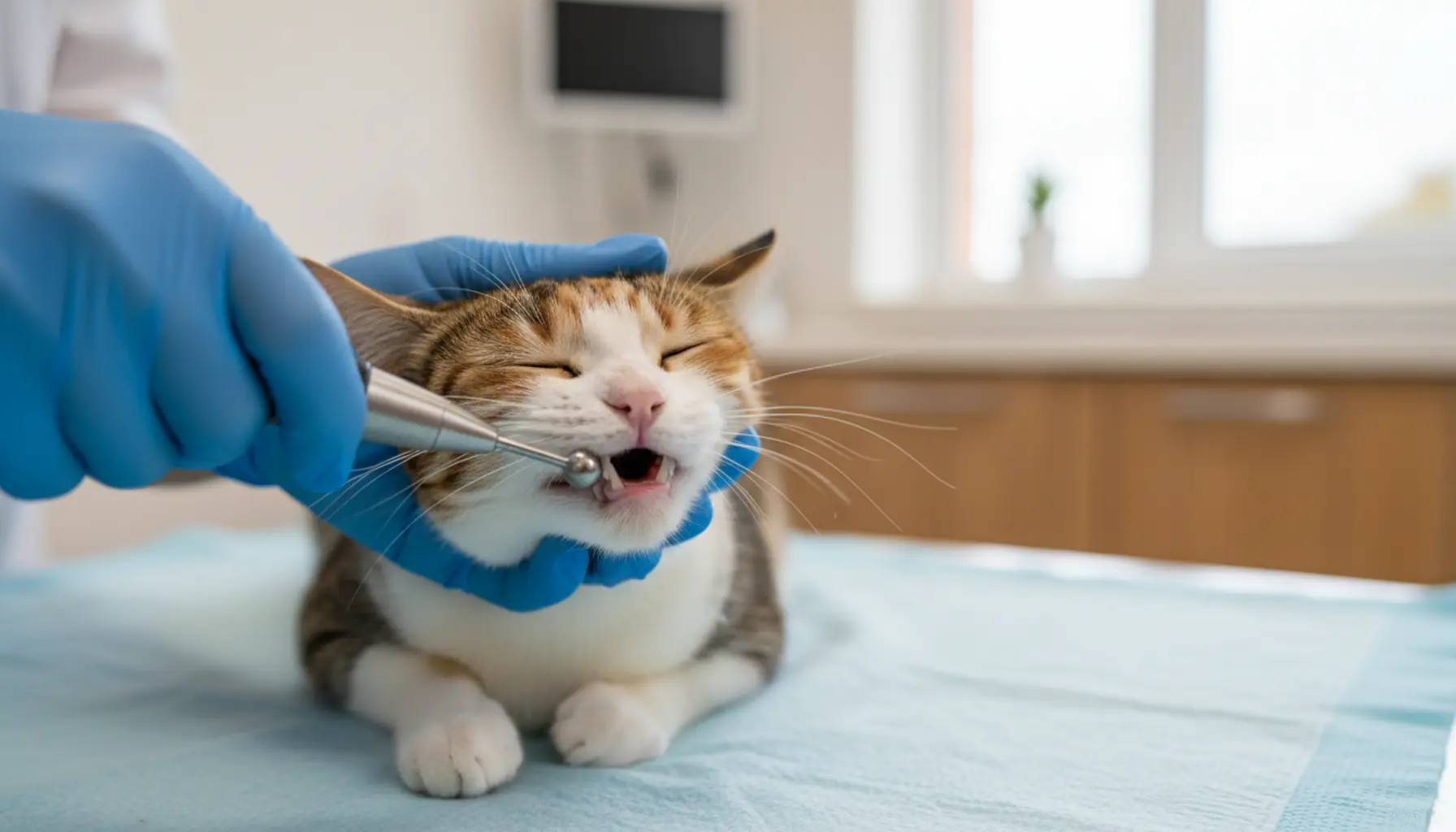
Tartar in cats is not just an aesthetic issue but also a health problem that affects your pet’s comfort and overall health. Learn effective ways to remove it and dental care prevention methods.
Table of contents
- What is tartar in cats?
- Why is tartar a problem?
- What are the options for tartar removal?
- Anaesthesia for tartar removal in cats
- Home methods for cat teeth care
- The importance of regular vet check-ups
What is tartar in cats?
Dental tartar in cats is a hard mineral deposit that accumulates on the tooth surface – most often along the gum line, but eventually can cover a large portion of the tooth crown. The formation process starts very innocently, from a soft, sticky layer called dental plaque. Plaque is formed by food debris, saliva, bacteria, and their metabolic products, and it develops faster the less often a cat’s teeth are mechanically cleaned (e.g., by chewing harder kibbles or—ideally—by regular brushing). If plaque is not removed, it begins to mineralize within a few days due to calcium and phosphate salts in the saliva. As a result, the soft layer turns into hard, rough tartar that adheres firmly to the enamel and cannot be removed by ordinary brushing, requiring veterinary dental intervention. Tartar can be seen as yellow-brown or dark brown deposits, initially on the canines and premolars, and then on other teeth, often symmetrically on both sides of the jaw. It’s important to understand that dental tartar is not merely an aesthetic issue—it is mainly a reservoir of bacteria and the source of chronic inflammation in the mouth. The surface of tartar is porous, making it an ideal place for microorganisms to adhere and multiply, producing toxins and acids that irritate gums and deeper periodontal tissues. Over time, this can lead to gingivitis, exposure of tooth necks, bleeding with minimal touch, and eventually periodontitis, loosening, and loss of teeth. Sometimes an owner only notices a problem when the cat develops a noticeably bad breath, drools, is reluctant to eat dry food, or tilts its head while eating—but in reality, the tartar build-up process has been ongoing for months, or even years.
From a medical point of view, tartar in cats is the end-stage result of uncontrolled accumulation of bacterial plaque and minerals from saliva, which is linked not only to dental problems, but to the cat’s overall health. Bacteria living in tartar can enter the bloodstream through damaged, bleeding gums, putting stress on the kidneys, liver, and heart. In cats with chronic diseases (such as kidney failure, diabetes, or autoimmune diseases), this additional “bacteremia” can significantly worsen the condition’s course. In modern veterinary dentistry, tartar is therefore regarded as a symptom of a broader issue—periodontal disease—not merely an isolated problem with the teeth. In cats, tartar is especially common due to their diet (dominated by soft, tasty but poorly cleansing foods), less natural tendency to chew hard objects, and generally low owner awareness about oral hygiene in pets. Bear in mind that cats can mask pain for a long time—they may eat and play as usual, even as severe inflammation spreads around tartar deposits. Biologically, tartar forms in several stages: first, a thin protein film made up of salivary proteins settles on the enamel, to which bacteria easily attach. Next, bacteria create a biofilm that traps food residues and epithelial cells. Minerals in the saliva then accumulate, increasing the hardness and thickness of the deposit day by day. If this process continues, tartar begins to build up below the gum line (so-called subgingival tartar), which is particularly dangerous because it’s invisible to the naked eye, while severely damaging the tooth-supporting ligaments. Outwardly this appears as receding gums, formation of periodontal pockets, and bad breath. Understanding exactly what tartar is, how it looks, and what biological processes underlie it serves as the foundation for making informed decisions about your cat’s oral health—from early detection of plaque, to professional removal of deposits at the vet, and consistent aftercare.
Why is tartar a problem?
Dental tartar in cats is often downplayed because many caregivers think it’s just an “aesthetic” defect—a yellow or brown coating on the teeth. In fact, it is a serious health issue affecting not just the oral cavity but the whole body. Hard deposits offer an ideal environment for bacteria, thriving in massive amounts along the gum line. This leads to chronic gum inflammation (gingivitis), manifested by redness, swelling, soreness, bleeding when eating or grooming. Untreated gingivitis often progresses to periodontitis, where tissues holding teeth in their sockets (ligaments, bone) are destroyed. Teeth become loosened, painful to touch, and in advanced cases simply fall out. Dental tartar, the hardened plaque, is one of the main factors initiating this process. Additionally, bacterial action and toxins cause periodontal pockets to form, accumulating more food scraps and microbes, perpetuating a vicious circle of chronic inflammation. Cats suffering from mouth pain often stop chewing food thoroughly and swallow large chunks, which can cause digestive problems and weight loss. Although cats are experts at hiding pain, subtle signs—such as chewing on one side, avoiding hard food, licking, pawing at their mouth, or reluctance to have their head touched—often originate from untreated tartar and related periodontal disease. The unpleasant odor from a cat’s mouth, often thought of as “typically feline,” is actually one of the first warnings of disease in the oral cavity.
A key reason why dental tartar should never be ignored is its impact on a cat’s overall health and organ function. Bacteria residing in tartar and inflamed tissues don’t stay only in the mouth—they can enter the bloodstream and spread throughout the body. This is especially dangerous in immune-compromised, older cats, or those with chronic diseases (e.g., kidney failure, cardiomyopathies, diabetes). Chronic mouth inflammation may stress the kidneys, liver, and heart, increasing the risk of exacerbating or accelerating existing conditions. Pain and discomfort associated with tartar also negatively influence cat behavior: the animal becomes less active, apathetic, may avoid human contact and neglect grooming. The result is dull, matted fur, especially on the back and rump—areas that require more mouth movement to lick—because if every mouth action hurts, cats limit cleaning to a minimum. Tartar may also hinder proper food and water intake, contributing to dehydration and malnutrition, especially in senior cats. From a preventive health perspective, the problem is exacerbated by the fact that changes in the mouth often progress quietly—an owner may only notice them once serious damage has occurred, necessitating extensive dental procedures, possibly including extraction of multiple teeth. Each such procedure requires general anaesthesia, which poses greater risks for older or sick cats. Therefore, tartar is not a trivial matter to be postponed for “later,” but a real threat affecting daily comfort, life expectancy, and successful management of other diseases. Systematic oral check-ups and early tartar removal are important elements of comprehensive cat health care, on par with blood testing, parasite prevention, and vaccinations.
What are the options for tartar removal?
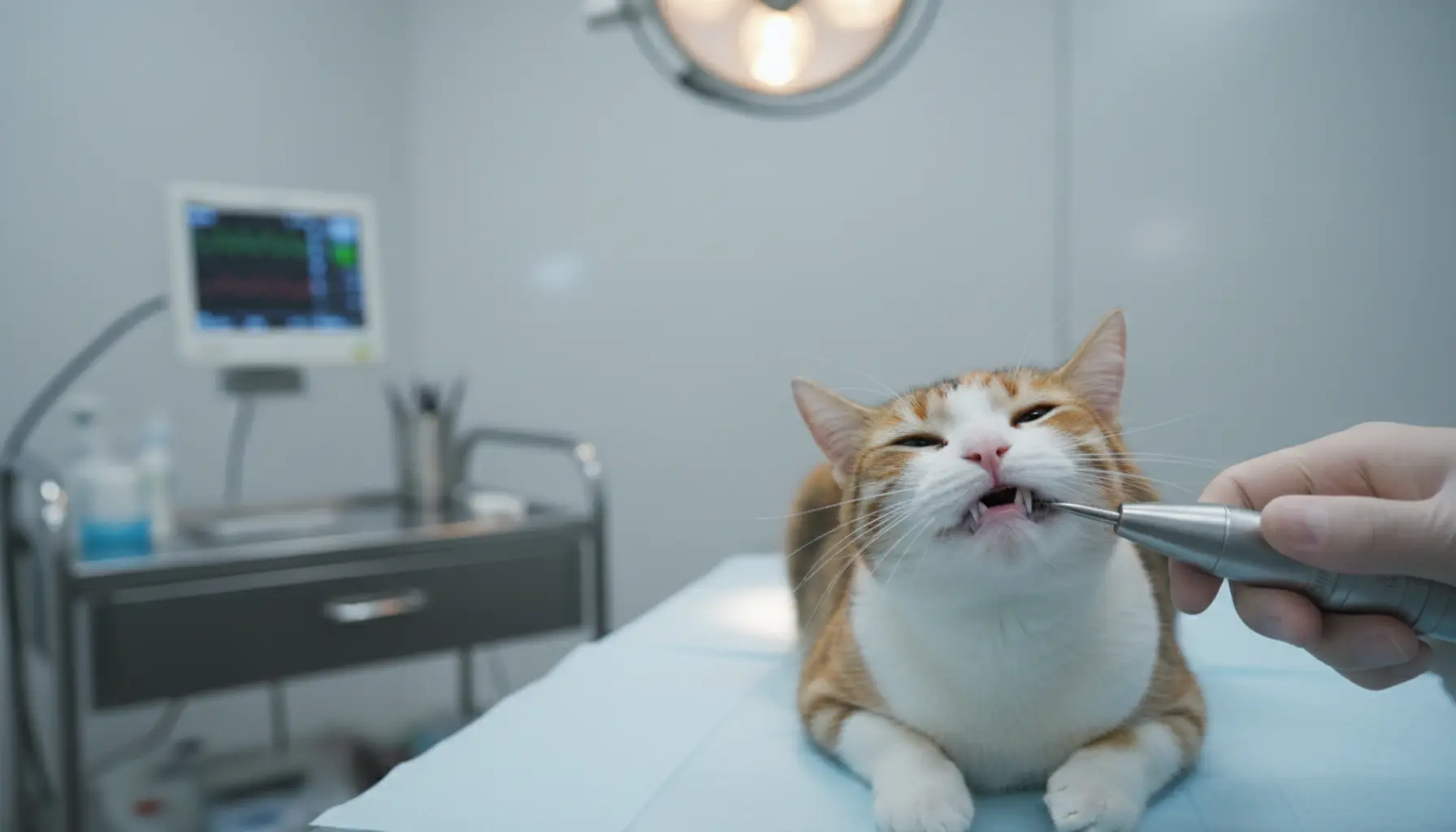
Tartar removal in cats can be done in several ways, but it’s key to differentiate between professional methods done at the vet clinic and home measures, which mainly serve a preventive role. The primary and most effective method is ultrasound scaling under general anaesthesia performed by a veterinarian or veterinary dentist. During such a procedure, the cat is fully anesthetized, allowing thorough cleaning of both the tooth crowns and subgingival areas, where the most dangerous deposits and bacteria accumulate. Special ultrasonic tips vibrate at high frequencies to break up mineralized tartar without damaging the enamel. After scaling, teeth are usually polished, smoothing micro-damage and making it harder for plaque to redeposit. This procedure requires pre-qualification tests (including heart evaluation, sometimes blood and chest X-ray), especially in older cats or those with chronic diseases since general anaesthesia always carries some risk which must be minimized. In advanced periodontal disease, besides plaque removal, the vet may decide to extract teeth that are loosened, painful, or so inflamed they can’t be saved. Sometimes, periodontal pocket curettage is performed, which is a mechanical cleaning of tissues around the tooth from infected granulation tissue and debris. In certain cases, the vet may also prescribe supportive antibiotic therapy (e.g., when gingivitis is severe or there is a risk of bacterial dissemination), but this never substitutes for mechanical removal of tartar—antibiotics merely reduce bacterial burden in the body. Some clinics also offer dental laser treatments, which can support periodontal inflammation therapy, reduce bacteria in pockets and speed up tissue healing, but classic mechanical cleaning remains the foundation. On the other end of the spectrum are “anaesthesia-free” tartar removal methods, sometimes advertised as a safe alternative—note that most specialists strongly discourage such approaches because in a non-cooperative cat, you cannot effectively or painlessly clean the subgingival spaces or assess all tooth surfaces; there is also a risk of injury, stress, and aversion to future mouth procedures.
Rising interest in dental prevention means many owners look for home ways to remove or slow down tartar formation, but it must be clearly stated: once hard tartar has formed, no toothpaste, rinse, or food can replace professional clinic treatment. Home options are focused on regular brushing with special cat toothpaste (never human, due to fluoride and xylitol) and a soft brush or fingertip silicone cap. Systematic brushing effectively removes soft dental plaque before it becomes mineralized, so it’s one of the most important preventive tools after scaling. For cats that don’t tolerate brushing, there are enzymatic gels, sprays, and drinking water additives to help break down plaque and promote oral hygiene—though these are generally less effective than mechanical brushing. Another group includes specialist dental diets and treats, designed to provide abrasive action on plaque and strengthen teeth during chewing. However, it’s best to choose products recommended by veterinary organizations (e.g., VOHC) and treat them as supplementary to daily hygiene, not as the only method of dental care. Natural chews like dried meat or special plant sticks are increasingly popular—they can partially support tooth cleaning but should not be given without veterinary consultation, especially in cats with sensitive gums, kidney disease, or dietary allergies. There are also various “homemade remedies” using baking soda, vinegar, essential oils, or human mouthwashes—these should definitely be avoided as they can irritate the oral mucosa, alter natural oral microflora, or even be toxic for cats. In practice, the options for removing established tartar are limited to professional procedures under anaesthesia; all others—brushing, dental preparations, proper diet, and treats—act as support and prevention, slowing down new tartar build-up and extending time between dental visits.
Anaesthesia for tartar removal in cats
General anaesthesia is standard during professional tartar removal in cats and is not an optional “addition” but an absolute necessity for treatment safety and effectiveness. First, scaling is performed both on the visible tooth surface and in subgingival areas where the worst deposits and bacteria reside. It is a precise and often lengthy process using ultrasound, curettes, and other dental instruments, which include noise and vibrations. Without anaesthesia, a cat would not remain still with its mouth open for dozens of minutes, tolerate instruments, suction, or mouth gags. Attempting such a procedure “live” involves enormous stress and pain, risk of injury to the cat and staff, and—most of all—leaves the teeth incompletely cleaned, making the whole treatment ineffective. Anaesthesia allows the vet to thoroughly examine each tooth’s surface, take dental X-rays (if available), and test tooth stability painlessly. Additionally, deep-seated inflammatory changes, abscesses, root resorption, or tooth fractures are often only visible after a thorough oral exam under anaesthesia—that’s when the decision is made about possible extractions or further procedures. Note that tartar removal in cats often goes beyond “cosmetic” scaling and involves a full dental workup, which simply cannot be done without general anaesthesia. Airway protection is also important—water and rinsing agents are used during the procedure, plus dislodged tartar fragments are removed—a cats under anaesthesia is intubated, reducing the risk of aspiration of fluid or tartar fragments. Intubation also allows easy control of breathing and, if needed, oxygen administration, which is vital in animals with heart or lung disease. From a behavioral perspective, anaesthesia avoids associating the visit with pain and strong discomfort—the cat does not remember the procedure, so future check-ups are often less stressful than if it had once undergone painful “live” manipulation in the mouth.
Owners’ natural concern is the safety of general anaesthesia, especially in older or chronically ill cats. However, modern veterinary anaesthesiology relies on individualized drug selection, monitoring, and pre-procedure risk assessment, greatly reducing the risk of complications. Before the procedure, blood tests—morphology and biochemistry—and in senior cats or those with suspected heart disease, ultrasound, ECG, or chest X-ray are usually ordered. This allows assessment of liver, kidney, cardiovascular function, and hydration—all key for the metabolism and excretion of anaesthetic drugs. This makes it possible to choose an anaesthetic plan suited to the cat’s age, weight, and health, and if any serious abnormalities are found, to treat or stabilize them first and plan dental procedures only afterwards. In clinical practice, so-called balanced anaesthesia is most often used: a combination of premedication (sedative and painkillers), then induction drugs, and maintaining anaesthesia with inhaled gases (e.g., isoflurane, sevoflurane) administered through an endotracheal tube. Vital parameters such as heart rate, respiratory rate, oxygen saturation, blood pressure, and body temperature are monitored throughout the procedure; in many clinics, capnography (CO2 measurement in exhaled air) is also used, permitting early detection of breathing problems. The staff regularly checks anaesthesia depth, adjusting drug doses so the cat is “deep enough” for painless surgery, but not deeper than necessary. Intravenous fluid therapy is often introduced to stabilize circulation, support the kidneys, and help eliminate anaesthetic drugs. It’s worth knowing that skipping professional tartar removal due to fear of anaesthesia may actually pose more risk to the cat than the well-prepared procedure itself. Chronic mouth inflammation, abscesses, periodontitis, and bacteremia can seriously burden the heart, kidneys, or liver and, if untreated, lead to systemic complications. A conscientious vet always weighs the risk of anaesthesia against the risk of leaving a diseased mouth untreated. The most common post-procedure complications after dental anaesthetic are mild and temporary—slight drowsiness, sleepiness, transient imbalance after waking up. In most cases, the cat recovers fully within a few hours, though in seniors the process can take a bit longer. Strict adherence to pre- and postoperative instructions minimizes the risk of serious complications: fasting before the procedure (to reduce vomiting and aspiration risk), ensuring a warm, quiet recovery spot, and observing breathing, behaviour, and appetite at home. A well-performed anaesthetic tartar removal procedure combined with treatment of existing problems usually brings a marked improvement in the animal’s comfort, and in many cats also increases their appetite, energy, and general activity, confirming indirectly just how uncomfortable oral changes were before.
Home methods for cat teeth care
Home dental care for cats is primarily preventive—its aim is to slow the accumulation of plaque and tartar, not to remove already established hard deposits. The most effective method, supported by research and veterinarian recommendations, remains regular tooth brushing. This requires patience and gradual training, but with the right approach most cats can accept the procedure. Always use only special animal toothpaste (usually enzymatic, with flavors appealing to cats, e.g., poultry or fish) and a soft toothbrush—use a children’s brush with a small head, a finger brush, or a special veterinary model. Regular toothpastes for humans are dangerous to cats as they contain fluoride, detergents, and other substances meant to be spat out, not swallowed. Training should be broken down into steps: first, getting the cat accustomed to touch around the mouth; next, gently lifting the lip and touching gums and teeth with a finger; then adding a dab of toothpaste to the finger; and finally introducing the toothbrush. Initially just gently brush the front canines for a few seconds, gradually increasing time and covering the back molars, which are most likely to develop deposits. Realistically, aim for brushing at least 3–4 times a week, and daily if your cat is prone to tartar build-up—less frequent cleaning is noticeably less effective. Create a quiet atmosphere, choose a time when the cat is relaxed, and always provide a reward after the procedure—favorite treat, playtime, or petting, so that brushing is associated with something positive, not stress or force. With many cats, limited tolerance for mouth manipulation is a challenge; in such cases better to make the session short and successful rather than forcefully try to clean all teeth in one go and risk discouragement. It is also helpful to prepare a comfortable setup—a stable countertop or table with a non-slip mat—so your cat feels safe, doesn’t slip from your hands, and the procedure becomes more predictable. Habits can be built with routines, such as fixed times and sequence of actions (prepare the brush first, then a brief petting session, then brushing), which reduces stress and promotes acceptance of hygiene activities. Home care can and should be adapted to your pet’s age and health: start socializing kittens just with mouth touch and positive associations, while for adult cats—especially those with periodontal disease or tenderness—go gently and consult a vet first, to avoid causing pain when touching diseased gums.
Not all cats will tolerate classic brushing, so other home methods are also widely used that support oral hygiene, although they do not replace brushing or professional scaling. Popular choices are enzymatic gels and pastes applied directly to teeth or gums—the active enzymes help limit bacterial growth and break down plaque, slowing tartar formation. The advantage is that often it suffices for the cat to lick the preparation, so these are practical for animals that won’t allow brushing. Another category involves drinking water additives with antibacterial and anti-plaque substances; their effectiveness, however, depends on the cat’s water intake and on regular use. Dental diets are also often used—dry foods with special kibble structure that do not shatter instantly when bitten but “hug” the tooth and mechanically scrub plaque while chewing. Choose foods and treats with official marks, e.g., recommendations from organizations such as VOHC (Veterinary Oral Health Council), for more assurance of declared action. Some dental treats in chew or pillow form may also help reduce plaque, but these should be considered supplementary, not the mainstay—excess treats promote obesity, and too-hard chews (bones, antlers, hard dried skins) may lead to tooth fractures or breaks. Thus, any “natural chews” should be selected carefully and in consultation with a vet, especially for cats with existing mouth problems. Home methods also indirectly support dental health, such as selecting food texture (in some cats an overly soft diet fosters plaque build-up) and regular home inspections—looking at gum color, mouth odor, excessive drooling, difficulty chewing or one-sided chewing. Most importantly, avoid home “tricks” taken from human dental care: using baking soda, vinegar, essential oils, hydrogen peroxide, or unknown preparations is not only ineffective but often dangerous for cats—it may cause chemical burns, digestive disorders, poisoning, or enamel damage. All “tooth supplements” in powder, tablet or oil form should be carefully selected—read labels and consult a vet; products based on algae or mineral ingredients may cause gastrointestinal problems or be contraindicated in certain chronic conditions (like thyroid or kidney disease). The main rule of home care is regularity: even the best products fail if used sporadically. Bringing dental care into everyday routines—besides feeding, playing, and grooming—helps cats accept treatments and lets owners spot worrying changes that require a veterinary clinic check up quickly.
The importance of regular vet check-ups
Regular check-ups with a veterinarian are one of the key elements of dental disease prevention in cats, including tartar build-up. Even if a cat seems healthy, eats normally, and shows no clear signs of pain, inflammation may be developing in the mouth that an owner cannot spot during normal home inspections. A vet, using proper lighting, dental tools, and clinical experience, can assess the condition of gums, the presence of plaque and tartar, periodontal pockets and possible cavities, resorptions, or broken teeth. Early detection of initial inflammatory changes or small tartar deposits allows for gentler, less invasive intervention—sometimes more thorough home brushing, introducing a dental diet, or scheduling a preventive scaling at a convenient and safe time before major problems develop. Routine oral checks are especially important in older cats, breeds predisposed to dental problems (e.g., maine coon, British Shorthair, Persian), and pets with chronic conditions like diabetes, kidney failure or autoimmune diseases, since even moderate oral inflammation can quickly worsen overall health. During periodic visits, the vet not only assesses current dental health but also compares it to previous records, facilitating detection of subtle, gradual changes that may become significant over time. Regularity—generally at least yearly, and every six months for seniors or those with known dental issues—means procedures like tartar removal can be planned ahead, when anaesthesia risks are lower and the cat’s condition is stable.
During a veterinary visit, the vet can also discuss with the owner daily feeding and hygiene habits and any seemingly minor signals that might take on new significance in the dental context. Change in mouth odor, chewing only on one side, reluctance toward hard kibbles, drooling, pawing at the mouth, or opting out of games that require biting—all may appear to be “quirks” or temporary behaviors, but for a vet are clues for further investigation. Routine check-ups not only assess tooth health but also educate owners in the basics of oral care and detecting first symptoms of problems. The vet can recommend an appropriate brush, toothpaste, enzymatic gel or dental food suited to the cat’s age, health, preferences, and level of cooperation, as well as the practicality for the owner. At the visit, it is also possible to assess whether there are any contraindications to specific products, such as water additives in cats with kidney disease. A major aspect of routine check-ups is risk assessment regarding general anaesthesia, required for professional tartar removal. With regular blood tests, heart auscultation, body weight and condition assessment, vets can detect early cardiac, metabolic or kidney issues and tailor anaesthetic protocols accordingly. This provides much greater safety than when a cat is only seen when it already has advanced periodontitis, severe pain, and needs urgent, extensive dental surgery under anaesthesia. Systematic check-ups also make possible an individualized prevention plan—taking into account age, breed, lifestyle (indoor or outdoor), diet, and medical history—practically resulting in less need for aggressive dental intervention and lower long-term treatment costs. For many cats, regular visits to the same vet in a calm, predictable clinic environment reduce visit-related stress, making mouth checks easier without much resistance from the animal.
Summary
Regular removal of dental tartar is key to your cat’s dental health. This covers both professional procedures under anaesthesia and everyday home tooth care. Understanding why tartar is problematic and how it can be removed is crucial. Professional vet care combined with good prevention can prevent health problems. Consult your vet to choose the best methods for your cat.

