
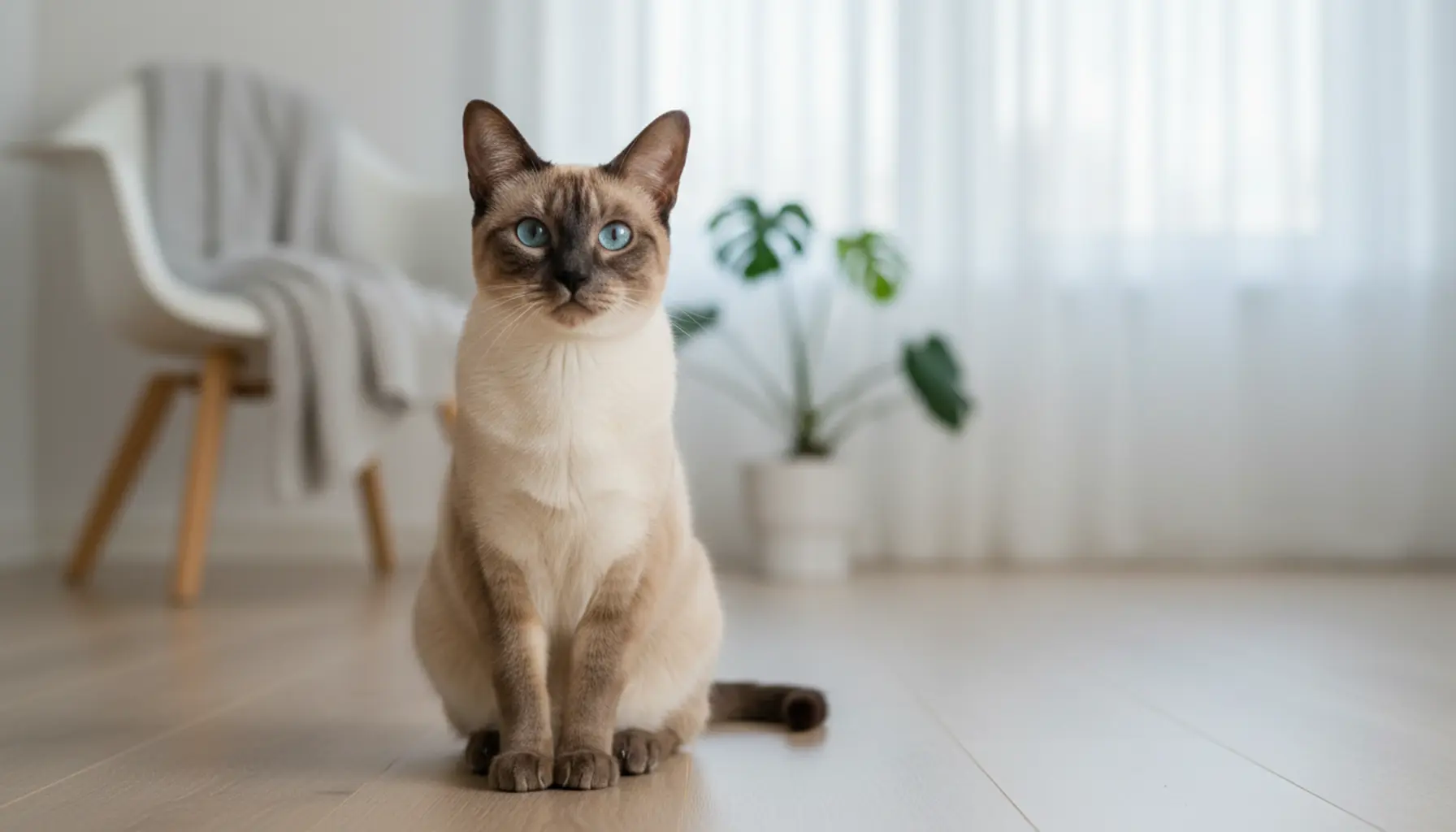
The Tonkinese cat delights with its exotic origins, stunning appearance, and extremely friendly nature. Discover the details about the history of this breed, its care, health condition, and maintenance costs to assess whether the Tonkinese cat is the perfect companion for your home.
Table of Contents
- History and Origin of the Tonkinese Cat
- Unique Features and Appearance of the Tonkinese Breed
- Characteristics and Temperament of the Tonkinese Cat
- Care and Health of the Tonkinese Cat
- Price and Maintenance Costs of the Tonkinese Cat
- Is the Tonkinese Cat Right for You?
History and Origin of the Tonkinese Cat
The Tonkinese cat, although it still sounds exotic to many, has its roots in one of the most classic stories in felinology: the crossing of two extremely popular breeds – the Siamese cat and the Burmese cat. The first mentions of cats resembling today’s Tonkinese appeared as early as the 19th century when slender, light Siamese cats with characteristic point coloration and more stocky, dark-coated Burmese cats started arriving in Europe and America. In Southeast Asia, cats of an “intermediate” appearance—neither as extremely slender as Siamese nor as massive as Burmese—naturally occurred but were not yet treated as a separate breed. The symbolic beginning of the Tonkinese cat’s history is considered the 1930s, when a cat named Wong Mau arrived in the United States—a pet with chocolate, smoky fur and ambiguous racial affiliation. She became one of the foundations of a breeding program, which ultimately led to the formation of both the modern Burmese and—indirectly—the Tonkinese cat. In the following decades, breeders in the USA and Canada deliberately crossed Siamese and Burmese cats, aiming to obtain a cat with a balanced body structure, soft, silky fur, and a unique “mink” coat color, combining features of both breeds: subtle shading, contrast between the body and points (mask, paws, tail), but without the sharp color division found in Siamese cats. Initially, these crosses were considered “utility hybrids” rather than a distinct breed, but over time, it became clear that the offspring had a unique, consistent type, both in appearance and character. In the 1960s in Canada and the United States, the first breeders consciously announced their desire to create and register a new breed—they gave the cats the name “Tonkinese,” probably referring to the historical region of Tonkin in Vietnam and the general, exotic connotation to the Indochina region, although the breed’s actual geographical connection to Tonkin remains symbolic rather than factual.
The process of official recognition of the Tonkinese cat by felinological organizations was extended over time and inconsistent across countries, and the breed itself sparked much controversy. Some Siamese and Burmese breeders feared the dilution of the original breeds’ features and opposed registrating hybrids as a full-fledged new breed. Nevertheless, Tonkinese enthusiasts consistently conducted breeding programs, keeping precise records and working on the preservation of the breed’s characteristic type. At the beginning of the 1970s, the first American clubs began treating the Tonkinese as an experimental breed, and in 1974, the Canadian Cat Association, as one of the first organizations, officially recognized the Tonkinese cat, opening up the way for wider popularization in North America. In following years, more federations granted recognition, including CFA (Cat Fanciers’ Association) and TICA (The International Cat Association); however, rules regarding permissible matings (whether Siamese and Burmese outcrosses are still allowed, or only within the breed) varied with regulations. The Tonkinese cat appeared more noticeably in Europe only in the 1980s and 1990s, and its position remained niche for a long time compared to more traditional breeds. In the FIFe system, the breed is still viewed with some reservation, with stricter breeding regulations affecting the Tonkinese’s numbers on the Old Continent. Nevertheless, several specialized catteries operate in Poland and other European countries, importing cats mainly from Canada, the USA, and the UK to maintain a broad gene pool. It is worth noting that the Tonkinese is considered a relatively young breed when compared with centuries-old Siamese or Persian lines, but its “roots”—natural crossings of cats with intermediate phenotypes in Asia—reach much further back than its registration date in western organizations. Today, the Tonkinese cat is seen as a harmonious blend of the elegance and expressiveness of the Siamese, with the gentleness, rounded body lines, and “velvety” nature of the Burmese. Breeding programs over the decades have focused on maintaining several key features: medium, muscular build (neither extremely slender nor stocky), short, glossy, close-lying fur, and eye-catching mink coloring in various colors (including natural, blue, champagne, platinum). Equally important was temperament—intelligent, curious, but very sociable and oriented to close contact with humans. This combination of exotic appearance with a friendly character led the breed to gain a devoted following in North America relatively quickly, and it is now gradually gaining popularity in Central and Eastern Europe, including Poland.
Unique Features and Appearance of the Tonkinese Breed
The Tonkinese cat immediately stands out with its harmonious, elegant figure, combining the slimness of the Siamese with the more rounded lines of the Burmese. This is a medium-sized cat, well-muscled but not excessively massive; it gives the impression of being athletic, springy, and always ready to play. The torso is slightly elongated, with a strong back and deep chest, projecting an image of “compact strength” while still feeling light. The legs are moderately long, proportionate to the body, with elegant oval paws—owners often comment on their agility and precision, observable when jumping onto high shelves or climbing scratching posts. The tail tapers towards the end, is medium in length, flexible, and often moves like an “antenna” when the cat is curious about its surroundings. The head of the Tonkinese has the shape of a slightly rounded wedge—not as sharp as the Siamese, but not as round as the Burmese. The profile is gently curved, with no prominent lines, giving the muzzle a soft, friendly expression. Cheeks are slightly rounded, the chin strong though not heavy. Another striking feature is the moderately large, widely set ears with rounded ends, set to continue the wedge line of the head; they often enhance the “alert” facial expression. Eyes play a major role in the Tonkinese’s beauty—large, almond-shaped, slightly slanted, giving the impression of being extremely expressive. The breed standard allows for several eye color shades, usually in aquamarine, greenish-blue, or golden-green tones, depending on the breeding line and coat color, with the most desirable being the characteristic “mink” slightly diffused shade with depth. The Tonkinese’s gaze—penetrating but gentle—often wins people over at first encounter. The feature that sets this breed apart is the specific “mink” coat color, visually “connecting” the pronounced point marking of the Siamese with the solid color of the Burmese. In the Tonkinese, the transition between the lighter body and the darker “points” (mask on the face, ears, tail, paws) is soft and subtly blurred, with no sharp line. This gives the impression that the cat is dusted with a delicate shadow, adding depth and three-dimensionality to its appearance. Depending on the feline association, various colors are recognized, but the most common are: natural (brown-coffee with darker points), champagne (warm beige), blue (cool, bluish-grey), and platinum (light, silvery-beige with grayish points). Coat color may deepen slightly with age, and the contrast between body and points becomes more distinct, but for well-pigmented individuals, it is never as sharp as in Siamese cats. The Tonkinese’s coloring is closely related to its genetic heritage from both foundation breeds—resulting from complex interactions of dilution alleles, which create this “intermediate,” smoky effect.
The Tonkinese cat’s fur is another trademark—it is short, silky, tight to the body, and exceptionally soft to the touch, often compared to velvet. The lack of undercoat means the fur rarely mats, and shedding is usually moderate, though it may increase seasonally. The smooth fur structure makes the colors and “mink” transitions even more visible, further emphasizing the breed’s exotic nature. The Tonkinese is a semi-oriental breed—their figure and body lines create a coherent image of a refined, though not extremely delicate, cat. To the touch, they are noticeably heavier than they appear; this “weight in hand” is highly prized by breeders and show judges. Males are usually slightly larger and more robust, while females tend to be lighter and more softly contoured, though both maintain proportion and elegance. Despite their exotic looks, the Tonkinese gives a very “domestic” impression: their expression is rich, ears are often set to reflect mood, and their movements are fluid, elastic, not abrupt. Unlike many long-haired breeds, the Tonkinese has no ruff or “trousers” on the rear legs; the body outline is clean and unobstructed by excess fur, making every muscle gesture visible. Their exotic impression is heightened by the subtle shine of the coat—in good lighting, the fur can appear slightly lustrous, as if brushed with satin. All this creates the image of a cat that looks like a living, moving sculpture but remains highly “accessible” in everyday life. The breed’s uniqueness is also evident in how the Tonkinese’s appearance “communicates” its character: open gaze, flexible body posture, and soft facial features reveal its sociable nature, curiosity about the world, and tendency to interact with humans. For many owners, this visual “reflection” of temperament is one of the most appealing characteristics—the Tonkinese presents as an orientally beautiful cat that is also a friendly, warm home companion, devoid of the aloofness sometimes wrongly attributed to exotic breeds.
Characteristics and Temperament of the Tonkinese Cat
The Tonkinese cat embodies sociability and intelligence—a breed that almost always seeks contact with humans and struggles with loneliness. Unlike many independent breeds, the Tonkinese bonds strongly with its guardian, often selecting a “favorite person” at home but remaining cordial and open towards all household members, including children. Its character is described as a balanced blend of the vivaciousness of the Siamese with the gentleness of the Burmese: active, curious, and playful but also extremely affectionate, interactive, and eager for physical closeness. Many Tonkinese like sitting on laps, sleeping in bed with their guardian, following “their human” from room to room, and eagerly involving themselves in daily household activities, curiously observing cooking, cleaning, or working at the computer. This is not a cat who will be happy left alone most of the day; if the owner is absent for long, it’s recommended to provide a feline companion or, at the very least, intense play and attention upon return. Tonkinese cats are exceptionally intelligent and learn quickly—they can open cabinets, find hidden toys, and even master simple commands like “sit,” “give paw,” or retrieve a favorite ball. They are excited by all forms of mental activity: logic toys, hidden treats in scent mats, and “hunting” games with wands, tunnels, or ball tracks. This high intelligence has another side—bored, unsupervised Tonkinese may seek “entertainment” on their own, such as chewing on plants, jumping onto forbidden furniture, or pulling items off shelves, which is why proper stimulation, challenge, and consistent but gentle upbringing are essential. The emotionality of the Tonkinese is also evident in their rich facial expressions and vocalizations: they are talkative, though generally less loud and sharp than a typical Siamese. Their “language” includes a wide spectrum of sounds—from soft purring, through chirping and short “comments,” to more decisive meows when making demands. Communication with humans is a natural way to bond, and owners quickly learn to read their needs by tone of voice, tail, ears, or posture. Importantly, Tonkinese are naturally empathetic and attuned to human moods—they often lie next to a sad or stressed owner, may come over and gently touch with a paw or head, as if offering comfort. At the same time, they are not particularly fearful cats; with proper socialization, they usually handle guests well, are curious about new people and situations, and do not nervously hide at every noise. Their courage and curiosity, however, require sensible home safety measures—windows, balconies, dangerous objects—because the Tonkinese is eager to explore everything new, not always predicting consequences.
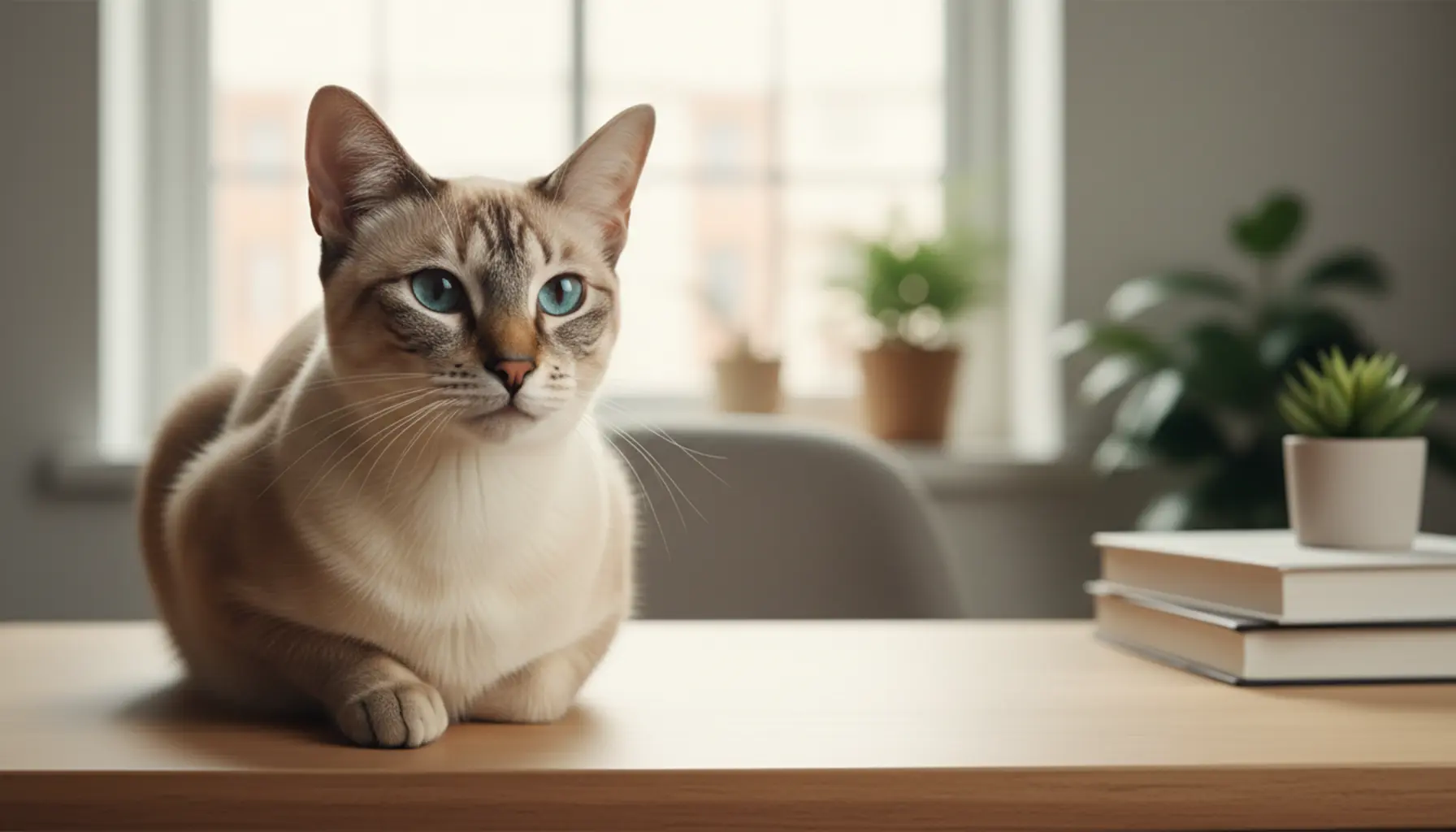
The Tonkinese temperament is ideal for a lively home: with children, other cats, or even dogs, provided they are well-trained and friendly. This is a basically gentle, tolerant breed, eager to interact, fond of shared play and chases around the apartment. In relations with children, the Tonkinese usually shows much patience, but as with all animals, it is necessary to teach kids to handle the cat gently and respect its boundaries. Among other animals, the Tonkinese rarely dominates; it is more inclined towards play and partnership, though it may display slight jealousy if the owner gives other pets too much attention. Compared with many typically “couch potato” breeds, the Tonkinese remains active throughout life—even as an adult or senior, it readily hunts for feather toys, jumps on scratching posts, and explores new hiding places. This vitality goes hand in hand with a need for closeness: after intense play, the Tonkinese curls up on a lap or beside the owner’s pillow, purring loudly and demanding petting. This is not a cat that likes to be ignored—a lack of attention may result in persistent meowing, sitting on the keyboard, book, or documents when the owner tries to work. The Tonkinese thrives best in a home where someone is present most of the day or where there’s more than one cat, which helps manage its energy and reduce feelings of loneliness. Thanks to its high intelligence and socialness, the Tonkinese is often described as a “dog-like cat”—it comes when called, learns to walk on a harness, and some individuals happily accompany the owner on short walks in safe areas. At the same time, it retains typical feline independence and a need to control its environment: it likes having high vantage points, scratching posts, and hideouts to retreat to if overwhelmed by too much stimulation. For potential guardians, this means the Tonkinese is not a “decoration” in the home, but an active, emotional, and demanding partner—it needs a close relationship, daily interaction, shared play, and a stable, calm environment where its sensitive, social character can fully blossom.
Care and Health of the Tonkinese Cat
Despite its exotic appearance, the Tonkinese cat is considered a relatively easy breed for daily care, but its lively character and emotional sensitivity require consistency and attention from the owner. The Tonkinese’s short, silky coat lacks undercoat, so it doesn’t mat and doesn’t require complex grooming. Weekly thorough brushing with a soft natural bristle brush or a rubber grooming glove is enough to remove dead hair, stimulate skin circulation, and give the coat shine. During heavy shedding periods (spring, fall), brushing more often helps reduce the amount of hair swallowed during self-grooming. Because of the delicate hair structure, avoid harsh metal combs or strongly perfumed products that may irritate the skin. Bathing is usually unnecessary unless the cat is visibly dirty or requires therapeutic bathing prescribed by a vet; in such cases, use only cat-safe, mild shampoos. Ear and eye care is very important since Tonkinese, as a breed with a more oriental head type, may accumulate discharge in the ears and eye corners. Once a week, carefully check the ears and, if needed, wipe them with a cotton pad moistened with a cat ear cleaner, avoiding sticking anything deep into the ear canal. Eyes should be gently wiped with a damp, soft cloth or gauze—one for each corner, to avoid spreading any infection. Dental care is equally vital: Tonkinese, like other breeds, may be prone to tartar buildup, so it’s advisable to accustom kittens to gentle brushing with a veterinary toothpaste and schedule regular mouth checks. Tonkinese claws grow quickly, and as this is a very active cat, provide solid scratching posts in several places at home, while checking nail length every 2–4 weeks and trimming gently with a special cat clipper if needed.
Maintaining the Tonkinese in good health relies on several pillars: proper feeding, veterinary prophylaxis, attention to mental well-being, and providing a safe living environment. Due to their high activity level and energetic temperament, cats of this breed require food with a properly balanced composition, rich in high-quality animal protein and fats, with limited grains and simple carbohydrates. A diet based on high-meat wet food works well, supporting urinary tract health and proper hydration, with premium dry food as a supplement or reward, not a mainstay. Tonkinese cats tend to eat eagerly and can easily gain weight if not given enough exercise, so portion control, weight monitoring, and plenty of play—wand hunting, obstacle courses, “food puzzle” toys combining mental work with a treat—are essential. Health-wise, the breed is generally robust, but due to close relation to Siamese and Burmese, some breeding lines may be predisposed to inherited conditions such as congenital heart defects (e.g., hypertrophic cardiomyopathy), dental and gum disease, respiratory issues, or a tendency towards kidney or liver amyloidosis. Thus, choosing a responsible breeder who conducts genetic testing and regular health checks is crucial, as is maintaining regular vet care after adopting a cat. Tonkinese should be on a vaccination schedule (against panleukopenia, feline cold, and if necessary, rabies and chlamydia), regular deworming depending on lifestyle (outdoor, balcony, or indoor only), as well as anti-tick and anti-flea prophylaxis. Annual checkups are recommended, and for older cats (over 7–8 years), also regular blood and urine tests for early detection of chronic diseases. As Tonkinese are extremely sociable and bonded to their owner, mental health cannot be neglected—long-term loneliness and boredom can lead to destructive behaviors, excessive vocalization, or behavioral problems such as spraying or compulsive fur licking. Providing a stable routine, a human (or another animal) presence, plenty of hideouts, shelves, tall scratching posts, and regularly rotated toys will support their well-being and strengthen immunity, which for an emotionally sensitive breed like the Tonkinese directly impacts their overall health and longevity.
Price and Maintenance Costs of the Tonkinese Cat
The Tonkinese cat remains a relatively rare breed, directly affecting its price and availability in professional catteries. In Poland, the price for a kitten from a legal, registered cattery (e.g., FIFe, WCF, or TICA) typically ranges from about 3500 to 6000 PLN, with exceptional show specimens or those from prestigious lines costing even more. The final price is influenced by the cattery’s reputation, show achievements of the parents, rarity of the coat color (some “mink” shades are more highly valued), and whether the cat is sold as a “pet” (with mandatory spay/neuter) or for breeding. Kittens sold solely as companions are often marginally cheaper, but their price still takes into account the high costs of responsible breeding: genetic testing, health care, quality nutrition, and in-home socialization. It is best to avoid advertisements offering Tonkinese kittens for “bargain” prices, without pedigree or with unclear origin—not only does this risk supporting unlawful breeders, but such “cheap” purchases often result in high expenses for healthcare or correcting behavioral problems. Registration with a reputable feline club, a transparent sales contract, the opportunity to see the mother and the conditions in which the kittens are raised, as well as full vet documentation (health booklet, vaccinations, deworming, microchip) are basics that every responsible breeder should provide. Purchase price is only the beginning—the real financial picture comes from estimating both regular and one-time costs associated with preparing a Tonkinese-friendly home. Before welcoming a kitten, prepare a “starter” list: litter box (often two, especially in larger apartments), quality cat litter, bowls (preferably ceramic or steel, easy to clean), a scratching post or cat tree, carrier for vet visits, bed or hammock, and a set of toys (balls, wands, interactive logic toys). A complete starter kit is typically around 500–1500 PLN, with a sturdy, tall cat tree and a quality, safe carrier being the bigger items. Note that Tonkinese cats are active and playful, so investing in a stable scratching post, wall shelves, or tunnels to allow exploration can effectively reduce home damage (to furniture, curtains) and thereby indirectly lower future expenses. If you plan to secure a balcony or windows with netting, factor these costs in early: depending on area and type, this can range from about 300–1500 PLN or more, but significantly increases the safety of an energetic Tonkinese eager to watch the world from up high. Another consideration is possible behavioral consultations—not standard, but owners of particularly active or emotionally sensitive cats may seek these out, expecting to pay around 150–300 PLN per session.
Ongoing monthly expenses for a Tonkinese cat depend mainly on diet, litter quality, vet care frequency, and individual needs. Tonkinese, being lively and well-muscled, generally need a high-meat diet: premium quality wet and/or dry food costs between 150–300 PLN per month per cat, depending on brand, body weight, and activity level. For specialist veterinary diets (e.g., for allergies, food sensitivities, or kidney disease), costs may rise to 300–500 PLN monthly, so discuss diet choices with your vet. Add to this cat litter—a quality clumping variety (bentonite, corn, wood, or silica)—is around 40–80 PLN per month for one cat and regular box cleaning. Vet costs have both regular and occasional components: annual vaccinations, checkups, possible deworming or flea/tick prevention usually total about 200–400 PLN per year, but this excludes emergencies from illness or accidents, which can far exceed this amount. The Tonkinese is generally a healthy breed, but—as with other breeds descending from Siamese and Burmese—may be predisposed to certain genetic issues (dental disease, cardiomyopathies, kidney problems), so responsible owners must allow for rare but sometimes significant expenditures on diagnostics (ultrasounds, x-rays, blood tests, genetic tests). For this reason, more owners are opting for pet health insurance, which—depending on coverage—costs about 400 to even 1000 PLN annually but can greatly lower the expense of unexpected procedures and hospitalization. Less obvious but real costs also include spending on toys, replacement scratching posts (especially for frequent “scratchers” like many Tonkinese), and possible pet hotel stays during vacation (about 40–80 PLN per day) or a pet sitter visit at home. As very social cats, Tonkinese do not tolerate long-term solitude well, so owners may need to arrange paid care during absences. When planning your budget, assume the average monthly cost for a healthy Tonkinese will be about 250–500 PLN, excluding one-time investments and emergencies; realistic estimates allow informed decisions on welcoming this joyful, but attention-demanding breed into your home.
Is the Tonkinese Cat Right for You?
The Tonkinese cat is not a “decorative couch ornament” who sleeps most of the day in seclusion—it is a lively, very social, and intelligent companion who needs the real presence of people. If you spend a lot of time outside the home, often travel for work, or enjoy spontaneous trips without arranging animal care in advance, the Tonkinese may not be the best choice. This breed does not cope well with loneliness, which can result in excessive meowing, destructive boredom-induced behavior, or apathy—and in extreme cases, separation anxiety. On the other hand, people who work from home, have flexible schedules, or simply like spending evenings with an animal on their lap will find the Tonkinese a particularly satisfying companion: it participates in daily activities, “helps” on the computer, follows household members, and often demands to be at the center of attention. Character-wise, many Tonkinese resemble dogs—they like to follow their owner from room to room, greet guests with interest, and can learn to retrieve toys or come when called. Those who prefer very independent, “invisible” cats might be surprised by how intensive and close the relationship with a Tonkinese is; they love to sleep in the bed, sit on your shoulder, or demand petting at the least expected times. Housemates’ attitude to feline vocalization also matters: although the Tonkinese is usually not as loud as the classic Siamese, it enjoys “talking”—commenting on returns home, demanding food, or calling the owner when it needs something. If you value peace and minimal interaction, this expressiveness can be stressful, yet for those who like a communicative pet, it is one of the breed’s greatest advantages. Consider also the Tonkinese’s physical and intellectual activity: they need daily play with a human, high shelves, scratching posts, logic toys, and hideouts. In a household where no one has time for joint play, the Tonkinese will be frustrated, which may translate into unwanted behavior (pulling items off shelves, climbing curtains, or bothering calmer pets). For families with children who know how to handle cats delicately and respect their boundaries, the breed works very well: eager to play with a wand toy, curious, and rarely shy with loud, energetic family members.
Before deciding, analyze your financial and organizational possibilities, because although the Tonkinese is not among the most demanding breeds in health, it combines potential predispositions of both Siamese and Burmese cats. This means regular check-ups, dental care, blood tests in middle and old age, and constant health monitoring, generating cyclical costs. If you are ready to invest in high-quality food, veterinary prevention, and possible specialist diagnostics, your Tonkinese will reward you with good health and longevity, often living 15–18 years. This, however, requires long-term commitment—it is not a “project for a few years,” but a responsibility for many years. People living in small apartments can also share space happily with a Tonkinese, provided they offer vertical space (shelves, high scratching posts), safely accessible windows for watching the world, and daily interaction. More problematic is a house where balcony doors or windows are left open without protection—Tonkinese are curious, active, and agile, making it easy for them to escape outside, posing a risk of accidents or disappearance; so mesh protection becomes a must. For those with other cats or dogs at home, the Tonkinese will usually be a good choice, provided proper, gradual introduction; thanks to its social nature, it can form strong bonds with people and other pets. Moreover, in households with a second equally active cat, the Tonkinese has a better chance of meeting its social needs while the owner is away. This breed thrives in homes of creative people open to building relationships, appreciating intelligent, interactive pets, keen to learn new games and tricks, and willing to adjust some of their daily routine to meet their pet’s needs. If you see a cat mainly as an independent animal who will “take care of itself,” the Tonkinese may prove too emotionally demanding, but if you seek a conscious, nearly partnership relationship with an animal of exotic appearance, energetic character, and high sensitivity, this breed profile will be a great match for your expectations.
Summary
The Tonkinese cat is an ideal choice for cat lovers looking for a friendly, energetic, and exotic companion. The breed’s unique look and character make them favorites among many families. Tonkinese cat care is relatively straightforward, which is attractive for people with a dynamic lifestyle. Understanding their unique features and needs can help potential owners ensure a healthy and happy life for these wonderful pets. Deciding on a Tonkinese cat is an investment in a companion that will undoubtedly bring much joy into your home.

