
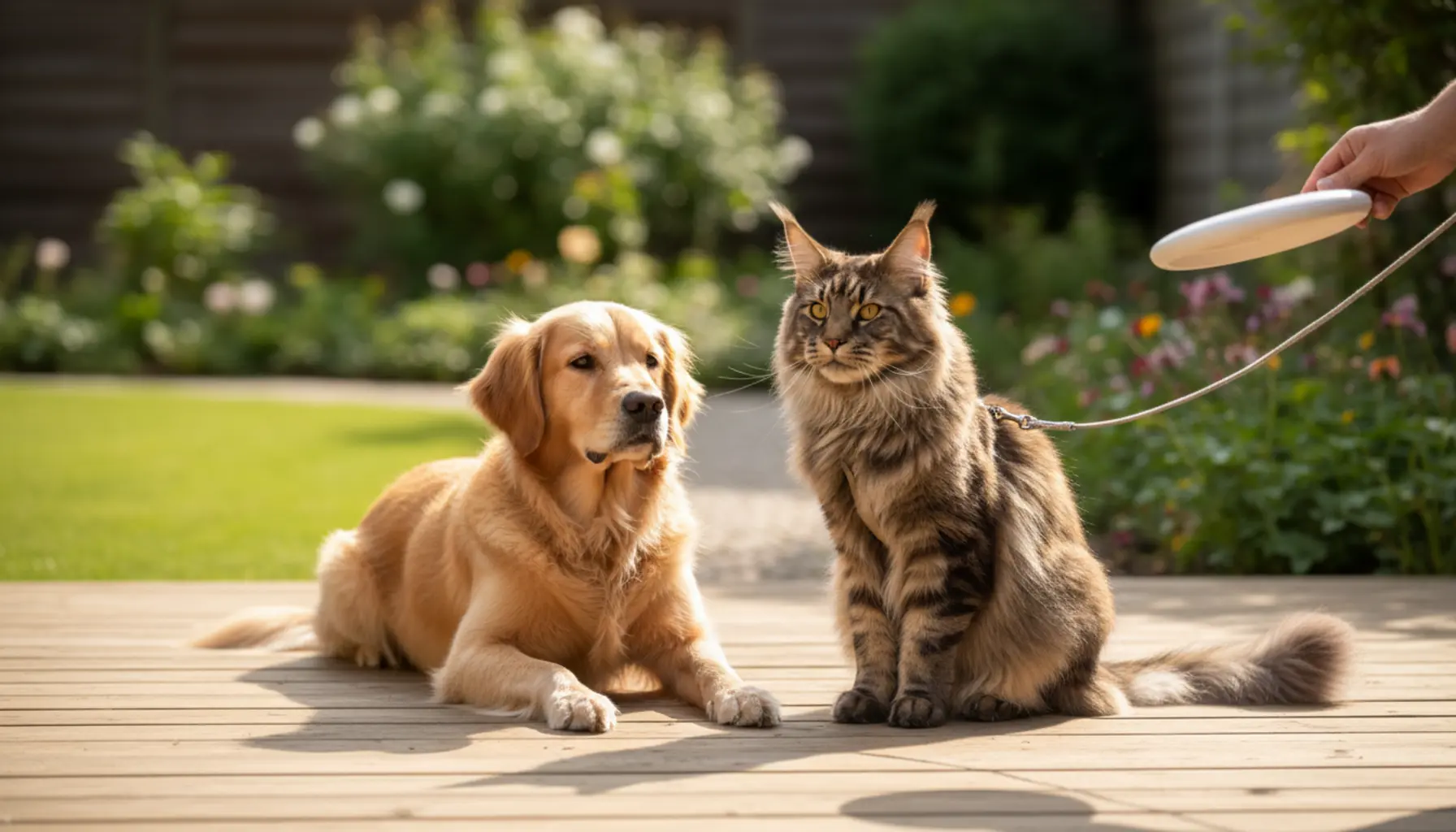
Maine Coon is a unique cat breed, known for its balanced character and impressive appearance. In the article below you will find everything worth knowing about this breed: description of character, grooming, health and prices.
Table of contents
- Maine Coon – appearance and origin
- Character and temperament of the Maine Coon
- Is the Maine Coon a cat for families and children?
- Grooming the coat and health of the Maine Coon
- Price of the Maine Coon – how much does a cat of this breed cost?
- Maine Coon and other pets in the home
Maine Coon – appearance and origin
Maine Coon is one of the most recognizable cat breeds in the world, and its looks evoke associations with a small lynx or a wild forest cat. It is a true “giant” among domestic cats – adult males can weigh even 8–10 kg, while females usually weigh 5–7 kg, with a strong, elongated and athletic build. Characteristic features include a long, rectangular body, deep chest and strong, well-muscled legs ending in large, round paws with dense fur between the toes that act like natural “snowshoes”. The Maine Coon’s head has a wedge shape with a well-defined chin, a slightly concave profile and widely set almond-shaped eyes – their gaze is often described as penetrating but gentle. The ears are large, set high and wide at the base, often finished with tufts of fur, the so-called “lynx tips”, which together with the ruff around the neck give the cat a majestic, “lion-like” appearance. The Maine Coon’s coat is semi-long and double-layered: the undercoat is soft and fine, while the guard hair is moisture-resistant, silky, yet dense and heavier. The tail is a real ornament – very long, fluffy, resembling a plume; the cat often wraps it around its body while sleeping, which not only looks impressive but also serves as insulation against the cold. This breed appears in virtually all color varieties (except for the colorpoint known from Siamese cats) – popular ones include classic tabby patterns, tortoiseshell, black, blue, silver or white, often combined with white markings on the paws, chest and muzzle. The coloration can affect the overall visual impression – darker individuals appear even more massive, while silver and light ones have a somewhat “fairy-tale” look. Importantly, despite impressive size and solid build, a Maine Coon should be proportionate and agile; excessive obesity is undesirable both for health and from the breed standard perspective. Breed standards (e.g. FIFe, TICA, CFA) emphasize a “wild”, natural look combined with harmony and soft lines, which distinguishes the Maine Coon from other large breeds, such as the Norwegian Forest Cat, which has a slightly different head and coat structure.
The origin of the Maine Coon is shrouded in legends, but most felinologists agree that it is a natural breed originating from the state of Maine in the northeastern USA, where it adapted to a harsh climate over centuries. One of the most famous, though entirely untrue, legends claims the breed resulted from crossing domestic cats with raccoons – hence the name “Maine Coon” and the striped, fluffy tail. Biologically this is impossible, but the resemblance of the tail and the love of water in many individuals have cemented this story in the folklore of breed enthusiasts. A more plausible theory assumes that the ancestors of the Maine Coons were European cats brought by sailors and settlers – including long-haired cats from England and Scandinavia, which crossed with local farm cats. In the harsh conditions of New England, natural selection favored individuals strong, cold-resistant, with dense, water-resistant coats, large paws and efficient metabolisms. Over time, from these “working” barn cats emerged the type we know today as the Maine Coon – an excellent hunter, pantry guardian and an animal that coped easily in snow and frost. Historical mentions of large, fluffy cats from Maine date back to the 19th century; they were shown at some of the earliest cat shows in the USA, and one of the most famous queens – “Cosey” – won a prestigious show at Madison Square Garden in 1895. Later, with the influx of fashionable Persian and Siamese breeds, the Maine Coon temporarily lost popularity and was even threatened with extinction, but in the 1960s and 1970s a group of enthusiasts launched breeding programs that saved the breed and led to its official recognition by the major federations. The natural origin of the Maine Coon is still reflected in its appearance: ear tufts protecting from snow, longer fur on the back, a ruff warming the neck, shorter hair on the shoulders facilitating movement through undergrowth, and a muscular body adapted to hunt rodents. Thanks to this, the Maine Coon is not only an impressive show cat, but also a living testament to how environmental conditions and the history of settlement in North America shaped one of the most fascinating breeds in the world.
Character and temperament of the Maine Coon
The Maine Coon is often called a “gentle giant” and this is no exaggeration – it is one of the most balanced, social and friendly domestic cat breeds. Despite their impressive size, most representatives of this breed have an extremely gentle disposition, are delicate in contact with people and animals, and adapt well to family life. Maine Coons are known for high intelligence and curiosity – they eagerly observe what is happening in the home, like to participate in their owner’s daily activities, often “helping” with computer work, cleaning or cooking. They are not typical “lap cats”, although much depends on the personality of the individual; they usually prefer to lie next to a person rather than be constantly carried, yet they highly value human closeness and often initiate contact themselves. These are cats that bond strongly with their caregiver, loyal and relationship-oriented – they often follow their person around the apartment, and their behavior is sometimes compared to that of a dog. Unlike many breeds with strong temperaments, the Maine Coon is rarely aggressive without a clear reason; it will much more often withdraw from an uncomfortable situation than respond with claws. However, these cats are energetic, especially when young, so it is worth providing them with a proper amount of play, scratchers and climbing space – lack of activity can lead to boredom and unwanted behaviors. High intelligence facilitates learning commands or simple tricks, such as fetching a ball, coming when called or using interactive puzzle toys. Maine Coons generally accept changes in the home, new furniture or moves, especially if they happen gradually and routine is maintained; they are more resilient to stress than more sensitive breeds, but still need a quiet corner to retreat to when feeling overwhelmed by noise or excessive stimuli.
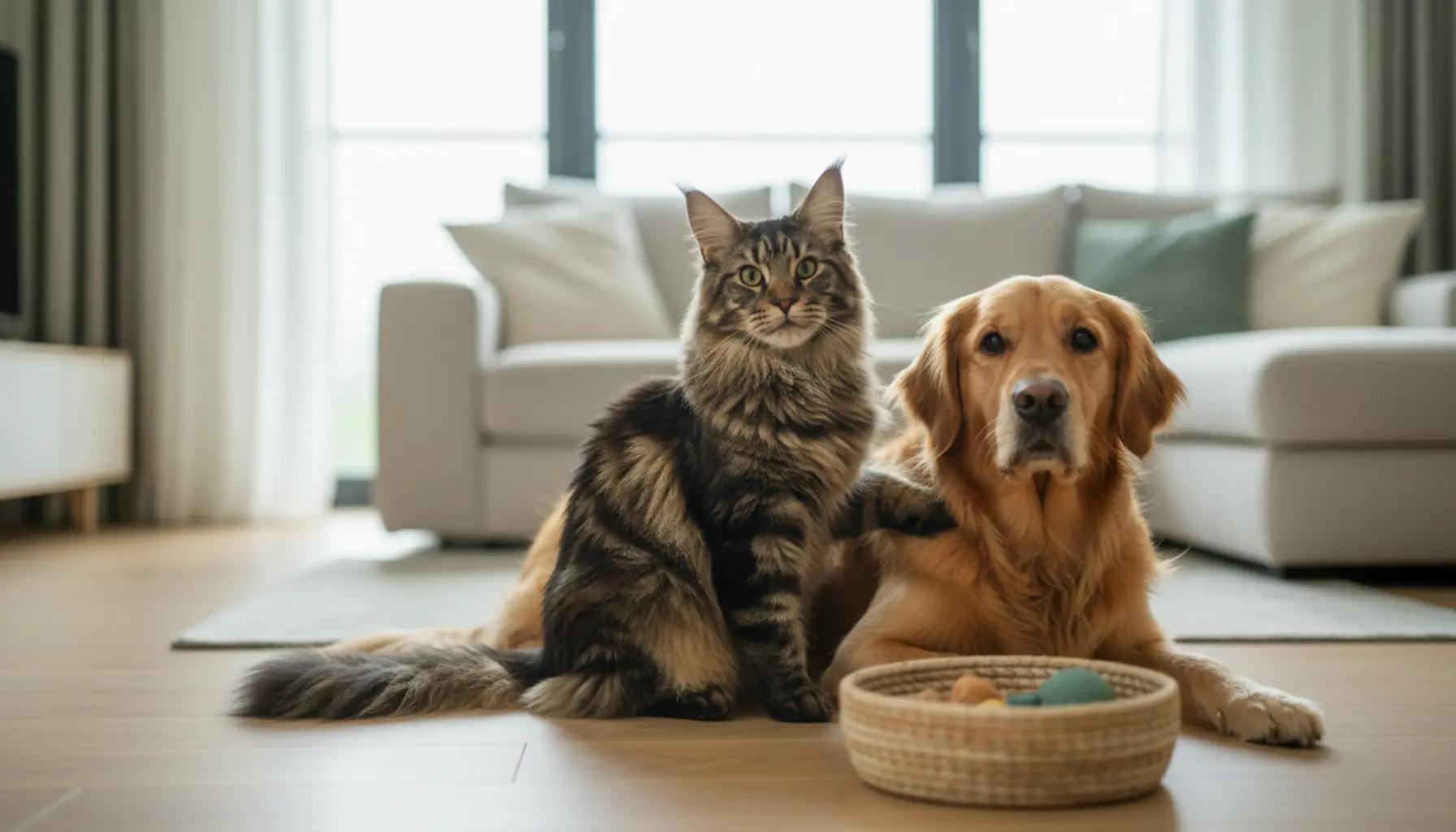
The Maine Coon’s character makes it a breed especially often recommended for families with children and for people who value a sociable but non-intrusive temperament. Most Maine Coons are patient with children, tolerate petting well, and even accept clumsy attempts at hugging – provided children are taught from the start how to handle the animal gently. Thanks to their stable psyche, Maine Coons usually do not panic at sudden movements or loud sounds, which helps build positive relationships in families with lively children. In interactions with other animals this breed typically proves very tolerant – it gets along well with both other cats and dogs, especially if socialization is done properly and gradually. It is often observed that a Maine Coon becomes a “mediator” in a multi-cat household, avoiding conflicts and easing tensions. A characteristic feature of this breed is moderate vocalization: they are not as loud as some oriental cats, but neither are they completely silent – instead of typical meowing they often produce soft trills, chirps and “chatter” to comment on what they see outside the window or to respond to their owner’s presence. Their temperament combines a need for activity with a love of rest; an adult Maine Coon enjoys playing hunting games with a wand or laser, but equally enjoys spending long hours observing the surroundings from a high scratching post. An important element of their psychology is the need for constant social contact – these are not cats that like to spend whole days alone; prolonged solitude can lead to frustration, excessive vocalization or destructive behaviors. Therefore this breed feels best in homes where someone is present for most of the day, or in the company of another friendly cat. By nature Maine Coons are brave but not reckless – they usually examine new objects and situations cautiously before relaxing. A good breeder pays special attention to balanced temperament of kittens, as this trait is largely hereditary; proper socialization in the first weeks of life further strengthens their friendly, stable and “family-oriented” disposition.
Is the Maine Coon a cat for families and children?
The Maine Coon is one of the breeds most often recommended for families with children – not only because of its gentle character, but also due to remarkable patience and adaptability in everyday life. This “gentle giant” usually tolerates a busy family home very well, where there is a lot going on: from walking children, the sounds of toys, to frequent visits from guests. Its large size makes it less fragile than small, delicate breeds, and at the same time it is not naturally dominant or aggressive. Most Maine Coons respond to clumsy petting or too tight a hug from a child by trying to withdraw and walk away, rather than attacking. It is very important, however, to teach children from the start how to properly handle a cat: not to pull the tail or ears, not to squeeze, and not to wake the cat forcefully. Even the most patient cat has its limits, and respect for the animal is a key element of a safe child–cat relationship. Due to their curiosity and intelligence, Maine Coons eagerly engage in play with children – they enjoy interactive wands, balls, obstacle courses or joint “hunts” for a toy. Many individuals can fetch, respond to their name and come when called, and even learn simple commands, making them in a child’s eyes almost a “dog-like cat” with whom one can form a real bond and shared activities. It is important for parents to supervise these games – on one hand to prevent accidental harm to the cat, on the other to avoid scratches resulting from overly rough play. A good rule is to establish that the cat always has the possibility to go to its quiet place, and the child must never disturb it there.
In the context of family life it also matters that the Maine Coon is not typically a “one-person” cat – it usually bonds with the whole family, moving between household members and accompanying them in various rooms. They like to be at the center of events, often lying near the table, sofa or desk, rather than hiding away in solitude. This gives children numerous opportunities for natural, spontaneous contact with the cat – petting, talking, and shared rest. This contact, if handled wisely and calmly, can be very educational: it teaches empathy, responsibility and reading animal body language. However, it should be remembered that the Maine Coon, despite its sociable nature, is not a plush toy to be carried endlessly – its large mass means being lifted by a small child is not only uncomfortable for the cat but also dangerous for the child. Living with a Maine Coon will be particularly successful if parents introduce clear rules from the start: children may pet and play with the cat under adult supervision, whereas lifting such a large cat should be left to adults or older, stronger children who know the proper hold. A great advantage of the breed is a fairly predictable, stable temperament – responsible breeders select animals not only for appearance but also for character, eliminating fearful or excessively aggressive individuals. Therefore, buying a kitten from a reputable breeder gives a better chance of a balanced, friendly companion. It is also worth paying attention to socialization – a kitten that from an early age has had contact with children, various sounds and household bustle will adapt much faster and more gently to an active family home. From a practical point of view, families should also consider several aspects: a Maine Coon needs adequate physical exercise and mental stimulation, so it is good to have scratchers, shelves, tunnels and toys to help expend energy. Although cats of this breed usually patiently tolerate petting and hugging, lack of play opportunities, excessive boredom or being left alone for too long may cause frustration. When planning life with children, health and hygiene aspects must also be considered: regular brushing reduces the amount of hair in the home and the risk of hairballs, and children’s allergies often depend not so much on the breed as on individual sensitivity – before deciding to buy it is worth allowing a child to interact with an adult Maine Coon and observe the reaction. If the family is ready to consistently introduce rules, provide daily care, play and basic grooming, the Maine Coon can become an exceptionally successful choice – a cheerful, patient and intelligent companion for children’s upbringing, naturally woven into the rhythm of family life.
Grooming the coat and health of the Maine Coon
The Maine Coon has a semi-long, dense, double coat that protects it well from the cold but requires systematic grooming by the caregiver. The most important rule is regular brushing – preferably 2–3 times a week, and during shedding seasons (spring and autumn) even daily. Metal combs with different tooth spacing, slicker brushes and a furminator or undercoat rake work well for grooming, used with care so as not to irritate the skin. During brushing, pay special attention to areas most prone to matting: the armpits, groin, behind the ears, as well as the belly and under the tail. These cats usually tolerate grooming well if accustomed to it from kittenhood – therefore it is worth combining brushing with rewards and a calm voice from the start to build positive associations. If grooming is neglected, painful mats may form that in extreme cases require removal by a veterinarian, often under sedation. Contrary to appearances, a semi-long coat does not mean frequent bathing is necessary – a healthy cat that is groomed regularly copes well with keeping itself clean. Bathing can be considered only in case of heavy soiling, dermatological problems (after consultation with a vet) or in preparation for a show, always using gentle cat shampoos. An important part of grooming is also cleaning the ears (especially for cats with heavily furred pinnae, where wax and dirt tend to accumulate), clipping the claws every 3–4 weeks and regular oral hygiene – from offering dental treats to gradually introducing toothbrushing with cat-specific toothpaste. Due to the size and massive build of the Maine Coon, it is worth providing a large, stable litter box with appropriately deep litter and sturdy scratchers and trees that will support the weight of an adult cat and allow it to naturally wear down claws and stretch muscles.
The health of the Maine Coon largely depends on responsible breeding, veterinary prevention and proper diet and living conditions. This breed has predispositions to several hereditary diseases, so it is crucial that the parents of kittens have undergone genetic testing and regular imaging examinations. The most common problem is hypertrophic cardiomyopathy (HCM), a disease of the heart muscle that can progress asymptomatically for a long time and lead to heart failure and sudden collapses. Responsible breeders perform genetic tests for HCM mutations and regularly repeat echocardiographic examinations in breeding cats. Another genetically based condition is hip dysplasia, which in a heavy-bodied breed can cause pain, stiffness and reluctance to jump. Maine Coons are also at risk of hereditary spinal muscular atrophy (SMA) and polycystic kidney disease (PKD) – therefore before buying a kitten it is worth asking the breeder to provide the parents’ test results and the health history of the lines. In addition to breed-specific diseases, Maine Coons face common feline issues such as gastrointestinal diseases. Due to their large appetite and rapid growth during youth, it is essential to choose a high-meat, well-balanced diet, ideally consulted with a veterinarian or animal nutritionist. Too calorie-rich a diet and too many treats promote overweight, which strains joints and the heart, so portion control, regular weighing and daily physical activity are integral preventive measures. Annual check-ups with clinical examination, at least basic blood and urine tests, and regular vaccinations and deworming according to the cat’s lifestyle (indoor, outdoor or harness-walked) should be standard. It is advisable to monitor the condition of the coat, skin, eyes and ears – sudden dulling of the coat, excessive shedding, behavior changes, loss of appetite or shortness of breath are signs that must not be ignored. Adding omega-3 and omega-6 fatty acids to the diet, ensuring an adequate amount of fresh water (many Maine Coons like cat fountains) and a well-planned living environment – with opportunities for climbing, hunting-style play and resting in quiet hiding places – affect not only the coat condition but also overall physical condition and psychological welfare, thus contributing to a long, healthy life of this “gentle giant”.
Price of the Maine Coon – how much does a cat of this breed cost?
The price of a Maine Coon can surprise those interested in this breed for the first time, because the range of amounts is really wide. In professional, registered catteries in Poland, a kitten of this breed typically costs approximately from around 3500–4000 PLN up to even 8000–9000 PLN and more, although the upper limit is fluid in practice. The price is primarily influenced by the breeder’s reputation and experience, the quality of the pedigree (show lines, champions among ancestors), and the intended purpose of the cat – a kitten “for the lap” (as a pet, with compulsory neutering or a neutering agreement) costs differently than an individual intended for further breeding or an intensive show career. A kitten with promising exterior from titled parents regularly receiving high marks at shows may cost significantly more than an animal with minor faults disqualifying it from breeding but irrelevant for life as a pet. It should also be remembered that a cat from a legal cattery is not a “luxury item” but the result of years of breeding work: line selection, genetic testing, health checks, proper nutrition and socialization. Each of these elements generates real costs for the breeder, which directly translate into the price of a kitten. Relatively cheap offers, significantly below market ranges, should be a warning signal – they often indicate a back-yard breeder, lack of parental tests, poor maintenance conditions and the risk of serious health and behavioral problems in the future.
When considering the price of a Maine Coon, it is worth including costs hidden “behind the scenes” of proper breeding. A responsible breeder keeps animals in home conditions, not cages, feeds them high-quality food, performs regular tests (including heart echocardiography for hypertrophic cardiomyopathy HCM, hip examinations for dysplasia, genetic tests for PKD, SMA), vaccinates, deworms, and in the case of kittens intended “for the lap” often neuters before handing them to a new home. There are also veterinary costs during births, possible cesarean sections, maintaining hygienic conditions, socializing the kittens with people, children, other cats and dogs, organizing shows and paying membership fees to feline clubs and registering litters with organizations such as FIFe, WCF or TICA. Each kitten should leave the cattery at least twice vaccinated, dewormed several times, microchipped, with a pedigree, a health book or passport and a starter kit – this is a standard that has its price and cannot be provided at “occasionally” low rates. A person considering buying a Maine Coon should also add indirect costs: high-quality food tailored to the needs of a large breed, sturdy scratchers and beds (cheaper models often cannot withstand the weight of an adult male), regular vet check-ups, pet insurance, and a budget for possible specialist tests typical for the breed. It is worth being aware that a cat “given away for free” or sold without pedigree as a “Maine Coon from a home breeder” is usually not a true representative of the breed – lack of documented origin means there is no guarantee regarding health, temperament or actual genetics of the animal. Investing in a kitten from a reliable breeder is not only a matter of prestige but above all greater safety and predictability regarding future treatment costs and the comfort of living together with this exceptional, large cat.
Maine Coon and other pets in the home
Thanks to its balanced character and high tolerance, the Maine Coon usually adapts very well to a home with other animals, but harmonious coexistence does not happen “by itself” – it requires a conscious approach, patience and knowledge of feline communication from the caregiver. Cats of this breed are generally less territorial for their size, less prone to conflicts and more likely to choose withdrawal than open confrontation. Their natural curiosity makes them eager to observe and “investigate” other animals, but a properly socialized Maine Coon does this calmly and in a controlled manner. Even at the stage of choosing a kitten, it is worth checking whether it comes from a cattery where it had contact with other cats, dogs and everyday household stimuli – well-socialized youngsters will much more easily accept future four-legged housemates. It is also important to understand individual differences: not every representative of the breed will be an enthusiast of company, and traumatic past experiences (e.g. in adopted cats) can complicate the bonding process. Maine Coons often tolerate the presence of other animals better than solitude, but this applies when they feel safe and have the possibility to withdraw – tall scratchers, wall shelves, beds in places inaccessible to a dog or active children serve as “buffer zones”. Such space is also crucial during the first introductions to new household members: lack of an escape route is one of the most common reasons a cat enters defense mode and reacts aggressively. The caregiver should also remember to control resources – separate food and water bowls, separate litter boxes (at least one per cat plus one extra) and the ability to use them without feeling threatened significantly reduce stress levels and the risk of territorial conflicts. If other animals already live in the home, especially older ones or those with a strong territorial instinct, it is good to consult the introduction plan with a behaviorist to consider the temperament of current pets and any previous interspecies issues.
The degree of compatibility of the Maine Coon with other species largely depends on how carefully the socialization and gradual introduction process is conducted; this applies to other cats as well as dogs or smaller pets. In relations with other cats, the Maine Coon usually adopts the role of a gentle, though sometimes dominant “older brother” – due to its size and physical strength it often surpasses companions, but its natural gentleness means conflicts usually boil down to mild pushing and hissing, especially if there are plenty of resources and hiding places in the home. In the first weeks after introducing a new cat, the gradual adaptation method is recommended: initial separation in a separate room, exchange of scents (shared blankets, swapping beds), then short controlled meetings under the caregiver’s supervision and gradually extending the time spent together. In the case of dogs, temperament matching is very important – a calm, stable dog that knows basic commands and does not have a strong chase drive most often becomes an attractive playmate for a Maine Coon. Introduce them in stages: first through a barrier (gate, carrier, slightly open door), then on a leash or with the dog in a harness for control. Never allow a dog to rush up to the cat suddenly or chase it around the apartment – even a confident Maine Coon will then start associating the dog’s presence with danger. With smaller animals – rodents, rabbits, birds or reptiles – remember that the Maine Coon, despite its gentleness towards people and larger animals, remains a predator and the hunting instinct in this breed is relatively well preserved. This means physically separating and securing cages, terrariums or aviaries: they must be positioned so the cat cannot knock them over, open them or slip a paw inside. Many Maine Coons will be satisfied watching movement in a cage as a “cat TV”, but curiosity should not be mistaken for acceptance and never leave smaller animals unsupervised in the same room. In a multi-species household it is worth establishing a consistent daily rhythm – regular feeding, repeatable times for individual and shared play – which helps all animals predict events and thus feel safer; special engaging toys (wands, obstacle courses, food puzzles) allow you to expend the Maine Coon’s energy in a controlled way, reducing the risk that it will “entertain itself” at the expense of more sensitive roommates. With consistent work by the caregiver, respect for each animal’s limits and proper space organization, the Maine Coon has the potential to become a calm, predictable and caring member of a multi-species family.
Summary
The Maine Coon is a gentle, intelligent and very sociable cat, often called a “gentle giant”. It is highly recommended for families with children, people who value animal company and anyone looking for a feline friend with an exceptionally friendly disposition. Proper coat care, attention to health and providing physical activity ensure that the Maine Coon remains a joyful companion for a long time. Although the purchase price of this breed can be fairly high, its extraordinary character and charm are worth the investment. The Maine Coon adapts well to life with children and other household pets alike.

