
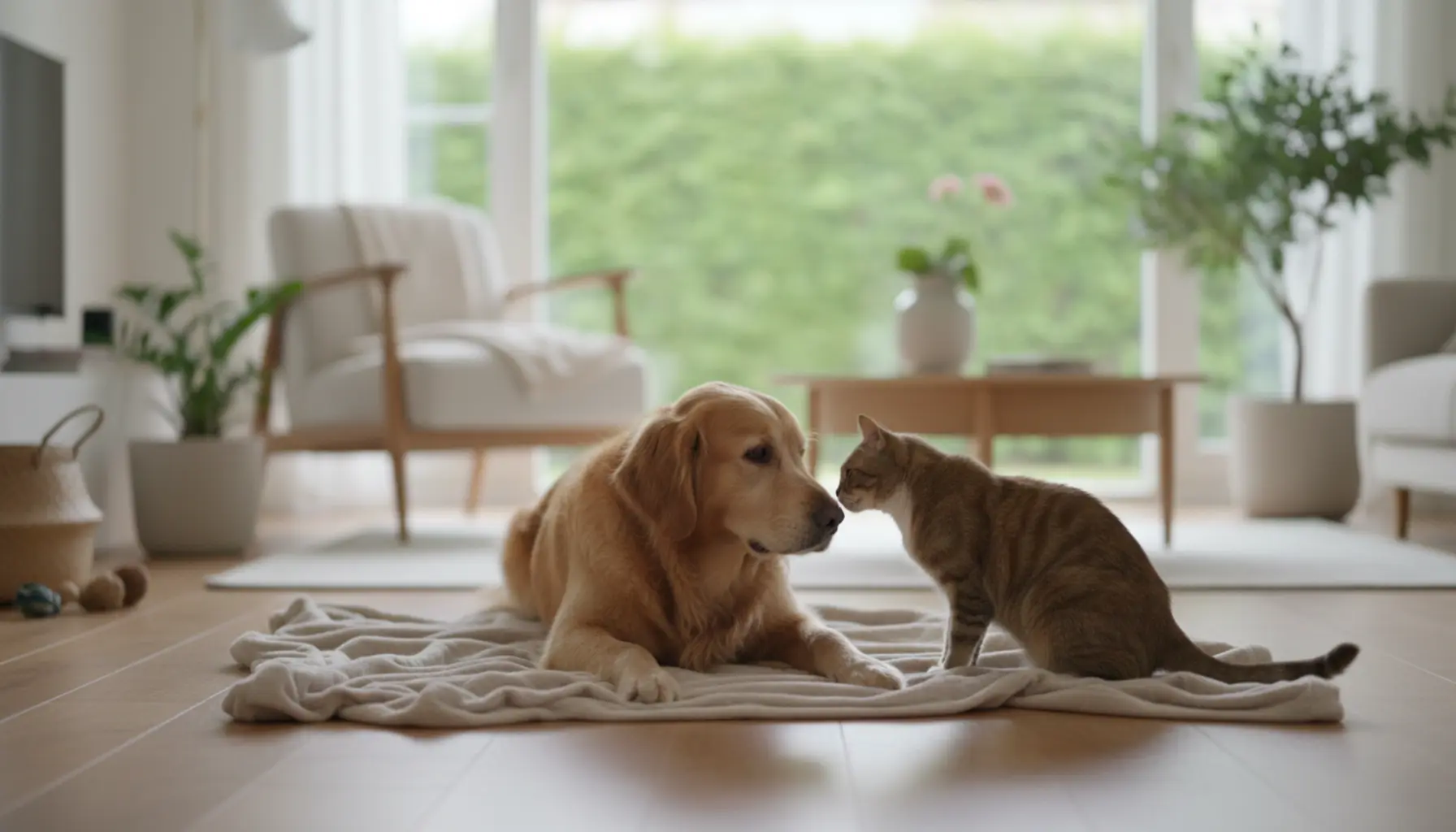
Integrating a cat with a dog requires a plan, patience, and an understanding of the unique needs of both animals. Rushing the process or acting without preparation often leads to fear and behavioral problems. Effective integration is based on gradual changes at home and conscious observation of the situation.
Table of Contents
- Preparing the Space: Safe Zones for Pets
- Gradual Exposure: Swapping Scents and Sounds
- First Meeting: How to Conduct it Effectively
- Behavior Monitoring: Avoid Unforeseen Situations
- Positive Reinforcement: The Key to Lasting Friendship
- Common Challenges and Their Solutions
Preparing the Space: Safe Zones for Pets
Before the first cat-dog meeting, it is crucial to prepare your home so each animal has a clearly defined, safe space. Both the cat and dog should have the opportunity to retreat, hide, and observe from a distance without feeling like their territory is being invaded. In practice, this means creating separate “comfort zones” — ideally in different rooms or at least on different levels (the floor for the dog, high-up places for the cat). For a cat, observation points are extremely important: wall shelves, a scratching post with a tall hut, windowsills, or special cat hammocks. These allow the cat to feel secure, as they can assess the situation from above, assured that the dog cannot reach them. Meanwhile, a dog needs a spot that isn’t associated with constant interruption — this can be an always-open crate (never as punishment), a bed in a quiet corner, a cushion by the wall, or a calming mat. These zones should be physically separated — you can use baby gates, doorway gates, panels, or even arrange furniture to naturally prevent animals from suddenly bumping into each other. Another pillar of preparing the space is separating key resources: food and water bowls, litter boxes, beds, toys, and scratching posts. The litter box should be in a place that’s hard for the dog to reach — ideally in a room with a cat-only latch, behind a gate, or in a niche protected from the dog. This not only avoids cat stress but also stops dogs from “snacking” on litter box contents, which is unpleasant for humans and unhygienic for pets. Feeding areas should not intersect: the cat can eat on an elevated surface (counter, dresser, special shelf), and the dog — in a consistent, calm spot on the floor. Keeping these locations stable builds a sense of predictability and reduces tension, as each pet knows where its resources are and does not need to compete for them. Also, avoid putting either animal in the “intruder” role in the first weeks — for instance, don’t move the resident’s bed to a cramped corner just to make way for the newcomer. It is better to add new zones and gradually encourage pets to adjust than to suddenly disrupt their established routines.
In the following steps, pay attention to the details that truly determine whether the space will feel safe and comfortable for both pets. Firstly — escape routes and “emergency” points: in every main room where they’ll be together, the cat should have the ability to quickly escape to height or behind an obstacle, and the dog — to turn and retreat to its bed without blocking each other’s path. Avoid narrow corridors where the pets would pass each other at close quarters; if that’s unavoidable, try to visually and functionally widen the space by moving furniture from the walls or creating two entrances to a room. Next — a neutral zone, where calm, monitored interactions will occur: a living room, larger common area, or hallway where you can comfortably sit with the dog on a leash while the cat has access to high places. It’s good practice to “decontaminate” this zone with scent before first meetings: wash blankets, lay out new neutral mats, clean the floor with gentle, unscented products. Since both species react strongly to smells, also rotate or move some elements so that neither animal feels the area “belongs” solely to them. An excellent solution is scent exchange even before an actual meeting — place a blanket with the other’s scent in each animal’s safety zone, allow them to sniff freely, and watch their reactions. If either animal gets stressed (hissing, growling, avoiding the spot), you can additionally use pheromone diffusers (cat or dog, as recommended by a behaviorist or vet) to reduce stress. Be sure to secure windows, balconies, and any potential “escapes” from the house — in stressful situations, a cat or dog may act impulsively, so window screens, balcony guards, and closed entrance doors are especially important. Remove potential hazards that could cause conflict or injury: exposed cables, small toys that could be swallowed, slippery rugs, sharp corners. Equip shared spaces with some chew and lick toys for the dog (kong, snuffle mats, lick mats) and interactive toys for the cat, but take care that each animal’s most valued items remain in their separate safety zones. Such a well-designed space helps gradually acclimate the pets to the other species’ presence while letting them withdraw to rest at any time — this greatly reduces aggression risk and cements positive experiences in the shared home.
Gradual Exposure: Swapping Scents and Sounds
Gradual exposure to scents and sounds is absolutely fundamental for safely introducing a cat to a dog. Before they ever see each other, they should “meet” through smell and hearing. For a cat, a dog is usually large, loud, and unpredictable, and for a dog, a cat’s intense scent can be highly exciting. The first step is a controlled scent exchange that lets both animals associate this new stimulus with something neutral or positive. Start with simple actions: swap the beds or blankets the animals sleep on, moving each between rooms every 1–2 days. If the cat sleeps on a scratching post or in a favorite basket, place a thin towel there for a few hours, then move it to the dog’s rest area — and vice versa. Watch the reactions: if the dog sniffs the material, wags its tail, but isn’t tense or growling, that’s a good sign. If you see lip licking, stiff posture, a fixed stare, or attempts to rip the material — these are signs of overexcitement or frustration and mean you should slow down the process. In cats, discomfort shows up as flattened ears, an agitated tail, hissing, or fleeing from the item with the dog’s scent. In this case, shorten exposure and pair it with something pleasant — such as giving treats only with the new smell present but at a greater distance. Another helpful move is lightly “transferring scent” with a soft cloth: rub the cat’s cheeks, neck, and tail base (scent gland areas), then use the same cloth to wipe spots where the dog hangs out — bed edges, door frames, carrier sides. Repeat the same with the dog (behind ears, by the mouth, flanks), and bring that scent into the cat’s zone. This gets both pets used to the other’s scent as part of the “home smell.” If you have carriers, another trick is to place them in separate rooms and swap them periodically: one day, the cat sleeps in the dog-scented carrier, the next, the dog investigates the carrier where the cat recently rested. Always back up this process with rewards — treats, calm voice, games at a safe distance — so the presence of the other species’ scent becomes associated with good things, not threat or stress. This way, when the real-life meeting happens, the new scents are already familiar, drastically reducing tension and the risk of sudden reactions.
In parallel with scent swapping, carry out controlled sound exposure, as it’s often noises — barking, dog running, meowing or cat hissing — that really excite the other pet. Do this very gently at first. If the pets are in separate rooms, open the door just a crack or use a pet gate, but without visual contact at first, so they only hear each other’s presence: breathing, footsteps, scratching posts, or food bowls. Whenever the dog notices a cat sound (e.g., listens but doesn’t dash to the door), immediately reward calmness with treats and praise in a soft, low voice — thus teaching the dog that ignoring the cat brings good things. With the cat, reward with treats or a teaser play session whenever the cat hears the dog but stays relaxed or only mildly curious. Using recordings is another good tool: record your dog’s barking, footsteps, or collar sounds, then play at a very low volume in the cat’s room, increasing incrementally only if the cat shows no distress. Do the same with cat sounds for the dog. This “listening training” helps both animals get comfortable with the new housemate’s sounds in a neutral context. If either pet is especially reactive (the dog barks with every sound behind the door, the cat hides instantly), introduce more routine: practice dog commands (“sit,” “stay,” “come”) when the dog hears the cat, or gradually lengthen the dog’s calm time. For the cat, calming rituals help — hunting play with a wand followed by a meal, with gentle dog sounds in the background. Where possible, conduct these early listening exposures when the pets are naturally calmer (after dog walks/meals or post-cat play/feeding). By combining scent and sound exchanges and consistently rewarding calm behavior, you build the foundation for later safe visual and direct contact, free of explosive reactions or excessive stress.
First Meeting: How to Conduct it Effectively
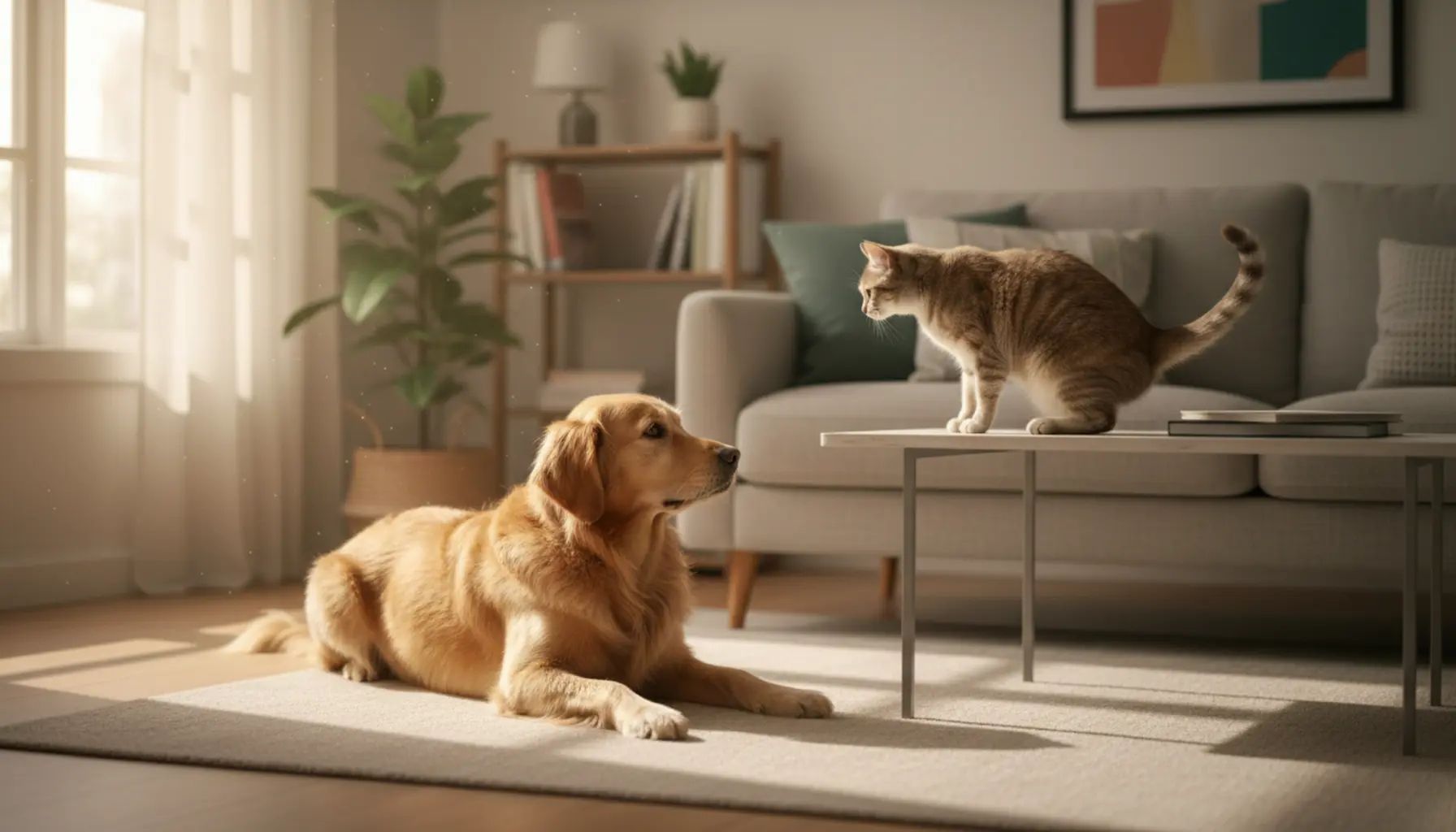
The first cat-dog meeting should be a well-planned, brief, and controlled event — not a spontaneous “let’s see what happens.” Pick a calm time of day with no rush or stress at home — human tension quickly transfers to your pets. Before opening the door, ensure your dog has exercised, so he has no pent-up energy, and that the cat has access to its safe heights and escape routes. The meeting should take place in a neutral area, not strongly “claimed” by either animal (e.g., living room, not the cat’s favorite bedroom). Make sure no food bowls, high-value dog toys, or litter box are in sight — this minimizes resource guarding risks. Keep the dog on a short but loose leash, ideally with a comfy harness for body control rather than a collar. For highly excitable, strong, or prey-driven dogs, consider a well-fitted muzzle for safety (not as punishment). The cat should be free to choose their distance but make sure all outside doors and windows are closed to prevent panic escapes. Bring the dog into the room first, let them settle in, then bring in the cat or let them enter on their own without forcing them from the carrier. A good practice is a first “visual” meeting from a distance: the cat can stay in an open carrier or high perch, the dog sits or lies under your control, and there’s enough space between them for both to observe without feeling trapped.
During the first contact, your composure and ability to read both animals’ body language are key. In dogs, look for tension, stiff tail held high, unblinking stares at the cat, leaning forward, impatient trembling, whining, pulling, or barking — these mean emotions are running high and more distance is needed. With cats, warning signs include ears pinned back, wide eyes, stiff or agitated tail, growling, hissing, arching, puffed-up fur, or sudden tail flicks. If you spot any of these, don’t try to “push through” — calmly move the dog away, lessen the interaction (e.g., increase the distance or partially obstruct the view with a curtain or gate), and give both pets time to calm down. Reward every calm, desirable response: if the dog glances at the cat then looks away or lies down on cue, give a treat and warm praise. If the cat observes the dog calmly or chooses a high retreat instead of aggression, reward with a snack, play session, or simply by giving them space. First sessions should be short — a few minutes, ending before either animal gets frustrated or overly excited. Several short interactions in one day, gradually reducing the distance, are better than forcing a single long session. Over time, progress from leashed, distant interactions to moments where the dog lies calmly while observing the cat move about — always under close supervision. When both pets appear relaxed — tails loose, bodies at ease, cat purring, dog yawning or shaking off — you can allow brief, freer interactions but still without pressure for touching, close sniffing, or sharing the same feeding/bed area. At any sign of tension, always step back rather than risk creating lasting negative associations, which are hard to undo.
Behavior Monitoring: Avoid Unforeseen Situations
Monitoring your cat and dog’s behavior after the first meeting is vital to prevent tension escalation and unplanned incidents. This requires not just your physical presence, but a conscious, attentive reading of signals from both animals. With dogs, watch for tense posture, freezing, low stiff tail movements, persistent staring at the cat, lip-licking, yawning at odd times, muted growling. With cats, tension signs include a violently twitching tail, stiff walk, flattened ears, widened pupils, rapid breathing, growling/hissing, sudden stop in play, or intense staring at the dog. Don’t ignore subtle discomfort — these often precede aggression. Observe the pets in different contexts: feeding time, passing in narrow spaces, shared relaxation, and during heightened emotions (doorbell, running children, loud outside noises). In such moments, dogs may easily “switch into pursuit mode,” while cats become defensive, hence limit intense stimuli at home in the first weeks and don’t leave pets unsupervised in high-excitement situations. Systematic monitoring also means recognizing what calms each: some dogs need a chew toy or snuffle mat, others need to retreat to their bed; cats may prefer access to high perches or hiding holes. If you sense tension rising, intervene early: gently call the dog away, give a different task, or let the cat retreat instead of physically separating them at the last moment. Remember, long staring contests, even with apparent stillness, are often “silent battles” best interrupted by shifting the pets’ attention or subtly changing their position in the space rather than waiting for a sudden move from either.
Behavior monitoring also includes managing situations with a high conflict risk. Problem areas are often related to resources like food bowls, toys, beds, and particularly important for the cat — the litter box and favorite resting spots. Early on, don’t allow your dog free access to the cat’s food or litter box, as this stresses the cat and invokes “conqueror” behavior in the dog, which is harder to reverse later. Establish a steady, predictable daily routine so feeding, play, and rest occur at similar times; predictability decreases overall tension in both pets. Watch them closely during joint rituals — if the dog receives a treat with the cat nearby, check for any possessiveness. If the dog hovers over its bowl or stares at the cat, increase their distance and consider separate feeding rooms in future. Similarly, with play: chasing the cat may seem playful from the dog’s side, but to the cat, it’s persistent threat; your role is to interrupt the chase before it becomes a habit — call the dog away, reward for disengaging from the cat, and redirect energy into a toy, walk, or scent task. Keep notes of when tensions arise (time of day, context, who’s present), to recognize patterns and modify routines as needed. If, despite careful monitoring, you see persistent warning signals — chronic avoidance, blocking doorways, “guarding” doors to the cat’s room, or routine hissing/growling at every approach — consider consulting a behaviorist. A professional can spot subtle signals, develop an individualized plan, and suggest behavior modifications before serious incidents occur that might permanently disrupt the dog-cat relationship and everyone’s comfort.
Positive Reinforcement: The Key to Lasting Friendship
Positive reinforcement is the most effective tool for building a harmonious relationship between your cat and dog, because it lets them associate each other’s presence with something pleasant and predictable. This means rewarding all behavior that promotes calm, gentle curiosity, and mutual ignoring, rather than punishing for “mistakes.” Both cats and dogs learn through association, so the other’s presence should always mean good things: treats, playtime, petting, or access to favorite spots. At first, use the “frequent and small” rule — small rewards delivered many times a day work better than rarely but in large quantity because the associations are formed faster. Rewards need to come immediately after the desired behavior — even 2–3 seconds’ delay might link it to the wrong action. For dogs, reward calm looking at the cat without invading its space, quiet sitting/lying, responding to “stay” or “come,” and shifting focus from the cat to you. For cats, reward brief body relaxation, calmly observing the dog from a safe distance, slow blinking, stretching, or simply ignoring the dog. Use rewards of varying “value”: standard treats or part of a regular meal for daily events, something special for milestone moments (like the first time the dog approaches the cat calmly). Tailor rewards to personal preference — some cats favor petting or a teaser wand, others only treats; dogs may react equally well to verbal praise, tug toys, or a quick mini-training session as to food. Build a “bank of rewardable behaviors” before first contact: teach the dog impulse-control cues (sit, stay, look at me), and the cat — that calm eye contact with you, or staying on a specific scratching post earns rewards. During shared situations, this makes it easier to redirect attention and reinforce safe behaviors for both sides.
A highly effective method is “counterconditioning” — flipping associations: if the dog previously got excited or barked at cats, and the cat ran, you can slowly build a new link: cat = treats, dog at a distance = the best things ever. Do this by having the pets within view but at a comfortable distance, and simultaneously “showering” them with rewards. If either animal shows signs of stress (ears back, stiff posture, tucked tail, growl, hiss), that means it’s too difficult and you should step back: increase distance, shorten contact time, reduce intensity, and only return to rewarding once both are calm again. Positive reinforcement also covers wise resource management: reward the dog for leaving the cat’s bowl alone, for passing by the litter box uninterested, for dropping pursuit if the cat runs by, using cues like “leave it” and “come here” with an attractive reward every time. For the cat, reward giving up pawing the dog, retreating instead of confronting, and using safe perches instead of preemptively leaping down to attack. To avoid rivalry, often reward both animals at the same time but separately — for example, dog gets treats from your hand while the cat receives his on a nearby shelf or snuffle mat. Avoid “shared” single rewards, as that can fuel tension. Build shared positive rituals: parallel feeding at a distance, simultaneous play (dog with ball, cat with teaser), or combined petting sessions — always ensuring both animals’ boundaries are respected and the other’s presence always heralds a series of nice, predictable events. Consistency is key — the more often and reliably you reward calm, friendly, or even neutral behavior in the other species’ company, the more likely these become the default reactions, and the cat-dog relationship evolves from cautious tolerance to genuine security and comfort together.
Common Challenges and Their Solutions
Bringing a cat and a dog together rarely goes perfectly — even with the best preparation, classic problems pop up that can discourage caretakers. One of the most common issues is the dog persistently chasing the cat, usually driven by prey instinct, excess energy, or boredom, not true aggression. The solution involves managing the environment and training: initially, physically prevent chasing (gates, indoor leash, baby gates) while teaching impulse-control commands like “leave it,” “come,” “place.” If the dog looks at the cat but doesn’t chase, instantly reward with a treat, play, or praise to reinforce calm behavior. For excitable dogs, give them vigorous but controlled physical exercise and scent tasks before possible interactions — a tired dog is much less likely to chase. Make sure the cat has plenty of high escapes and shelves for relaxed observation without feeling trapped. Another frequent issue is one pet intimidating or blocking the other’s space — the cat sits at the door growling at the dog, or the dog lies by the litter box or food bowl. Such situations can escalate into “nervous warfare.” Don’t punish warning signals (growling, hissing), but manage resources wisely: separate bowls, beds, toys, and litter boxes so the pets don’t have to “pass by” the other to access them, and secure critical spots (like the litter box) with gates only cats can pass. Rotate rewards — when the dog takes a detour to avoid the cat, reward that; if the cat retreats rather than blocking, reward with a treat or play. Gradually they’ll link yielding the way with a positive outcome. Another challenge, especially for sensitive cats, is chronic stress manifesting as hiding, loss of appetite, soiling outside the litter box, over-grooming, or sleep routine changes. Here, restoring the cat’s sense of control is crucial: add more vertical space (shelves, posts, tunnels, hideouts in various rooms), provide several litter boxes in calm places, and limit times the dog can roam “cat zones.” Calming pheromones, predictable routines (set meal times, nightly hunting play), and ensuring the cat is never forced into dog contact help, too — if the cat hides, never drag them out but work so that the dog’s presence brings rewards at a safe distance. Never scold the cat for hissing or spitting when the dog is pushy — these are defensive tactics; rather, call the dog away, shorten the distance, and reward calm withdrawal.
Dog frustration is also a common problem — wanting to play when the cat prefers distance or calm observation from above. Remember, “friendship” doesn’t always mean playful hijinks — for most dog-cat duos, success is peaceful coexistence. To reduce a dog’s frustration, you should be the main play partner: fetch, tug, scent games, or trick training help burn off energy so the dog pushes the cat less. Create short, controlled “micro-interactions,” for example, giving treats simultaneously on both sides of a gate, or parallel activities — dog chews a toy on the floor, cat gets a treat stick or interactive toy above. Sudden regressions can occur after apparent progress — for example, chasing or hissing after weeks of peace. This is often from too much liberty, a routine change (renovation, guests, new vacuum, work schedule change), or missed subtle stress signals. In these cases, go back a step: reintroduce barriers, shorter controlled meetings, more positive training, and resource separation. Also check if the pets are starting to compete for attention — if so, ensure individual time for each pet, and when together, consciously reward peaceful coexistence, not favoring either one. Occasionally, there is real aggression — a prey-driven dog trying to “get” the cat, or a cat attacking from ambush with claws and teeth. Here, safety is paramount: separate the animals physically, pause contact, and consult an experienced behaviorist before resuming. A detailed behavior modification plan may be needed, involving gradual desensitization, emotional work for the dog (especially impulsivity/excitement), and reorganizing the home so direct contact is always controlled. Remember, punishment (yelling, leash jerks, water sprays) increases tension and negativity; instead, focus on patience, prevention, space management, and rewarding every step toward calm and mutual acceptance, even if it only means neutral passing in the hallway.
Summary
Introducing a cat and a dog under one roof can be a challenge, but by following the right steps, you can make the process effective and stress-free for both animals. From establishing safe zones to the first controlled meeting, it’s crucial to remain calm and patient. Positive reinforcement will help your pets build a long-lasting friendship. Understanding the most common challenges and how to address them will help you better understand and monitor their behavior. Over time, your pets will not only accept each other but may even come to love one another.

