
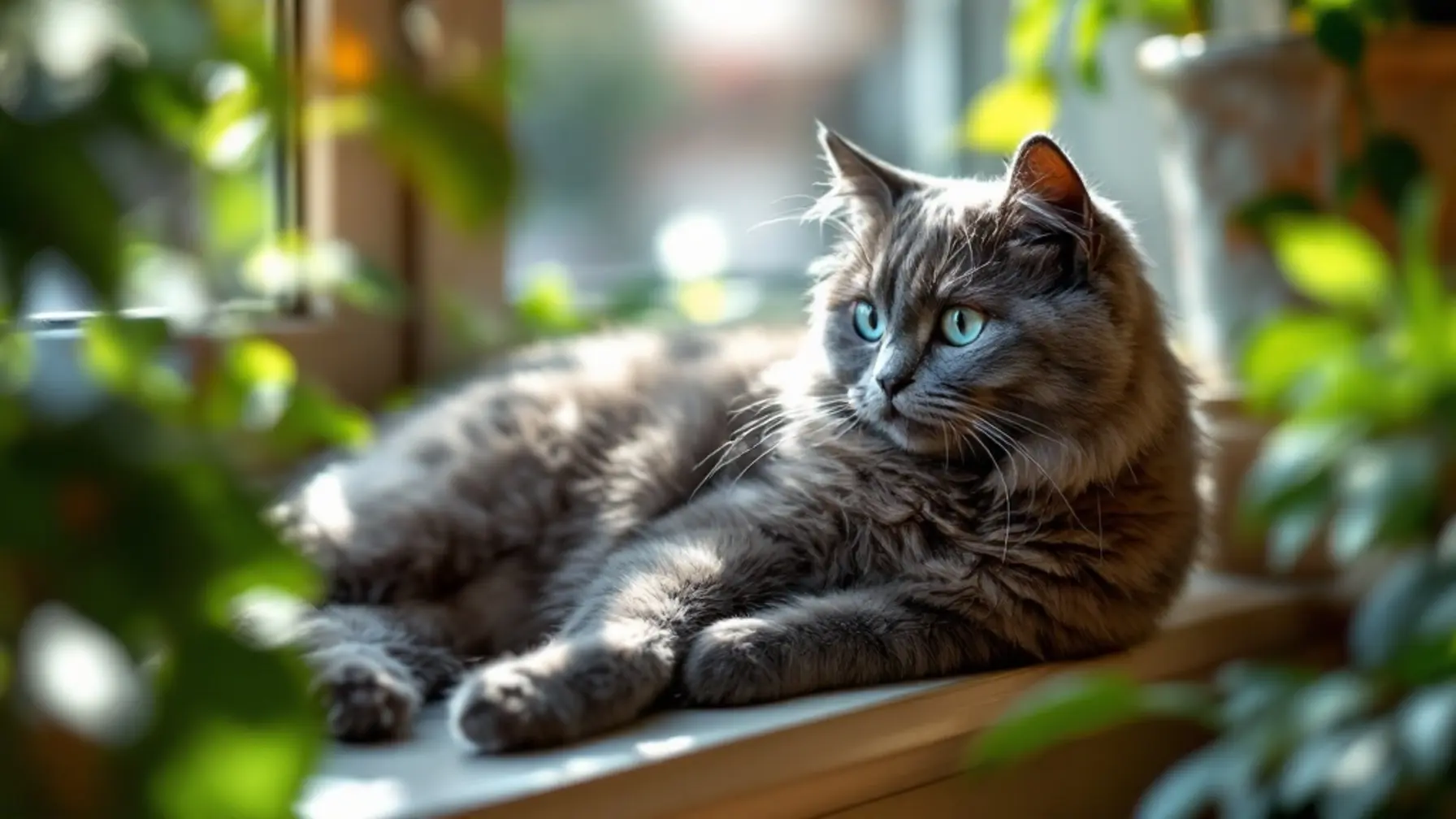
The Chartreux cat is an extremely old and esteemed French breed, known for its calm temperament and unique blue-grey coat. The Chartreux thrives both in peaceful, intimate homes and with families who value feline intelligence and discreet loyalty. The Chartreux captivates with its gentleness and quiet presence, forming a strong bond with its caregiver.
Table of Contents
- History of the Chartreux Cat Breed
- Character and Temperament of the Chartreux Cat
- Appearance and Physical Characteristics of the Chartreux Cat
- Caring for the Chartreux Cat: How to Take Care of Its Coat
- Chartreux Cat Health: Most Common Ailments
- Chartreux Cat at Home: Who Is It Suitable For?
History of the Chartreux Cat Breed
The Chartreux cat, also known as the chartreux, is one of the oldest described cat breeds in Europe, with a history intertwined with legends, French aristocracy, and the turbulent fates of the continent. The breed’s origins are not conclusively documented, but most feline specialists agree that the ancestors of the Chartreux arrived in France as early as the Middle Ages, probably from the Middle East or Syria, brought by merchants and crusaders. One of the most famous legends claims that Chartreux cats were bred in Carthusian monasteries, where they helped protect supplies from rodents and created an atmosphere of tranquility. Although there is no solid proof that the breed was ever systematically bred by the Carthusian order, the similarity of the names – “Chartreux” and “Carthusian” – has reinforced the image of the Chartreux as an almost contemplative animal, with a calm, subdued character fitting for monastery walls. The first more credible references to cats with blue-grey fur, robust build, and copper eyes come from the 16th and 17th centuries in France, where these animals were valued as effective rodent hunters in farms and warehouses, and as subtle, silent companions in city homes. French sources from this period mention “grey French cats” as a distinct, already recognizable population, characterized by dense, woolly fur and impressive strength combined with a gentle disposition.
In the 18th century, the Chartreux cat appeared more and more frequently in aristocratic salons and among the French intelligentsia, and its elegant blue-grey coat came to be associated with nobility and good taste. The writer Colette, a known lover of the breed, further contributed to its popularity by describing its unique bond with people. Yet for a long time the breed remained informal: Chartreux cats lived in natural, semi-wild populations in rural areas, ports, and French cities, breeding freely but maintaining a distinct, recognizable type. Only at the turn of the 19th and 20th centuries did the first efforts at conscious breeding begin. French cat enthusiasts, recognizing the unique appearance and character of the “blue French”, decided to stabilize the breed, selecting the best specimens for their dense, double coats, strong bones, and the typical “smiling” facial expression. Unfortunately, two world wars almost wiped out the Chartreux cat population. During World War I and II, the number of these cats drastically declined – some perished from hunger and chaos, others were crossbred with other breeds to survive. In the 1930s and again just after WWII, a small group of French breeders undertook the enormous task of rebuilding the breed. Sisters Léger from Belle-Île-en-Mer played a particularly important role, systematically selecting blue-grey cats of a strong Chartreux type and establishing one of the most influential breeding lines. Thanks to such enthusiasts, the breed’s traits were stabilized and complete mixing with other blue cats – especially the British Shorthair and Russian Blue – was avoided. In 1931, the Chartreux was officially presented for the first time at an exhibition in Paris, and two years later, one of the first formal breed standards was published. After the war, in the 1950s and 60s, the Chartreux slowly extended beyond France – first reaching Belgium and Switzerland, then the United States, where it piqued interest as an exotic “French Blue” breed with an extremely gentle temperament. In 1972, the breed was officially recognized by the CFA (Cat Fanciers’ Association), and subsequent feline organizations worldwide gradually included the Chartreux in their standards. Another important chapter in the breed’s history was the fight to retain its distinctive name and identity – at times, the Chartreux was confused with other blue shorthair cats or regarded as a British Shorthair variant. Thanks to consistent efforts by French and international breeders emphasizing the unique history, genetics, and character of the Chartreux, today, the Chartreux is recognized as a fully independent, historical French breed with its own, clearly defined standard and rich cultural heritage.
Character and Temperament of the Chartreux Cat
The Chartreux cat is the embodiment of calm, balanced nature combined with keen intelligence and subtle independence. Unlike many breeds with pronounced, loud personalities, the Chartreux is famous for its “quiet character” – it rarely meows, expressing its needs and emotions primarily through body language: gaze, tail position, gentle taps with a paw. This does not imply aloofness – the Chartreux forms strong bonds with its caregiver, often choosing one “favored person” in the home, following them from room to room like a shadow. Many people compare it to an “independent dog”: it likes to be near humans, but does not demand constant attention, patiently waiting until you finish work or a conversation. Its attachment is expressed subtly – lying next to you, not necessarily on your lap, watching, touching its owner with a paw, resting its head on your hand. It is extremely loyal: the Chartreux is not typically a cat “for everyone”; it may accept people outside its household with distance, needing time to build trust. In relationships with children, it is usually patient and gentle, as long as the children respect its boundaries – it doesn’t lash out, preferring to walk away rather than use its claws, making it a good candidate for calm, well-organized families. At the same time, it is not the type of “cuddly toy” readily available at any call: the Chartreux decides for itself when it wants affection and when it needs a moment of solitude; it’s important to respect this autonomy to maintain its sense of security. The intelligence of the Chartreux clearly shows in everyday behavior – it quickly learns daily routines, recognizes the sound of keys, distinguishes the sound of food from other noises, and can “plan” its actions, for example waiting for someone to open a door instead of persistently meowing. Many individuals are eager to learn simple commands, retrieve a favorite toy, or use interactive logic toys; these activities provide them not only with exercise but intellectual challenge. At the same time, the Chartreux is never overly insistent or hyperactive – it is a rather balanced breed rather than “crazy”, with a natural inclination for observation and attentiveness. It can laze in a favorite spot for a long time, seeming a bit phlegmatic, but in reality, it remains alert, ready to respond to any stimulus it finds interesting, such as a plush mouse, feather wand, or a buzzing fly outside the window. This balance between calmness and readiness to play makes the Chartreux well-suited to various lifestyles – it will thrive with a single person working from home, a couple in an apartment, or in a quiet household on the city outskirts.
In everyday life, the temperament of the Chartreux is especially apparent in how it reacts to changes and stress. It is emotionally stable for a cat – it does not panic at every noise and handles moves or changes in home arrangement better than many other breeds, as long as the process is staged with a basic sense of security: a fixed sleeping spot, litter box and bowls in the same place, and the presence of a trusted person. By nature, it is not confrontational – with other cats, it usually adopts a withdrawn attitude, avoiding open conflict, while with dogs, especially calm and well-socialized ones, it can develop correct, gradually even friendly relationships. It is important, however, to introduce new animals gradually and ensure each has personal space. At home, the Chartreux usually selects several strategic observation posts: windowsills, shelves, the back of a couch from where it can calmly watch its surroundings. This need for control is linked to its innate alertness – it can observe a single scene for a long time before deciding whether to engage. Despite its calm demeanor, the Chartreux has a pronounced hunting instinct: it loves to chase fishing rod toys, is drawn to the rustle of a foil ball, and prefers toys that can be chased, caught, and “smothered” with its paws – this is its favorite play environment. Regular play sessions are important not only to expend energy but to maintain mental balance – a Chartreux deprived of stimulation can become apathetic or overly withdrawn. In communicating with people, its voice is gentle – characteristic soft “chirping” or purring in response to greetings, petting, or play invitations. Some owners notice the Chartreux “understands more than it shows”: it responds to voice tone, senses the household mood, and may come over when someone feels unwell, lying nearby and staying with the person in almost meditative calm. This behavior is especially valued by people looking for not necessarily a very sociable, but an empathetic cat. On the other hand, it is important to remember that the Chartreux does not like chaos or intrusiveness – a noisy environment, frequent visits from large groups, or excessive violation of its space may make it more withdrawn, hiding in secluded places and being less willing to interact. A sufficiently calm, predictable environment, respect for its needs, and regular but unobtrusive attention from the caregiver bring out the best qualities of the Chartreux: a quiet, elegant companion with deep but unassuming affection, bringing harmony and a discreet presence to the home, felt more than seen.
Appearance and Physical Characteristics of the Chartreux Cat
The Chartreux cat is a breed whose beauty lies in harmonious proportions, sturdy build, and a distinctive steel blue coat. The Chartreux’s body type is described as “cobby,” meaning compact but not heavy – a strongly built, solid cat of medium to large size. Males are noticeably bigger and more massive than females; adult males often weigh between 5 and 7 kg, while females usually weigh 3–5 kg. Despite this considerable weight, the Chartreux does not appear fat – its body is muscular, with a broad chest, strong shoulders, and well-developed thighs. The legs are proportional to the body, quite short but powerful, giving the cat an “athletic”, stable look. Its paws are rounded and compact, often described as “plush pads” that further accentuate the breed’s soft silhouette. The tail is of medium length, proportional to the trunk, rather broad at the base and gently tapered to a rounded tip, never too thin or excessively long. The head of the Chartreux is one of its most recognizable features – broad at the base, somewhat like an inverted trapezoidal pyramid, with strongly marked cheeks in adult males. The nose is straight in profile, with a subtly rounded forehead. The correct Chartreux does not have a typically “round” head like the British Shorthair, but a more geometric, characteristic outline, with pronounced width at the cheeks and a gently tapering muzzle. The ears are proportionate in size, broad at the base, slightly lifted, set high on the skull but not too close together, slightly flared outward to give an alert expression. The Chartreux’s eyes are large, open, rounded at the edges but not perfectly spherical; their shape is often described as “nut-shaped.” Their color is one of the most crucial features – ranging from intense gold to deep copper, with the more saturated the shade, the better. The breed standard excludes green eyes or those with strong green tones; kittens may initially have a gray-blue or mixed shade, but the iris should gradually become yellow and take on a warm, amber hue with age. The characteristic “smiling” face of the Chartreux is due to the structure of the cheeks and slightly upturned corners of the mouth – this is especially visible in mature males with strongly developed “jowls.” This subtle facial mimicry gives the Chartreux a gentle, cheerful expression, which, with the keen gaze of its eyes, creates a unique impression of intelligence and calmness.
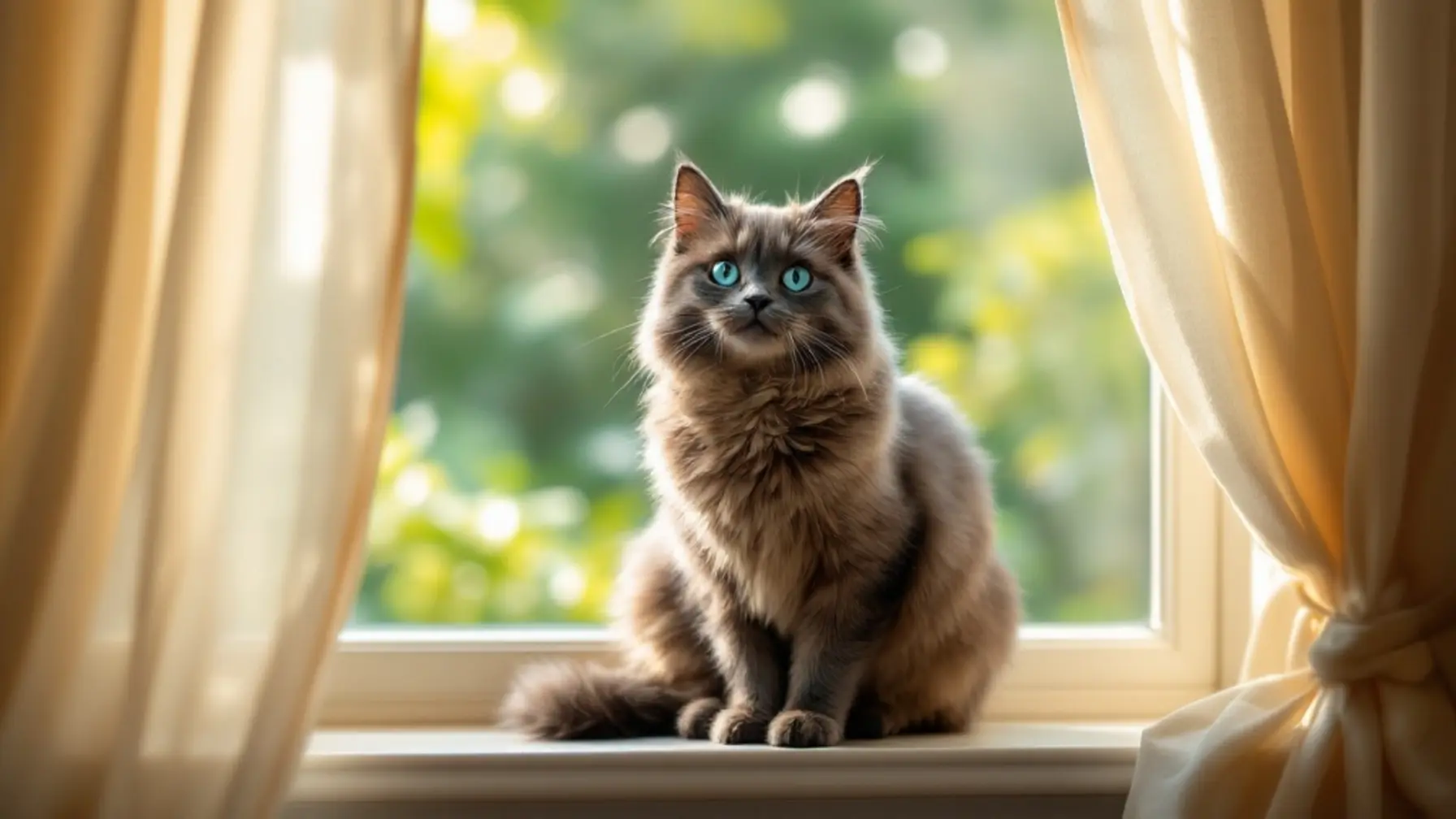
The Chartreux’s coat is its true hallmark – short-haired but double, dense, and springy, often compared to otter fur. The topcoat is relatively thick, straight, and slightly stands out, while the undercoat is soft and very rich, giving the coat a “woolly” structure. To the touch, the Chartreux’s fur feels plush but with noticeable resistance – it does not lie flat against the body like in many other shorthair breeds, but rather “bounces,” making the silhouette seem fuller. The coat is fullest in adult Chartreux cats during the colder months, when the undercoat thickens naturally. The coat color is uniformly blue (blue-grey), with shades ranging from lighter, pigeon-blue to darker, steel blue. The most prized is an even, clear color without shading or discoloration, though some subtle changes of tone may occur naturally. The most important thing is that the Chartreux does not have visible stripes or markings – ghost markings (faint tabby-like shadows, especially in kittens) are quite common at a young age but should fade as the cat matures. The tip of the tail and the paws should also remain evenly colored, without the darkening typical for some other blue cats. The nose skin is gray, often dark graphite, and the pads are blue-gray or dark gray, matching the coat and completing the cat’s unified and elegant color palette. The Chartreux cat grows and develops slowly – it is a late-maturing breed, often achieving its full silhouette only at 3–4 years old. Chartreux kittens are usually slimmer and less “plush,” with fur and musculature gradually taking on their adult form. During youth, there may be temporary differences in coat density and texture before achieving the typical springy coat of the adult Chartreux. In daily home life, the Chartreux’s physical features mean the cat has a large but compact presence – you feel its weight on your lap, yet it retains agility and grace; its coat is not long, but it can shed heavily seasonally due to the dense undercoat. All these elements – sturdy but harmonious build, the characteristic “smiling” face, gold-copper eyes, and steel blue coat – make the Chartreux uniquely and instantly recognizable among other blue cat breeds.
Caring for the Chartreux Cat: How to Take Care of Its Coat
The Chartreux’s coat is one of its biggest hallmarks – double, dense, springy and silky to the touch, resembling soft wool. At first glance, such a “plush” cat may seem very demanding to groom, but in practice, the Chartreux is relatively easy to maintain, provided the owner is consistent and adjusts grooming routines to the breed’s specificity. The most important aspect is regular brushing – usually once a week outside of shedding season and 2–3 times a week during coat changes (spring and autumn). The Chartreux’s double coat consists of a dense undercoat and a somewhat longer, springy outer coat, making ordinary soft brushes insufficient. The best option is a metal comb with rounded ends and both wide and narrow teeth, as well as a slicker brush with delicately flexible pins. Brushing should be done calmly, “against the fur” and “with the fur” – starting on the sides and back, then gently moving to the belly and tail area, which is more sensitive for many Chartreux. Avoid aggressive undercoat removal tools with sharp edges, as the Chartreux’s coat should retain its springy and naturally “fluffy” structure. Over-thinning the coat can disrupt its texture and reduce its thermal protective qualities. Short, 2–3 minute grooming sessions every few days are better than one very long, exhausting session every two weeks – this keeps the coat in top condition and helps build positive associations with grooming for the Chartreux. Because the breed is intelligent and appreciates calm rituals, it’s worth establishing a fixed grooming time (for example, in the evening on the couch), combining it with gentle petting and a treat reward. This way, even initially distrustful Chartreux cats can learn to enjoy grooming as a pleasant daily routine. Grooming also has health benefits: regularly removing dead hair reduces the amount ingested during self-cleaning, thus lowering the risk of hairball (bezoar) formation in the digestive tract, which can be a problem in dense-coated cats such as the Chartreux.
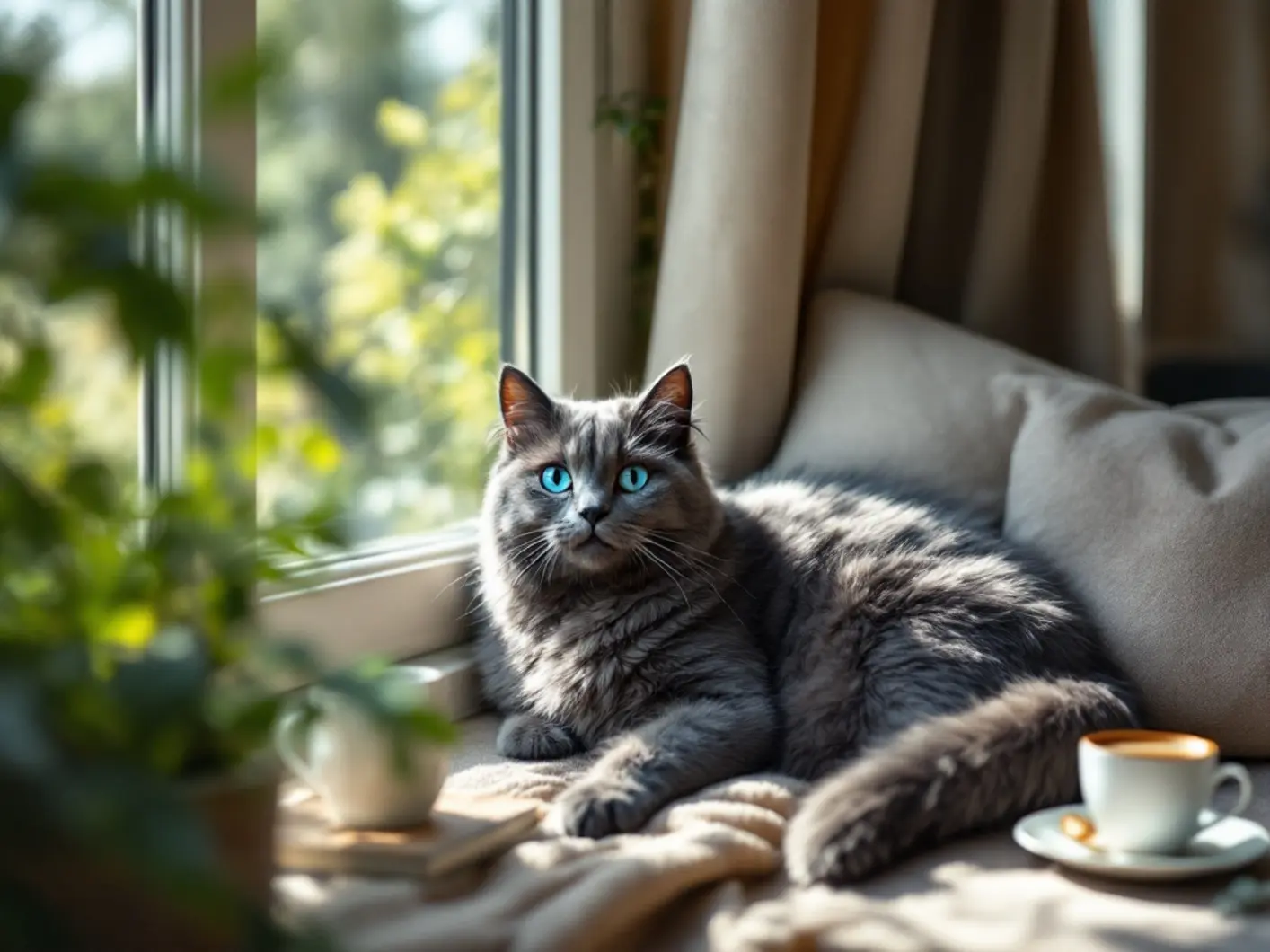
Besides brushing, the condition of the Chartreux’s coat is determined by diet, home conditions, and general body care. As a robustly built breed, the Chartreux is prone to slight weight fluctuations, so high-quality food rich in animal protein, omega-3 and omega-6 fatty acids, and adequate B vitamins has a real impact on the shine, elasticity, and density of its fur. Well-fed Chartreux cats have sleeker, less brittle, and more resilient coats. It is important to always provide fresh water, as good hydration affects the condition of the skin, and dry skin promotes more itching, scratching, and mechanical hair damage. Bathing Chartreux cats is generally unnecessary – their coat is naturally adapted to self-purification, and too frequent washing can disturb the skin’s protective layer and make the fur dull. Baths should only be considered in exceptional cases (severe soiling, preparation for shows, or veterinarian advice for specific skin problems), always using shampoos intended for cats and thoroughly rinsing the lather from the dense undercoat. After bathing, the Chartreux should be carefully towel-dried and, if it tolerates the sound, blow-dried on the lowest temperature from a distance to prevent overheating. Too fast drying in a draft can lead to chills, for which even a hardy Chartreux can be sensitive. In daily grooming, pay attention to typical “problem areas” where tangles may form: armpits, inner thighs, and the base of the tail. Gently separating tangles with fingers and a short session with a soft brush usually resolves the issue before the knot becomes an issue. It’s also worth regularly checking the skin under the dense fur – redness, dandruff, bald patches, or excessive licking of an area may signal allergies, parasites, or stress. In these cases, physical grooming alone isn’t enough and a vet consultation is necessary. Well-groomed Chartreux fur is slightly lifted, springy, and pleasant to the touch – if it starts sticking to the body excessively, turns dull or rough, it’s usually a sign to check diet, brushing frequency, or the cat’s general health. When caring for a Chartreux’s coat, owners should think long-term: it’s not about perfect looks for a photo, but about maintaining the natural structure of this extraordinary “plush” coat in the best possible condition throughout the cat’s life.
Chartreux Cat Health: Most Common Ailments
The Chartreux is considered a generally healthy and long-lived breed, often living up to 14–16 years, but like any purebred cat, it has certain health predispositions owners should know before adopting or buying. The Chartreux matures moderately late, which affects the pace of bone and muscle growth, as well as special nutritional needs and the risk of certain orthopedic problems. Careful breeding is the foundation of prevention – reputable breeders test their Chartreux for hereditary conditions of the heart and kidneys and monitor bloodlines for rarer issues. Regular veterinary check-ups (at least once a year for adults, every 6 months for seniors), blood and urine tests, weight monitoring, and maintaining good physical condition allow early detection of abnormalities that Chartreux cats often conceal because of their quiet, unexpressive nature. Remember, this breed is more tolerant of discomfort – the Chartreux may not show clear pain signals for a long time, so even subtle behavioral changes (less interest in play, avoiding jumping, more sleep in secluded places, appetite changes) should prompt a veterinary consultation.
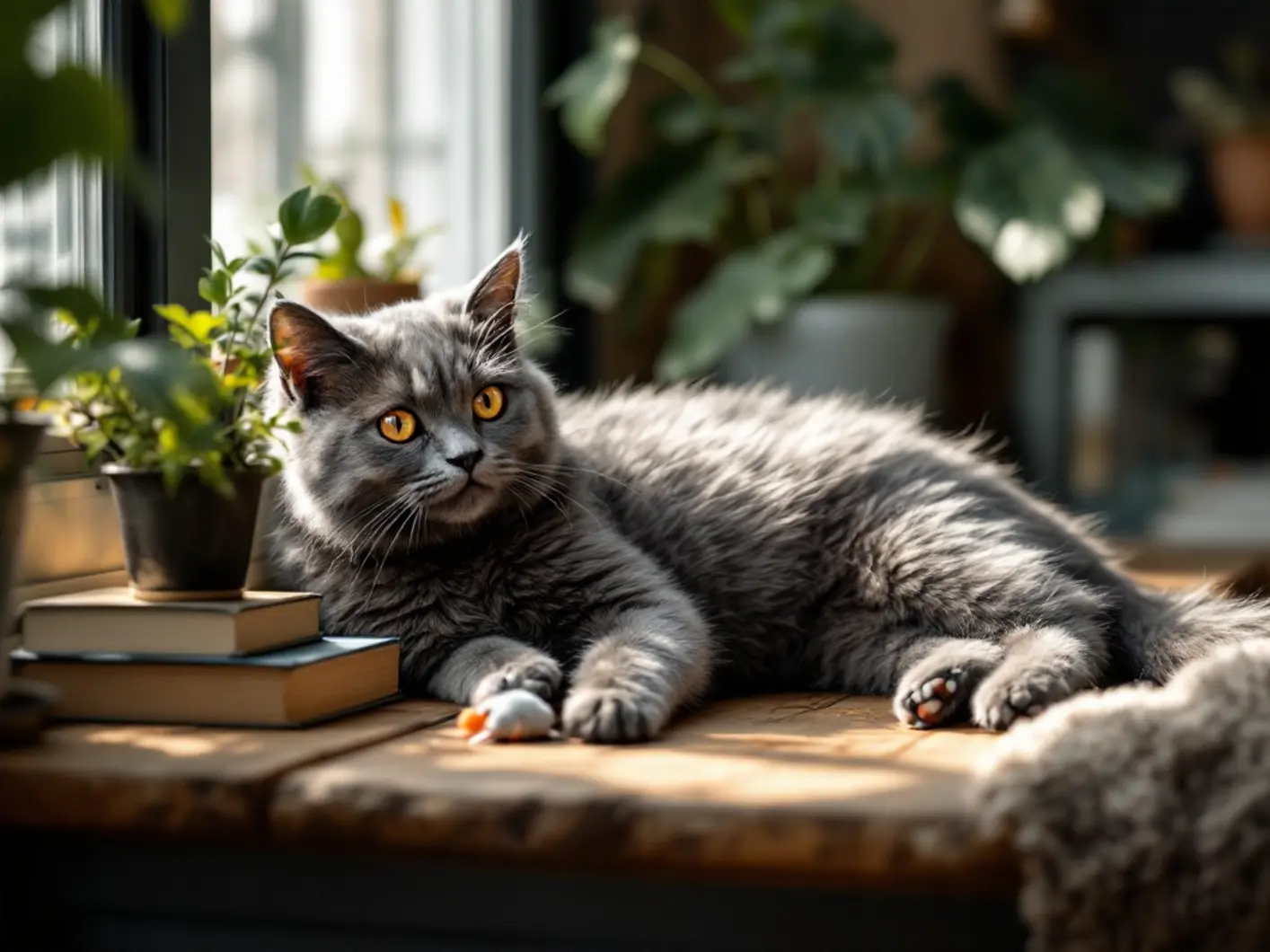
The most commonly discussed health problem in the Chartreux is hypertrophic cardiomyopathy (HCM) – a heart muscle disease leading to gradual thickening and decreased efficiency. In many members of the breed, this condition is asymptomatic for a long time; the first signs may be decreased stamina, shortness of breath during exertion, rapid resting breath, or fainting. Responsible Chartreux breeders regularly perform cardiac ultrasound (echocardiogram with Doppler) on breeding cats to reduce the risk of passing on the disease, though even well-managed lines can rarely see HCM. Early detection allows for support medication, limiting excessive activity, and precise medical monitoring. The next area of concern is the kidneys – Chartreux cats have been documented to suffer from chronic kidney disease (CKD) and, rarely, hereditary polycystic kidney disease (PKD), so regular blood tests (kidney markers: urea, creatinine, SDMA) and routine urinalysis are recommended, especially after age 7–8. Being a breed with a dense double coat, the Chartreux is also moderately vulnerable to skin problems associated with obesity and excessive shedding: less active, overweight cats may groom their fur less, leading to tangles, skin irritation, and secondary bacterial or fungal infections. Weight control is crucial from a broader health perspective – the Chartreux’s naturally compact, muscular build may be mistaken for “healthy overweight.” The wrong diet and too many treats lead to obesity, which increases the risk of diabetes, puts extra strain on joints and spine, and worsens tendencies to cardiovascular problems. As far as orthopedics, the Chartreux is less prone to congenital defects than some other breeds, but with excess weight comes more stress on hip and knee joints, potentially leading to degeneration and pain when jumping or using stairs. Prevention should include calorie-controlled food suitable for the cat’s age (kitten, adult, senior) and activity, plus regular, moderate exercise. Although the Chartreux is not prone to excessive meowing, changes in how it vocalizes may indicate tooth pain – periodontal disease is another common quiet problem. Thus, gradually getting the Chartreux used to oral hygiene (special toothpastes and gels, dental chews) is recommended, and if needed, ultrasound scaling under general anesthesia. Standard preventative care is also necessary: vaccination against infectious diseases (panleukopenia, herpesvirus, calicivirus, and if needed rabies), regular deworming, flea and tick prevention, and securing windows and balconies, as even calm Chartreux cats can, driven by their hunting instincts, make risky jumps. Appropriate prevention, watching for subtle signals, and working with a vet experienced in breeds with “unexpressive” personalities will help keep the Chartreux in good condition for many years.
Chartreux Cat at Home: Who Is It Suitable For?
The Chartreux cat is best suited to homes that value calm, predictability, and a subtle, not “loud” relationship with a cat. It’s an excellent choice for working people who spend part of the day away from home, as the Chartreux can organize its time well, does not panic from loneliness, and does not manifest discontent excessively. At the same time, this is not a cat that thrives in emotional isolation – after its person returns, it is happy to spend time nearby, accompany during remote work, reading, or watching movies, usually lying next to rather than demanding constant petting. Consequently, the Chartreux fits introverts, singles, and couples looking for a quiet, loyal companion, capable of forming a strong bond with one or two people in a home. It also adapts well to older people – its calm temperament, lack of hysterical reactions, and relatively low grooming and activity needs make it unobtrusive in daily life but sensitive to the household’s moods. In an apartment, the Chartreux does well as long as it has observation “command points” such as windowsills, shelves, or cat trees with platforms to calmly watch its surroundings. The breed does not strictly need a big garden – what’s more important is a sense of safety, a stable daily rhythm, hideaways, and opportunities for substitute hunting with toys. If there is a garden, a secure enclosure or netted balcony is best; the Chartreux has a hunting instinct, but is quite cautious by nature and is not suited for unsupervised outings. People with irregular lifestyles, those often away or who do not arrange alternate cat care, may not be the best fit for this breed – while the Chartreux handles change well, it strongly bonds with “its” human, and long absences can make it withdrawn, reduce appetite, or lower its mood, even if it doesn’t show this spectacularly.
The Chartreux can adapt to homes with children as long as they have been taught to handle animals gently and to respect the cat’s space. This is not a “toy” cat that will tolerate constant carrying and loud, rowdy play – its patience has limits, and it prefers calmer interactions, mostly initiated on its own terms. Families with school-age children who understand the basics of “cat etiquette” usually do well with a Chartreux; younger, highly active children or loud, chaotic homes may overwhelm this sensitive, though composed, breed. In relationships with other animals, the Chartreux can be surprisingly tolerant yet also keeps a certain distance. It does well with another calm, balanced cat that is not overbearing or territorial – with proper, gradual introduction, it often forms a bond based on companionship and observation, not constant play. In homes with dogs, the Chartreux can also coexist peacefully, as long as the dog has stable character, is not noisy, and does not chase the cat; in such cases, the chartreux often chooses high shelves or furniture as “safe zones” and, with distance but no panic, accepts the canine housemate. Due to its pronounced hunting instinct, it’s better not to keep the Chartreux with small pets like rodents or birds, even in cages – their presence can be a constant frustration for the cat and a real danger for the smaller animals. The Chartreux is best suited for people who can appreciate its gentle communication: soft purring, subtle gestures, and a “distant” presence rather than loud meowing or insistent demands for attention. This is a breed for caregivers seeking an intelligent, emotionally responsive, but non-demanding companion – a cat who is “nearby,” not always “center stage,” and for whom a quiet bond is more important than spectacular antics or constant interaction. In such a home, the Chartreux flourishes, revealing a full range of subtle behaviors and showing trust by quietly lying nearby or gently following its caregiver from room to room.
Summary
The Chartreux cat is an ancient, intelligent, and friendly breed originating from France. It is characterized by an extremely dense blue-grey coat and golden eyes, adding to its aristocratic appearance. These cats are balanced and playful; their care requires regular brushing. Chartreux cats are generally healthy, though they can be prone to certain hereditary ailments. They are excellent companions for families looking for a gentle and quiet friend.

