
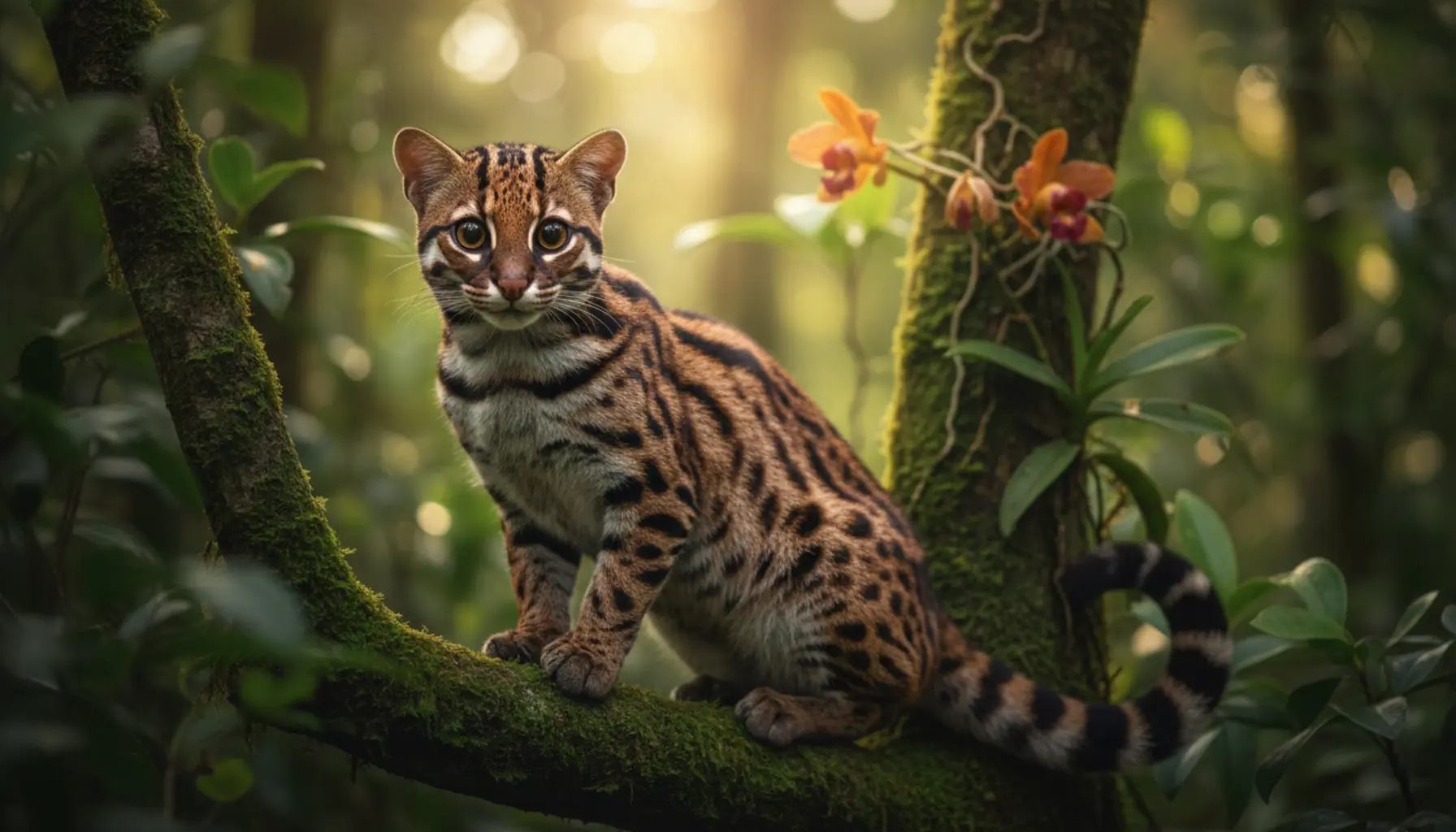
The Bengal cat and the marbled Bengal enchant with their extraordinary, wild appearance and energetic temperament. Discover the unique characteristics of these exceptional breeds, their needs, and the rules of proper care. Explore the exotic beauty hidden behind their distinctive coat patterns and behaviors.
Table of Contents
- Characteristics of the Bengal Cat
- Breeding Bengal Cats
- Price and Care of a Bengal Cat
- Extravagant Appearance of the Marbled Bengal
- Habitats and Natural Environment
- Traits and Behavior of Wild Cats
Characteristics of the Bengal Cat
The Bengal cat is one of the most recognizable and sought-after breeds in the world, mainly due to its “wild” appearance that resembles a mini leopard. Its body is athletic and muscular, yet slender and elegant, immediately revealing great physical potential and a need for activity. The Bengal’s head is slightly wedge-shaped with a pronounced muzzle and strong chin, giving the animal a slightly predatory but noble expression. The eyes are large, slightly oval, usually in shades of green or gold, very expressive and alert; in snow varieties, they can appear as a spectacular, intensely blue color. The ears are medium-sized, rounded at the ends, widely set, further emphasizing the “wild” look. A highly desirable feature is the so-called “Asian profile”–a gently concave nose that gives the face a characteristic and exotic touch. The Bengal’s fur is its calling card—short, velvety, and extremely dense, often with a “glitter” effect, meaning shimmering hairs that, in the light, look as if dusted with golden powder. The patterns on the fur are divided into two main types: spotted and marbled. In the spotted variety, large rosettes reminiscent of a leopard’s markings are desired, with a clearly darker outline and lighter center; the more contrasting and symmetrical the arrangement of spots, the more valued the cat is in breeding. The marbled variety features swirling, fluid streaks, creating a marble effect—a nod to wild ancestors and an exceptionally decorative pattern that looks remarkable both in motion and in photos. The most popular color varieties are brown, snow, and silver, but rarer shades such as charcoal or blue can also be found. The Bengal’s body structure favors agility: a long, strong torso, powerful limbs, and a flexible spine allow it to make impressive jumps and climb skillfully. The tail is of medium length, thicker at the base, well-muscled, often with a dark tip, accentuating the elegance of its silhouette in movement. Although Bengals look like small wild cats, they are fully domesticated animals, selected by breeders not only for appearance but, above all, for character and stable temperament.
The Bengal’s temperament largely mirrors its physique—this is an extremely energetic, curious, and intelligent cat that needs constant stimulation to thrive. It is not a “couch potato” who sleeps on one chair all day long; a Bengal loves to explore its surroundings, climb shelves, peek into cupboards, and participate in every household activity. This is a highly social cat, strongly attached to its caregiver, often choosing a “favorite person,” but able to form good relationships with the whole family, including children, as long as they are taught to respect animals. In relationships with humans, the Bengal behaves somewhat like a dog: it will follow its owner around the house, eagerly learn to walk on a leash, retrieve toys, and even follow simple commands, provided training is based on positive reinforcement and rewards. Its intelligence is evident not only in learning speed but also in its ability to solve small “puzzles”: opening cabinet doors, pressing handles, searching for hidden treats. For this reason, Bengals require a rich environment: tall cat trees, shelves for climbing, interactive toys, and games that engage their brain—without these, they may become bored and release energy undesirably, for example by damaging furniture or persistently demanding attention. A distinguishing feature is also their love of water: many Bengals observe running water in the tap with fascination, play in bowls, and some even jump into the bath or shower to accompany their caregiver. Compared to many other breeds, Bengals tend to be quite “talkative”—they communicate needs and emotions via a range of sounds: from classic meows to chirrups and soft purrs, especially when excited or playing. Despite their temperament, a well-socialized Bengal is generally friendly to other animals, especially if raised with them from a young age; they can get along with both other cats and dogs of calm, balanced disposition. However, it should be remembered that this breed has a strong hunting instinct—small animals, such as rodents or birds, may be viewed as potential prey. Due to their high activity, Bengals do best in homes where owners are willing to spend time on daily play and interaction; with sufficient movement and mental stimulation, they become extremely affectionate, devoted companions, who, after intense play, can fall asleep right beside their human, purring loudly and with clear satisfaction.
Breeding Bengal Cats
Breeding Bengal cats requires much more than fascination with their exotic looks—it’s a blend of responsibility, genetic knowledge, and concern for animal welfare. The foundation is choosing the right breeding animals from legal, registered catteries that operate within recognized feline organizations (e.g., FIFe, TICA). A Bengal cat’s pedigree should be documented to at least the fourth or fifth generation, with ancestors, degree of kinship, and lines marked in which there have been no health or behavioral issues. Breeding selection focuses not only on spectacular coat patterns (rosettes, strong contrast, shimmering fur) but, above all, on a stable, balanced disposition and good overall condition. A responsible breeder pays attention to body proportions, correct head conformation, ear and eye placement, and overall movement quality—Bengals should move lightly, springily, and harmoniously. Controlling inbreeding (close matings) is crucial; prioritizing showy appearance at the expense of genetic diversity can lead to deteriorated health, lower immunity, or fertility problems. Before including a cat in the breeding program, detailed exams should be performed: heart ultrasound for hypertrophic cardiomyopathy (HCM), abdominal ultrasound, infectious disease tests (FIV, FeLV), and often genetic screening for known hereditary disorders in the breed. These tests should be repeated cyclically, as some diseases develop with age. Equally important is proper care of the pregnant Bengal queen—a well-balanced, high-energy diet, a calm and safe place to give birth, regular veterinary check-ups, and observation of the mother-to-be’s behavior, who with this breed may remain remarkably energetic even in late pregnancy.
The period of raising Bengal kittens is a mixture of health care, socialization, and early behavioral education. Kittens are generally born in litters of 3-6, and in the first weeks of life stay mainly with their mother who provides warmth, nourishment, and security. The breeder should monitor weight gain from the very beginning, check reflexes, limb position, eye and ear condition, and maintain the nesting area’s cleanliness. Around the third week, kittens become interested in their surroundings, and this is when gentle adaptation to human touch, various household noises (vacuum, TV, doorbell), and later toys, cat trees, and simple obstacles begins. Bengals are inherently curious and bright, so they respond well to early games developing coordination and intelligence, but all stimuli must be administered moderately to avoid overstimulating the young nervous system. The vaccination and deworming schedule is standard for cats, but for such an active breed, often travelling for shows, enhanced prophylaxis and close veterinary cooperation are advisable. Bengal kittens should remain in the cattery at least until the twelfth week of life, and often until the fourteenth or sixteenth, to fully establish proper social patterns—both with other cats and with humans. In this period, breeders build kittens’ confidence and teach them to use the litter box, scratching post, carrier, nail trimming and gentle grooming procedures, greatly facilitating future care. An essential aspect of professional breeding is also carefully matching new homes: the Bengal is not a “sofa cat,” but requires active, committed owners who will provide ample space, cat trees, shelves, interactive toys, and daily play. Responsible breeders conduct detailed interviews with potential buyers, inform them about the breed’s specifics, provide a starter kit, a sale agreement, and full medical and pedigree documentation. It is also important to distinguish between a “pet quality” and a breeding cat—in the first case, animals are usually neutered or sold with a spay/neuter obligation, while in the second, only experienced breeders with suitable facilities for ethical breeding receive intact cats. Thanks to such a multi-level approach, Bengal cat breeding is not just “kitten production” for stunning looks, but a thoughtful process aimed at shaping a healthy, stable, and well-socialized population of this fascinating breed.
Price and Care of a Bengal Cat
The cost of acquiring a Bengal cat is higher than for many other breeds, due to both exotic origins and high breeding standards. The price of a kitten from a legal, registered cattery in Poland generally starts from around 4000–6000 PLN for a “pet quality” cat, i.e., not intended for breeding. Show or breeding quality individuals can cost from 7000 PLN upwards, and for rare colors or exceptionally attractive patterns (e.g., large rosettes, high contrast, shiny fur), the price can rise above 10,000 PLN. Final cost is determined by: breeder reputation, parent titles won at shows, genetics (imported cats from renowned foreign catteries are more expensive), and whether the animal has already been neutered or spayed before release. Remember that “bargain” offers without pedigree, often seen online, usually mean no control over health, origin, or character, and a saving at purchase can translate to high vet bills in the future. Beyond the kitten’s price, other initial expenses must be considered: high-quality starter kits (solid cat tree, beds, bowls, carrier, litter box with good litter, interactive toys, shelves, or tunnels for climbing), first vet visits, vaccinations, deworming, and any subsequent neutering/spaying if not performed by the breeder. Annually, the main costs are: premium meat-based food, regular preventive vet care, supplements (if prescribed), pet health insurance, and potential spending on a pet sitter or cat hotel during owner’s trips. Many say the greatest “cost” of owning a Bengal isn’t money, but time and commitment—a cat of this breed requires daily attention, active play, and well-thought-out care, without which it may become frustrated or even problematic.
Caring for a Bengal cat is a combination of health maintenance, mental well-being, and ensuring sufficient exercise, forming the foundation of their good mood. Bengals are demanding eaters—they are active carnivores, so their diet should be based on high-quality wet and/or dry food with a high meat content, low grains, and no unnecessary fillers. Grain-free foods or those with limited ingredients work very well, and many owners also choose BARF diets or home-cooked meals following veterinary-nutritionist guidance. Constant access to fresh water is essential—Bengals often like cat fountains, which encourage drinking and are also an additional “water toy.” The breed requires careful health prophylaxis: regular vaccinations, deworming, blood and urine check-ups, heart monitoring (since some lines are predisposed to hypertrophic cardiomyopathy—HCM), and dental examination to prevent tartar build-up and periodontal diseases. Although Bengals have short coats, they occasionally require brushing, especially during shedding periods; regular claw trimming and checking ears and eyes for infections are also important. Crucially, an appropriate amount of exercise and mental stimulation must be ensured—Bengals need tall cat trees, wall shelves, tunnels, and toys that allow them to exercise natural hunting and climbing behaviors. Several intense play sessions per day are recommended, using fishing rods, balls, or treat puzzles that engage both body and mind. Many Bengals enjoy learning basic commands, retrieving, or walking on a leash, which also strengthens the bond with their caregiver. For safety, windows and balconies should be secured (with netting or screens), and unsupervised outdoor access should be avoided—their inquisitive, brave character lends itself to accidents or getting lost. A Bengal left alone for many hours daily can begin exhibiting undesirable behaviors, such as furniture destruction, loud vocalizations, or even litter box issues, so in many cases, companionship of another similarly active cat is a good solution. Conscious care encompassing both the physical and emotional needs of the animal allows one to enjoy a healthy, balanced Bengal, whose exotic beauty goes hand in hand with a fascinating yet demanding character.
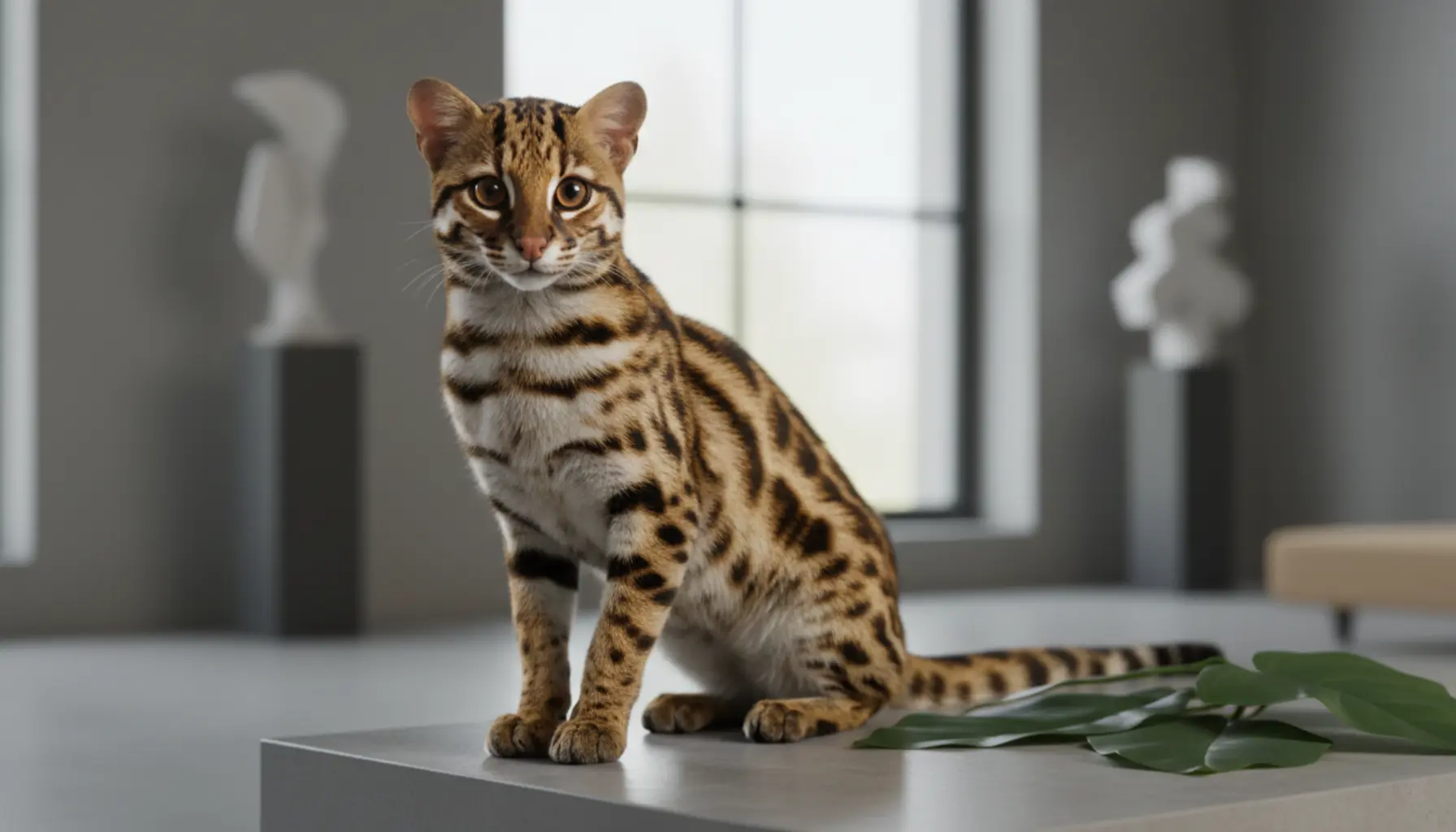
Extravagant Appearance of the Marbled Bengal
The marbled Bengal, also known as the marbled Bengal, is one of the most hypnotizing Bengal variants, which at first glance can entirely change your idea of a domestic cat. Instead of classic round spots, its fur is covered by an elaborate, fluid pattern resembling smoky streaks, spilled ink puddles, or marble veining of a precious stone. This spectacular design is not chaotic—the best-bred marbled Bengals have what’s called a “horizontal flow”: patterns flowing horizontally along the body flanks, evoking small, horizontal waves or a labyrinth of organic shapes, where darker blotches are surrounded by thin, contrasting borders. The pattern can be compared to wild forest cats or the lynx but with a noticeably more artistic, “drawn” character due to thoughtful, multi-generational selection. The marbled Bengal comes in various colors—from classic browns with deep chocolate and black patches, to cooler “snow” (seal lynx, mink, sepia) shades, as well as exotic, rarer hues like charcoal or silver. In each version, sharp contrast between the background color and markings is key: the background should be light, even, and “clean,” while the blotches are intense, deeply saturated, sometimes with a gradient effect—darker in the middle and softly blurring at the edges. The marbled Bengal’s hair is short, silky to the touch, dense, and often features the famous “glitter” or pearlescent shine, making some hairs look like dusted with golden sparkles. In natural light or sunbeams, the cat literally “sparkles” in motion, further highlighting the irregular lines of the pattern. High-quality marbled Bengals have pronounced “dimensionality” in their markings—these are not flat color blotches but a layout resembling a three-dimensional relief, which “arranges” itself along the muscles when the cat moves, stretches, or jumps. The back often features a noticeable “butterfly” or broad stripes spilling onto the body sides, and the belly can be speckled with small dots, reminiscent of wild felines. Head shape matters, too: marbled Bengals generally retain the typical “Bengal” face expression—somewhat wild, with a strong chin, expressive nose, and large, slightly almond-shaped eyes. Markings above the eyes are often clearly defined, with an “M” or more complex signs on the forehead forming a visual continuation of body patterning. The ears are relatively small, rounded at the tips, enhancing the exotic impression. The physique remains athletic: marbled Bengals are built like small predators—with a broad chest, solid legs, and a long, well-muscled tail, which often carries marbled or ringed patterns ending in a dark tip. This combination of “wild” musculature and refined, artistic coat drawing creates an extremely extravagant effect: with every movement, the cat seems like a living work of art.
The marbled Bengal’s extravagance doesn’t end at coat markings—how the pattern complements the cat’s proportions and movement dynamics is equally important. As a proper Bengal, their physique favors elegant, springy movement; the coat doesn’t hang loosely but fits tightly like a luxurious, natural silk suit. Thus, every jump, twist, or stretch accentuates the marbling, which gently “flows” across the body. As the cat runs, the flank patterns seem to shift and morph, giving the impression of watching swirling smoke or water waves through a prism. This kinetic aspect is unique and means that a marbled Bengal rarely looks the same in two different photos or poses—its fur reacts to light, motion, and perspective. An interesting fact is that the marbled pattern develops as the kitten ages. In very young marbled Bengals, the markings may appear somewhat “blurred” or less distinct; as they mature, the lines sharpen and contrast increases, which can be fascinating for owners who watch a seemingly indistinct youngster become a boldly marked, exotically colored adult. In breeding, the so-called “broken marble” is especially prized—where the pattern forms a complex mosaic of spots and streaks with visible background, instead of a single, heavy, dark block. Excessive solid black, which could “overwhelm” the fur’s texture and hide its fine lines, is avoided. At the same time, symmetry and harmony matter: while marbling is, by definition, irregular, top individuals show a balanced layout on both sides of the body. For many Bengal lovers, the marbled Bengal epitomizes the “artistic” approach to breed selection—a bold alternative to classic spotted Bengals, while remaining wild in spirit, giving strong associations with nature and untamed wilderness. Its extravagant appearance is the result of carefully designed genetics, attention to detail, and respect for ancestral traits, making each marbled Bengal unique and inimitable, impossible to mistake for any other breed or even for another of its own line.
Habitats and Natural Environment
When we speak of the Bengal cat and marbled Bengal, the image of their wild ancestor—the Asian leopard cat (Prionailurus bengalensis)—always appears in the background, whose appearance and behavior inspired the creation of the breed. Understanding the natural environment of this small, but extremely agile cat makes it easier to appreciate the needs of Bengals in domestic settings and the unique aesthetics of the marbled pattern. The leopard cat inhabits a vast range across Asia—from the dense tropical forests of Southeast Asia, through humid monsoon woods, to mountainous regions and a mosaic of farmland, shrub thickets, and suburban areas. Its “home” includes dense, multi-leveled forests with rich undergrowth as well as transitional zones between wilderness and human settlements, where there is shelter and an abundance of small mammals, birds, and reptiles—the main prey of this hunter. The Asian leopard cat prefers environments where it can combine climbing with ground-level hunting: dense tree branches, fallen logs, rocky outcrops, bamboo clumps, and thick shrubbery provide opportunities to hide, observe from above, and strike quickly. Water access is also important in its natural habitat—streams, marshlands, and rice fields serve not only as drinking sources but also as places to hunt amphibians or fish, explaining Bengals’ fascination with water often observed in domestic Bengal cats. The climate in these areas is generally warm, humid, and seasonally variable, which has fostered the leopard cat’s and its descendants’ hardiness, adaptability, and high temperature tolerance—traits inherited by Bengals, keeping them comfortable at home as long as they have a dry, stable shelter.
Today’s Bengal cat, including the marbled Bengal, is no longer a wild animal—it is a fully domesticated cat, but its genetic blueprint “assumes” it will live in an environment reminiscent of its natural habitat’s richness, not a bare or unchallenging apartment. Therefore, it is crucial that the Bengal’s environment becomes a sort of “mini-ecosystem”: tall climbing structures in the form of cat trees, wall shelves, bridges, or cat towers replicate a forest’s vertical stratification, allowing climbing, high vantage points, and favorite lookout spots, just like tree branches in nature. Varied hiding spots—boxes, tunnels, cardboard houses, covered corners—act as safe resting places, like natural burrows or dense shrub clumps where the wild ancestor could rest and hide from danger. For the marbled Bengal, multi-level spaces with different lighting are particularly attractive because the interplay of light on their marbled coat strengthens their natural tendency toward sneaking and “camouflage” games, mimicking sunbeams filtering through tree crowns and casting shadows. The water element can be safely replicated with deeper drinking bowls, fountains, or even supervised play at a tap, satisfying their instinct to explore this medium and promoting both hydration and hygiene. Scent “layering” is also vital—wild leopard cats move through environments rich in plant, earth, animal, and water smells; at home, this can be partly reflected by introducing safe houseplants, scent mats, catnip or valerian toys, and rotating objects to prevent territory monotony. Finally—movement and hunting: in the wild, the leopard cat travels considerable distances and makes multiple hunting attempts daily, whereas at home, food is virtually instant. To avoid frustration and behavioral problems, Bengals need regular “hunting sessions” using fishing rods, balls, track toys, or puzzle feeders that simulate searching for and obtaining prey. This kind of domestic environment—rich in spatial, olfactory, and movement stimuli—is closest to the natural habitat of the Bengal’s ancestors, allowing marbled Bengals to fully develop physically and mentally, while remaining safe and balanced as companions to humans.
Traits and Behavior of Wild Cats
Wild cats, including the Asian leopard cat—the Bengal’s ancestor—have developed a range of morphological and behavioral traits for effective functioning in demanding natural environments. The most visible is their specialized body: slim yet powerfully muscled silhouette, flexible spine, long tail for balance, and strong, springy legs with retractable claws. Thanks to this, wild cats move almost silently, can accelerate quickly, leap long distances, and land precisely even on narrow branches. The Asian leopard cat, like many wild species, has highly developed vision—eyes are relatively large, forward-facing, providing excellent motion perception, including at dusk and at night. Coat patterns—spotted, striped, or marbled—serve as camouflage, breaking up the outline of the body against a background of leaves, branches, and forest shadows. The senses of hearing and smell are equally acute—the movement of a small prey or the rustling in the thicket is detected from far away, and scent traces help map territory and avoid conflicts. Key traits include striking independence and territoriality; wild cats are usually solitary, pairing up mainly during mating season. Their territories may overlap, but boundaries are marked with scent cues—urine, secretions from cheek glands, or tree scratching. Such spatial organization minimizes direct confrontations, which in nature could mean serious injury and thus—reduced survival odds. Characteristically, wild cats economize energy extremely—sleeping and resting up to many hours a day, with activity focused on hunting, patrolling, and reproduction. Their hunting behavior follows sequences—from silent observation, stalking, freeze, and the final leap to a single, precise killing attack. It is this hunting skill, combined with avoidance of danger, that has shaped many of the traits we see in Bengal and marbled Bengals in domestic life today.
Understanding wild cat behavior helps interpret everyday habits of Bengals and marbled Bengals, who, despite domestication, retain a significant share of ancestral instincts. In nature, the leopard cat is mainly crepuscular-nocturnal, and this translates into increased domestic Bengal activity in the evening and early morning hours. A strong drive to explore territory and control space shows in frequent climbing on furniture, peeking in cabinets, or a desire for high vantage points—equivalent to arboreal observation posts in the wild. Wild cats communicate primarily nonverbally—via body language, ear and tail position, posture, and scent marking. Bengal cats display the same subtle cues: tense tail and wide eyes in alert mode, low tail and flattened ears in stress, rubbing against objects and people to “mark” them as safe territory. Their wild genealogy also explains the unique need for hunting stimulation—in nature, the leopard cat spends much of its time hunting, while the domestic cat has a constantly filled bowl. However, the hunting instinct does not disappear, which is why Bengals and marbled Bengals show such passion for moving toys, tunnels, puzzle feeders, or fishing rod-style toys, mimicking the chase and capture sequence. Stress management strategies are also key: wild cats avoid open confrontation, preferring hiding, freezing in place, or retreat. At home, this explains why a scared Bengal seeks a high shelf, hides in refuges, or becomes hyper-alert to strangers or sudden stimuli. In nature, young cats learn crucial social and hunting skills by observing their mother and siblings, directly corresponding to the need for kittens to remain in professional catteries until at least 12 weeks—removing them too soon interrupts this phase of “wild education,” possibly resulting in behavioral problems. Wild cats’ distinctive trait—the ability to quickly shift between intense activity and deep rest—at home appears as “zoomies,” or sudden running outbreaks throughout the apartment, followed by a long rest. Even Bengals’ love of water has roots in the ancestor’s ecology, observed by streams and hunting fish or amphibians. Once you realize that your exotic-looking companion’s behaviors are a reflection of thousands of years of wild cat evolution, it’s easier to adapt your domestic environment—with tall cat trees, climbing routes, opportunities to observe the outdoors, and regular “hunting sessions”—to their natural predispositions, instead of trying to suppress them.
Summary
In summary, both the Bengal cat and the marbled Bengal are exotic and fascinating animals that draw attention with their beauty and uniqueness. The Bengal cat, known for its leopard-like appearance, is the perfect choice for enthusiasts of active, intelligent pets. The marbled Bengal showcases the wild side of the feline family, evoking the mystery of Southeast Asian forests. Breeding these cats requires particular care and knowledge, but the satisfaction of being with them is priceless. No matter your choice, both types offer plenty of joy and endless fascination.

