

Creating the perfect cat paradise in an apartment is the art of combining a cat’s needs with the comfort of household members. A cat paradise should offer safety, opportunities for play, and rest at every height. Discover how to plan a functional and aesthetically pleasing space where your cat will feel truly happy.
Table of Contents
- The Most Important Elements of a Cat Paradise
- How to Plan a Cat-Friendly Space
- Innovative Apartment Solutions for Cats
- Toys and Accessories Cats Love
- How to Organize a Cat Corner in a Small Apartment
- Avoiding Mistakes When Designing Cat Spaces
The Most Important Elements of a Cat Paradise
The perfect cat paradise in an apartment is not just a set of random accessories, but a well-thought-out system of zones that addresses a cat’s basic needs: safety, observation, movement, play, scratching, rest, and satisfying hunting instincts. The foundation is vertical space—cats naturally feel safer when they can observe their surroundings from above. In practice, this means using tall scratching posts, wall shelves, cat bridges, and cabinets that can be transformed into lookout points. A well-planned “highway” at height, combining several pieces of furniture and shelves, allows a cat to move through the apartment without descending to the floor—a feature especially appreciated by shy cats and those living in multi-cat households since dominant cats won’t block access to resources thanks to alternative “overhead” routes. Equally important are ample scratching surfaces. Cats don’t scratch out of spite, but to mark territory, stretch muscles, and care for their claws. One scratch post in a corner is not enough—instead, provide a variety of textures (sisal rope, corrugated cardboard, wood), forms (vertical posts, horizontal mats, slanted ramps), and locations: near the sofa, by a favorite armchair, or by doorways—places the cat actually passes and lingers. Placing an enticing scratch post by a piece of furniture previously “victimized” by claws can effectively redirect behavior, especially if you initially help with catnip or a scratch post spray with synthetic feline pheromones. Another key element is rest areas—cats sleep up to 12–16 hours a day, and each has different preferences. Offer at least two or three types of beds: open (e.g., soft cushions or radiator hammocks), semi-enclosed (baskets with high edges), and hideaways (nests, houses, tunnels, a spot under the bed with a comfy blanket). Window beds are especially attractive, letting cats observe birds, people, and the street; it’s a plus if the window has sturdy netting for safety during airing. In the relaxation zone, be sure to include “high-comfort” spots—soft blankets that retain the cat’s scent, which provides olfactory security as important as physical safety.
The next pillar of a cat paradise is an elaborate play and hunting zone that lets a cat act out its natural prey sequence: spot–stalk–pounce–“kill”–eat–rest. In practice, this means providing a variety of interactive toys, wands, balls, plushies, string toys, ball tracks, as well as puzzle feeders and scent mats for treats. Rotate toys—don’t have everything out at once; instead, hide extras and “refresh” every few days to maintain novelty. Feather and string wands are irreplaceable, enabling play with caregivers and simulating real chases. There are also interactive battery-operated balls or mice that move on their own. Another essential element is the life resources: bowls for water and food, and litter boxes, properly spaced around the home. The water bowl should be far from the food bowl, as many cats instinctively avoid water near “prey.” Fountains encourage more drinking, vital for kidney and urinary health. There should be at least one litter box per cat plus one extra, placed in a quiet but not completely isolated spot—cats need to feel safe and still be able to monitor their surroundings. Covered litter boxes provide privacy, but not all cats tolerate them—offer both open and covered options so your cat can choose. Don’t forget stress-reducing elements: hideouts (boxes, pens, tunnels), “escape” spots from guests, and a calm area inaccessible except by the cat’s “invitation.” You might also use calming pheromones in diffuser form. Organization is crucial—bowls and litter boxes should not be side by side, play zones should not interfere with sleeping zones, and cat highways should allow easy movement between “safe points.” Only by combining these elements into a coherent system does a regular apartment transform into a true cat paradise that stimulates, relaxes, and fulfills a cat’s deep-rooted species needs—while remaining aesthetic and functional for people.
How to Plan a Cat-Friendly Space
Planning a cat-friendly apartment space is best started by… looking at your home through your cat’s eyes. Cats perceive space in three dimensions—it’s about more than just what’s on the floor, but also activity at varying heights. First, analyze the existing layout: where can the cat safely climb, from where does it see doors, windows, and strategic points allowing control over its environment. Mentally divide the apartment into several zones: rest, play and hunting, eating, toileting, and observation. Each should be logically placed and connected, so the cat doesn’t cross paths with people at sensitive spots (like right by the TV or busy walkways). Factor in temperament and age: for confident young cats, create more active, “climbing” spaces; for seniors or timid cats, focus on multiple hideouts, low access to resources, and easy, safe paths. Analyze potential challenges and hazards—slippery windowsills, narrow passes between furniture, unstable shelves, or exposed wires that should be secured before inserting new cat elements. Sketching the apartment and tracing your cat’s usual routes, favorite spots, highway paths, or conflict zones (where they’re startled by noise or sudden movements) can help. This process helps you see which areas need reinforcing—like adding hideouts, shielding spaces, or creating alternate pathways above floor level on furniture and shelves.
The crux of planning is smartly distributing resources to support a cat’s natural behaviors and reduce, not increase, stress. Food and water bowls should be separate from the litter box and areas of heavy foot traffic—it’s like separating your kitchen from bathroom and hallway. Ideally, bowls are in a calm, open space where the cat can see their surroundings and isn’t “trapped” between a wall and furniture. For water, multiple spots around the apartment encourage frequent drinking; ceramic bowls or a fountain can be placed near the rest zone, but not right by the bed to avoid disturbing sleep. The litter box should be in a quiet spot, not totally isolated (far from machines and speakers, but easily accessible). For sensitive cats, partially shielding the litter box with a screen or safe plant can give privacy without closing it off or causing ventilation issues. Plan the vertical space—scratching posts, shelves, bridges—as a “highway,” allowing the cat to bypass sofas, tables, or desks. Rest areas should be both high (shelves, radiator hammocks, post tops) and low (cat houses, open carriers, baskets under tables) for choice depending on mood or temperature. The play and hunting zone needs enough room for a wand session or tossing balls—hallways, living rooms, or a cleared section of a room are better than cramped corners. Remember the “cat continuity” rule: elements should connect into logical pathways, not stand-alone “islands.” A scratcher by the sofa diverts scratching, a shelf by the window continues the climb, and a hideaway near the family zone lets the cat be “with you, but on their terms.” This approach makes the apartment not just cat-friendly, but intuitive for your pet, reducing moments of feeling trapped, cornered, or forced to abandon their natural behaviors.
Innovative Apartment Solutions for Cats
Modern apartment design for cats increasingly combines cats’ needs with interior aesthetics, using solutions recently associated mainly with architects or behaviorists. One of the most interesting trends is modular systems—scratching posts, shelves, and wall walkways that can be rearranged, expanded, and tailored to the apartment’s size and layout. They let you build “cat highways” along walls, above doors or windows, so your cat can roam everywhere without clashing with human spaces. Tall corner structures that use tricky spaces—such as between a wardrobe and wall—are becoming popular by turning them into attractive viewpoints. Hybrid furniture—the 2-in-1 or 3-in-1 style—like coffee tables with built-in hideouts, TV cabinets with hidden beds, or entryway benches that hide the litter box, are smart options. This means a cat paradise doesn’t have to mean compromising on style—on the contrary, it can be a seamless part of the decor. In small apartments, retractable or foldable modules—collapsible shelves, fold-down wall bridges, or mobile scratching posts on wheels—are great for saving space and adjusting layout to household activity. Innovation also means getting creative with existing furniture: connecting wardrobe tops with ramps and steps for a safe highway, or transforming under-bed/sofa spaces into “secret bases” with soft blankets and LED lighting. Design cat-flow in your apartment like energy flow—the cat should seamlessly move between zones without having to jump major hurdles or force its way through human paths. Another growing trend is “cat windows,” i.e., installations at windows and balconies: wide windowsills with non-slip finishes, observation platforms, and secure balconies/loggias with mesh or transparent panels. Add pots with non-toxic plants and a mini “cat garden” with cat grass to create a stimulating and calming space. In apartments short on daylight, try shelves near the window, mirrors to reflect light, and warm, spot LED lighting in resting spots that is gentle on the cat’s eyes but still highlights the ambience. Another area of innovation is scratching surfaces—use a set of narrow, vertical modules from various materials (sisal, cardboard, wood, jute) on walls, furniture sides, or even doors, instead of one classic scratch post. These “architectural scratchers” both protect furniture and blend into the design, serving as decor. Innovatively, you can personalize height, angle, and firmness of elements for a cat’s age or agility so both energetic youngsters and older, less mobile cats use the “route” in a way that suits them.
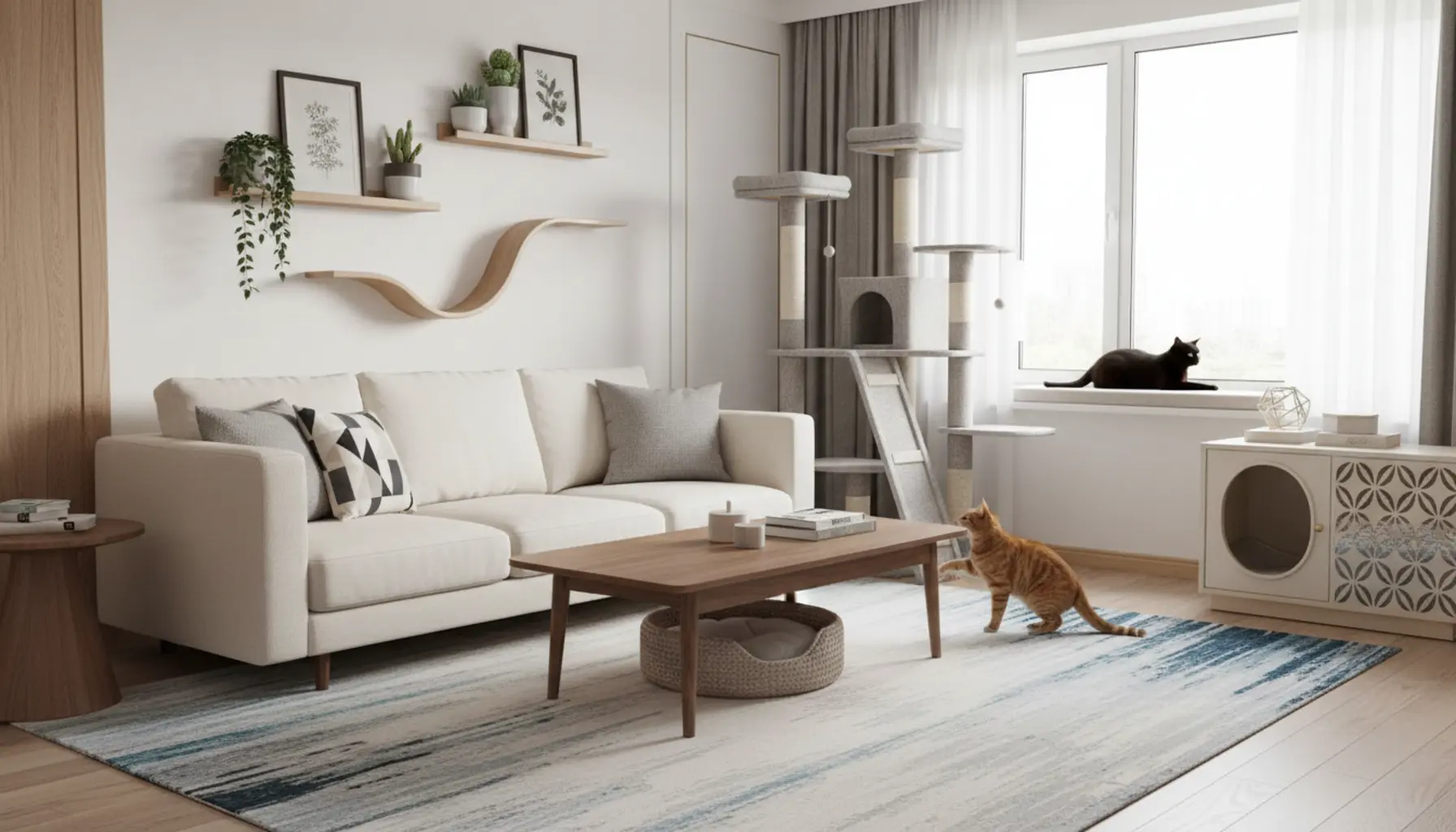
New technologies are increasingly entering the cat world, but their aim is not to replace human interaction, but to smartly complement daily routine and apartment design. Smart fountains with filters and motion sensors encourage more drinking and shut off automatically to reduce noise and save energy. Automatic feeders that let you set meal times and portions keep a regular routine and prevent rapid eating, especially for owners with shift work or frequent trips. Interactive toys controlled via app, programmable lasers, or electronic mice on set tracks are gaining popularity for play zones. To avoid household chaos, treat these areas as a “training arena”: designate a play spot (in the living room or hallway), and put toys away after play so they don’t become stray decor items. Comfort innovation includes stylish litter box cabinets with odor filtration, discreet entry holes, mats to trap litter, and self-cleaning litter boxes that remove waste automatically. Plan their location with a two-step entrance—a small platform, then the actual toilet zone—to keep litter tracked through the home to a minimum and simplify cleaning. Advanced owners now use air quality sensors for tracking scents and humidity near the litter box, or health apps that record litter box usage or water intake—valuable for monitoring health. Innovations also apply to materials: easy-to-clean, antibacterial bed covers, scratch- and stain-resistant furniture covers, and eco-friendly components from recycled materials for zero- and less-waste lifestyles. Acoustics matter: soft sound-absorbing panels, curtains, rugs, and upholstery benefit both people and cats by reducing sudden noise that can stress sensitive pets. More often, discreet calming pheromone diffusers are built into baseboards or sockets, so the home becomes a predictable, soothing space for cats. All these modern solutions make sense only when tailored to an individual cat’s age, temperament, health, and confidence—and harmoniously incorporated into the family’s daily life so tech and design support natural cat behaviors rather than force unnatural compromises.
Toys and Accessories Cats Love
The selection of toys and accessories is key when creating a cat paradise, as these items trigger hunting instincts, encourage movement, relieve stress, and prevent boredom—which often leads to problematic behaviors. The essentials are toys that engage the senses: all kinds of wands with feathers, ribbons, plush “prey,” and interchangeable tips mimic hunting and let cats chase, pounce, stalk, and finally “capture” their prize. Have a range of wands that move differently (flying “birds,” wriggling “snakes,” fast “mice”) and put them away after sessions so they stay novel and associated with you. Supplement with lightweight balls—with bells, treat holes, made of foam or felt—for batting, catching, and tossing; some cats prefer unpredictably moving balls, so spiral track balls, mazes, or rail setups work well. Small plush “prey” and mice, infused with catnip or valerian, are a hit—some cats love to carry them in their mouth, drop them from shelves, or present them as trophies. To keep toys interesting, rotate them by hiding extras for a few days and swapping weekly, so your cat always finds something “new.” For overstimulated or anxious cats, opt for toys encouraging calm, focused play—like treat-dispensing balls and scent mats that reward pawing and sniffing; these engage the mind, slow eating, and provide a sense of accomplishment. Introduce toys for solo play: cardboard houses with holes, fabric tunnels, multi-entrance hideouts for hiding balls or treats, setting up a simple prey trail—perfect if your cat has no outdoor access. Some cats love sound toys—crinkly tunnels, balls with gentle bells, soft rustling fabrics—but sounds need to be gentle, not loud, and always monitor your cat’s reaction, as too much noise can be stressful. Besides commercial toys, use simple homemade “gadgets”: uncoated paper balls, shipping boxes, paper bags with no handles (handles are unsafe!), or toilet paper tubes stuffed with treats and folded at the ends; these “zero waste toys” are often more enchanting than store-bought ones, as they offer endless opportunities for sniffing, scratching, biting, and tearing apart.
Beyond movement toys, accessories supporting daily comfort, activity, and a cat’s sense of security (while presenting the paradise attractively) are vital. Scratching posts with extras—dangling strings, balls, hammocks, little dens—combine claw care, climbing, play, and rest. Look for stability (heavy, broad base, solid mountings) and a variety of textures (sisal, cardboard, fabric)—some cats prefer vertical, others slanted or flat scratching. For more stimulus-hungry cats, consider interactive electronic toys—spinning balls, “escaping” mice, mats with a moving element underneath, or auto-wands—always keeping in mind these shouldn’t replace play with you, only complement it; crucially, the toy must let the cat “succeed” and catch the target, so motion should not be too fast or erratic. Feeding-related toys and accessories are also valuable: interactive bowls, dry food labyrinths, treat towers, puzzle feeders requiring paw manipulation for reward—all provide play, mental exercise, and slow feeding, which is vital for cats prone to gulping. Include scent accessories—catnip, valerian, or matatabi plush pillows, mats and scratchers sprinkled with dried herbs—many cats will roll, rub, bite, and dash about, but not all cats react, and “herb play” should be limited to 1–2 times a week to retain the “wow” effect. There are also accessories supporting cat-human bonds: soft brushes and grooming gloves many cats see as pleasant massage, and lick mats smeared with hairball paste or wet food—some cats find licking to be calming. Don’t forget travel accessories: a sturdy, ventilated carrier or “capsule” backpack lined with a familiar blanket can be kept open at home as an extra hideaway, so your cat doesn’t associate it only with vet visits. Observation elements that also serve as “environmental toys” round off the cat paradise: window shelves, suction-cup perches, radiator beds, or a simple “cat TV”—a bird feeder or drinking spot outside the window, or pots with safe cat grass. All this turns even a typical urban apartment into a place rich in stimuli, where your cat can hunt, explore, and enjoy tranquil observation—fulfilling the whole range of natural feline behaviors.
How to Organize a Cat Corner in a Small Apartment
A small apartment doesn’t have to limit your cat—use every centimeter cleverly and think in terms of “three-dimensional space.” Instead of giving up a big part of the room, plan a compact cat nook that combines several functions: rest, observation, scratching, play, water access, and, if needed, a litter box, all while keeping decor aesthetics. A perfect spot is often a room corner by the window or an unused niche next to wardrobes or sofas. On the floor, place a tall, stable scratch post with a few platforms, or a house with an integrated sisal post that doubles as lookout and rest spot. Opt for tall, slim builds rather than sprawling “cat towers” to save space. Add wall shelves above—these create a “cat highway” and give your pet a sense of control. Shelves don’t need to be wide; what matters is their stability, non-slip finish, and enough spacing for comfortable jumps (30–40 cm apart vertically). Modular shelves and bridges easily reorganize to fit walls in small apartments. For more “public” living areas, choose neutral colors and simple shapes—wood-toned scratchers, shelves with hidden mounts, and beds in matching fabric. The cat zone won’t overwhelm visually and can become a highlight of the interior. To maximize space, “absorb” some functions into furniture: hide the litter box in a side-access cabinet, put a bed on the TV cabinet or dresser, or lay a thin mat on the windowsill instead of a bulky cat bed. In small apartments, ensure the cat nook doesn’t overlap with heavy foot traffic: avoid placing the scratcher by the front door, hallways, or passages between the kitchen and living room—cats may associate their zones with constant disturbances and noise. Instead, use a side wall by the sofa, the space behind an armchair, or a room corner rarely visited by humans. If there are kids, ensure “high” retreats out of reach—a shelf or hammock on the wall is perfect when the cat wants peace. In compact studios, the “resources apart” rule is especially helpful: food and water bowls shouldn’t be by the litter box or entrance, so your cat can feel safe during each activity.
Organize the cat nook as a multi-level “activity center,” not just a single bed. Beside the scratch post or den, lay a small rug or mat—the soft landing after jumps, providing warmth and making the area more inviting. In the wall corner, anchor a little playstation: a hook or rail with a dangling toy, a spinning track with a ball, or interactive puzzles for treats. Accessories should be easy to clean and rotate—too many items in a small flat quickly create clutter. Store extra toys in a cupboard, laying out only 2–3 at a time and swapping them regularly. In the rest zone, beds with raised edges or small dens work well—especially near TVs or windows facing busy streets to help muffle stimuli. Cats often love combining observation and naps, so a windowsill shelf or radiator hammock is ideal: they take up no floor space and provide a great viewpoint. In tight bedrooms, the top shelf of a bookcase, accessed by wall shelves or a stepwise scratcher, can double as a “hammock.” Ensure discreet, easy litter box access—if it must be in the same room as the cat area, visually separate it with a low bookcase, a large potted plant, or a panel curtain; the entry should be easy and visible to your cat but not central for all occupants. Lighting is another often-overlooked element: overly bright spotlights on the bed may make your cat avoid it, so use diffuse floor lamps or wall sconces for a cozy twilight. Cats feel every change in a small space, so the cat nook should be as stable as possible—frequent moving of scratchers, litter boxes, or bowls increases stress. Adjust elements to your cat’s life stage: a young, energetic cat will enjoy higher shelves and active toys, while a senior prefers lower shelves, gentle ramps, and a soft bed at low height. Blending vertical and horizontal features, hiding function in furniture, and considering sensory comfort means even a small section of the home can become a full-fledged, safe, and interesting territory for your pet—fulfilling their needs without overwhelming the space.
Avoiding Mistakes When Designing Cat Spaces
When designing a cat paradise, it’s easy to focus only on aesthetics or online inspiration and overlook your pet’s true needs. One common mistake is designing a space “for humans,” not “for cats”: the scratch post matches the sofa color but sits in an unused hallway, shelves are too high or don’t connect, and the bed in a “lovely nook” turns out too noisy or exposed for your cat. Cats see the home differently—their priorities are safety, observation, escape routes, and a variety of places to rest and play. Ignoring this means expensive design solutions go unused. Also avoid over-“cramming” a small apartment with cat gadgets—too many items create chaos, make cleaning difficult, and ironically add stress for cats that value predictable environments. Another mistake is clumping all resources together: bowls, litter box, scratch post, and bed in one spot. This may be convenient for humans but unnatural for cats, which in nature separate eating, sleeping, and toileting areas. Placing the litter box too near food can cause your cat to avoid both. Problems also arise when planning for just one cat even though a second may be present—they need separate scratchers, bowls, and litter boxes, otherwise territorial conflicts and stress follow. Another big error is poor vertical planning: a single shelf with no safe access, no travel path, slippery or unstable furniture, or setups requiring big risky jumps dissuade cats and cause injuries. High places must be stepwise, using shelves, scratchers, or furniture—never requiring big leaps. Also beware of “concealed” elements to hide cat amenities, like fully enclosed litter box cabinets without ventilation, hidden beds only reachable by squeezing, or entries that force the cat to squeeze through gaps. This may look good, but increases odor, hinders cleaning, and discourages use if the spot is stuffy, too tight, or dark while not allowing supervision of surroundings.
Another mistake is disregarding noise and movement when picking key resource spots. Litter boxes by washing machines, gas stoves, speakers, or in busy hallways; bowls by the entrance; beds by the TV or a street-facing window—all lead cats to avoid these spots, relieve themselves outside the litter box, eat quickly and nervously, or shun “nice beds.” It’s also wrong to believe your cat will “get used to” uncomfortable solutions—chronic stress is subtle but results in more urinary infections, fur problems, apathy, or aggression. Other issues arise from not having enough or suitable scratching surfaces: a single low, wobbly post in a corner made of materials your cat dislikes won’t meet territory marking or stretching needs. As a result, furniture gets scratched, and the cat is unfairly scolded. Another mistake is forcing interactions in rest spaces—putting beds in the middle of traffic, petting your cat every time it steps onto its favorite shelf, or playing games in their hideouts. This makes your cat mistrust that it has a safe spot, so it avoids the space entirely. Watch, too, for age- or health-related oversights: too-high shelves for kittens or seniors, no low beds, cold slippery sills without mats, and no ramps or steps for cats with joint issues. Plan with the future in mind—your cat will age, so what’s fun now may become an obstacle. Finally, introducing all changes at once and expecting instant approval is a mistake. Sudden rearrangement, removal of familiar-smelling items, and swapping them for new ones can cause confusion and stress. Instead, add elements gradually, let your cat explore at their own pace, reinforce with positive experiences (treats, calm companionship), and observe usage. Avoiding these mistakes isn’t about perfection from day one, but being ready to adjust, abandon “good-looking but nonfunctional” ideas, and being attentive to your cat’s daily signals and needs.
Summary
Creating a cat-friendly apartment can be a creative and rewarding experience. Focus on covering your cat’s basic needs by planning the space right, providing appropriate toys and accessories, and avoiding typical design mistakes. By integrating innovative solutions, you can increase both your pet’s comfort and safety. Even in small apartments, there are countless ways to create a place where your cat feels like they’re in a true feline paradise.

