
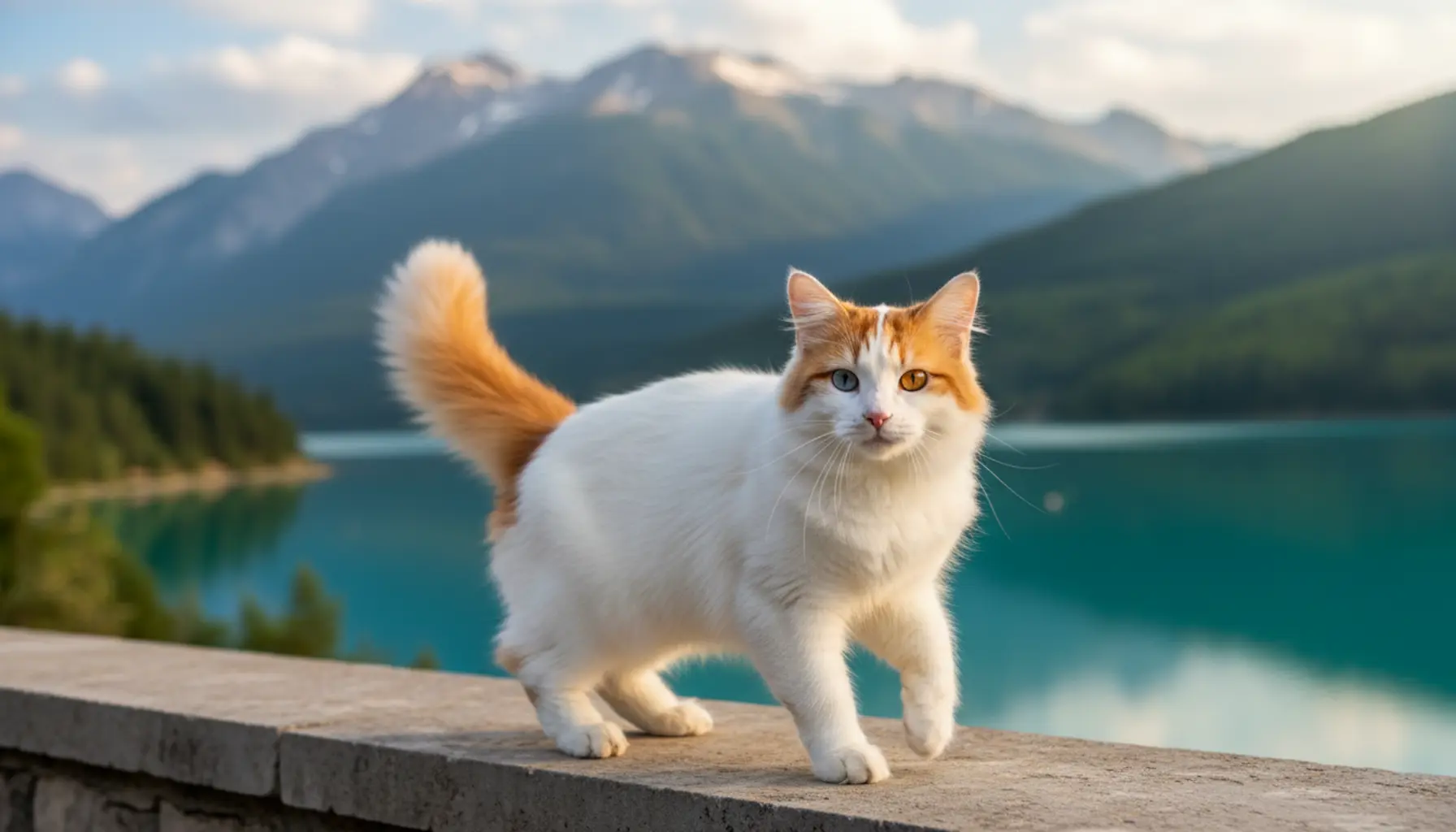
The Turkish Van is a unique cat breed known for its unusual approach to water and a strong bond with humans. These cats stand out not only because of their appearance, but above all because of their exceptional personality and friendly disposition. Discover the secrets of the Turkish Van and learn how to ensure its health and a happy life at home.
Table of Contents
- History and Origin of the Turkish Van Cat
- Characteristics of the Turkish Van: Exceptional Personality
- Ideal Care for the Turkish Van
- Nutrition: How to Feed a Turkish Van
- Turkish Van: A Feline Companion for Children
- Why Does the Turkish Van Love Water?
History and Origin of the Turkish Van Cat
The Turkish Van cat is one of the most distinctive and at the same time oldest natural cat breeds, whose roots go deep into the history and culture of the Middle East. The breed owes its name to Lake Van in Eastern Turkey – a vast, mountainous body of water surrounded by a rugged landscape, where, according to local beliefs, these cats have been living for hundreds of years. It is believed that Turkish Vans developed as a natural breed, without direct human intervention, as a result of adapting to the region’s unique climate: cold, snowy winters and hot, dry summers. Their semi-long, silky coat without a thick undercoat changes with the seasons and is the result of this evolutionary adaptation – lighter in summer, visually denser in winter, yet still not prone to matting, which distinguishes them from many other longhaired breeds. In Turkish tradition, cats with the characteristic “van” coloring – a white body with colored spots on the head and tail – were treated with respect and sometimes even reverence, perceived as animals bringing luck and harmony to the home. They appeared in local stories, legends, and folklore, and their extraordinary courage, intelligence, and attachment to their caregivers helped make them constant companions of the villagers living around Lake Van. The breed’s most notable trait – its fondness for water – also has its cultural reflection: local shepherds and fishermen long told tales of cats jumping into water, chasing fish by the shore, and wading fearlessly in the lake’s shallow inlets. Unlike most cats, which instinctively avoid getting their fur wet, the Turkish Van often curiously checked out the banks of rivers, streams, and ponds, which gave it an advantage in hunting small game and provided an additional source of food, while also enhancing its reputation as the “swimming cat.” Over time, these features – endurance, high physical fitness, and courage – made Van region cats associated with being exceptional animals, almost symbolic for this corner of Turkey, and their image began to accompany local crafts, textile patterns, and stories passed down through the generations.
Although the Turkish Van has long been present in its native region, it started its international breed career relatively recently, only in the second half of the 20th century. A breakthrough moment was a trip by two British tourists – Laura Lushington and Sonia Halliday – to Eastern Turkey in the 1950s, where they became enamored with the extraordinary semi-long-haired cats swimming in Lake Van. Captivated by their character, looks, and water-loving tendencies, they took a few cats back to the UK, where initial but very careful breeding efforts began with a focus on maintaining the breed’s natural type. It was in England that the modern Turkish Van standard was formulated – specifying the specific van coloring (white body with colored spots, most often red or cream, on the head and tail), a strong, muscular physique, and a characteristic feline temperament: lively, intelligent, yet strongly attached to chosen people. The breed was officially recognized by the GCCF (Governing Council of the Cat Fancy) in 1969, and later gained recognition from other feline organizations – including FIFe and TICA, thanks to which it reached breeders and cat enthusiasts in Europe and North America. Despite its growing popularity, the Turkish Van still remains a rather rare breed, surrounded by a certain aura of exclusivity, resulting from concerns over maintaining its lineage and genetic purity. Importantly, the Turkish Van should be distinguished from the related but nonetheless different Turkish Angora – also originating from Turkey, but with a more delicate build, different head type, and usually uniform or classic tabby coat. Modern Turkish Van breeding programs often emphasize maintaining the features typical of the original Lake Van population: strong, athletic build, good health, natural resilience, and a vivid character in which the love for water and playfulness go hand in hand with extraordinary loyalty towards caregivers. In many catteries – especially in Turkey and European countries – attention is paid to giving cats access to safe water play, which helps maintain their unique, historically-rooted fondness and keeps the story of the “swimming cats of Lake Van” alive, not only in legend but also in the everyday lives of today’s enthusiasts of this unusual breed.
Characteristics of the Turkish Van: Exceptional Personality
The Turkish Van is a cat with an extremely expressive personality, who quickly attracts attention not only with its looks but above all with its temperament. This is a lively, energetic, and highly intelligent breed, so it won’t do as a simple “sofa ornament” that sleeps the whole day. Turkish Vans love movement, exploring their surroundings and active interaction with people – they often behave more like dogs, following their caregiver from room to room and participating in almost every household activity. This isn’t a cat that likes being bored; a lack of mental and physical stimulation can lead to destructive behavior, so at home it’s worth investing in lots of interactive toys, high scratching posts and shelves, as well as regular hunting games using wands or balls. At the same time, although very sociable, the Turkish Van is extremely independent – able to choose when it wants affection, and when it prefers to climb, run, or observe the environment from the highest possible perch. When it comes to human relationships, the Turkish Van is usually open, curious, and friendly, but can also be selective – often attaching especially to one person in the household, whom it chooses as “its human.” Such an attachment is shown not only through constant companionship, but also displays of affection like rubbing, purring, staring into eyes, or bringing toys to play together. On the other hand, the Van is not a typical “lap cat” – most representatives prefer lying next to their person on the sofa or bed, rather than right on the lap, though of course much depends on individual character and early socialization experiences. Another key characteristic of this breed is its communication skills – the Turkish Van loves to “talk” to its caregiver by making a variety of sounds: from soft chirps to clear meows, especially when demanding something or seeking attention. This is a cat that often signals its needs very clearly: hunger, playtime, or irritation, so the caregiver soon learns to read its body language and vocalizations.
The Turkish Van’s attitude towards water is a hugely distinctive aspect of its personality. Most representatives of this breed not only aren’t afraid of water, but are actually fascinated with it: they can play for hours in a water bowl, catch dripping drops from a faucet, or even jump into the bath or shower. In many homes, the Van quickly learns to turn the tap on with its paw or waits for the moment when the caregiver opens the tap. This behavior is rooted in the breed’s natural environment and historical presence near Lake Van. Love of water also affects daily life: water bowls should be placed in stable locations, as the Van may splash them, treating them as toys. At the same time, the Turkish Van is a very clever cat who loves solving problems – it quickly learns to open cabinets, doors, and even simple locks, so the home should be made safe, e.g., by limiting access to cleaning agents or fragile items. Its curiosity means its nose (and paws) often end up in every crack, box, or bag – which on one hand is adorable, but on the other requires vigilance from the caregiver. As for other animals, the Van may be friendly but can also be territorial and dominant – especially males tend to take control of space and toys. Introducing a new animal into a Van household should be gradual and well-planned, ensuring each has a separate retreat. In relationships with children, the Turkish Van generally copes well, especially if the children are taught gentle animal handling and to respect the cat’s boundaries. As a highly energetic breed, it often eagerly participates in children’s play, chases balls, and even learns to fetch, but when overstimulated or tired, it can clearly indicate it’s time for a break. Many caregivers stress that the Van is an emotionally sensitive cat – it reacts to household moods, can comfort someone who is sad, and is involved in daily life like a full-fledged family member. At the same time, it requires consistent upbringing and clear rules from an early age, as its cunning and stubbornness mean it’ll quickly exploit weaknesses in the “household regulations.” For those dreaming of an active, intelligent, very interactive, yet characteristically independent feline companion, the Turkish Van can be a fascinating breed if one is willing to dedicate time, attention, and an understanding of its exceptional nature.
Ideal Care for the Turkish Van
Despite its semi-long, dense coat, the Turkish Van is not an especially demanding breed when it comes to grooming, but it does require regularity and adapting practices to the changing seasons. Its characteristic feature is a “seasonal wardrobe”: in winter, the coat is much more abundant with a pronounced ruff and breeches, while in summer it becomes lighter, shorter and less fluffy. In practice, brushing once or twice a week outside of molting seasons is usually enough to keep the coat in good condition, prevent mats, and reduce the amount of hair at home. During heavy shedding (usually in spring and autumn), it’s worth brushing or using a metal comb every day, especially around the neck, armpits, and thighs, where the coat is thickest. This not only supports natural hair exchange, but also minimizes hairballs in the digestive tract, which can lead to vomiting or digestive issues. The Turkish Van, being a “swimming cat,” often tolerates water better than other breeds, but this doesn’t mean frequent bathing is necessary – over-washing can dry out the skin and weaken the coat’s natural protective layer. A bath every few months or only in exceptional circumstances (e.g., major soiling, show preparation) is sufficient; it’s best to use gentle shampoos for long-haired cats, free of strong fragrances or harsh detergents. Since the Van likes water, some caregivers take advantage of this by proposing water games in a shallow container or by a basin, but caution is advised to prevent hypothermia – after water contact, the coat should be well dried with a towel, and the cat should have access to a warm, calm place. Besides coat care, skin condition is crucial: any redness, excessive dandruff, intense scratching or bald patches may be signs of allergies, parasites (fleas, mites), or even hormonal problems – it’s best to consult a vet before experimenting with grooming products.
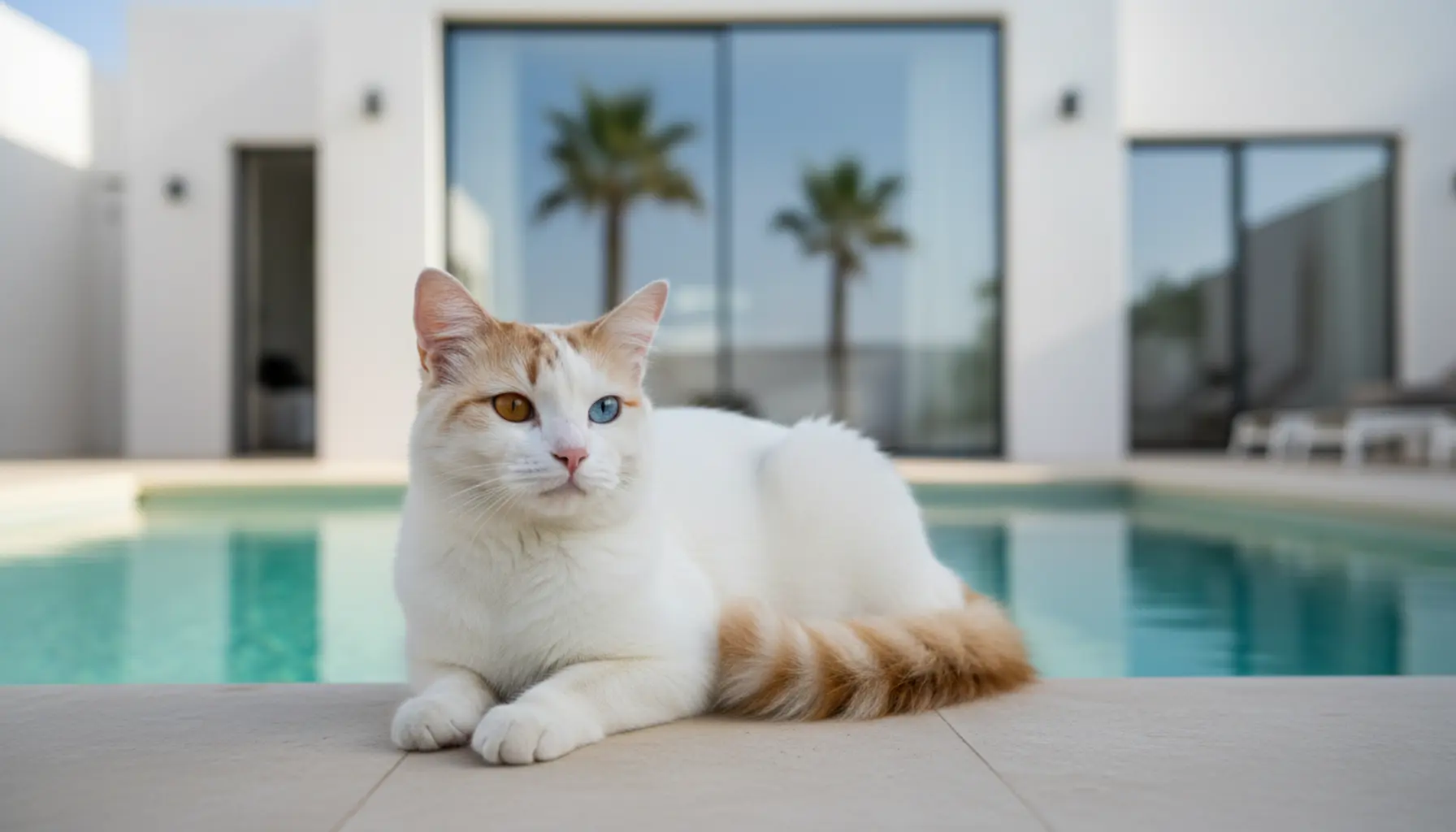
Comprehensive Turkish Van grooming, however, is not just about fur but also regular checks of eyes, ears, teeth, and claws, as well as tailoring the living environment to this breed’s high activity. The breed’s eyes – often amber, blue, or heterochromatic – should be clear, without excessive tearing or discharge. Gently wiping the corners of the eyes with sterile gauze moistened with boiled water or a special veterinary eye lotion, as needed (not daily if not necessary), maintains hygiene without irritating delicate tissues. Ears, due to their medium size and slightly rounded shape, usually don’t collect excessive wax, but every 2–4 weeks one should check inside: it should be light pink, with no brown clumps, bad smell, or redness. Use only cat ear cleaners and soft pads, never cotton buds which could damage the ear canal. Neglected ears increase the risk of infections and mite infestations, indicated by persistent scratching and head shaking. Extremely important, though often overlooked, is oral care: Turkish Vans have strong teeth but are prone to tartar if the diet includes lots of soft foods and teeth aren’t regularly cleaned. Ideally, accustom the cat from a young age to brushing with pet toothpaste (no fluoride) 2–3 times per week; if the cat won’t accept a brush, dental gels, dental chews, or oral hygiene-supporting foods are alternatives, though they won’t fully replace mechanical cleaning. Claws are naturally worn down through climbing and play, but indoor cats, especially if they don’t go outside, generally require trimming every 3–4 weeks to prevent ingrown nails and damage to furniture or the caregiver’s skin. Essential for “behavioral grooming” are numerous vertical and horizontal scratchers, shelves, cat trees, and observation points – the breed is very active, enjoys jumping up high and observing from above. A well-arranged space (stable scratchers, wall bridges, window access, secured balconies) helps maintain good muscle tone, healthy weight, and reduces the risk of destructive boredom-driven behavior. Regular veterinary check-ups (at least once a year, and every 6 months in older cats), up-to-date vaccinations, deworming on an individual plan, and flea/tick prevention complete a picture of proper care. With a combination of attention to coat, hygiene, and exercise and psychological needs, the Turkish Van maintains not only a pristine appearance but, above all, good health and emotional balance.
Nutrition: How to Feed a Turkish Van
The Turkish Van is an active, muscular, and relatively large cat, so its diet must support both high physical performance and a strong immune system. The basis of the menu should always be complete animal protein – muscle meat, organ meats, and, to a lesser extent, animal-based products such as eggs. When choosing commercial food (wet or dry), look for formulas with meat as the first ingredient, a high protein content, moderate fat, and limited carbohydrates. The Turkish Van, like all cats, is an obligate carnivore, so diets based on grains or high plant/plant protein content won’t be optimal or healthy in the long run. The ideal feeding plan is usually based on high-quality wet food as the primary diet, supplemented by moderate amounts of dry food – this supports oral health but doesn’t lead to dehydration or overburden the kidneys. It’s also important to adjust calorie portions to age, weight, activity level, and the cat’s individual metabolism. The Turkish Van is prone to intense play and high activity, so usually needs more energy than a typical “sofa purrball,” but, like any breed, can be prone to overweight if portions are too large or caloric. The safest approach is to use the food manufacturer’s recommendations as a starting point, then monitor body condition (the so-called Body Condition Score) and modify portions as needed after consulting your vet.
For Turkish Van kittens, it’s essential to provide adequate protein and fat in the diet to support rapid growth, muscle, and nervous system development. Good kitten food should be energy-rich, high in taurine, omega-3 fatty acids (DHA, EPA), B vitamins, and balanced minerals, particularly calcium and phosphorus in the right ratios. Kittens typically eat more often but in smaller portions – even 4–5 meals a day, gradually moving to 3, and for adult cats usually 2–3 meals daily. For adult Turkish Vans, consider portioned feeding rather than free access (ad libitum), as even active cats can gain weight if they always have uncontrolled access to food. For neutered/spayed cats, diets with slightly lower calories and controlled mineral content – especially magnesium and phosphorus – are recommended, as these help lower the risk of urinary tract problems and crystallization. The Turkish Van, known for a love of water, typically drinks more willingly than the average cat, which is a big plus, but nevertheless, fresh, clean water should always be available: in a bowl, drinking fountain, or even as light supervised water play. High inclusion of wet foods (pouches, cans, “wet raw” mixes) in the diet also helps hydration since they naturally contain more moisture than dry food. Cow’s milk does not need to be and should not be given, as most adult cats are lactose intolerant, which can cause diarrhoea and digestive upsets. On the other hand, all “human treats” like cold cuts, fried meat, seasoned dishes, sweets, or foods containing onion, garlic, chocolate, or xylitol are toxic or harmful for cats and must be avoided. If you would like to use a BARF diet or homemade cooked food, cooperation with an animal nutritionist or veterinarian is necessary, because incorrect balancing of micro- and macroelements can lead to serious deficiencies, kidney, bone, or heart disease. Particular attention should also be paid to preventing obesity: regular weighing, monitoring body shape, palpable ribs without excessive fat, and a visible waist indentation are simple indicators that the food portion is appropriate. Proper nutrition for the Turkish Van, supplemented by physical activity, exercise involving hunting and play (wands, balls, interactive toys), and care for water quality translates into a healthy body, shiny coat, good immunity, and high quality of life for this energetic, social cat.
Turkish Van: A Feline Companion for Children
Thanks to its lively temperament and high intelligence, the Turkish Van can become an extraordinary companion for children, especially those who like movement, play, and active ways of spending time. This cat doesn’t settle for lying on the sofa – it prefers to participate in family life, follow members around, and get involved in daily activities. For kids, this means a buddy for all kinds of games: from chases with a ball, through exploring hidden corners together, to interactive play with a wand, tunnel, or puzzle toys. At the same time, the Turkish Van is independent enough to withdraw when it feels overstimulated, helping avoid stressful situations for both cat and child. Caregivers should, however, realize that the breed’s temperament requires children to be taught respect for feline limits. From the first days, it’s worth explaining to young children that the cat’s tail, ears or paws must not be pulled, and it doesn’t like being held by force or waking up during sleep. The Turkish Van, though generally patient, may show displeasure by hissing or leaving for a secluded spot if it feels dominated or cornered. For this reason, it’s best suited to homes with preschool- and school-age children who already understand basic pet handling rules and follow established guidelines. Sharing a home with a cat can have huge educational benefits: children learn responsibility (e.g., helping with feeding, cleaning bowls, or grooming), and also empathy by observing and responding appropriately to feline reactions.
One especially interesting feature for children is the Turkish Van’s love of water – this is not just a fun fact but also a real opportunity to build unusual but positive rituals. Under adult supervision, the cat can watch water play in the bath or at the sink, “catch” floating toys or drops running down the tap – this often entertains kids and triggers their curiosity about nature. However, it’s important that a child never tries to forcibly “bathe” the cat or dunk it in water – the initiative should always come from the animal, and it’s the caregiver’s role to explain that even a “cat who likes water” has the right to decide when and how to interact with it. For the Turkish Van–child relationship to develop smoothly, it’s worth setting clear household rules: the child should only play with the cat using toys, not their hands, learn to interpret signs of impatience (tail-wagging, flattened ears, leaving), and respect the cat’s “private zone” – beds, scratchers, or shelves for retreat when the cat has had enough. A good practice is encouraging calm, shared activities like reading a book together, petting only when the cat approaches, or watching the cat during feeding. This helps the child develop composure and focus, while reinforcing the cat’s sense of security as its choices are respected. Thanks to its high intelligence, the Turkish Van is also perfect for learning simple tricks – it can be encouraged to jump through small hoops, follow a target stick, or even fetch small toys. Involving children in such training – always using positive reinforcement (treats, praise, petting) – develops patience, consistency, and a sense of agency. Remember, however, that the adult is fully responsible for both sides’ safety: they supervise all play, ensure the child doesn’t overwhelm the cat, and explain that, just like people, animals also need rest and can be in a bad mood. In such a household, the Turkish Van becomes not only a cheerful playmate but also a valuable “teacher” of emotions and sensitivity, who helps children better understand the world of living creatures and build deep, respectful relationships with them.
Why Does the Turkish Van Love Water?
The Turkish Van has fascinated cat lovers for years with its unusual, almost anti-stereotypical, relationship with water. While most cat breeds instinctively avoid bathing and deep puddles, the Turkish Van can jump into bathtubs by itself, wade in bowls, or even swim in a lake or pool. The foundation of this extraordinary fondness lies primarily in the breed’s history and natural adaptation to the environment around Lake Van in Turkey – a region with hot summers and a relatively harsh climate. For centuries, these cats lived near water reservoirs, where water was not only a source of cooling, but also a place full of small prey like fish or crustaceans. Hunting instinct combined with intelligence led many individuals to associate water not with threat, but with the opportunity for food and exploration. This environment also developed a muscular, athletic body and strong limbs adapted to swimming – the Turkish Van not only isn’t afraid of water but is physically well-equipped for it. Another major element is the specific structure of its fur. Turkish Van’s coat is semi-long without the thick, woolly undercoat typical of many long-haired breeds. As a result, water does not get in as easily or form heavy mats, making the coat dry faster and absorb less. One could say the coat is almost “water-repellent”: drops tend to roll off rather than immediately soak through the layers. In warmer months, this is a huge advantage – immersion in cooler water provides relief, and the body isn’t overly chilled after drying off. Crucially, a lack of strongly negative experiences from wet, slow-drying hair means the Turkish Van does not form associations with water as unpleasant as other cats do. Combined with natural curiosity and high confidence, you get an animal that will likely undertake “water experiments” if given the opportunity. Often, the Turkish Van’s water relationship starts even as a kitten: the young watch their mother and siblings play around water bowls or dripping taps and quickly learn that running liquid is not an enemy but an intriguing part of the surroundings.
The Turkish Van’s temperament is pivotal to its watery passion. This is an intelligent, confident, inquisitive, and active cat – all traits that encourage testing new stimuli. Instead of backing away at the sight or sound of splashing water, the Turkish Van usually approaches, touches with a paw, and little by little gets more and more involved in play. Many individuals quickly discover that water is a great “tool” for sensory stimulation: you can chase floating toys in it, “hunt” spinning bubbles, splash with paws, or watch light reflect from the surface. At home, this translates to specific behaviors that caregivers often describe with amusement – the Turkish Van may independently enter the shower cabin just after someone has bathed, peek into the bathtub, or even hop into the tray as water is draining. Not infrequently, they also learn to turn taps on by themselves, which can be funny but means bathrooms and kitchens need securing to avoid flooding the house. Splattering water around the bowl is also characteristic: some Vans fish toys out “like fishermen,” others just enjoy splashing water across the floor. From an animal-psychology perspective, the fondness for water can be seen as a combination of innate hunting instinct, a need for intensive stimulation, and high resilience to new experiences. This cat “discovers” more quickly than others that water presents no real danger, especially if first contact is gradual and voluntary. Therefore, the caregiver’s approach is crucial: the Turkish Van should never be suddenly dunked or forced into a bath, because even with this breed, unpleasant experiences can provoke fear of water. Much better is encouraging water contact via play – e.g., putting floating toys in a shallow bowl, letting the cat watch the bath fill, or allowing access to a dripping tap, if safe. It’s increasingly popular to use the love of water as environmental enrichment: therapeutic fountains for cats, bowls of different depths, or even small portable pools in the garden. This way, the Turkish Van can fulfill its natural needs in a controlled environment, reducing the risk of boredom and destructive behavior, and also strengthening the bond with its caregiver – shared “water rituals” become a characteristic element of daily life with this amazing breed.
Summary
The Turkish Van, known as the ‘swimming cat,’ is a fascinating breed with a rich history and outstanding personality traits. These medium-sized cats are not only intelligent and sociable but also show a unique passion for water adventures. They require suitable grooming to keep their semi-long fur healthy and beautiful. Feeding a Turkish Van should be tailored to its active lifestyle. Thanks to their friendly nature, they make excellent companions for children, forming strong bonds with them. If you are looking for a cat to bring plenty of happiness into your life, the Turkish Van is an excellent choice.

