
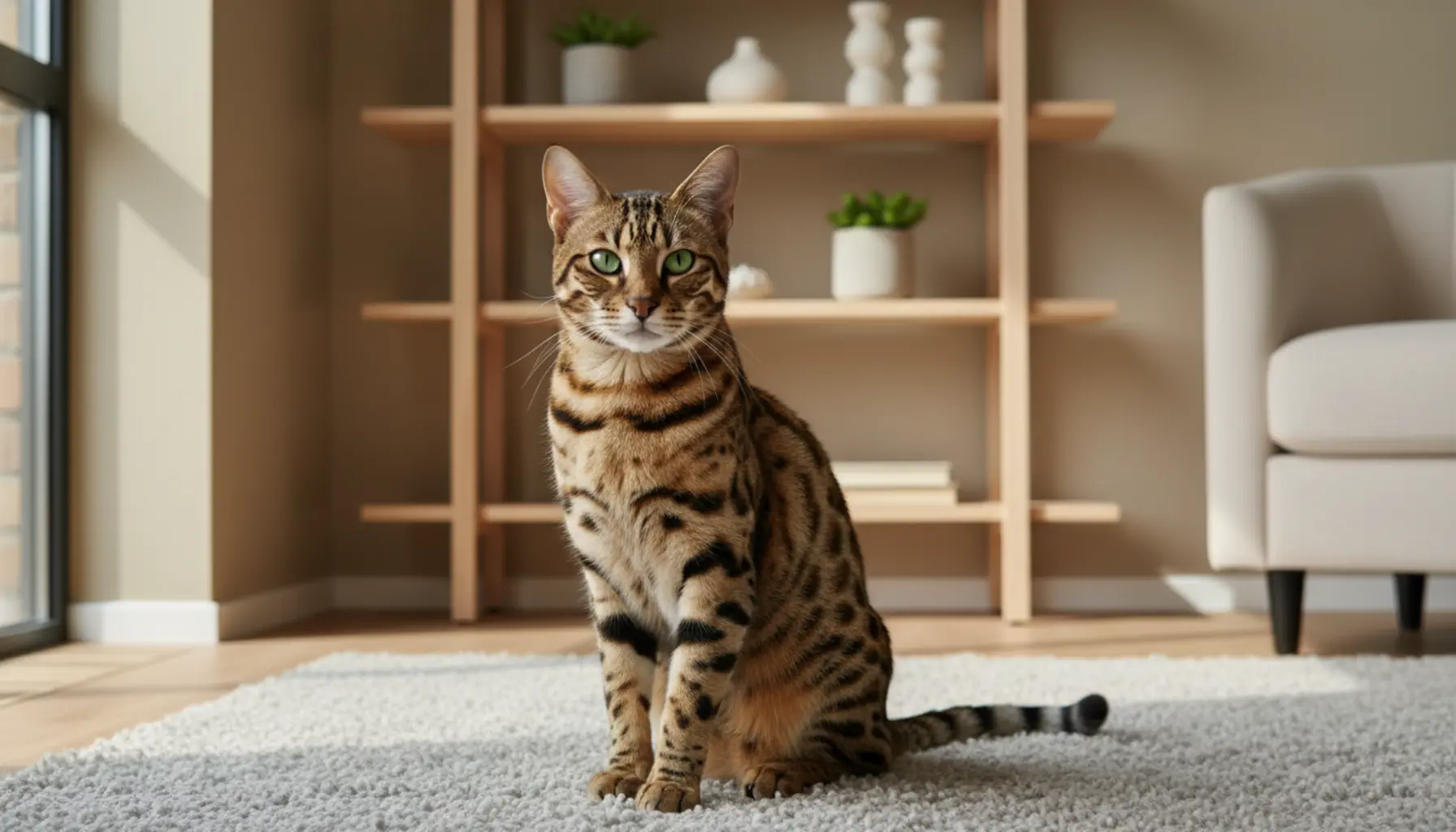
Ocicat is an extraordinary cat breed that combines an exotic appearance and high intelligence with an exceptionally sociable character. These cats delight not only with their striking spots, but also with their activity and friendly disposition, making them ideal companions in everyday home life. Ocicats win the hearts of cat lovers looking for loyal, interactive pets with a fully domestic, easy-to-care-for character.
Table of Contents
- Origin and History of the Ocicat
- Appearance and Characteristics of the Ocicat
- Behavior and Personality of the Ocicat
- Ocicat Health: How to Care
- Dietary Needs of the Ocicat
- Why Ocicats Are Ideal for the Home
Origin and History of the Ocicat
The origins of the Ocicat breed are extremely interesting, as it was created entirely by accident, rather than as a result of a deliberate breeding program aimed at producing a cat with a spotted, “wild” look. The history goes back to the 1960s in the United States, when breeder Virginia Daly from Michigan was working on improving the coat color and type of Siamese cats. The aim was to obtain “Abyssinian point” Siamese, so Daly decided to cross a Siamese cat with an Abyssinian. This combination produced kittens that resembled Abyssinians, but carried the Siamese genes. Then, one of these kittens was paired again with a Siamese to reinforce the desired oriental features. In one of the litters, however, a kitten with a distinctively spotted coat emerged—completely different from the rest of the siblings. This kitten became the progenitor of the Ocicat breed, and its unique, wildcat-like appearance, reminiscent of a ocelot, inspired the name of the new breed: a combination of “ocelot” and “cat.” Interestingly, many breeders and show judges initially believed that wild cats must have been involved in the creation of the breed, but in reality, there are no wild species in the Ocicat’s pedigree—it’s a fully domestic cat, with its exotic appearance the result of skillfully blending traits from three breeds: Siamese, Abyssinians, and American Shorthairs.
As news of the unusual spotted cat spread among breeders, there was growing interest in creating a stable, recognized breed with this appearance. In the 1960s and 1970s, the first attempts were made to organize a breeding program, controlling pairings to preserve the distinctive coat pattern—clear, rounded spots arranged symmetrically along the sides, shoulders, and rump. The American Shorthair was also introduced into the breeding program, whose genes helped strengthen the more massive, “wilder” physique and improved the structure and density of the fur. As a result, the Ocicat gradually diverged from the more delicate Siamese type, becoming a more athletic, muscular cat, while still retaining elegance and a well-defined wedge-shaped head with large, expressive eyes. In 1966, the CFA (Cat Fanciers’ Association) first registered the Ocicat as an “experimental” breed, marking an important milestone toward official recognition. In the following years, the breed standard was refined, with a focus on the desired head profile, ear shape, body proportions, and—most importantly—the coat pattern. A real breakthrough came in the 1980s, when the Ocicat received full CFA recognition (1987) and could officially compete in champion class. The breed later gained acceptance in other international federations, such as TICA, FIFe, and GCCF, allowing it to expand beyond the United States and appear in Europe, including Poland. The evolution of the Ocicat breed was cautious—due to the desire to maintain genetic health and avoid an overly narrow gene pool, controlled use of foundation breeds was allowed in many breeding programs. At the same time, care was taken to preserve the unique character of the Ocicat: combining spectacular, “wild” markings with the gentle, sociable temperament of the domestic cat. Today, Ocicats come in many color variations (including tawny, chocolate, lilac, blue, fawn, or cinnamon), but all share the typical evenly spotted coat and a distinctly exotic appearance. Although several decades have passed since Virginia Daly’s first accidental litter, the breed still remains relatively rare, adding to its exclusivity. At the same time, its history shows how thoughtful breeding can combine wild appearance, high intelligence, and balanced character in one cat, without resorting to crosses with wild species—a fact of great ethical and practical importance in the context of living with a cat in a typical family home.
Appearance and Characteristics of the Ocicat
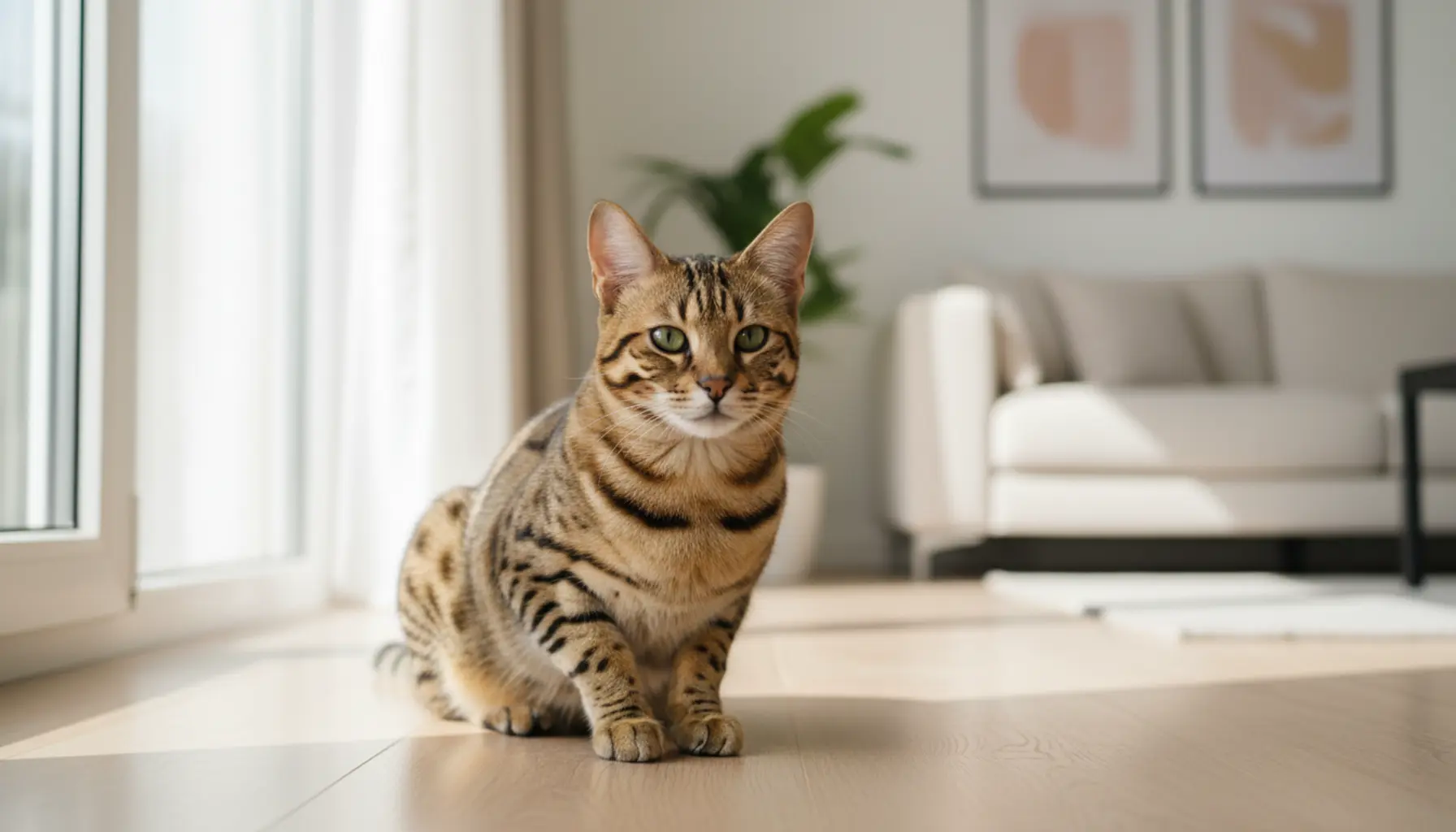
The Ocicat is a cat with an exceptionally harmonious, athletic silhouette that immediately attracts attention with its wild, “leopard-like” look. Medium-sized, muscular bodies are agile, but not excessively massive—it’s a classic “athlete’s” build combining elegance with strength. The torso is slightly elongated, the chest well-developed, and the back smooth and level, giving the body a springy impression. The limbs are proportionate: slender, well-muscled, ending in oval, nimble paws. The tail is medium in length, thick at the base and narrowing toward the tip, often with a darker tip that further emphasizes the “wild” nature of the coat. The Ocicat’s head is a slight wedge with softly rounded contours, without sharp transitions—which is important, as the breed should resemble neither extreme oriental types nor the broad heads of Persians. The muzzle is defined but not overly square, the chin is strong and well-marked, and the cheeks are gently rounded. The ears are medium-sized, wide at the base, often ending with subtle tufts (not required), giving the facial expression a more alert and “wild” look. The eyes are one of the most magnetic features of the Ocicat—large, slightly almond-shaped, set at a slight angle to the nose, and can appear in a wide palette of colors, from intense green, to gold and amber, to deep copper; the only excluded color is blue, reserved for other breeds. Their gaze is often described as piercing, intelligent, and deeply expressive. The Ocicat’s short, close-lying coat is silky to the touch, smooth, with a gentle but noticeable sheen. It’s this coat that displays the characteristic, contrasting spot pattern—most visible along the sides, shoulders, and rump. The spots are usually oval or “thumbprint” shaped and evenly distributed, mimicking the coat of a wild cat, though the Ocicat remains fully domesticated. Distinct “make-up” around the eyes and nose, stripes on the limbs and tail, and the typical “M” mark on the forehead, inherited from tabby ancestors, are desirable. The breed comes in many color variations—tawny (brown), chocolate, cinnamon, plus their dilute varieties: blue, lilac, fawn, as well as silver versions where the hair base is light and the tips dark. Such color diversity allows the cat to suit fans of both warm, golden tones and cooler, silvery shades. Despite the striking appearance, coat care is relatively simple—a weekly brushing is usually enough to remove dead hair and emphasize the natural shine, as well as occasional checks of ears, claws, and teeth. The lack of undercoat means the Ocicat sheds moderately, which many owners appreciate for easy home maintenance.
The Ocicat’s character is surprising, as beneath the “wild” exterior lies a remarkably sociable, intelligent, and people-oriented cat. This breed is known for its high level of mental activity—Ocicats learn quickly, can open cabinets, memorize household routines, and recognize the sound of keys or the steps of particular people. They eagerly participate in positive training, fetch toys, respond to their name, and even perform simple commands such as “sit,” “give paw,” or “bring.” Their curiosity about the world and desire to be involved in family life means they don’t tolerate boredom or long loneliness—left alone without adequate stimulation, they might look for their own “entertainment,” e.g., by exploring forbidden places or stealing small objects. For this reason, it’s important to provide them with interactive toys, scratchers, shelves, and a daily dose of shared playtime with their owner. In terms of temperament, the Ocicat is often compared to a dog—they form a strong bond with their person, happily follow them around the house, observe every activity, keep company during work at the desk or while relaxing on the sofa in the evening. Many like to be carried, sleep close to people, or at least keep them in sight. This is not the “lone wolf” type; they do especially well in homes where someone is regularly present, as well as in families with children, provided the children are taught to handle cats gently and respectfully. By nature, Ocicats are friendly, confident, and open—they rarely display fearfulness, and usually greet new guests out of curiosity rather than running under the bed. They get along well with other cats, as well as with dogs, especially those with gentle temperaments if socialization is calm and consistent. Their energetic nature is paired with vocalization, though not as intense as the Siamese: they usually communicate with soft, melodious meowing and purring, used to “speak” with their caregiver. Their intelligence and need for contact mean the Ocicat requires a mindful approach—this isn’t a decorative cat to be admired from afar, but a full-fledged family member who expects involvement, conversation, play, and closeness. With proper upbringing and fulfillment of their needs, they become loyal, balanced companions who adjust to the household rhythm, while retaining their innate curiosity and joyful temperament.
Behavior and Personality of the Ocicat
The Ocicat is a breed that combines exceptional intelligence, energy, and a strong need for human contact, making their behavior significantly different from the stereotypical “independent cat.” They are very curious animals—interested in literally everything that happens at home. They’re happy to accompany their caregivers with daily chores, observing cleaning, cooking, or even work at the computer, often trying to “help” with a paw or lying on the keyboard. Thanks to their high intelligence, they quickly pick up daily routines: they recognize feeding times, can anticipate when their people come home, and many individuals learn to respond to their name or simple voice commands—which is reminiscent of dogs. Ocicats are not typical loners—when left alone for too long, they may experience frustration and boredom, leading some to vocalize, destroy things, or demand lots of attention upon their person’s return. For this reason, they thrive in homes where someone is present most of the day or where more than one cat lives. Their sociability isn’t limited to people—they usually accept other cats and, with proper introduction, even dogs, especially those with a gentle temperament. Compared to many breeds, Ocicats are quite open to guests; often instead of hiding under the bed, they will come to greet new people, sniff their belongings, and curiously investigate who has arrived on their territory.
In terms of temperament, the Ocicat is active—even lively—but rarely chaotic. Their energy is usually directed into play, exploration, and interaction. They have a strong hunting instinct and particularly enjoy hunting games, such as chasing feather wands, balls, or interactive treat toys that require moving or opening to release treats. They are great at learning tricks: fetching small toys, sitting, spinning, jumping on command onto a certain shelf or scratching post, or even walking on a harness is not beyond their abilities. Incorporating short training sessions with a clicker and rewards into the daily routine positively influences their behavior at home, helps expend excess energy, and strengthens the bond with their owner. Ocicats are very communicative; although their voices are generally softer than Siamese cats, they often use gentle meowing, purring, and an array of murmurs to attract attention, ask for play, or signal displeasure. “Shadow dog” behaviors are typical—following their person from room to room, sitting on laps, lying on the desk, or wanting to sleep in bed with their owner. At the same time, they are not annoyingly demanding if their need for activity and companionship is fulfilled; after an intense play session, they’re happy to curl up on a bed or high shelf, from where they can observe the surroundings from a distance. Ocicats appreciate vertical space: ceiling-high scratchers, cat shelves, and bridges allow them to satisfy their natural climbing instincts while also preventing unwanted jumps onto fragile furniture or kitchen counters. In an environment that offers enough stimulation, this breed usually presents a stable, cheerful personality—combining courage, openness, and remarkable loyalty to “their” people, making many describe daily life with an Ocicat as more like a relationship with a very clever little companion than a “typical” domestic cat.
Ocicat Health: How to Care
Ocicats are generally considered a healthy and long-lived breed, but—as with any pedigree cat—they have certain predispositions that a responsible owner should be aware of. The basis of good health is choosing a reputable breeder who conducts genetic testing and regularly monitors the health status of adult cats, eliminating individuals with serious illnesses from breeding. In Ocicats, special attention should be paid to the heart (hypertrophic cardiomyopathy, HCM), kidneys (including congenital defects and chronic renal failure), as well as the condition of the joints and teeth. Although HCM is not as common as in some other breeds, responsible breeders perform regular echocardiograms in breeding cats, significantly reducing the risk for kittens. As active and muscular cats, Ocicats may be prone to minor injuries, so it’s worth observing their movement, especially after energetic play sessions or jumps from high places. Ongoing weight monitoring is very important—excess weight, especially in such an active breed, quickly burdens the joints, heart, and liver, encouraging the development of diabetes and other metabolic diseases. Prevention includes not only food appropriate for age, activity level, and any illnesses, but also strict control of treats, ensuring sufficient exercise, and minimizing boredom, which often leads to “eating out of boredom.” A balanced diet should provide high-quality animal protein (essential for healthy muscles and coat), healthy fats, and controlled carbohydrate levels; many owners choose grain-free or low-carb foods, which may be beneficial for this active breed, provided the diet is well designed and discussed with a veterinarian. Hydration is also key—some Ocicats enjoy cat water fountains, which encourage more drinking and may reduce the risk of urinary tract problems.
Regular veterinary prevention is fundamental to keeping an Ocicat healthy, even if the cat appears robust. Annual checkups (more frequent for kittens and seniors, as recommended by your vet) should include a thorough clinical exam, dental and gum control, auscultation of the heart, weight assessment, and periodically blood and urine tests to catch chronic diseases early—such as kidney, liver issues, or inflammation. Vaccinations (e.g., against panleukopenia, feline flu, and rabies—according to local protocols) should be renewed following the current vaccination schedule, and deworming/external parasite protection (fleas, ticks, lice) tailored to the cat’s lifestyle; even if the Ocicat is strictly indoors, parasites can be brought inside on shoes or clothing. Oral hygiene is also important—Ocicats, like most cats, are at risk for tartar build-up, gum inflammation, and painful tooth resorption, so it’s best to get them used to gentle tooth brushing from a young age, and to use supporting products as recommended by the vet. Equally important is obesity prevention by ensuring daily active play—chasing feather toys, interactive games, or clicker training, which combines mental stimulation and movement, and is especially effective for such an intelligent breed. Home health monitoring should observe appetite, stool consistency and frequency, water intake, litter box behavior (e.g., frequent, unsuccessful attempts to urinate may indicate cystitis), and general well-being. For Ocicats, known for sociability and vitality, any sudden changes—apathy, withdrawal, hiding, aggression when touched, or reluctance to jump—are warning signals that require vet attention. Mental health is just as important as physical: Ocicats suffer in prolonged loneliness, lack of stimulation, and monotony. Providing scratchers, shelves, hideaways, puzzle toys, rotating stimuli, and daily attention reduces the risk of compulsive behaviors, stress, or somatic illnesses worsened by chronic tension. Maintaining a safe home environment (including securing windows and balconies, removing toxic plants, storing detergents and medicines) is especially important, as the curious and bold Ocicat tends to explore every nook and cranny. All these elements—vet care, proper nutrition, exercise, mental stimulation, and home safety—form a comprehensive system of care, allowing the Ocicat to fully enjoy a long and active life.
Dietary Needs of the Ocicat
The Ocicat, as an active, highly muscled, and extremely energetic breed, has specific nutritional needs that set it apart from typical “couch potato” cats. The basis of their diet should be high-quality animal protein, which is the main building block for muscles and source of energy for such a lively cat. In practice, this means wet and dry foods listing meat, rather than grains or plant fillers, as the first ingredient. A good diet should feature various meat sources (poultry, turkey, beef, rabbit, sea fish) to reduce the risk of specific amino acid deficiencies and make it easier to tailor food to an individual cat’s digestive sensitivity. As strict carnivores, Ocicats also need taurine—an essential amino acid supporting heart, vision, and nervous system health—so it’s worth selecting foods with a clearly specified, sufficient taurine content or consulting your vet about supplementation if needed. Adequate dietary fat is also important, as it provides stable energy for active cats and keeps skin and coat healthy; however, fat should not cause a calorie surplus, because Ocicats, despite their musculature, can still gain weight quickly without enough exercise. Grains, especially in cheap foods, should be limited; too much corn or wheat increases risk of obesity, can worsen digestive issues, and cause glucose spikes. Grain-free or low-grain diets with easy-to-digest carbs like sweet potato or peas, in only supplemental amounts, are particularly beneficial for this breed. Hydration is another key aspect of the Ocicat’s dietary needs. Although most cats drink little by nature, high meat content in cans and pouches combined with fresh water in multiple locations can significantly ease the burden on the kidneys and urinary tract. As practical and quick-learning cats, Ocicats often enjoy water fountains, which are a clever way to encourage them to drink more. It is also important to regularly adjust calorie intake to the cat’s age, activity, and health status. Ocicat kittens in their rapid-growth stage need “kitten” formula with higher protein, fats, and balanced calcium and phosphorus for bone development. Adult cats, especially those who go outdoors or are actively playing inside, benefit from complete “adult” foods, and for seniors it’s best to use “senior” formulas with reduced calories, joint support (glucosamine, chondroitin), and added antioxidants to protect cells from oxidative stress. In all age groups, sudden dietary changes should be avoided—even though Ocicats usually have strong stomachs, abrupt shifts can result in diarrhea or vomiting; transitioning from one food to another should last at least 7–10 days.
Due to their high intelligence and learning ability, Ocicats can successfully “train” their caregivers to give treats more often—an easy road to overweight. Therefore, snacks should only be used as a training aid or an occasional reward, not exceeding 10% of the cat’s daily calorie requirements. Ideally, treats are dried meat without added sugar, salt, or artificial coloring, or special functional dental treats that support oral health; too many soft, high-calorie snacks can accelerate tartar build-up and cause weight gain. For this breed, interactive toys and treat balls are particularly beneficial, combining food with mental activity—allowing the Ocicat to “work” for part of its daily ration, reducing boredom and improving weight control. Feeding “from the table” should be avoided, as many human foods are harmful to cats (onion, garlic, chocolate, alcohol, xylitol), and some, although not outright toxic, are too fatty or salty (deli meats, sauces, cheeses), putting a strain on the pancreas and kidneys and potentially leading to long-term health problems. Special attention should be paid to mineral content, especially phosphorus and magnesium, to reduce the risk of kidney disease and urinary stones; it is recommended to choose foods with controlled levels of these components—adjusted for the cat’s age and sex—and to regularly monitor blood and urine test results, especially for Ocicats displaying any symptoms of urinary problems. Omega-3 fatty acids (from fish oil or krill oil) support immunity, the heart, joints, and skin condition, and can be valuable dietary additives, if not present in the main food. Remember that every Ocicat is an individual—some do well on high-meat wet foods with minimal dry, others need more variety in texture or flavor; the key is to observe your cat’s reactions, stool consistency and frequency, coat quality, and energy level. Persistent dull fur, bad breath, frequent diarrhea or constipation can indicate that the current diet isn’t well-suited or that a health issue has arisen requiring vet consultation or therapeutic food. Finally, regular weighing—at least once a month—and recording the results helps catch weight gain or loss trends before they are visible to the eye; in this muscular breed, which can “hide” extra grams easily, body condition monitoring is an important part of responsible feeding.
Why Ocicats Are Ideal for the Home
The Ocicat is a breed that uniquely combines exotic looks with the qualities of an ideal family cat, making it well-suited for both city apartments and larger homes. First and foremost, their balanced, sociable character means they form very close bonds with family members—they enjoy participating in household life, greeting owners at the door, keeping company during remote work or evening movie sessions. They are not typical cats that disappear for long hours into secluded corners; instead, they tend to stick to the center of activity, making sure to keep an eye on everyone. Thanks to their intelligence and learning ability, Ocicats respond well to house rules—they quickly learn where they’re allowed, can grasp daily routines, and predict specific actions like mealtimes and play sessions. This predictability and adaptability is especially valuable in homes with children, where it’s crucial for a pet to be emotionally stable and not over-react to the daily bustle. Unlike some more sensitive breeds, Ocicats cope well with normal household noises, such as vacuuming, television, or guests’ conversations, provided stimuli are introduced gradually and with respect for their boundaries. Another advantage is that they are neither excessively vocal nor completely silent—they communicate, but don’t have the loud, intense “voice” of classic Siamese. Their vocalization is fairly subtle: gentle meows, chirps, or purrs that help the owner catch their needs without turning the home into a concert hall. For many, it is important that Ocicats usually accept other pets—especially if socialization is properly managed from kittenhood. They function well in multi-pet homes—with other cats or friendly dogs—which makes them a good choice for families who already have pets and worry about conflicts. If introduced calmly to resident animals, they usually quickly develop relationships, share space, and play together without excessive territoriality. Practically, many owners value the relatively simple grooming needs of Ocicats: their short, smooth coat doesn’t mat or require complicated grooming—regular brushing easily fits into a weekly routine, even for a busy lifestyle. This limits the amount of hair on furniture and clothes and makes everyday care less demanding. At the same time, Ocicats are famous for their willingness to cooperate during hygiene procedures—properly accustomed, they accept nail trimming, ear or tooth checks, making it easier to maintain health at home.
An important reason why Ocicats are ideal for the home is their high intelligence and need for stimulation, which can be very creatively used in everyday life. These are cats that often love learning tricks: fetching toys, coming when called, or using harnesses and leashes on safe walks. This kind of active time together is especially attractive for families with school-age children—kids can participate in simple positive training, learning responsibility, patience, and respect for animals. An Ocicat given clear rules, enough stimulation, and regular play sessions is usually well-balanced and less likely to engage in destructive behaviors such as scratching furniture or chewing objects. Their enthusiasm for activity can be channeled by creating a “cat obstacle course” at home with shelves, scratching posts, or tunnels, which, especially in apartments without outdoor access, provides a healthy outlet for energy. For remote workers, the Ocicat is an excellent companion: content lying quietly near a desk but also reminding you to take breaks by bringing a toy or hopping onto the cat tree by your workstation—thereby naturally supporting a more active lifestyle. It’s also worth noting that while energetic, these cats can adjust their activity level to the household rhythm—after a youthful “crazy phase,” they usually mellow out, remaining playful but also content with long naps on the couch. They enjoy rooms with vertical space (tall scratching posts, shelves), which is easy to provide even in small apartments. From a safety perspective, Ocicats, thanks to their intelligence and curiosity, quickly learn to use the litter box, scratchers, and interactive toys, minimizing the risk of “accidents” and making it easier to keep the home tidy. They are relatively non-confrontational with guests—after initial observation, they often initiate contact with new people, which is a pleasant aspect for social gatherings. Finally, their general good health and longevity—given proper care—means you can plan a many-year relationship, which is especially important for families seeking a stable, steady member of their home. All this makes the Ocicat a breed that fits harmoniously into the daily rhythm of a modern home—active, full of stimulation, yet requiring a flexible, friendly, and well-adapted companion to shared living with people.
Summary
In summary, the Ocicat is a unique breed combining exotic looks with intelligence and friendly behavior. These cats are excellent companions for families and active people who value interaction with their pets. They evoke the beauty of ancient wild cats but are fully domesticated, making them perfect house companions. Grooming is fairly simple, and providing them a balanced diet and proper healthcare contributes to a long and happy life. These traits make Ocicats a wonderful choice for cat lovers seeking a loving and interactive companion.

