

Skin problems in cats are not only a matter of aesthetics but also a signal for health issues. Effective skin protection requires quick recognition, proper treatment, and everyday prevention. Get to know the most important aspects to ensure your feline friend’s comfort and a healthy coat.
Table of Contents
- Main Causes of Skin Problems in Cats
- Allergic Dermatitis: Symptoms and Treatment
- Parasites and Your Cat’s Skin Health
- Recognizing Skin Diseases in Cats
- Treatment and Prevention of Skin Problems
- Home Remedies for Healthy Cat Skin
Recognizing Skin Diseases in Cats
Recognizing skin diseases in cats requires careful observation of the animal at home and thorough diagnostics at a veterinary clinic. The first warning sign is usually a change in behavior – the cat begins to scratch, lick, or bite particular areas of its body intensely, often also at night. The owner may notice excessive hair loss, the appearance of dandruff, greasy or conversely overly dry fur, as well as small scabs that can be felt under the fingers when petting. Also characteristic are sudden “jerks” where the cat seems as if pricked, then nervously licks or bites the area. It’s important to pay attention not only to general changes in the appearance of the coat but also to the specific location of skin lesions – on the neck, base of the tail, belly, flanks, or around the muzzle and ears, since the typical distribution of lesions may lead to a specific cause (e.g., allergy to fleas, food allergy, ear mange). Changes in your cat’s smell are also significant – an unpleasant, “rancid” odor from the fur, oozing ulcers, moist, red areas, or excessive licking around the anus or perineum, which may indicate inflammation or the presence of parasites. When observing at home, it’s worth parting the fur to examine the skin in well-lit places, especially on the back, belly, and base of the tail. This way, the owner may spot tiny black dots resembling “pepper grains” (flea dirt), scratching marks, small pimples, bumps, erythema, flaky patches of skin, or circular bald spots with clear borders, typical for fungal infections. Also worrisome are any sudden, symmetrical bald spots on the belly, thighs, or sides, which can suggest so-called psychogenic alopecia, as well as behavioral changes like aversion to touch, withdrawal, or irritation when petting specific body parts. However, an owner is not able to distinguish many diseases on their own, so whenever changes persist for more than a few days, are getting worse, are accompanied by wounds, bleeding, intense itching, or general symptoms (apathy, fever, lack of appetite), a vet visit is necessary for professional diagnostics.
In the clinic, the veterinarian begins diagnosing skin diseases by taking a detailed medical history from the caregiver, which includes the duration and dynamics of symptoms, the cat’s diet (type of food, treats, any recent dietary changes), anti-parasitic prevention used, the living environment (indoor or outdoor cat, contact with other animals, the presence of new detergents, cat litter, or plants at home), as well as previous illnesses and medications taken. Then comes a thorough clinical examination of the entire body, with special attention to the skin, fur, claws, and ear pinnae. The vet assesses the type and distribution of lesions (erythema, bumps, pimples, vesicles, scabs, scales, bald patches, discoloration), the degree of itching, the presence of secondary bacterial or yeast infections, the cat’s overall condition, lymph nodes status, and vital parameters. Depending on the clinical picture, further additional tests are selected. Basic diagnostic tools include skin scrapings – samples of the epidermis and superficial skin layers collected with a special curette or scalpel, then examined under a microscope for parasites (e.g., mites, Demodex) or hair follicle abnormalities. Trichoscopy (microscopic examination of hairs) is also commonly performed, helping distinguish baldness due to mechanical biting from that caused by hair growth disorders. For fungal infections, a Wood’s lamp examination and mycological cultures are used to confirm or exclude dermatophytes; keep in mind that a negative preliminary test does not always rule out ringworm, so repeating the test may sometimes be necessary. If a bacterial infection is suspected, the vet may take a swab from the skin or deeper layers of the lesion for cytological and bacteriological examination with an antibiogram to choose the most effective antibiotic. Tests for external parasites are performed, e.g., the so-called white paper test for flea droppings (flea dirt) or a detailed coat examination with a comb and magnifying glass. In chronic and widespread lesions, or when allergies or autoimmune diseases are suspected, a skin biopsy for histopathological examination is helpful, as it allows very precise diagnosis. Allergy tests – intradermal or serological – are increasingly used to diagnose atopic dermatitis, and elimination diets are conducted to confirm food allergies. Blood tests (morphology, biochemistry, thyroid hormones, B12 level, assessment of kidney and liver function) are also crucial, since some systemic diseases may initially manifest as skin lesions. Full and accurate diagnosis of skin disease in a cat thus requires the combination of thorough home observation, a detailed clinical examination, appropriate additional tests, and patience, as in many cases the diagnostic process is staged and requires follow-ups and modifications of initial assumptions.
Treatment and Prevention of Skin Problems
Treatment of skin problems in cats should always be based on a precise diagnosis of the cause, so the first and most important step is a visit to the veterinarian rather than self-experimentation with over-the-counter products. Depending on the diagnosis, the vet may implement topical, general, or combined treatment – for bacterial and fungal infections, ointments, creams, sprays, or medicated shampoos containing antifungal and antibacterial ingredients are usually used, and for extensive lesions, antibiotics or oral antifungals are added. For parasitic diseases such as infestations by fleas, lice, mites, or mange, anti-parasitic products are applied in the form of “spot-on” drops, tablets, collars, or injections, and at the same time, thorough disinfection of the environment is necessary – washing blankets, beds, and toys at high temperatures as well as vacuuming and using insecticides at home. In the case of food allergies, therapy is based on an elimination diet, which involves feeding special monoprotein or hydrolyzed food for at least 6–8 weeks, with no “add-ons” such as treats, table scraps, or other foods. If the skin condition improves during this period, the vet and owner re-introduce subsequent food components to observe which causes recurrence of itching and lesions. For environmental allergies (atopy, dust mite or pollen allergies), treatment is usually long-term and includes anti-itch medications, topical glucocorticosteroids, sometimes specific immunotherapy, and dietary supplements to support the skin barrier. Regardless of the cause, regularly monitoring your cat’s condition is crucial – skin lesions often heal slower than owners expect, and stopping medication too soon can cause the disease to return. In many cases, using an Elizabethan collar or post-surgery clothes helps prevent the cat from scratching or licking itchy areas, which would otherwise delay healing and promote secondary infections.
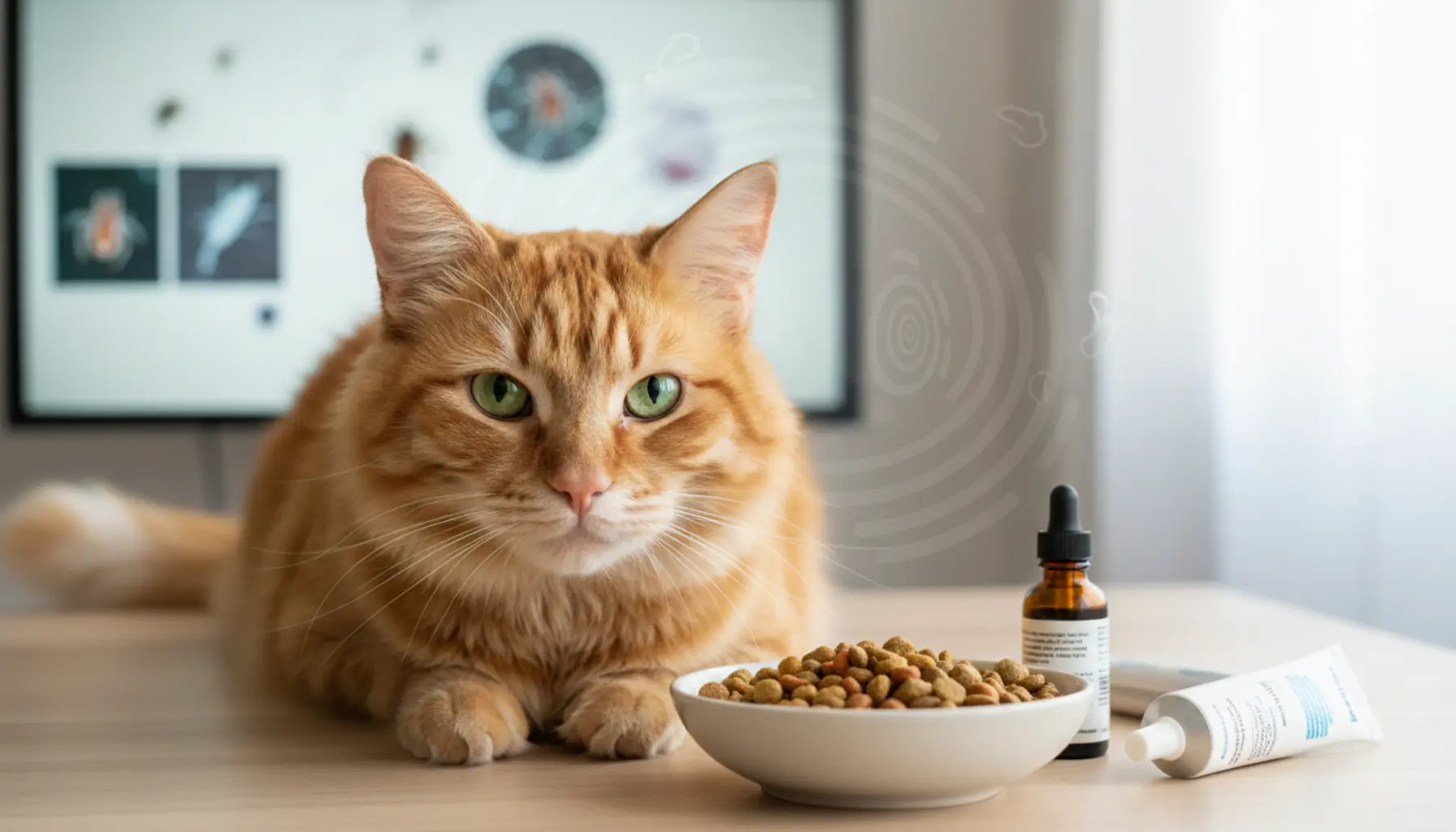
Preventing skin problems in cats is primarily based on comprehensive, daily care for your pet’s health and prompt reaction to the first worrying signs. Key is regular anti-parasitic prevention – even if your cat does not go outdoors, it may come into contact with fleas or other parasites brought into the home on people’s shoes or clothes. Using “spot-on” drops or anti-parasitic tablets every 4–8 weeks (as advised by your vet and per product instructions) significantly reduces the risk of mange, Demodex, and flea saliva allergy (FAD), one of the most common causes of intense itching. Equally important is a properly balanced diet, rich in essential omega-3 and omega-6 fatty acids, high-quality animal protein, B vitamins, zinc, and biotin – these support the reconstruction of the skin barrier, limit inflammation, and help keep the fur in good condition. Sudden food changes and products containing many artificial colors and preservatives, which may promote the development of food sensitivities, should be avoided. Regular grooming also plays a vital role in prevention – brushing the fur removes dead hair, stimulates skin circulation, and helps quickly spot irregularities such as small scabs, pimples, bald areas, or dandruff. Baths should be limited to cases recommended by your vet and only with gentle veterinary shampoos – too frequent washing with random cosmetics can disrupt the natural skin lipid layer, leading to dryness and itching. To prevent contact allergies, pay attention to the chemicals used at home: detergents, floor cleaners, air fresheners, or cleaners for washing cat beds – it’s best to choose hypoallergenic products and thoroughly ventilate rooms after cleaning to minimize irritating vapors. The living environment is also significant: reducing stress by providing hiding spots, climbing areas, scratching posts, daily play, and a stable routine lowers the risk of psychogenic dermatoses like excessive licking and balding. Routine check-ups at the vet – at least once a year, or more often in older cats – allow early detection of not only skin conditions but also systemic diseases, whose first symptoms can be dermatological changes. Effectively combining these elements – anti-parasitic prophylaxis, a balanced diet, proper grooming, environmental control, and close observation of your pet’s behavior – is the best way to minimize the risk of skin problems and their recurrence in the future.
Home Remedies for Healthy Cat Skin
Home care plays a huge role in your cat’s skin condition and can significantly reduce the risk of dermatological issues, provided that it doesn’t replace vet visits but complements them. The foundation is regular brushing suited to the coat type – short-haired cats usually need brushing 2–3 times a week, while long-haired breeds such as Persians or Maine Coons require daily detangling. Brushing removes dead hair, prevents mats, improves skin circulation, and makes it easier to notice problems such as flaking, redness, scabs, or external parasites. Use brushes and grooming combs designed for cats, with gentle ends that won’t irritate the skin; with sensitive individuals, rubber grooming gloves work best. Responsible approach to bathing is also important – most healthy cats do not need frequent baths, and washing too often can destroy the skin’s natural oil barrier, worsening itching or dandruff. If a cat bath is necessary, e.g., due to severe dirt or if recommended by a vet for specific dermatoses, only use specialist veterinary shampoos for cats with appropriate pH and formula, rinse thoroughly, and ensure a calm, stress-free environment. At home, it’s also worth regularly checking problem areas – ears, between toes, armpits, and groin – where moisture, dirt, and debris easily accumulate, fostering the growth of yeasts or bacteria. A key foundation of at-home dermatological prevention is feeding an appropriate diet, especially rich in high-quality protein and omega-3 and omega-6 fatty acids that support rebuilding the skin’s barrier, limit inflammation, and improve coat shine; sources include “skin & coat” diets or supplements from salmon, borage, or evening primrose oil, though any dietary additions should be introduced after consulting a vet, especially for cats with liver, kidney, or pancreatic diseases. Ensure proper hydration as well – encourage your cat to drink by placing several water bowls around the home or using pet fountains to help keep the skin elastic from within. Maintaining a healthy body weight is just as important: overweight promotes hard-to-access, moist skin folds prone to maceration and infections and limits the cat’s mobility, hampering its care for its own hygiene.
Home prevention also covers creating a friendly, stable environment because chronic stress can indirectly lead to skin diseases, intensifying licking, scratching, and lowering immunity. Give your cat places to hide and observe, scratching posts, shelves, or beds at different heights and a fixed, predictable daily schedule to minimize emotional tension; for particularly sensitive cats, pheromones in diffusers or sprays help soothe and reduce compulsive fur licking. Never forget regular use of anti-parasitic agents bought at the veterinary office – routine protection against fleas, ticks, and mange is one of the simplest home methods to avoid itching, flea allergic dermatitis, or secondary infections. At the same time, keep your cat’s environment clean: vacuum carpets, wash blankets, beds, and stuffed toys at high temperature, and ventilate rooms to reduce dust, mites, and potential environmental allergens. Be careful with aggressive detergents, air fresheners, insecticides, and scented products at home – cats are very sensitive to chemicals, so contact with irritating substances on skin or mucous membranes can cause irritation, hives, or contact dermatitis; choose gentle products, rinse surfaces well, and don’t let your cat walk on freshly cleaned floors. Absolutely avoid “home remedies” like essential oils, human medications (e.g., steroid creams, antifungals, cosmetics) or products found online, as these can be toxic or highly irritating to cats – always consult your vet before using any skin spray, ointment, or supplement. It’s wise to introduce a short, calm skin and fur check into the daily routine, best during petting or play: look out for scabs, wounds, bald spots, excessive dandruff, red areas, and any unusual skin odor. Detecting subtle changes early and responding quickly by contacting the vet clinic makes your at-home prevention efforts much more effective, as it stops the development of advanced, painful, and difficult-to-treat dermatological disorders.
Summary
Skin problems in cats can have various causes, from allergies to parasites. The key to healthy skin is a quick diagnosis and proper treatment. Regular observation of symptoms such as itching or redness, and vet consultations are essential. Proper prevention, including protection against parasites, can significantly improve your cat’s quality of life. Diet and hygiene also play a crucial role in preventing skin disorders. Thanks to these steps, your cat will enjoy healthy, shiny skin.

