
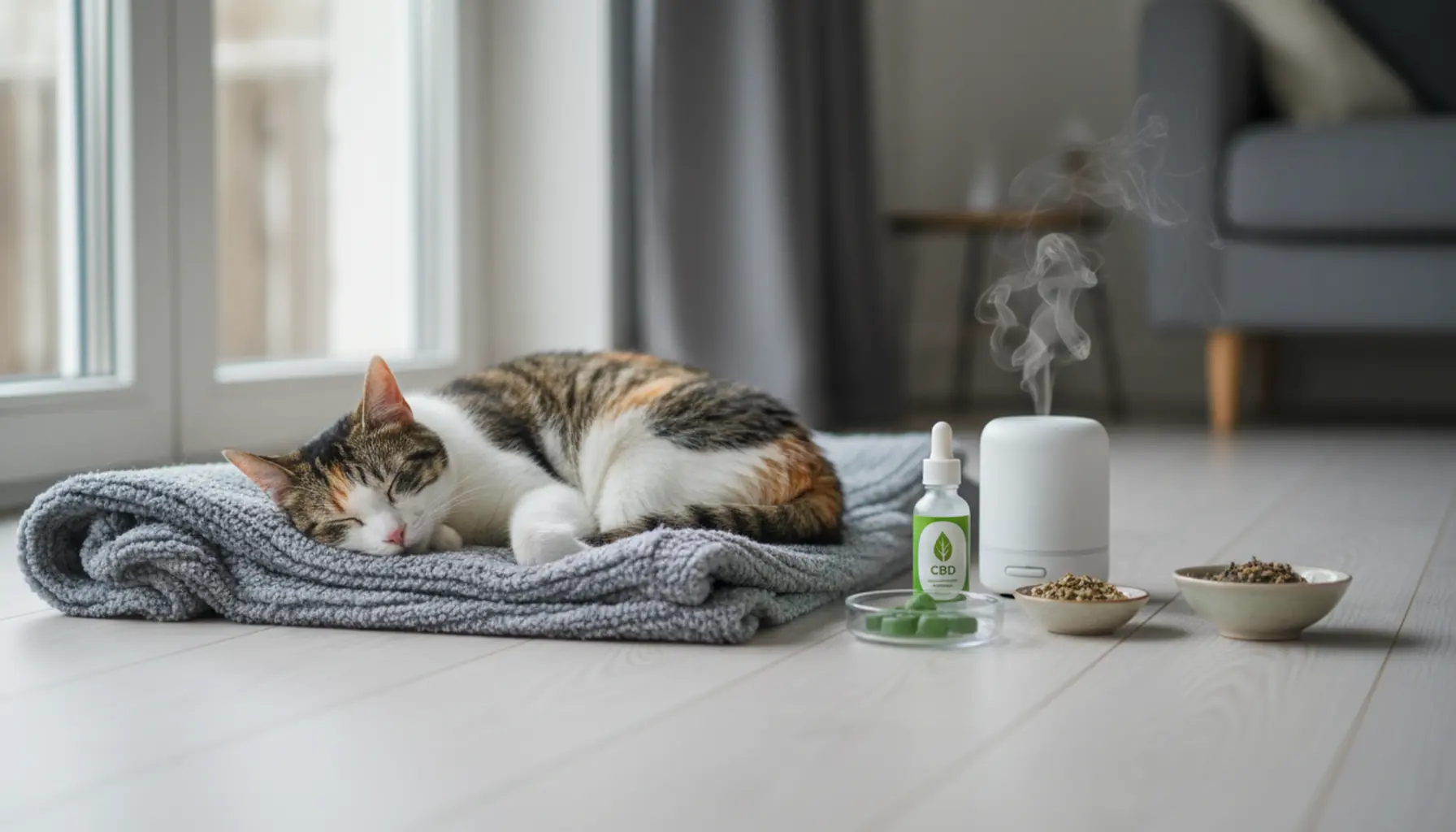
Stress in cats can manifest in many different ways. In this article, we explain how to recognize signs of stress in your cat and how to effectively calm them down. Discover methods such as pheromones, CBD, calming herbs or sedative medications, and find out how to support your cat’s health every day.
Learn how to calm your cat: pheromones, CBD, herbs and calming medications for stress. Discover effective ways to soothe and support your feline’s mental wellbeing.
Table of Contents
- Symptoms of Stress in Cats – How to Recognize Them?
- Pheromones for Cats – When Should You Use Them?
- CBD for Cats – A Natural Way to Calm Them
- Calming Herbs and Home Remedies for Stress Reduction
- Calming Medications for Cats – When Are They Necessary?
- Prevention and Everyday Support for Cat Calmness
Symptoms of Stress in Cats – How to Recognize Them?
Stress in cats rarely looks as spectacular as it does in humans – your feline won’t say they’re having a “bad day,” so it’s up to the owner to learn to read subtle body and behavioral cues. The most obvious symptoms involve changes in routine: a previously calm and balanced cat may suddenly become overly agitated, or quite the opposite – withdrawn and apathetic. Many cats begin to vocalize excessively: loud meowing, yowling, “crying” (especially at night), or even purring in situations where they normally wouldn’t (some cats purr not only when happy, but also when tense). Hiding is a common sign – your cat may spend more time under the bed, in the closet, behind the sofa, avoid contact with household members, flee at the sight of strangers, and crossing the middle of the room may become a challenge. Stress can also manifest as aggression: hissing, growling, pawing, biting, attacking other cats or people seemingly without cause, especially when touched or picked up. Excessive grooming can also be alarming – a cat may compulsively lick itself, creating bald patches, especially on the belly, inner thighs, or the base of the tail; in extreme cases, this may lead to self-harm. Some stressed animals might even neglect grooming, causing a dull, matted coat, especially visible in long-haired cats. Litter box habits react quickly to stress — issues might include urinating outside the box (on bedding, carpet, sofa), marking vertical surfaces, diarrhea, constipation, loose stools, or the opposite — straining to defecate. Many people wrongly interpret such behaviors as “malice,” while very often they are a cry for help and a key indication of emotional overload. Stress also affects appetite – some cats stop eating or only approach their bowl before walking away, while others eat greedily, may “attack” food, steal from the table, or beg incessantly, using food as a form of self-soothing. Sleep may also change: the cat might sleep much more than usual, but the sleep is shallow and interrupted, they wake easily and respond to every sound; some cats, on the other hand, become overly alert and seem to keep watch constantly. Also typical are changes in movement and body posture – a stressed cat moves close to the ground, tail low or tucked under, ears flattened or in constant “listening” mode, often with dilated pupils even in bright rooms, and a tense body ready to run. It’s good to watch the tail: quick, nervous swinging, “lashing” against the floor, twitching its tip during seemingly calm lying, can betray rising tension. Many cats also show tics and compulsive behaviors – sudden jumps, chasing “invisible” objects, staring at blank walls, licking objects, sucking fabrics or their own tails. Physical symptoms with a stress background shouldn’t be ignored: recurring urinary tract infections (so-called idiopathic cystitis), vomiting “from nerves,” increased scratching without clear allergic cause, and sudden worsening of chronic illnesses such as IBD or diabetes. Chronic stress can be especially insidious (learn more about chronic stress in cats) – a cat may appear “simply calm” yet is actually constantly operating in a state of slight tension, slowly eroding its health and predisposing to a range of medical issues.
Recognizing stress in cats is above all about careful observation and comparing your cat’s behavior to their own “norm,” not to ideas of how a cat “should be.” What is a natural personality trait (such as being quiet or needing less interaction) in one cat, if it appears suddenly in another, may be an alarm bell. Always ask yourself three questions: what changed, when did it change, and did any possible new stressor appear (renovation, moving house, new household member, change in food, new cat in the home, prolonged loneliness). Don’t just watch for single behaviors but the whole “package” of signals: a single meow or occasional hiding doesn’t mean a serious problem immediately, but together with avoiding contact, appetite changes, litter box or grooming issues, the risk of chronic stress rises. It’s also important to distinguish acute from chronic stress. Acute stress appears, for example, during fireworks, vet visits, transport – the cat may pant, drool, vocalize intensely, tremble, try to escape or freeze; after the trigger ends, most return to normal. Chronic stress is living constantly in “mild tension” – it develops gradually and involves increasingly problematic behaviors and health issues, decreased quality of life, withdrawal or, conversely, agitation without clear reason. Body language is crucial for assessment (cat body language guide): micro-signals such as frequent lip licking without food present, yawning at “odd” moments (e.g., during petting the cat tolerates but dislikes), sudden head turns, muscle tension, paw or tail rigidity, are calming and masking signals sent before more obvious reactions like hissing or swatting. If you feel “something’s wrong” and your cat’s behavior or health changes, always consult a veterinarian first to rule out medical causes, and then – if needed – a behaviorist. Early recognition of stress symptoms allows you to choose suitable support strategies (including pheromones, CBD, environmental modifications or relaxation training) before problems become deep-rooted and a heavy burden for your cat.
Pheromones for Cats – When Should You Use Them?
Pheromones for cats are synthetic analogs of natural chemicals that cats use to communicate, mainly by rubbing their cheeks on objects, scratching or marking territory. The most popular products (sprays, plug-in diffusers, collars) usually contain analogs of the so-called F3 facial pheromone fraction or “friendship” pheromones, which symbolize safety, familiarity and lack of threat for a cat. This helps lower anxiety and tension, support behavior therapy and facilitate adaptation to new conditions, though it’s important to use them as part of a broader plan, not as a “magic spray” for all issues. Consider using pheromones especially when your cat faces sudden environmental changes – for example during a move, renovation, arrival of a baby, a new partner or another animal. Many cats get stressed even by changes in furniture layout, new smells or noises; a pheromone diffuser in your cat’s main room can help shorten adaptation, and reduce hiding, vocalizing or defensive aggression. Pheromones can also help when introducing a second cat at home – sprayed in common areas or used as a diffuser, they can reduce tension, ease territorial fights, and help build positive associations. Usually, several strategies are combined: adequately arranged space (separate food bowls, litter boxes, hiding places, shelves), gradual socialization, and pheromone support acting as a subtle “message” that the environment is safe and predictable. Another good occasion for pheromones is traveling – to the vet, on vacation, or using public transport. Many cats get anxious just seeing the carrier; spraying its inside with pheromones a few minutes before putting your cat in can reduce anxiety, and using a diffuser in the waiting room (if available) also supports calming. For cats prone to separation anxiety, loud meowing in their owner’s absence or destructive behavior in stress, pheromones may be part of a behavioral intervention plan – especially for stress-related to clear changes (e.g., longer time alone, new feeding schedule, or lonely nights). Pheromones are odorless for people and other species, so they should not cause household discomfort, and their effects are usually subtle and gradual, not dramatic overnight.
Pheromone use in cats is especially justified for mild to moderate stress symptoms, like occasional hiding, increased vocalization, mild scratching of furniture, or sporadic urine marking in new situations, but for severe, chronic issues (intense aggression, persistent self-licking to the point of wounds, recurring urinary infections due to stress), they shouldn’t substitute a vet and behaviorist consultation, but instead complement it. Pheromones are also recommended for stress related to clinic visits or medical procedures: you can start using them a few days before a scheduled procedure, allowing your cat to associate home smells with safety, and leave a diffuser in the recovery room after returning home. For senior cats, prone to chronic illnesses, cognitive changes and sensitivity to routine disruptions, pheromones can ease disorientation and anxiety linked to night yowling, changed sleeping places or limited mobility – again, alongside adjusting the environment (easy-access litter boxes, warm resting spots, non-slippery surfaces). To be effective, pheromones have to be used systematically and as recommended by the manufacturer: diffusers usually require uninterrupted plugging for at least 4 weeks to assess effects, and sprays must be applied at appropriate distances from surfaces, avoiding direct contact with the cat and its bedding right before use (you need to let the alcohol base evaporate). Owners should realistically evaluate their potential: pheromones won’t “fix” poor socialization, lack of hiding spots, boredom or pain—often an underestimated cause of irritability and aggression. They work best when combined with better environmental conditions, environmental enrichment (shelves, scratching posts, wand toys, observation spots), a clear daily routine, and a relationship with the cat based on predictability and respect for its boundaries. Ask your vet which kind of pheromones suits your situation best (facial pheromones, “friendship” types for cat groups, or anxiety-relief formulas), and discuss combining them with other support — herbal supplements, calming diets, or, for tough cases, medication. That way, pheromones become a consciously integrated tool in your cat welfare plan, not just an “in case” extra.
CBD for Cats – A Natural Way to Calm Them
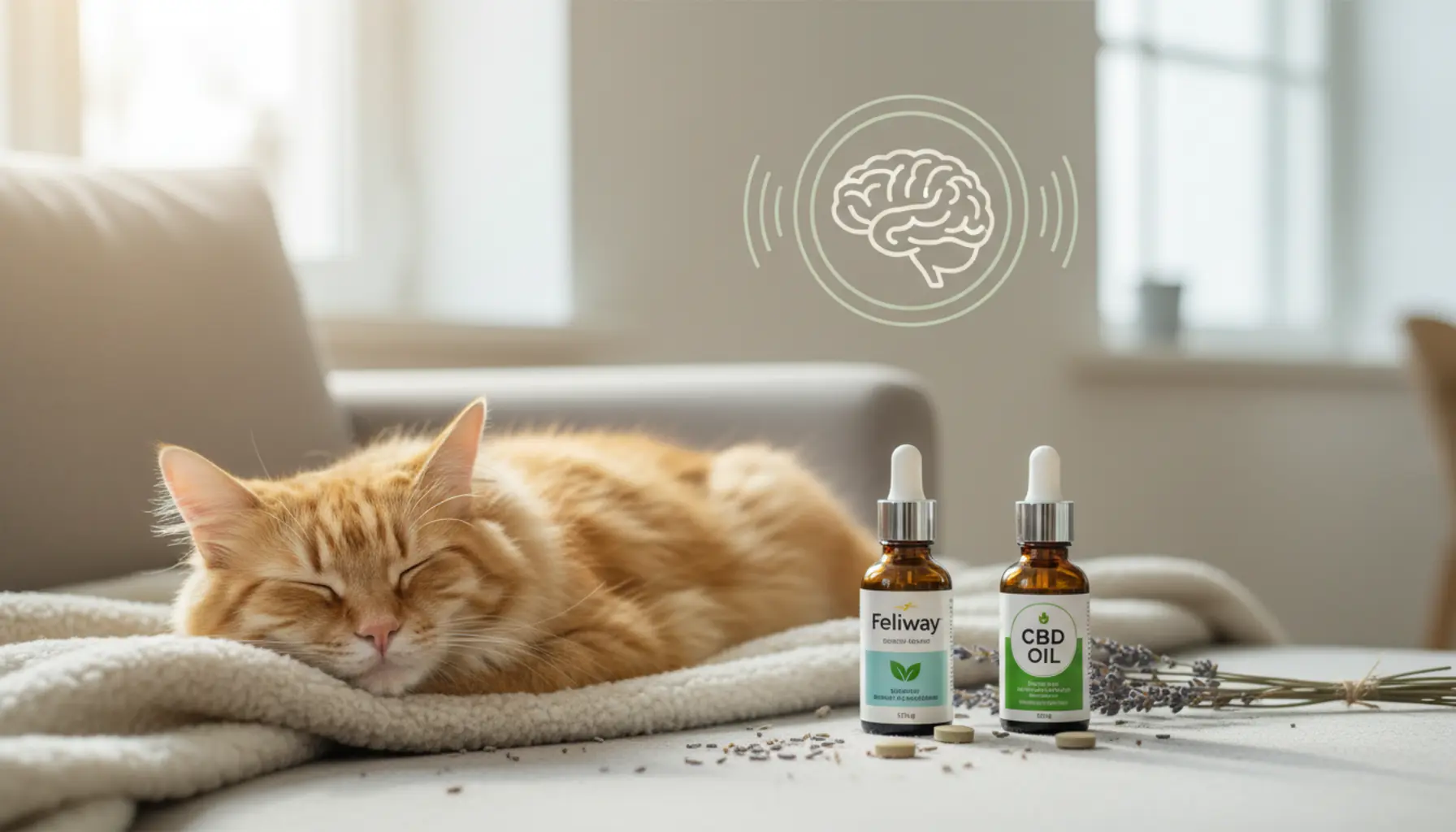
CBD (cannabidiol) is a compound from industrial hemp (Cannabis sativa) that does not have psychoactive effects — it won’t get your cat “high,” as it contains none or only trace amounts of THC. In cats, as in humans, CBD acts on the endocannabinoid system — a receptor network responsible for mood, stress reactions, appetite, sleep, and pain perception. Well-chosen CBD products can support calming, lower tension, and improve psychological comfort, especially for anxious cats that overreact to environmental changes, noise or other pets. Owners often report that after a few days or weeks of proper supplementation, their cat becomes calmer, less reactive to stimuli, less compulsive (such as excessive licking), and more able to recover after stressful situations. However, CBD is not a “magic pill” that instantly solves all behavioral problems — it works best as part of a broad plan that also involves environmental work, pheromones, play, and possibly behavioral therapy or vet-prescribed medication.
When considering CBD for your cat, it is crucial to understand the difference between legal animal-specific products and random oils of unknown provenance. Always select formulas dedicated for cats or at least companion animals, from reputable manufacturers sharing analysis certificates (COA – Certificate of Analysis) confirming a legal, trace or zero THC content, and free from heavy metals, pesticides, solvents. For cat safety, it’s key that the oil uses a proper base – some essential oils or flavoring found in “human” products can be dangerous for cats. Most often, CBD is used as drops administered directly into the mouth or mixed with a small amount of wet food; there are also treats with added CBD, though for picky or sensitive cats, drop-by-drop dosing allows better control. Dosage should always be set individually – safest to start very low (e.g., 0.1–0.25 mg CBD/kg body weight per day), observe the cat’s response for a few days, and, in consultation with your vet, gradually increase to a typical range of 0.5–1 mg/kg, though for severe anxiety or chronic pain, the vet may recommend a different dose. Never exceed manufacturer guidelines or use high-THC products, as this can cause poisoning in cats: excessive sedation, ataxia (wobbly gait), vomiting, drooling, or, in extreme cases, seizures. Always consult your vet before starting CBD, especially if your cat is on other meds — cannabidiol can affect drug metabolism in the liver, so with chronic diseases (e.g., kidney failure, liver diseases, epilepsy, hyperthyroidism) a specialist should assess interaction risks and plan bloodwork. In daily life, CBD can support separation anxiety, hyperactivity, adaptation to new conditions (moves, baby, renovation), for cats from shelters or adoptees learning life in a new home, and for chronically ill pets for whom stress amplifies pain and hinders rehab. The calming effect is usually subtle and builds over time — rapid withdrawal or sudden dosage jumps make it hard to gauge results. Patient observation is key: it’s worth keeping a diary of cat behaviors (noting frequency of night meowing, aggression, litter box issues, activity levels), to objectively compare the pre- and post-CBD state. If, after several weeks at a proper dose, there’s no improvement, consult with your vet to try other methods: environmental modification, more intensive behavioral work, changing product, or classic anti-anxiety medication — always prioritize the cat’s comfort and wellbeing, and remember that CBD is just one of several tools and may or may not be optimal for a given individual.
Calming Herbs and Home Remedies for Stress Reduction
Calming herbs and simple home remedies may be valuable in reducing stress for cats, provided they are used wisely and always as a supplement, not a replacement for professional veterinary care. First, not every “human” herb is safe for cats – many plants, such as valerian in human tablets, St. John’s wort, lemon balm with essential oil additives, or many pharmacy herbal blends, may contain substances toxic to cats (alcohol, sugar, xylitol, preservatives, high-dose essential oils). Always consult any herbal support with a veterinarian knowledgeable in animal phytotherapy. The most commonly and best-tolerated herb for cats is valerian, available in preparations formulated specifically for cats – drops, capsules, or treats. It has calming effects, can reduce tension and help relax during stressful events (storms, fireworks, moves). Some cats react to valerian similar to catnip – a moment of stimulation, followed by relaxation; this is natural and generally short-term. Catnip (Nepeta cataria) and valerian as dried plant can also be used as part of therapeutic play: sprinkled onto a sniffing mat, scratching post, or toy, they encourage cats to explore, roll, lick, and rub their cheeks, which relieves tension. Not all cats react to catnip – an estimated 30–40% are unresponsive — so lack of reaction isn’t worrying. For sensitive cats, gentle herbal mixes in drops or paste, based on hops, passionflower, linden, or hawthorn, in small doses and always as recommended by producer and vet, may help. Never mix your own herbs or use home-made alcohol-based tinctures, as even small amounts of ethanol or some essential oils are dangerous for cats. Instead of experimenting, opt for ready-made, veterinary-tested products where doses and ingredients are adapted for cat metabolism, remembering that the calming effect usually builds gradually over days or weeks of regular use.
Besides herbs, non-pharmacological home strategies are hugely important for reducing stress and supporting natural calming mechanisms in your cat. The basis is a safe, predictable environment: cats need high places (shelves, cat trees, windowsills) and hiding spots (cat cubes, boxes, tunnels), to withdraw when threatened or overstimulated. Make sure you have at least as many safe resting spots as cats, plus at least one extra; the same goes for litter boxes, water and food bowls. A steady daily routine – set feeding, play and rest times – helps many cats feel more secure by knowing what to expect. One of the simplest “home anti-stress measures” is proper play: daily fishing-rod, ball or interactive toy sessions (10–15 minutes each) allow your cat to release tension and satisfy hunting instincts. After play, offer food — the “hunt–eat–sleep” cycle mimics the cat’s natural wild behavior and encourages deeper rest. Creating a “safe stimulus zone,” too – muting loud sounds (close windows, use curtains, play soft relaxing music), limiting sudden scent changes (avoid strong cleaning products, air fresheners) and providing easy access to water and litter box in a quiet area. For cats anxious about external noise, cozy houses lined with blankets and familiar human smell (e.g., an old t-shirt) can work soothingly. For predictable stress like travel, vet visits, or new pet introductions, desensitize your cat to the carrier by leaving it always open in your home with a blanket, treats, and toys inside, so it is not only associated with bad experiences. Gentle massage, petting on favorite spots (like cheeks, chin, tail base) and a calm, low voice also act as “natural calming aids” — as long as the cat seeks contact, never forcing closeness if they wish to withdraw. All these home strategies are strongest when combined with synthetic pheromones, proper diet and — if needed — herbal or medical support prescribed by a vet, with consistency, patience and close observation of the individual cat’s needs at the core.
Calming Medications for Cats – When Are They Necessary?
Calming medications for cats are a recourse when milder methods like pheromones, CBD, herbs, or environmental work fail, and the cat’s state becomes a real threat to their own health or the safety of others. This is usually considered for severe or long-term stress, anxiety disorders, strong aggression, self-harm (fur-chewing, self-wounding), compulsive licking to the point of wounds, and repeated stress-linked somatic issues such as idiopathic cystitis, recurring digestive complaints, or complete food refusal. Warning signs include a cat who spends most of the day hiding, panics at attempts of contact, has frequent panic attacks, urinates outside the box from fear, attacks household members for no reason, or lives in chronic tension despite environmental changes. In these cases, a veterinarian – preferably in cooperation with a behaviorist – may propose medication as one part of a broader therapy plan. “Calming medications” is a broad group — ranging from fast-acting drugs used occasionally (for transport, vet visits, New Year’s Eve), to central nervous system medications needing regular use over weeks or months to stabilize mood and lower anxiety. Deciding to start medication always requires an interview, clinical exam and, if needed, basic diagnostics (blood work, urine, ultrasound), since many behavioral problems stem from pain or hormonal disbalance and shouldn’t be masked with sedation only. For cats with chronic illnesses (kidney, liver, cardiac), assessing the safety of specific substances is especially important — never use human anti-anxiety or “calm-down” tablets without explicit vet instruction. In practice, veterinarians use several main drug groups: anti-anxiety and antidepressant medications (mainly SSRIs or TCAs), sedatives for occasional use, and, in rare cases, neuroleptics. Each has different effects, onset times, potential side effects, and contraindications, so careful observation, regular checks and possible dose adjustments are crucial during therapy. Owners should know that full effect for some drugs can take 3–6 weeks, and there may be initial temporary side effects like drowsiness, mild agitation, appetite changes or increased vocalization — always discuss these with your veterinarian rather than stopping the drug yourself.
An important consideration when deciding on medication is the overall quality of the cat’s life and the risk of not treating. Long-term untreated stress is not a “matter of personality,” but a disease state that disrupts immunity, digestion, cardiovascular and urinary systems, increases obesity or, conversely, wasting, and shortens average life span. If fear prevents basic behaviors like eating, using the litter box, sleeping, or moving safely about the home, the vet may judge the risk from medication is less than the suffering chronic tension brings. Drugs are often necessary for cats with a background of chronic stress (shelters, failed socialization, abuse), or very sensitive nervous systems, where even ideal environments still lead to relapses. Remember, medication should never be the only tool — without environmental adjustment (more hiding places, vertical space, proper introduction of new pets), improved relationship with the owner (no punishment, predictable routine, enough play and interaction), and behavioral modifications, drugs only “cover up” the issue. The modern approach is multimodal: the vet chooses the drug and dose, behaviorist plans environmental and behavioral modifications, and owner steadily implements recommendations, tracking the cat’s response (e.g., with a diary or stress scale). Follow withdrawal guidelines closely – many drugs require gradual dose reduction to avoid “rebound” and worsened symptoms. Never mix drugs or combine psychoactive medications with supplements or herbs affecting the nervous system without medical consultation, as this can cause serious interactions (like serotonin syndrome). Report promptly to your vet troubling symptoms: marked lethargy, sudden aggression, seizures, vomiting, balance issues, breath difficulty, or significant changes in drinking or urination. Calming medications, used responsibly and under expert supervision, can greatly improve a cat’s life quality and help them benefit from other therapies, but require an informed, partnership approach with the owner and close cooperation from an experienced veterinarian, and ideally a veterinary behaviorist.
Prevention and Everyday Support for Cat Calmness
Prevention of stress in cats primarily involves consistent creation of safety – not just during crises, but as part of daily life. Cats are territorial and value predictability, so a key preventive measure is a steady, peaceful routine. Try to feed your cat at similar times, avoid sudden bowl, litter box or bed location changes, and introduce home modifications gradually, giving time for your cat to adjust to new smells and sounds. Providing different space levels – shelves, cat trees, window perches and high beds – lets your cat observe from safe distances, greatly lowering tension. Every cat should have its “base” – a quiet, out-of-reach spot (safe from kids or other pets) for retreat and rest. The quality of the litter environment matters: enough boxes (at least one per cat plus one extra), clean substrate, quiet spot away from noisy appliances, no strong-scented litter – all reduce litter box-related stress. Daily grooming – regular brushing, nail trims, gradual desensitization to the carrier – if done calmly, with rewards and without rush, is also preventive: the cat learns touch and care routines are not a threat. Resilience to sudden stimuli matters, too: sharp shouts, slamming doors, loud music, rough play by children or generic noise can all cause chronic tension, so “quieter” habits help, and if possible, create a quiet room/area where sound is muted. Low-level background noise (soft radio, white noise) helps mask surprises from the hall or street. Controlled use of pheromones or CBD, in small regular doses not just during crises, may further support a sense of safety, but a stable environment and good owner relationship remain fundamental. Observe your individual cat’s sensitivities: some do best in quiet, others need more stimulation and play; matching home rhythm to your cat’s temperament lowers chronic sensory overload risk. Also avoid sudden introduction of new animals – the socialization process should be gradual, with scent exchanges (blankets, bedding), gradual visual contact at a distance, then short, supervised meetings, all while ensuring the original cat can retreat to a safe zone.
Everyday support for your cat includes not just environment but quality interactions and play. For a cat’s mental health, it’s vital you let them satisfy their hunting instincts: stalking, chasing, jumping, biting, scratching. Short, regular play sessions (2–3 times per day for 10–15 minutes each) with interactive toys, rods, balls or puzzle feeders lower cortisol, help release tension, and reduce destructive behaviors like aggression or obsessive licking. After active play, provide a meal and sleep time – the “hunt–eat–rest” cycle mirrors a cat’s natural daily rhythm and is one of the most effective “natural calming aids.” Another pillar is sensibly reinforcing positive behaviors: petting, treats, or a gentle tone in the right moment build the sense that human closeness is safe and predictable. Avoid punishment, yelling, squirting with water or room isolation for unwanted behavior — this increases fear, doesn’t teach alternatives, and in the long-term, makes problems worse. Instead, address the reason: excess energy, lack of hiding spots, or poor litter box placement. Preventive support also involves proper diet: meals offered more frequently in small portions, via treat toys or sniff mats, provide mental stimulation and a sense of environmental control. Limit sudden food changes and consult any supplements (including calming herbs, tryptophan, L-theanine or melatonin) with your vet to avoid drug interactions or side effects. Regular checkups are crucial for mental wellbeing: chronic pain, kidney, thyroid or urinary illnesses often appear like “behavioral problems,” and early detection prevents long-term stress. Make vet visits less stressful by desensitizing your cat to the carrier (keep it open at home with a blanket and treats), using pheromones in the carrier or car, and, for very anxious cats, ask your vet about pheromone, CBD or gentle sedative support before travel. Good daily practice is to recognize subtle stress signals early: tense tail, wide pupils, flattened ears, contact avoidance or sudden appetite changes should prompt you to search for possible causes — the sooner you address the cause, the lower the risk of chronic stress. Finally, part of daily support is your patient, calm presence: not every cat loves intense petting, but most appreciate lying close to their human, gentle petting in favorite spots, or a soft voice, all of which, over time, build a deep sense of safety and foster natural relaxation.
Summary
Calming a cat requires finding the causes and recognizing symptoms of stress. Using pheromones, natural methods such as CBD or herbs, and—in extreme cases—prescribed tranquilizers lets you care for your pet’s psychological comfort. Key, too, are everyday support and prevention, like proper diet, play, and tending to a cat’s emotional needs. Regular observation and quick responses to any worrying signs help maintain your cat’s peace and wellbeing for many years to come.

