

Cat mats can quickly lead to health problems and severe discomfort for your pet. The solution lies in consistent coat care—regular brushing and proactive prevention, since the key to “how to remove mats from a cat” is healthy, tangle-free fur. Discover expert home techniques and professional treatments that untangle mats effectively, along with proven steps to make sure they don’t return.
Table of Contents
- What Are Cat Mats?
- Why Do Cats Get Mats?
- How to Safely Remove Mats from a Cat?
- Home Methods for Detangling Cat Mats
- Professional Solutions for Cat Matting
- How to Prevent Mats in Cats?
What Are Cat Mats?
Cat mats are clumps of fur formed by the tangling of undercoat and topcoat hairs into a dense, hard or felt-like mass close to the skin. While they may look like small “clumps” at first glance, mats are actually complex structures where tightly packed hairs pull at the skin with every movement. Technically, a mat is a form of coat matting—hairs become trapped in multiple directions and further bonded by skin oils, sweat, saliva, dust, and environmental debris. Mats typically begin as subtle knots and gradually develop into larger sheets of felted fur, forming a “shield” clinging close to the skin if left untreated. Certain areas are more prone, such as flanks, belly, groin, “trousers,” tail, and neck ruff—especially where fur is long or soft, or where frequent movement causes friction.
Loose, superficial mats can often be gently separated by hand, while deep, felted mats reaching the skin are much tougher and pose real health hazards. Mats disrupt the cat’s self-cleaning process: licking can’t detangle the mass, and saliva further stiffens dried fur. It helps to compare mats to dreadlocks or felt—except, in cats, the process is uncontrolled, uneven, and often painful, tugging at the skin with every movement or touch. Mats can affect both long-haired, semi-long-haired, and even short-haired cats, although the problem is most obvious and severe in breeds with longer coats. Factors like genetics, age, health, weight, and individual coat texture (e.g., very fine, woolly, thick undercoat) influence how easily mats develop, but the mechanism remains the same: lack of regular removal of shed hairs leads to them becoming trapped and forming clumps.
On a microscopic level, each hair is like a shingle with a scaly surface that tangles more readily when fur is dry, greasy, or subjected to friction (bedding, scratching posts, clothing). Matting occurs as hairs fail to shed, mingle with the undercoat, become pressed by body movement, and are “locked” in further by the cat’s tongue while grooming. Over time, minor tangling hardens and expands. Mats usually begin near the warm skin where sebum accumulates; sometimes, the coat looks just a bit fuzzy on the outside, while a tightly-packed mass firmly adheres to the roots underneath. This causes chronic pulling, irritation, redness, and micro-injuries to the delicate skin, with the risk of moisture, sweat, sebum, parasite droppings, and dirt becoming trapped—ideal for bacterial and fungal growth. Untreated mats can lead to seborrhea, unpleasant odor, itching, inflammation, and infections needing veterinary intervention. Mats can also affect behavior—cats become touch-sensitive, avoid petting, and move less if matted fur restricts free movement. In severe cases, felted fur behaves like tight, chafing clothing. Recognizing mats as a comprehensive coat and health problem—not just tangled hair—is key: it signals that natural shedding and cleaning aren’t working, and the cat’s body can’t manage dead hair or debris alone.
Why Do Cats Get Mats?
Mats in cats arise mainly from a breakdown in natural grooming—a combination of what cats do for themselves and what owners should provide with regular brushing. Cat fur consists of long guard hairs and dense, soft undercoat; when these layers tangle, stick together, and trap dead hair, sticky matting results. The earliest stage is dulling: hair loses smoothness, tangles more often, and everyday friction (from napping, rubbing against furniture, carpets) adds more tangled hair to the developing mat. Dust, grit, litter, dried saliva, and skin secretions further “cement” hairs together. Hard-to-reach spots—groin, tail base, inner thighs, armpits, behind the ears—are prime zones, as the cat’s tongue can’t effectively reach them. Coat type is key: long- or semi-longhaired breeds with a fine, woolly coat mat far more easily than shorthaired ones, while heavy undercoat that sheds intensively during molting rapidly forms tangles if not brushed thoroughly.
Home environment matters, too: dry air in heated apartments makes fur more static and prone to attracting dirt. During heavy shedding, owners may fall behind with brushing, so loose hairs accumulate and serve as a base for new clumps. Outdoor cats and those with access to balconies or gardens also collect grass seeds and plant debris that act as hooks, accelerating felt formation.
Health and age play a major role in matting, reducing a cat’s self-grooming ability. Older cats—with arthritis, spine issues, sore joints—have trouble twisting to groom flanks, tail base, or the belly, leading to greasy, dead-hair-filled fur that becomes mat-prone. Similarly, overweight cats struggle to reach the rear, flanks, and underbelly, leaving zones dirty and tangled. A sudden decline in grooming may signal pain, dental issues (like gum disease), kidney or liver problems, thyroid issues, or other illnesses causing the cat to neglect personal care. Stress matters too—cats in tense, noisy, or unstable homes, or under social pressure, may groom less, leading to matting. Skin conditions and parasites (itching from allergies, fleas, mites, ringworm) prompt scratching and biting, breaking hairs and facilitating tangling; discharge from wounds or scabs further “cements” mats. Improper human grooming—rare or aggressive brushing, using the wrong tools, washing with human or harsh shampoos—also increases matting by drying out the skin. All these elements—coat structure, environment, age, health, stress, grooming habits—interact to determine a cat’s matting risk, so understanding the causes is key to prevention at home.
How to Safely Remove Mats from a Cat?
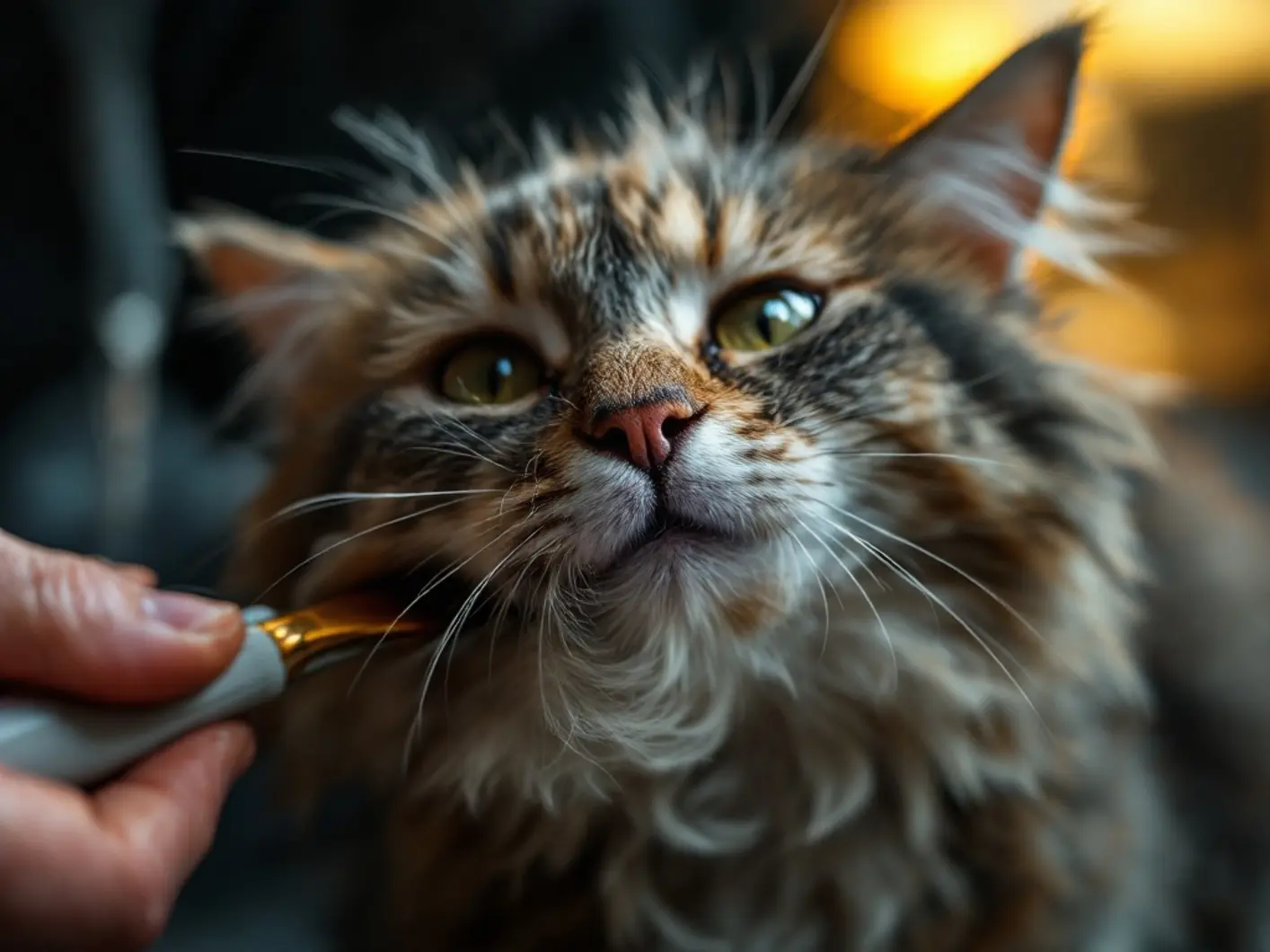
Removing mats safely from a cat requires patience, gentleness, and the right approach so you neither hurt the cat nor discourage future grooming. Before reaching for scissors or clippers, thoroughly inspect the coat in good light: use your fingers to part the fur and check if the mat is superficial (separated from the skin) or deep and close. Count mats and note their location: isolated mats can be handled at home, but large, tight mats (e.g., belly, armpits, rear) often need a professional groomer or veterinarian. Choose a quiet, relaxed moment and a stable, non-slip surface. Prepare the right tools: a steel comb with wide and fine teeth, a slicker brush, an undercoat rake, round-tip scissors, a matt-breaker, and a cat-safe detangling spray. Never use dull kitchen or office scissors, as these may pull fur and accidentally cut skin. Before starting, smooth the fur gently and, if needed, lightly mist the mat with spray and work it in, avoiding the skin. Be extra careful in delicate zones—armpits, groin, belly, and under the tail—where the skin is thin and easily nicked.
Watch your cat’s body language: tail flicking, growling, hissing, head turning, or biting attempts mean too much stress or pain; take a break, or consult your vet for sedation and professional shaving if needed. Start by gently loosening the mat with your fingers, working along the hair (not across), always holding fur near the skin to avoid painful pulling. Use short, outward movements, break apart the edges, and gradually detangle. Then, comb with the wide-tooth comb starting from the tip of the fur and working in, never the other way or you’ll cause pain and more tangling. If you feel resistance, don’t force: use more spray or hands to loosen, then try again. For larger but still superficial mats, a special matt-breaker with protected blades helps—slip under the mat parallel to the skin and gently slice, then comb out. Always feel for the skin underneath, protecting it with your other hand.
Cutting with scissors or a clipper should be a last resort for hard, deep mats: place a comb between the mat and skin, then cut above the comb as a protective barrier. Never cut “blind” from the underside: skin can be drawn up into the mat and sliced. If you’re unsure whether it’s skin or fur, stop and consult a vet. For sensitive or fearful cats, break work into several short sessions, ending each positively with treats and calm praise. Severely felted coats—like a “shield” of mats—require professional veterinary shaving, often under anesthesia, so the skin beneath can be assessed and treated if there are sores or infections.
Home Methods for Detangling Cat Mats
Effective home detangling starts with preparing both the cat and your tools for a stress-free process. Choose a naturally calm moment, such as after a meal or nap, and use a familiar surface like a favored blanket. Your attitude matters: use a gentle voice, steady movements, and start with petting or a light massage to relax muscles and skin near the mats. At home, you’ll need a steel comb with wide and fine teeth (rounded tips are best), a soft brush or rake suited for your cat’s hair length, rounded-tip scissors (only as a last resort), and a pet-safe detangler. Always check labels for pet suitability—never apply human products, essential oils, or greasy kitchen items like oil or butter, which can irritate the skin or cause washing problems. Locate mats by sweeping your hand “against” the fur; small clumps are often easier felt than seen, especially on the belly, thighs, armpits, behind the ears, and tail base. Before combing, gently loosen with fingers, stretching the mat sideways to split it into smaller bits without yanking.
If needed, mist the mat with a little detangler, waiting a moment for hairs to “slip”—never saturate the area, which can create a heavier, harder-to-fix tangle. Often, just this combination of massage, finger-loosening, and gentle product is enough to reduce the mat before using tools. Allow your cat to take breaks—it’s better to do several short sessions than one stressful long one, rewarding even small progress with treats or a favorite game so grooming is associated with positive experiences.
Once the mat is sufficiently loosened, gently comb it out, always working from the mat’s outside inward, and from hair tips toward the skin. Hold fur close to the skin with one hand to minimize tugging, and work on a small section at a time. If the comb snags, further break down the mat by hand or with more spray, never forcing your way through. For delicate or stressed cats, furminators or undercoat rakes can help, but always follow guidance to avoid thinning the coat too much. With small mats, you can use the “incision” method: place the comb flat between skin and mat and make short vertical cuts in the mat with round-tip scissors to loosen it rather than slicing off large chunks of fur. Once fragmented, mats are easier to comb painlessly. In sensitive spots like armpits or groin, it’s often best to remove mat pieces with scissors, leaving short but loose hair—as long as you can see exactly what you’re cutting. If the cat is very nervous or resisting, pause and get professional help. Continuously observe your cat: if it tenses, turns away, growls, hisses, or bites, it’s in pain—stop, wait, and try again later. Regular, gentle brushing—just a few minutes daily—prevents mats by detecting tangles early, so you can unravel them by hand before they become a painful problem.
Professional Solutions for Cat Matting
Professional intervention is essential when home grooming is no longer safe or effective: when there are multiple, deeply attached mats, bad odors, redness, oozing wounds, or clear pain. The first line of help should be a veterinarian, who will assess your cat’s overall health and the skin beneath mats and determine whether gradual detangling or clipping is needed. Pre-procedure tests (especially bloodwork) may be required if sedation is necessary, which is often the case for older, overweight, or chronically ill cats who can’t tolerate prolonged stress or pain. Your vet will also check for underlying health causes of matting, such as thyroid problems, joint pain, allergies, skin parasites, or chronic stress, so the visit becomes part of a bigger plan for your cat’s comfort.
Secondly, a professional cat groomer—ideally recommended by a vet or experienced owners—has expert tools (combs, matt-breakers, clippers, gentle veterinary products) and techniques for safely removing mats: patient detangling, thinning, targeted clipping, or even full-body shaving if needed. The method used depends on matting severity, skin condition, and the cat’s temperament; anxious or aggressive cats often require sedation at a vet’s office, after which a veterinarian or an in-clinic groomer performs the clip. Stress minimization is vital: groomers use non-slip mats, gentle handling, breaks, and sometimes synthetic pheromones to calm the cat. After mats are removed, the skin may be irritated or sensitive, so soothing ointments or sprays are often applied. Aftercare instructions typically cover frequency and technique of future brushing, tools to use, recommended shampoos or conditioners, and sometimes diet advice (e.g., hair and skin formulas, omega-3/6 supplements). Many owners benefit from regular grooming appointments—every 2–3 months—to catch new mats early and keep fur manageable. Combined with veterinary oversight, professional grooming offers real protection from recurring, painful matting, making daily care easier and less stressful.
How to Prevent Mats in Cats?
Preventing mats in cats relies on consistent, coat-appropriate grooming, along with vigilance for health and behavioral changes. The mainstay is regular brushing: for long-haired cats (Persian, Ragdoll, Maine Coon), usually daily or every other day; for shorthaired, at least once a week, especially during molting. Match your tool to the coat: soft-bristle or rubber brushes for delicate fur, dense-tooth metal combs for thick undercoats. Be thorough, focusing on tricky spots—armpits, groin, behind the ears, belly, tail base—where mats often begin. Start with short, positive sessions, pairing brushing with petting and treats, gradually increasing duration and coverage. This builds positive associations, reducing resistance or fear and helping you catch mats early. Focus on technique: gentle, even strokes with the grain, no yanking, and use your hands to loosen small tangles instead of aggressive brushing. Strategic trimming of problem areas, as recommended by your vet or groomer (for seniors, obese, or arthritic cats), can make self-grooming easier.
Sensitive cats may benefit from leave-in, pet-safe detangling sprays. Home humidity helps reduce static and tangling, while keeping bedding and scratching posts clean prevents hair build-up. Multiple-cat households should monitor mutual grooming: overgrooming a single spot can cause mats, so distract with play or separate cats as needed.
Mat prevention also reflects your cat’s general health: good nutrition (high-quality cat food rich in animal protein, omega-3, B vitamins, biotin, zinc) keeps fur stronger and less likely to tangle. For some cats, after vet approval, supplements or special “hair & skin” diets may help. Regular parasite control is vital—itching from fleas or mites leads to excessive scratching and matting. Any sudden change in coat quality—dullness, greasiness, dandruff, or missed grooming spots—warrants a vet check, as it often signals underlying problems (kidney, liver, diabetes, joint pain, obesity, discomfort), not just grooming technique. Mental well-being matters too: chronic stress (moving, new housemates, renovations, boredom, animal conflicts) can trigger both obsessive licking (causing bald patches/tangles) or neglect, leading quickly to severe mats in long-haired cats. Ensure a stable routine, safe rest spots, and daily playtime to keep stress low. For senior or chronically ill cats, prevention requires close veterinary and grooming partnership: more frequent but shorter brushing sessions, gentler tools, dietary tweaks, and occasional controlled trims. With daily gentle grooming, attentive observation, proper nutrition, and emotional care, you’ll keep your cat’s fur mat-free or catch issues early—removing tangles before they hurt or stress your pet.
Summary
Cat mats are both an aesthetic and health issue. Understanding the causes is key to prevention. Regular brushing with the right tools, along with both home and professional techniques, forms the foundation of coat care. Avoid stress, poor diet, or conditions that worsen matting. With proper care and prevention, your cat’s fur can remain healthy and shiny—mat-free.

