
The Andean ocelot and the spectacled bear are extraordinary inhabitants of the Andes mountains, whose mysterious lives inspire admiration and scientific curiosity. The rank_math_focus_keyword Andean ocelot and spectacled bear appears in stories about high-mountain ecosystems, where survival requires sophisticated strategies. Discover the differences, similarities, and challenges involved in protecting these fascinating species.
Table of Contents
- The Mysterious World of the Andean Ocelot
- Ocelot Habitat: Life in the Mountains
- Ocelot vs. Large Ocelot: Differences and Similarities
- Spectacled Bear: Facts and Curiosities
- Diet and Range: Ocelots and Bears of the Andes
- Conservation of Andean Species: Future and Challenges
The Mysterious World of the Andean Ocelot
The Andean ocelot, sometimes called the “ghost of the misty forests”, is one of the most enigmatic felines inhabiting the Andes mountains chain—and still a species about which we know surprisingly little. Unlike the better-known tree-living ocelots of Central America, this high-mountain cousin has adapted to harsher, cooler conditions, where dense clouds and ever-present mist often shroud the mountain slopes for hours each day. Its natural realm comprises humid mountain forests, upper montane cloud forests, and a mosaic of thickets and high-altitude grasslands—paramo—stretching from about 1,500 up to even 4,000 meters above sea level. Under these conditions, where temperatures are capricious and vegetation changes rapidly with altitude, the Andean ocelot has evolved a set of characteristics that give it an edge: dense, insulating fur; a compact, muscular body that aids in climbing steep slopes; and remarkable agility in moving through branches, rocks, and thick thickets. Its coloring—a mosaic of dark spots, streaks, and blurred rosettes on a golden-brown or grayish background—works as perfect camouflage, breaking up the animal’s silhouette in the interplay of light and shadow on the forest floor and moss-covered rocks. Thanks to this disguise, the ocelot almost “vanishes” in the semi-darkness of the subcanopy, making it a master of stealth and surprise, while simultaneously complicating systematic field observations for researchers. In terms of daily/nocturnal activity rhythm, the Andean ocelot is flexible, but is generally considered primarily nocturnal or crepuscular. It often hunts at dawn and dusk, when small mammals, birds, and amphibians are most active, and the dim light favors its “slow approach” tactics and lightning-fast attack. By day, it may rest on high tree branches, in rocky crevices, or thickets, using their natural protection from predators and humans. The ocelot’s territory, though usually smaller than that of larger felids, is strictly guarded; the animal marks it scent-wise with urine and gland secretions, as well as scratches on tree trunks and rock faces. Scent communication, supplemented by quiet vocalizations—rumbling, meowing, growling—plays a key role in maintaining distance between individuals and during the mating season. The breeding season varies regionally but often coincides with periods when prey is most accessible, increasing the chances of feeding the young.
The Andean ocelot’s diet consists primarily of small mountain fauna: rodents, smaller mammals (such as rabbits, small raccoons, and opossums), ground and arboreal birds, lizards, and amphibians from the damp cloud forests. Stomach and scat analyses show it can flexibly adjust its diet to changes in prey availability, which is crucial in the highly variable Andes, where local climatic fluctuations, seasonal rainfall, and human influence can quickly transform the ecosystem structure. Hunting both from the ground and from trees allows the ocelot to exploit the forest’s three-dimensional space: it can stealthily stalk prey in thick undergrowth, or jump down from branches onto unsuspecting animals. Ecologically it plays the role of a medium predator, regulating populations of small and mid-sized vertebrates, which indirectly impacts vegetation (fewer herbivores means less pressure on plants) and the species diversity of lower trophic levels. The Andean ocelot’s mysteriousness further stems from the difficulty of studying it: the animal is discreet, mostly active at night, and often inhabits hard-to-reach steep slopes. Therefore, scientists increasingly use camera traps and genetic analyses of scat to estimate population numbers, genetic structure, and range. Results indicate that local populations may be highly isolated in “islands” of suitable habitat surrounded by farmland, roads, and settlements, increasing the risk of inbreeding and a drop in genetic diversity. While ocelots display some adaptability—for example, preying at the edge of plantations or in habitat mosaics of fields and thickets—they simultaneously become more vulnerable to human conflict (such as retribution killing for poultry) and road collisions. In many regions, poaching pressure for fur and body parts, still valued on the black market (though less than in the past), remains a threat. Climate change is an added problem, potentially shifting suitable forest zones to higher elevations and narrowing available “habitat corridors.” Consequently, the Andean ocelot has become a key indicator of mountain ecosystem health—its presence signals relatively healthy forests, while population disappearance may be the first sign of major ecological imbalance in the Andes.
Ocelot Habitat: Life in the Mountains
The Andean ocelot’s habitat is tightly linked to the Andes range, where numerous altitude zones overlap in a relatively small area, creating a mosaic of microenvironments. This medium-size cat primarily chooses Andean mountain cloud forests—moist, cool, and for most of the year shrouded in clouds, usually at altitudes from approximately 1,500 to even 3,500 meters above sea level. This environment features lush, multi-layered vegetation, dense undergrowth, moss-covered tree trunks, and a network of fallen logs and rocky ledges that form natural corridors and refuges. The Andean ocelot uses this structure much like a three-dimensional labyrinth—climbing, slipping under trunks, using terrain depressions and bamboo thickets to remain unseen by both potential prey and larger predators, including pumas. Stable water sources—streams, waterfalls, mossy springs, and seasonal creeks—are a crucial habitat element, supporting a humid microclimate and great diversity of small mammals, birds, and amphibians—its main food source. Ocelots prefer areas far from intensive human activity, but in some regions they also occur near extensive crops and traditional pastures, provided that even narrow forest strips remain as migration corridors. As agriculture, mining, and infrastructural development move ever higher in the mountains, the cat’s habitat is being split into smaller patches, forcing adaptation to a mosaic landscape, with remnants of primary forest interspersed with secondary thickets, plantations, and semi-open wooded areas.
Mountain life requires the Andean ocelot to cope with rapidly changing climatic and terrain conditions. High elevation means lower temperature, large daily temperature fluctuations, high air humidity, strong wind, and frequent rain or snowfalls at higher levels. Dense fur serves not only as insulation but also as protection against moisture and mechanical damage from branches or spiny undergrowth. Ocelots must move over steep slopes, deep ravines, and rocky outcrops, so they prefer areas where vegetation provides a “natural network” of stable supports—roots, branches, rock shelves. In winter and colder seasons, it may descend somewhat lower, seeking a milder microclimate and better prey availability; during times of increased human activity (e.g., cattle grazing, tree cutting), it may temporarily retreat to less accessible forest parts. Maintaining population cohesion depends on the existence of continuous forest strips along ridges and valleys, enabling ocelots to move between habitat patches: from humid cloud forests through a mosaic of alpine thickets to lower, warmer foothill forests. Camera trap and DNA scat studies show that individuals can cover significant distances, suggesting their territories encompass diverse altitudinal zones, not just a single forest type. Ocelots choose places offering dense daytime refuges—caves, rock fissures, windthrows, or thick clumps of vegetation—and proximity to “hunting trails” such as forest edges, steep, sunny slopes rich in rodents and birds, or stream banks attracting amphibians and small mammals. Anthropogenic landscape changes, including mountain road construction and high-mountain tourism, often intersect these trails, forcing ocelots to adjust their diurnal activity and use deeper, less accessible forest refuges. It is under the mosaic of harsh climatic conditions, steep landforms, and habitat-fragmenting human activities that the ocelot’s unique mountain lifestyle takes shape, making it a superbly adapted yet particularly vulnerable resident of the Andean peaks.
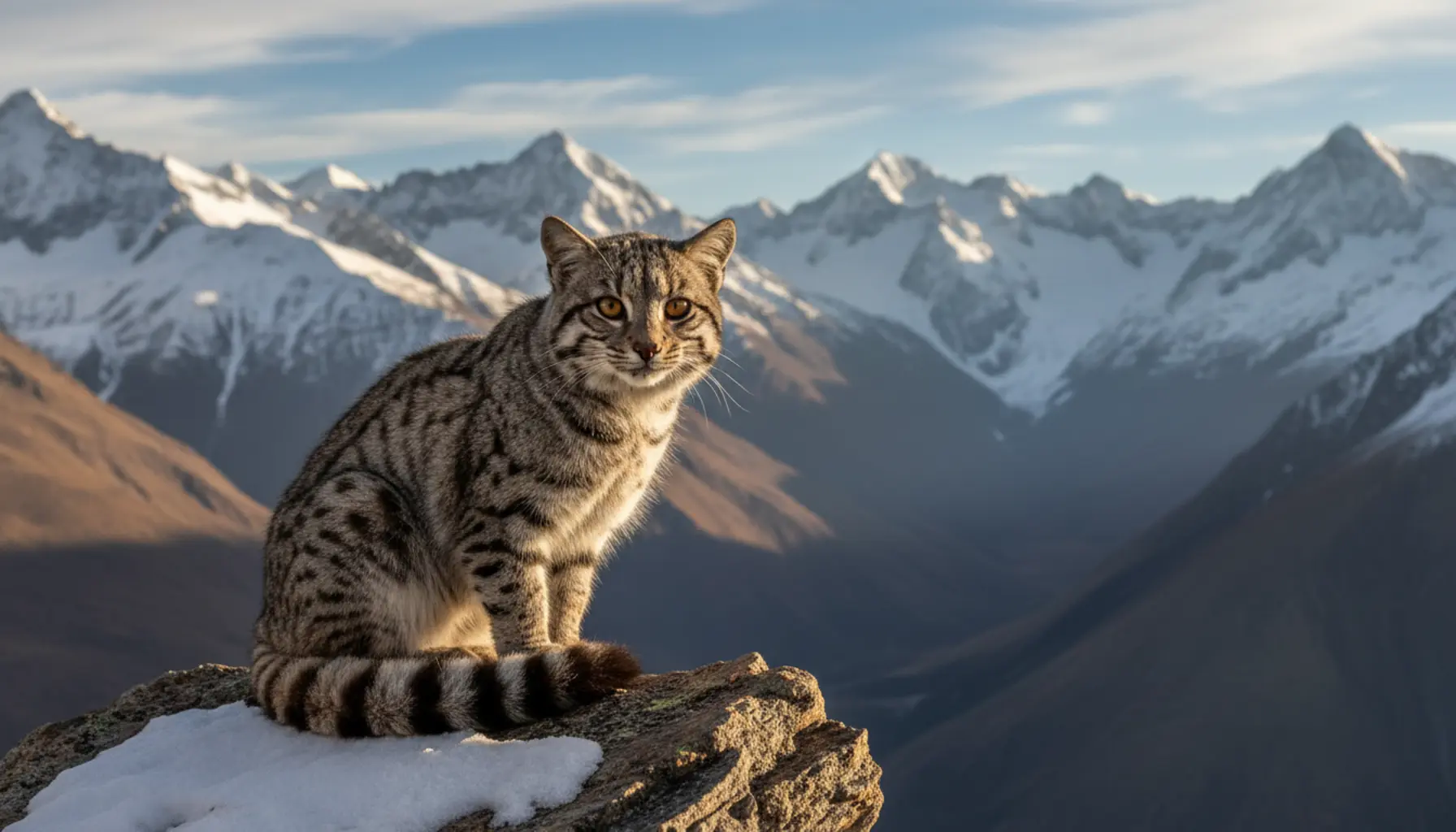
Ocelot vs. Large Ocelot: Differences and Similarities
Although the names “Andean ocelot” and “large ocelot” (Leopardus pardalis) sound similar, in practice they refer to two clearly different forms—both in ecology and in appearance and geographic distribution. The Andean ocelot is a highly specialized inhabitant of the Andean mountain cloud forests, adapted to living at elevations from about 1,500 to well above 3,000 meters above sea level, dominated by lower temperatures, high humidity, and steep slopes. The large ocelot is associated rather with lower, warmer ecosystems—the tropical rainforests of the Amazon, dry forests, thickets, and even mosaics with agricultural or pasture areas, making it a more “ecologically plastic” species. While the Andean ocelot avoids open spaces and relies on continuous forest strips to move, the large ocelot more often tolerates habitat fragmentation, using wooded corridors, thickets, and field woodlots. These differences result from distinct survival strategies—in the Andes, camouflage in dense mountain vegetation and minimizing movement energy costs in vertical landscapes are key; in lowland forests and habitat mosaics, the large ocelot benefits from abundant prey and more varied microhabitats. The geographic range of the large ocelot extends from northern Mexico to northern Argentina, while the Andean ocelot is restricted solely to Andean mountain regions, mainly in Bolivia, Peru, Ecuador, and Colombia, making it more susceptible to population isolation and local extinctions. Field identification is not easy, as both cats belong to the same genus Leopardus and have spotted fur; yet their coat and build reveal key differences—the large ocelot is bigger, more robust, with a longer body and clearly defined, irregular rosettes on a light background, with contrasting dark lines running from the eyes towards the nape. The Andean ocelot, on the other hand, has a more “muted” color palette—thicker fur, often grayer or browner, smaller and less distinct spots that blend better with the shadowy, mossy environment of cloud forests. The Andean ocelot’s tail, with its dense fur and relatively marked ringed pattern, is vital for balance on steep slopes, while the large ocelot’s body and tail proportions are more suited to agile movement in flat, densely vegetated tropical forests. Differences in appearance and habitat also affect hunting strategy: in colder mountain forests the Andean ocelot must carefully ration energy and adjusts activity to times when prey is most available, often using forest edges and natural crossings on slopes; the large ocelot, with richer prey resources in lowland forests, is more flexible and more frequently explores various environments, even those near human settlements if easy prey occurs there.
Diet-wise both species are opportunistic predators, relying mainly on small and medium vertebrates—rodents, small mammals, birds, reptiles, and amphibians, yet their menu structure depends on local prey availability. The Andean ocelot, living in cooler, upland forests, relatively more often hunts endemic mountain rodents, small raccoons, rabbits, as well as birds and amphibians adapted to misty, humid habitats; it may also use invertebrates when larger prey is scarce. The large ocelot in lowland forests can eat a wider range of potential prey, including larger rodents like agouti, paca, young peccaries, or iguanas, and in farming regions—poultry, regrettably leading to conflict with local communities. Both species are mostly solitary and territorial, with scent communication (marking with urine, leaving scat in strategic spots, rubbing against tree trunks) playing a big role in keeping population structure. Their core activity patterns are similar—typically nocturnal or crepuscular—though local conditions, human pressure, and competition with other predators may shift periods of peak activity. From a conservation perspective, both cats play a role under increasing anthropogenic pressure, but in somewhat different ways: the large ocelot still remains relatively abundant in many regions, though it suffers from habitat loss, poaching, and road accidents; the Andean ocelot, tightly linked to a narrow mountain habitat belt, is especially sensitive to cloud forest fragmentation, high-altitude road building, and climate-driven vegetation shifts. In both cases, it is crucial to connect scattered habitat fragments via ecological corridors and cooperate with local communities that can be allies for protecting these predators—in the Andes by promoting sustainable grazing and forest strip retention between pastures, and in lower areas and lowland forests by reducing poaching and implementing solutions to minimize livestock loss. Both the Andean and large ocelots act as regulators of small and medium vertebrate populations, thus supporting the stability of the whole food chain—their presence is an important indicator for biologists of forest ecosystem health, be it cool, humid Andean forests or the hot, vibrant lowland rainforests of Latin America.
Spectacled Bear: Facts and Curiosities
The spectacled bear (Tremarctos ornatus), also known as the Andean bear, is the only bear species naturally occurring in South America and one of the most mysterious mountain mammals of Latin America. Its common name comes from the distinctive pale markings on its snout and around its eyes, which can resemble “glasses”—each individual’s markings are unique, like a fingerprint. It ranges along the Andes from Venezuela through Colombia, Ecuador, Peru, to Bolivia and northern Argentina, usually at altitudes from about 1,800 up to 4,500 meters above sea level. It prefers humid cloud forests, paramo, and a mosaic of rocky slopes with shrubs but is renowned for ecological flexibility: it can use dense cloud forests, sunlit glades, even field edges. Unlike many other bears, the species is largely herbivorous—a substantial part of its diet consists of fruit, bromeliads, cacti, young plant shoots, and palm stems, though it will eat carrion, small vertebrates, or bird eggs, particularly when plant food is scarce. This surprisingly agile mountain dweller is an excellent climber, often spending long hours in trees, not only feeding there but also building makeshift “platforms” of branches for resting and observing surroundings—a fairly unique behavior among bears. With powerful claws and strong limbs, it efficiently moves over rocks and steep, mossy slopes, easily crossing altitudinal barriers that most land mammals will not attempt. For local communities, the spectacled bear has long been the subject of myth and legend—in some cultures seen as the guardian of the mountains and protector of water, since its presence is linked to well-preserved, humid forests key for water retention in high mountain regions. Nevertheless, it is sometimes considered a threat to maize, potato, or fruit plantations, and sporadic attacks on cattle or pigs—often due to easy access to penned animals—intensify conflicts with farmers, leading to persecution and retaliatory bear killings. Scientists, using telemetry collars and camera traps, find that the actual scale of damage is usually smaller than commonly believed, and most individuals avoid humans, choosing the wildest and most inaccessible parts of the mountains. In terms of reproduction, spectacled bear biology is relatively poorly understood—breeding season is believed to be extended, with females typically giving birth to one or two cubs after delayed embryo implantation, an adaptation to unpredictable mountain conditions; the young accompany the mother for many months, learning migration routes, food-rich spots, and safe paths through cliffs and deep ravines.
The conservation status of the spectacled bear is a growing concern among biologists and international organizations—the species is listed as Vulnerable on the IUCN Red List, mainly due to ongoing habitat loss, Andes forest fragmentation, and human conflict. Intense agricultural expansion, mountain road building, mining, and settlement growth split natural migratory corridors, impeding gene flow between subpopulations and raising the risk of local extinctions. In many areas, spectacled bear territories overlap traditional pastures; thus, bears, attracted by easy access to corn or orchard fruits, more often visit crops, often at night, leaving clear claw marks on tree trunks, dug-up potatoes, and damaged fences. At the same time, it plays an important “ecosystem engineer” role: as a consumer of fruit and seeds, it disperses many plant species, and its movements across elevation zones support forest regeneration after landslides or logging. Characteristic scats full of hard seeds in plant matter are often found on ridges and near summits, suggesting bears actively use natural “highways” in the mountain landscape, just as the Andean ocelot makes use of forest corridors. Another interesting fact is that despite their massive build—adult males can weigh more than 150 kg—the spectacled bear is described as relatively “gentle”: attacks on humans are extremely rare and usually result from surprise or protection of cubs. In many Andean countries, the spectacled bear’s image appears in educational campaigns, stamps, mountain city murals, and even in nature tourism, where observing this species in the wild is one of the most prized experiences. At the same time, projects to create and strengthen protected areas such as biosphere reserves, national parks, or community conservation forests, and local education on non-conflict crop protection methods—like electric fencing, “buffer” crops that are less attractive, and early warning systems—are being implemented to reduce confrontation risks. Such measures, combined with genetic research and migration path monitoring, help better understand how this unique, high-altitude bear interacts with other Andean mammals, including the Andean ocelot, and how maintaining habitat connectivity can protect the entire intricate ecosystem of the mountain cloud forests.
Diet and Range: Ocelots and Bears of the Andes
The Andean ocelot and spectacled bear share the same monumental mountain backdrop, but their food acquisition strategies and space usage are extremely different, allowing them to coexist without direct, devastating competition. The Andean ocelot is a typical medium predator whose diet is based mainly on small and medium vertebrates. In the higher Andes, mountain rodents, dormice, small rabbits, as well as both ground and arboreal birds (e.g., tinamous, doves, and small passerines) predominate. In regions where cloud forest transitions into shrubby paramo, the ocelot readily exploits abundant field rodents and amphibians migrating along wet valleys. Camera trap and scat analyses show that local diets can vary greatly: in some valleys rodents make up over half the menu; in others, birds and small lizards dominate, and near human settlements, chicken or young guinea pigs appear, immediately raising the risk of human conflict. However, the ocelot’s dietary flexibility is limited by harsh climate and prey availability—in colder, higher segments of its range it must hunt intensively during short windows of prey activity and thus usually hunts at dusk and dawn when small mammals move most and the twilight aids camouflage. During periods of low prey, e.g., after long rains or cold spells, the ocelot may increase consumption of carrion, insects, or occasionally bird eggs, helping it survive the unstable mountain environment. The spectacled bear, on the other hand, uses a very different strategy: it is largely herbivorous, with an animal food component accounting for only about a tenth of its diet. Its menu is dominated by fleshy fruits of high-altitude shrubs and trees such as bromeliads, wild avocados, berries, Andean palm fruits, or guavas at forest edges. In many regions, these bears specialize in extracting soft, water-rich tissues from bromeliads and cacti, crucial during the dry season—traces of their feeding appear as shredded clumps of plants on steep rocks. They also eat bamboo shoots, young leaves, tubers, and high-energy nuts, aiding fat accumulation. Animal food intake rises seasonally and locally: spectacled bears may eat cattle, deer, or llama carrion, can hunt young ungulates, or consume eggs and chicks of birds nesting on cliffs. Unfortunately, in agricultural landscapes where natural fruit sources dwindle, bears increasingly forage in corn, sugar cane, or orchards—a serious loss to farmers but from an ecological perspective a sign of their adaptation skills in a degraded environment.
The spatial distribution of both species in the Andes is closely tied to a patchwork of altitude, climate, and human pressure, resulting in complex distribution patterns. The Andean ocelot is found mainly in the band of mountain cloud forests, usually between 1,500 and 3,500 meters above sea level, although local records show it sporadically descends lower—to wooded river valleys—or climbs higher toward shrub zones if there are enough refuges and prey there. The best chance of encountering this cat is in relatively intact mountain forest complexes, where natural migration corridors along ridges and valleys survive. Habitat fragmentation from clearing forests for pastures, coffee or coca plantations, or roads breaks continuous forest stretches into isolated “islands,” reducing movement opportunities and genetic exchange between populations. In such degraded landscapes, ocelots may be forced to cross open areas at night, raising the risk of collisions with vehicles and confrontations with shepherd dogs. Geographically the species occurs patchily along the entire Andes chain—from Colombia and Ecuador through Peru to Bolivia and northern Argentina—with local densities strongly related to forest continuity and poaching pressure. The spectacled bear also has a wide but equally uneven range. It occurs from northern Venezuela to central Bolivia, occupying altitudinal belts usually from 1,800 to 4,500 meters above sea level, making it one of the world’s highest-dwelling bears. It prefers humid mountain forests and the transitional zone to paramo where abundant fruits and vegetation ensure a stable food base, but is also seen on open shrub slopes or near cropland. In many places, spectacled bears use “ridge routes”—regular trails along mountain crests traversed between seasonal foraging grounds, high forests, and lower valleys where other fruit species ripen. Their enormous home ranges can cover hundreds of square kilometers, so blocking corridors via roads, open-pit mines, or expanding towns causes family groups to become isolated and restricts genetic exchange between subpopulations. Significantly, despite some overlap in their ranges, ocelots and spectacled bears rarely compete directly, occupying different “levels” of the ecological niche: ocelots act mainly as stealth predators of the undergrowth and lower crown layers, while spectacled bears use both the ground and higher forest strata, climbing trees for fruit. This vertical and trophic segregation, combined with both species’ sensitivity to forest loss, means that conserving continuous stretches of Andean vegetation is key to maintaining a full array of predators and herbivores that underpin the stability of mountain ecosystems.
Conservation of Andean Species: Future and Challenges
Protecting the Andean ocelot and the spectacled bear is a complicated process involving overlapping ecological, social, economic, and political challenges. Both species inhabit mountain ranges spanning many South American countries, forcing a transboundary approach to managing their populations. The chief issue remains ongoing habitat fragmentation—cloud forests and mountain thickets are disrupted by a mosaic of fields, pastures, open-pit mines, and road and power infrastructure. For the ocelot, this means loss of continuous forest corridors needed to travel between feeding and breeding sites; isolated populations are more susceptible to inbreeding and loss of genetic diversity. For the spectacled bear, which needs extensive areas for seasonal migrations to find fruit and bamboo, landscape fragmentation means more frequent incursions into cropland and more farmer conflict. Climate change exacerbates these problems: shifting vegetation belts to higher elevations “pushes” animals into a narrow gap between warming valleys and inhospitable, rocky peaks, where food resources are lacking. Long-term models indicate that without greenhouse gas reductions, many high-mountain habitats will lose their present microclimatic features, forcing species into drastic adaptation or shrinking their range. Simultaneously, in dynamically growing populations the pressure to expand into new farmland and pastures increases, often at the expense of forests that shelter ocelots and bears. Weak law enforcement encourages poaching, illegal shooting and trafficking in body parts, as well as informal investments in mining and infrastructure that sidestep mandatory environmental impact reviews. In many Andean communities, human–wildlife conflict also has a cultural and economic dimension: farmers suffering crop loss from bear feeding or loss of poultry or young llamas to ocelots see these species as a direct threat to their livelihoods. Traditional knowledge and beliefs can protect or destroy—though in some areas the bear is revered as a “water guardian” (reducing killing), elsewhere entrenched superstitions justify persecution. Increasingly, conservation projects merge biological research with anthropology and sociology to understand local narratives and develop strategies that address both conservation needs and community expectations. Compensation schemes, farmer training in non-invasive crop protection (e.g., electric fencing, guard dogs, planting buffer vegetation strips), and promoting alternative income (like ecotourism or certified “bear-friendly” and “ocelot-friendly” agriculture) are growing in importance. Stable funding for these initiatives, transparent participation processes, and real benefit-sharing are key to winning sustained community support for species conservation.
The future of the Andean ocelot and spectacled bear depends largely on how effectively classic conservation actions can merge with modern spatial planning tools and climate policies. Concepts of protected area networks and ecological corridors are becoming increasingly important, aiming to ensure habitat continuity throughout the Andes. Biosphere reserves, national parks, and strict protection zones are being expanded, but merely designating boundaries in law isn’t enough—these areas must become truly networked. This means identifying and safeguarding forest strips and natural vegetation mosaics connecting isolated enclaves and enabling animal movement between them without having to cross areas with high risk of conflict with people. For this, landscape modeling, camera trap data, GPS collars, and genetic analyses are increasingly used to show where animal flows remain and where they have been severed. For the ocelot, priority lies in narrow strips of forest along mountain ridges and river valleys—the “green highways”; for the spectacled bear, in broad transition zones between cloud forest and paramo, allowing seasonal movements in search of food. In parallel, national action plans, international agreements, and initiatives—like Andean spectacled bear programs or projects focused on South America’s small wild cats—are being developed, defining conservation priority areas, developing sustainable forestry guidelines, and integrating scientific data with regional development needs. A forward-looking trend is to include ocelot and bear conservation in broader climate adaptation strategies: protecting cloud forests means securing water sources for valley cities, while mountain ecosystem protection helps mitigate the effects of extreme weather events like landslides or flash floods. This “ecosystem services” perspective makes it easier to access climate funding and international financial mechanisms. Modern communication and education technologies also play a vital role: social media, virtual reserve tours, live camera trap streaming, and school programs are creating a new narrative, where the ocelot and the spectacled bear are no longer anonymous “pests” but become ambassadors of mountain wilderness. Long-term, it will also be crucial to include indigenous voices—communities who have lived in the highlands for generations and whose belief systems and traditional land use can support pro-nature landscape management. Co-management of protected areas, legal recognition of “rights of nature” in constitutions and laws, and developing mechanisms making local communities genuine beneficiaries of conservation create the conditions for the Andean ocelot and the spectacled bear to survive in a rapidly changing world, still remaining an integral part of Andean ecosystems.
Summary
The Andean ocelot and the spectacled bear are fascinating components of the Andean ecosystem. Ocelots, with their unique coats, inhabit dry, rocky habitats that require them to be extremely well-adapted. Compared to the larger ocelot, they present intriguing differences and similarities. The spectacled bear, meanwhile, is a remarkable herbivorous predator reaching impressive sizes. Their diet and lifestyle attract researchers worldwide. A key aspect is the protection of these species in the face of climate change and human activity. The challenges associated with their protection require global effort and local initiatives to ensure they survive in their natural environment.


