
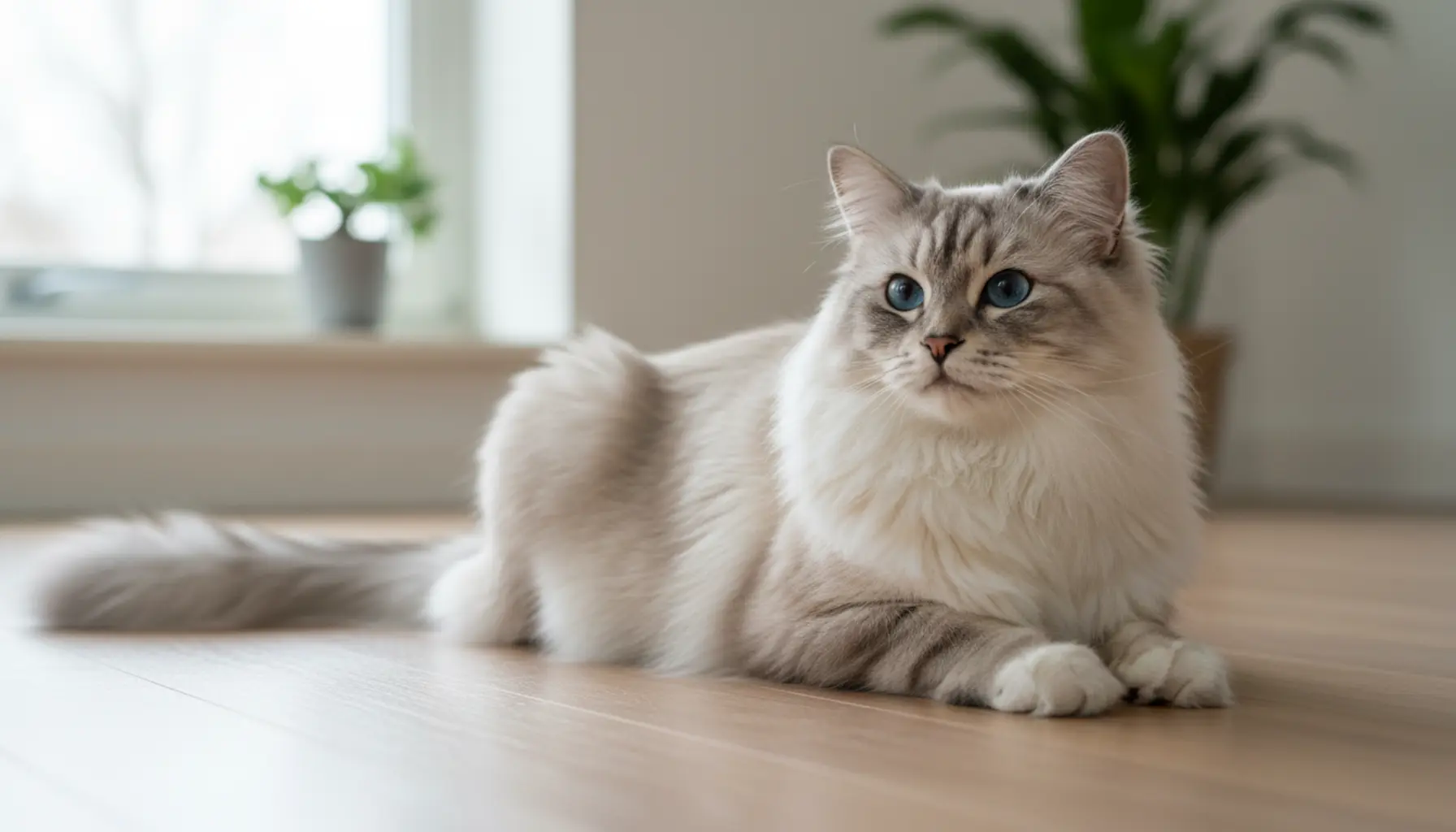
The Neva Masquerade is an incredibly attractive cat with a distinctive point coloration. Discover its history, character traits, grooming requirements, and tips for choosing a cat from a breeder. This breed delights not only with its looks but also its friendly, family-oriented temperament—an ideal choice for those seeking an intelligent, beautiful companion for the home.
The Neva Masquerade is a cat with an extraordinary appearance and a gentle character. Learn about the breed’s history, features, care, and tips for future owners.
Table of Contents
- Neva Masquerade – Origin and History
- What Does the Neva Masquerade Cat Look Like?
- Character and Temperament of the Neva Masquerade
- Neva Masquerade with Children and Other Pets
- Grooming and Nutrition of the Neva Masquerade
- How Much Does It Cost and How to Choose a Neva Masquerade?
Neva Masquerade – Origin and History
The history of the Neva Masquerade is inextricably linked to the story of the Siberian cat, a native Russian breed descending from the cold, forested regions of Siberia and the European part of Russia. For centuries, these cats lived in close proximity to humans—in villages, small towns, and later in larger cities—serving as natural rodent controllers. Their dense, semi-long fur, strong immunity, and robust physique were the result of natural selection in the harsh climate, not controlled breeding programs. Within such populations of “ordinary” Siberian cats, individuals with distinctive point coloration—lighter bodies with darker extremities on the muzzle, ears, paws, and tail—began to appear. These cats became the ancestors of the later Neva Masquerade, although for a long time they were seen merely as a colorful curiosity rather than a separate variety. The name “Neva Masquerade” is both symbolic and geographic. “Neva” refers to the Neva River, which flows through St. Petersburg (formerly Leningrad), one of the main centers where the organized breeding of point-colored Siberian cats began. The term “Masquerade” relates to the “mask” on the muzzle—a contrasting, darker marking typical for colorpoint cats, reminiscent of masquerade ball masks. The combination of these two elements highlights both the Russian origins and the distinctive, almost theatrical appearance of the breed. According to most breeders and feline experts, the Neva Masquerade emerged as a recognized type in the 1970s and 1980s, when interest in native Russian breeds intensified and the first organized breeding programs were established. Within the Siberian cat population, breeders began to deliberately select and pair individuals with the colorpoint gene, which causes “Siamese-like” coloration—lighter bodies with dark extremities. The gene’s origin remains debated: some specialists believe the mutation arose spontaneously in the Siberian population, while others suggest historical crossbreeding with Siamese or other oriental breeds brought by sailors and merchants to Russian port cities. Regardless of the gene’s exact origin, by the 1980s, Siberian cats with point coloration were being bred intentionally, which eventually led to the recognition of the Neva Masquerade as a type linked with the Siberian cat. Initially, there was debate within Russian breeding and feline circles if the Neva Masquerade should be classified as a separate breed or merely as a color variant within the Siberian breed. In practice, breeders often mated both classic Siberians and point-colored individuals, which strengthened the common body type, character, and fur quality while preserving the specific coloration. During this period, the Neva also began gaining popularity in the West—especially in Germany and Scandinavian countries, where the first cats were exported from Russia. The stunning appearance, the “wild forest” build combined with blue eyes and a masked muzzle, as well as the friendly, balanced temperament, quickly boosted interest in this new variety. In international cat federations, the Neva Masquerade’s recognition process was gradual and varied. In some organizations, such as FIFe, the Neva Masquerade is officially a color variant within the Siberian breed (SIB breed standard, with Neva being SIB colorpoint), meaning both variants are treated as one breed with different color groups. Other federations accepted or long considered treating the Neva as a separate breed, affecting registration, mating, and show regulations. These classification differences still cause confusion, especially among novice breeders and owners, but from a genetic and historical perspective, the Neva Masquerade remains closely related to the classic Siberian, sharing the vast majority of its traits.
As the Neva Masquerade grew in popularity, breedings began to carefully document pedigrees, standardize the type, and weed out animals not fitting the desired standard—both in appearance and health. In the 1990s and early 21st century, more cats were imported from Russia, Belarus, and Baltic countries to Western Europe and North America, enabling the formation of breeding lines outside their native lands. The breeding boom improved genetic awareness concerning coloration and line differences—breeders strove to maintain the massive Siberian type while perfecting prominent point markings and a deep blue eye color. During this period, the name “Neva Masquerade” became popular and eventually replaced earlier colloquial terms such as “colorpoint Siberian” or “masked Siberian.” This name became a kind of “brand”—it attracted attention with its exotic sound and aura of mystery. It’s worth noting that the history of the Neva Masquerade fits into the broader trend for the renaissance of so-called natural breeds—originating from local rural and urban cat populations, not created artificially through intensive crossbreeding. Just as the Maine Coon in the USA or the Norwegian Forest Cat in Scandinavia, the Russian Siberian and its variety, the Neva Masquerade, were “rediscovered” by cat fanciers eager to preserve and protect their unique character. Today’s Nevys, though bred with carefully documented pedigrees, still carry the legacy of former cats from Russian villages and towns: sturdy build, adaptation to cold, lively but stable temperament. The evolution of the breed—from anonymous, local cats through the first generations with striking point coloring, to a fully recognized show variety—happened relatively quickly, in just a few decades. At the same time, the Neva Masquerade managed to retain its “naturalness” better than many breeds created with intense human intervention. The development of modern genetic tests allows breeders to more consciously manage the gene pool, reduce hereditary disorders, and plan matings to maintain broad genetic diversity, which is key to the breed’s longevity and health. Today’s Neva Masquerade is the result of merging tradition with modern felinology: grounded in centuries of natural selection under Russia’s harsh climate, while benefiting from modern science that helps safeguard its unique type, character, and spectacular point coloring.
What Does the Neva Masquerade Cat Look Like?
The Neva Masquerade stands out above all for its characteristic point coloration, which gives it a unique, “masked” appearance. The foundation is a lighter torso—creamy, beige, sometimes with an ivory tint—contrasting with darker points on the ears, face, paws, and tail. It’s the darker “mask” on the face combined with intensely blue eyes that creates the effect reminiscent of a Venetian masquerade. Point coloration comes in many color variants: from the classic seal point (dark brown), through blue point (diluted, grayish-blue), to chocolate, lilac, red, or cream point. Additionally, lynx point (tabby point) and tortie point (tortoiseshell point) varieties are common, making each cat unique. Interestingly, Neva Masquerade kittens are usually born almost white, and their final color pattern develops gradually over the first months of life, influenced by ambient temperature—the cooler body parts (ears, face, legs, tail) darken more, which is typical for cats with Siamese-type coloring. The Neva’s build is semi-long to strong, well-muscled, harmonious, but not heavy. It’s a medium or large cat, with sturdy bones, a broad chest, and a straight, fairly long torso. Males can be noticeably larger and heavier than females, often weighing 6–8 kg, while females usually weigh 4–6 kg. The legs are medium-length, proportional to the body, with large, rounded paws that look like “snow boots,” especially when the toes end in tufts of fur. The tail is well-furred, thick at the base, and carried like an impressive “plume,” usually nearly as long as the torso. The head is a slightly modified wedge with a rounded outline—neither extremely triangular nor round. The muzzle is somewhat elongated but still full, with a well-defined chin and lightly rounded jaw. The profile is marked by a gentle indentation at eye level leading into a straight, medium-length nose. Noteworthy are also the medium-sized, wide-set, slightly rounded ears, placed high with a noticeable gap between them—often sporting distinctive ear tufts reminiscent of a lynx. The eyes of the Neva Masquerade are large, slightly oval but rounded, set at a slight slant, which gives them depth and an “oriental” charm; their color always falls within shades of intense blue, with deep, saturated color being most desirable. The darker and richer the blue eyes, the higher the cat’s show value.
The Neva Masquerade’s coat is another feature that greatly influences its appearance. It is semi-long, dense, with a well-developed undercoat, suited to Russia’s harsh climate—the breed’s place of origin. The fur on the neck and shoulders forms a substantial ruff, especially in adult males, giving them a majestic, “lion-like” look, while on the chest and belly, the coat is fuller and softer. Hair on the back and sides is a bit coarser and more resistant to moisture, lingering from adaptation to outdoor living. To the touch, the coat is delicate, silky, but shouldn’t be as silky as typical indoor breeds—you should feel a bit of “wildness” and practicality in it. In winter, the fur is thickest, adding to the “teddy bear” effect and making the cat look larger; during shedding, it may appear much lighter but still maintains a fluffy tail and characteristic structure. Point coloring may combine with tabby striping, visible as an “M” on the forehead, stripes on the cheeks, lighter eye rims, and rings around the tail. These visual details add vividness and a subtle “wild” element, despite the generally gentle, friendly facial expression. Overall, the Neva Masquerade should exude harmony between strength and elegance: this is a sturdy, muscular animal, yet agile and graceful, with a natural and effortless charm. Unlike highly selectively-bred breeds, the Neva maintains a natural look, without exaggerated traits. Thanks to the contrast coloring, blue eyes, lush coat, and solid build, the Neva Masquerade attracts attention even from those who usually don’t notice cats—the look is so distinctive it’s hard to mistake for other longhaired breeds, yet its kinship with the rugged, primitive Siberian cat is always visible.
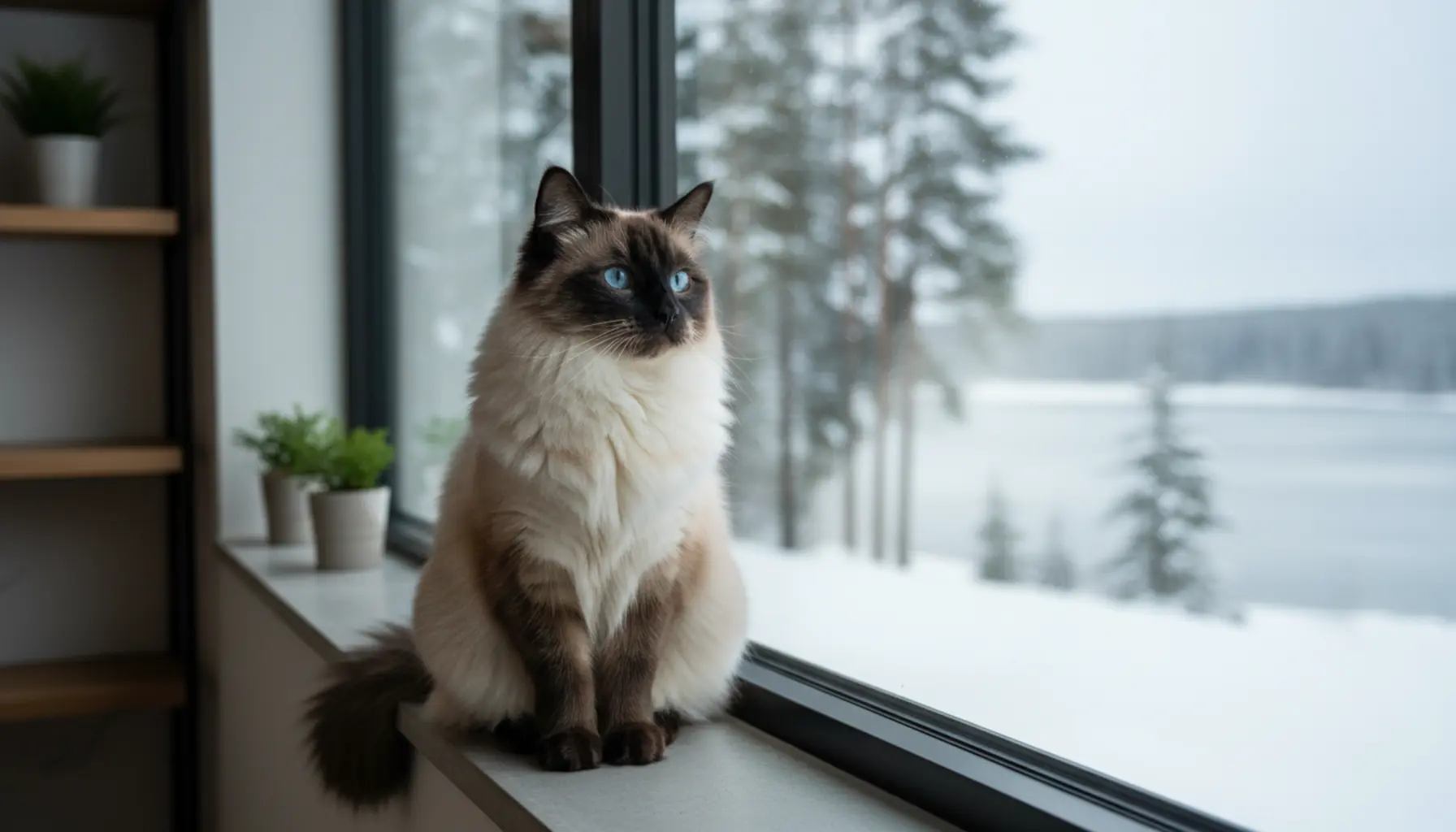
Character and Temperament of the Neva Masquerade
The Neva Masquerade is a cat with a complex yet typically balanced personality, attracting both experienced cat lovers and those looking for their first companion. The breed combines Siberian cat attributes—resilience, independence, and intelligence—with exceptional gentleness and attachment to humans. Nevys are known for forming strong bonds with their owners, often choosing a “favorite” person to follow from room to room, accompanying them in daily activities. This doesn’t mean they ignore other household members—most Nevys are open and curious around people, greeting guests and quickly making contact, though they may spend the first minutes calmly observing from a safe distance. Emotional intelligence typifies the Neva Masquerade: many people notice the cat can sense moods, soothe with their presence, purr when we’re sad, or lie close when the owner is sick or feeling down. This breed likes to be involved in family life, but usually isn’t excessively intrusive—they seek attention when they feel there’s room for it, but just as easily enjoy lying nearby and simply “being present.” Neva Masquerades are generally not loud cats; their voices are soft and used sparingly—subtle meows, chirps, and purrs are a form of communication rather than a demand for attention. At the same time, thanks to their lively intellect and sharp perception, the Neva is a cat that quickly learns household routines—knowing when feeding time approaches, observing where their favorite toy is kept, and even associating certain words, gestures, or sounds with specific events. A well-raised individual is not prone to aggression, is emotionally stable, and generally resistant to stress, although persistent noise, frequent relocations, or lack of a regular caregiver can affect their well-being. Owing to their “working cat” origin, their temperament combines moderate activity with a need for mental stimulation—they’re not couch “lazies,” but neither do they constantly demand intense play; most prefer a balanced day alternating between activity and long naps in a favorite spot.
In relationships with people, the Neva Masquerade is sometimes described as having a “dog-like companion nature,” although it’s important to remember that it’s still a fully independent cat, with its own boundaries and needs. In many homes, Nevys learn quickly to follow their owners, respond to their names, and even come when called—especially if rewarded with treats or playtime. They willingly take part in peaceful, daily rituals—lying nearby while you work at the computer, sitting atop the sofa when you watch a movie, or watching housework with interest. Still, Nevys are not typically “lap cats” on command—many prefer lying right beside the person, resting against a leg or arm, rather than being held for long; they like closeness, but on their terms. Their attitude toward children is usually very positive, provided the youngsters learn to respect the cat’s boundaries—Nevys, thanks to their calm disposition and patience, often become loyal playmates, but excessive pulling, screaming, or squeezing can cause them stress. With other cats, Neva Masquerades usually get along well, especially if socialized early; they enjoy play-hunting, chasing, and wrestling, but usually don’t seek conflict. With dogs, especially calm ones accustomed to cats, they may show wary curiosity that, over time, turns into a partnership—often resulting in napping together on the same bed. This breed highly values predictability and clear rules—they respond well to routines, regular feeding times, and regular, not overly vigorous, play that engages both body and mind (treat-hunting games, simple puzzles, wand toys, rolling balls). Prolonged solitude in an empty house is not ideal for Nevas: while they handle it better than extremely fearful breeds, they may become more withdrawn, lethargic, or, on the contrary, overly demanding of attention after the owner’s return—manifested by vocalizing or getting in the way of every activity. Therefore, the best environment for this breed is a home where the cat doesn’t spend all days completely alone, has regular contact points with people, and access to stimulating surroundings: scratching posts, shelves, window views, and toys rotated regularly. In such an environment, the Neva Masquerade shows the full scope of its character—becoming a calm, self-confident, affectionate, yet unobtrusive companion who brings atmosphere of harmony and gentle daily joy to the home.
Neva Masquerade with Children and Other Pets
Neva Masquerade’s relationships with children and other pets are among the most frequently highlighted strengths of this breed, though they require conscious supervision from adult guardians. Due to their even temperament, high emotional intelligence, and attachment to people, Nevas can form very close bonds with children, as long as the children are taught gentle, respectful animal handling. This cat usually does not react impulsively—when uncomfortable, it’s more likely to walk away than to respond aggressively, but this should not be seen as a “guarantee of safety” if left unsupervised. For families with preschool and school-age children, the Neva may become a loving playmate, willingly joining in calm, creative activities such as building obstacle courses, playing hide and seek, or retrieving lightweight toys. It’s essential to set clear ground rules: no pulling on the tail or fur, no picking up the cat by force, or waking it from naps, and learning to recognize warning signs such as tail flicking, flattened ears, or the cat’s retreat. Such rules teach children empathy and responsibility, while giving the Neva the space to show its gentle personality fully. For younger children, the best solution is to get them used to “respecting the cat’s space”: designating areas that are off-limits (e.g., high shelf with a bed, a separate room with litter box and a scratching post), and establishing the rule that one approaches the cat only when it initiates contact. With teenagers, the Neva often becomes a “cat friend,” keeping company while studying, resting, or watching evening movies, gladly cuddling and responding to calm, gentle interaction. However, even with a sociable nature, each cat has individual boundaries—some Nevas are more active and enjoy play with children, others prefer quiet petting and being “nearby.” It’s vital to respect their temperament and not compare two cats of the same breed, as individual differences can be pronounced. Interactive toys work wonders in family homes: wand toys, balls, treat mazes, which channel the hunting instinct into safe, controlled fun. The cat can be the parents’ ally in building rituals—feeding together, brushing under adult supervision, or evening play sessions foster children’s sense of agency and responsibility while strengthening the bond with the Neva Masquerade.
The Neva Masquerade’s relationship with other pets mainly depends on proper socialization and the way a new companion is introduced to the home, but this breed is generally predisposed to group living, provided it feels safe and has the chance to withdraw. Nevas usually get along well with other cats, especially if they grow up with them or if introductions are gradual—using scent exchange, separate starter areas, and brief, supervised visual contact. As a natural-breed cat, the Neva is territorial but not necessarily dominant; it can act as a balanced “mediator” in a multi-cat home, provided every animal gets its own bowls, litter tray, bed, and scratching post. Remember the rule “as many litter boxes as cats, plus one” to reduce stress and the risk of territorial marking. With dogs, the Neva Masquerade often surprises with its bold yet calm disposition. They handle the company of balanced, trained dogs that respect feline boundaries very well. Introduction should be particularly careful: first, exchange scents (cat blanket near the dog’s bed and vice versa), then short meetings with secured spaces (gate, carrier), and finally direct contact, always under careful supervision. Do not allow chasing, even if the dog “just wants to play,” as this can permanently undermine the Neva’s sense of security and cause chronic stress, hiding under furniture, or behavioral problems. With smaller animals—like rodents, rabbits, birds, or fish—the Neva Masquerade may awaken its natural hunting instincts, so proper protection of cages, aviaries, and aquariums is absolutely essential; do not assume that the breed’s gentle character will “switch off” primal reflexes. Cages and terrariums should be outside the cat’s reach or solidly closed, so contact between Neva and smaller pets only occurs under direct, controlled conditions. A multi-species home can greatly enrich the Neva’s life—other animals encourage movement, observation, and interaction—but requires wise space management: shelves and tall scratching posts for the cat, calm rest zones for the dog, separate rooms or protected areas for small animals. This way, the Neva Masquerade can fully develop its social potential, remain a balanced, curious cat, and always feel safe surrounded by people and other household pets.
Grooming and Nutrition of the Neva Masquerade
Caring for the Neva Masquerade requires attention to its semi-long, dense coat and digestive sensitivity typical for many semi-longhaired breeds. Nevas’ coats consist of a soft undercoat and resilient guard hairs, protecting against the cold but also causing periodic, intensive shedding. Regular brushing—at least 2–3 times per week, and daily during moulting—helps reduce hair in the home and the risk of hairballs in the digestive tract. The best brushes have soft, metal pins and medium-wide combs; avoid aggressive undercoat brushing “to the skin” to prevent irritation. Most Nevys get used to grooming quickly if introduced gradually as kittens: gentle touch, short sessions, treat rewards, and a calm voice create positive associations. Bathing is rarely needed—once or twice a year, or in emergencies, using mild cat shampoos free from SLS and strong fragrances; washing too often can disrupt the natural skin barrier and cause dryness. Care also includes regular checks of ears, eyes, and claws: ears should be cleaned as needed with soft gauze and a pet-safe solution (never deep inside the ear canal), and eyes wiped with a damp cotton pad if slight discharge appears. Claws of indoor cats often grow faster than they wear down; trimming every 3–4 weeks with animal clippers prevents snagging on fabrics or claws growing inward, especially in older cats. Dental checks are also crucial: Nevys, like other cats, are prone to tartar buildup, so consider cleaning teeth with special cat toothpaste and adding crunchy elements to their diet to help with mechanical cleaning. Besides hygiene, a stimulating environment is important—a tall scratching post, shelves, hideaways, and interactive toys protect furniture and help maintain body weight, muscle tone, and mental health, essential for immunity and the cat’s well-being.
Nevys’ diet should match their natural needs as obligate carnivores and their tendency (especially neutered, less active cats) to put on weight. The foundation should be a high-meat-content wet food or balanced cooked/BARF diet supervised by a vet or feline nutritionist; products must provide the right amount of animal protein (minimum 60–70% content in wet foods), optimal amino acid profile (especially taurine), moderate fat, and low carbohydrates. With dry food, pick those with the highest meat content and minimal grains, treating dry food more as a supplement than a staple—Nevys, like many cats, don’t have a strong sense of thirst, so high wet (or raw) food content is important for kidney and urinary health. Fresh water should always be available; many Nevys prefer drinking from a fountain, which encourages higher fluid intake. Portions should match age, body weight, condition, and activity level: kittens require smaller, more frequent meals rich in energy and protein, while adult, neutered Nevys often do best with 2–4 meals daily and controlled calories. Regular weighing (e.g., monthly) quickly alerts to weight gain or loss; see a vet in case of either to rule out metabolic or hormonal diseases. As a breed of natural origin, Neva Masquerade are generally hardy, but excess carbohydrates, low-quality foods, and “people food” treats can cause obesity, diabetes, and pancreatic problems. Avoid cow’s milk, salty, spiced, smoked, and fried foods, as well as cooked bones that can splinter and injure the digestive tract. Many Nevys benefit from omega-3 supplements (e.g., salmon oil in cat-appropriate doses), which support skin and coat, reduce inflammation, and ease allergy symptoms. With indoor cats, especially those with limited sun exposure, discuss supplementing vitamin D3 and other micronutrients with your vet, though a well-balanced complete food usually meets these needs. Nevys are famously food-curious—many love trying new flavors—so diet changes should be gradual, over 7–10 days, to avoid diarrhea and vomiting; slow mixing of the new food with the old allows gut flora to adapt. Feeding routines can also be playful: slow-feeder bowls, scent mats, or puzzle feeders stimulate intellectually, prevent gobbling and boredom—especially important for intelligent, emotionally sensitive Nevys living exclusively indoors.
How Much Does It Cost and How to Choose a Neva Masquerade?
The price of a Neva Masquerade cat depends on many factors, including breeder reputation, pedigree quality, the cat’s intended purpose (companion, show, breeding), and rarity of coloration. In Poland, the typical price range for a kitten from a legal, registered breeder is approximately 3500–6000 PLN, with “pet” cats (sold as companions with a spay/neuter agreement) at the lower end. Individuals with top pedigrees, titled parents, and show or breeding potential can cost 6000–9000 PLN, or even more, especially if the breeder is well-known and successful at shows. The price of a pedigree cat includes not just “looks” but a full package of breeder costs: genetic testing of parents, veterinary care, high-quality feeding, vaccination, deworming, microchipping, neutering (often included before pickup), and socialization. Prices much below typical rates (e.g., 1500–2000 PLN for a “purebred” cat without documentation) should raise suspicion, as this often means backyard breeding, untested parents, and unethical animal care. Remember, the Neva Masquerade is a relatively popular breed but still requires responsible selection; good breeders compete not on price, but on care quality and transparent practices. The initial starter kit (litter box, litter, scratching post, carrier, bowls, toys—usually minimum 600–1000 PLN), vet visits, and monthly food and litter costs (often 200–400 PLN per month, depending on food quality) should also be budgeted. Rather than looking for “bargains,” it is better to carefully consider offers and wait for the right litter—higher prices from reputable breeders typically mean lower risk of future health and behavioral problems.
When choosing a Neva Masquerade, start by checking if the breeder is affiliated with recognized feline organizations (e.g., FPL/FIFe, WCF, TICA, GCCF, etc.), has a registration number, and if current litters are listed in official databases. A reputable breeder should willingly share parent pedigrees, genetic test results (including HCM—hypertrophic cardiomyopathy, PKD—polycystic kidney disease, and other line-typical tests), vaccination records, and provide a sales contract with mutual responsibilities clearly outlined. A visit to the cattery, or at least a video call, is very important—you should see how the cats live: premises should be clean, well-equipped with scratching posts, hideaways, toys; adult cats should appear relaxed, groomed, and sociable, even if they’re not effusive with strangers. Neva Masquerade kittens should only be adopted after 12–14 weeks, after at least two vaccinations and with a health booklet or passport; releasing kittens too early (around 7–8 weeks) is a major red flag, as it disturbs socialization and can affect later behavior. When selecting a kitten, instead of focusing only on point color or eye intensity, pay attention to temperament—talk to the breeder about how the kitten responds to new stimuli, children, or other animals, and whether it’s calmer or more energetic. Good breeders often help you choose the kitten best suited to your lifestyle and may even discourage purchase if they feel the family’s not ready for the breed’s needs. The contract should state the cat’s intended purpose (companion, breeding), require spaying/neutering for pet cats, and ideally offer health guarantees—e.g., possibility of breeder support in case of issues. Ask about returns or assistance finding a new home if future circumstances prevent continued ownership. Before making a decision, prepare a list of questions for the breeder (about parents’ temperament, litter birth and upbringing, food used, kitten habits, breeding experience), and note if the conversation is factual and open, or if the breeder avoids detail, pressures for quick down payment, or discourages questions. Choosing a Neva Masquerade consciously is a process where price is just one factor; equally important are trust in the breeder, clear documentation, and suitability of the kitten to the realities and expectations of its future caregiver.
Summary
The Neva Masquerade is a remarkable cat for those who value original looks and a family-oriented nature. Its Siberian heritage gives it exceptional resilience and friendly traits. The Neva Masquerade’s character makes it an ideal companion for families with children and other pets. Regular grooming, proper diet, and attention are needed to maintain health and a beautiful silky coat. When considering buying such a cat, always choose reputable breeders. A Neva Masquerade is the perfect choice for anyone who wants an intelligent, beautiful, and friendly companion at home.

