
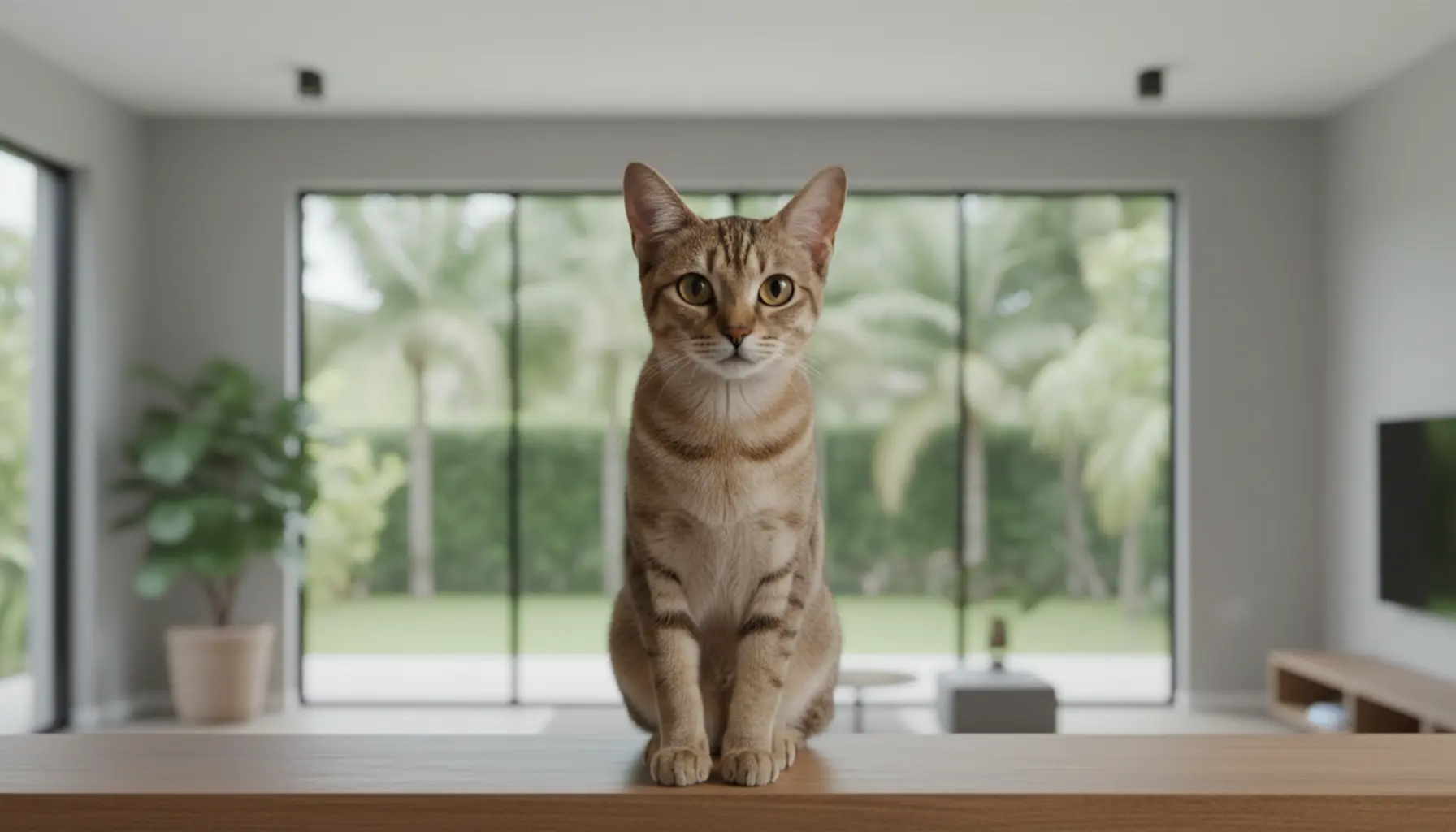
The Singapura cat is a unique breed not just because of its miniature size, but above all for its extraordinary character and charm. Discover what life is like with this cat, how to take care of it, and what to look out for when adopting or purchasing one.
Table of Contents
- History and Origin of the Singapura Cat
- Physical Characteristics: Appearance and Size
- Character and Personality of the Singapura Cat
- How to Care for a Singapura: Grooming and Health
- Singapura Cats in the Family and Their Interactions with People
- Buying and Adopting a Singapura Cat: What You Need to Know
History and Origin of the Singapura Cat
The Singapura cat arouses curiosity not only because of its miniature size, but also due to its intriguing and not entirely clear history. Most sources agree that the breed is closely linked to Singapore — the tropical city-state, whose alleys and drains were said to be home to small, beige cats with characteristic ticked tabby coats. According to the popular version, the street “drain cats” inhabiting the drains and marketplaces of Singapore’s business district became the ancestors of the modern singapura. Their small size, large ears, and “sepia agouti” – a warm, sandy fur color with gentle shading – were adaptations to the hot, humid climate and city life, where cats had to be agile, light, and clever to survive. In the 1970s, Singapuras entered the world of pedigreed cats thanks to the American couple Tommy and Halmy Meadow. The couple lived and worked in Singapore, where they became interested in the local population of small, light-colored cats. In 1975, they brought three cats to the United States, considering them unique both in appearance and character. These animals – two males and one female – were officially presented as \”Singapura\” and began organized breeding of the breed in the USA.
However, the breed\’s history soon became shrouded in controversy. Initially, the story of the “natural breed” from Singapore’s streets and drains was enthusiastically received by cat lovers, and feline organizations began recognizing the Singapura as an official breed. The Cat Fanciers’ Association (CFA) officially recognized the Singapura in 1982, followed by other organizations in subsequent years. A problem arose in the 1980s and 1990s when Singapore authorities and local animal welfare groups became interested in the status of the “national cat” and its promotional potential for the country. Research revealed that part of the Meadows’ story might be incomplete. Customs and breeding documents suggested the couple may have previously brought Burmese and Abyssinian-type cats to Singapore, and later exported their offspring to the US as “original Singaporean street cats.” Critics speculated whether the breed was in fact a cross between Burmese and Abyssinian cats, which were then “sent” to the US under a new name and an attractive, exotic legend. The matter was never finally settled, but most major feline federations, including FIFe and TICA, maintained breed recognition, considering the Singapura a semi-natural breed – originating with city cats from Singapore but enhanced and established through deliberate, planned breeding. Genetic studies in response to the controversy revealed certain relationships between Singapura and breeds such as Burmese and Abyssinian but also confirmed the existence of a genetic pool distinctive to Asian cat populations. Today, it is accepted that the Singapura cat has roots in both the natural population of small, sandy-colored cats from Singapore and in selective breeding that reinforced desirable traits – petite build, silky short ticked coat, large eyes and ears, and a gentle, sociable character. The breed quickly gained popularity in the US and later in Europe, especially in the 1990s, where breeders appreciated not only its exotic looks but also its potential in developing a miniature, yet healthy cat. In Singapore, the Singapura became something of a symbolic breed – the unofficial “national cat,” featured in promotional materials for the city as a place of unique culture blending modernity and local folklore. This duality – between the legend of “drain cats” and modern genetic research and breeding programs – makes the history of the Singapura one of the most fascinating stories in the feline world, and the breed itself remains an example of how a local animal population can become an international show star and beloved companion in homes worldwide.
Physical Characteristics: Appearance and Size
The Singapura cat is one of the smallest recognized cat breeds in the world, but its miniature body hides a harmonious, athletic build. Adult females usually weigh from 1.8 to 2.7 kg, males rarely exceed 3 kg, making them appear almost like eternal kittens compared to many other breeds. The Singapura’s silhouette is described as “medium” – neither completely petite nor overly fragile; rather, it’s a compact, well-muscled body with a broad chest, rounded rump, and proportional limbs. The legs are slender but clearly muscular, the paws small and oval, appearing delicate yet strong and agile for jumping. The tail is medium-long, slightly tapering at the end, never excessively fluffy or too short – it should harmoniously complement the rest of the body. The Singapura’s entire bearing suggests subtle elegance, without a hint of heaviness; when it moves around the home, it resembles a nimble, wild mini-cat, moving fluidly and almost silently. The short, close-lying coat further emphasizes the torso\’s muscle and neck slenderness, enhancing the impression of lightness and finesse. At the same time, the Singapura must not appear emaciated – the breed standard calls for palpable but not excessive muscle; a well-built individual should feel light in the hands, yet seem “dense,” with a compact body.
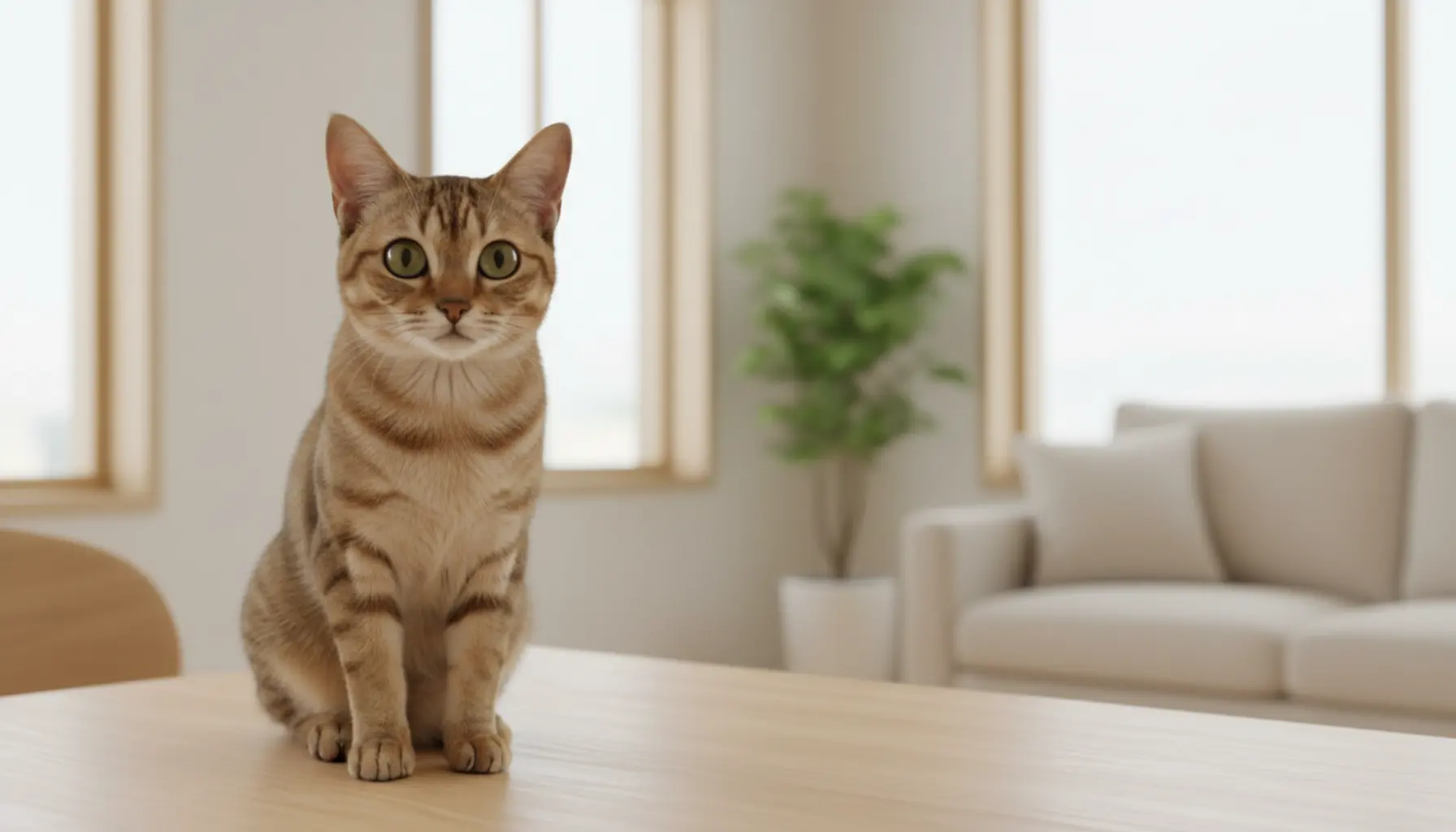
The Singapura’s extraordinary appearance results mainly from a combination of its specific coat, head shape, and huge, expressive eyes. The head is rounded, medium-sized, with slightly full cheeks and a gently defined muzzle; the snout is short but not flat – the breed is not brachycephalic, so it retains healthy skull proportions. The ears are relatively large for the small body size, broad at the base, set slightly at an angle, which gives the cat a playful, somewhat “owl-like” expression. The ear interior is often lightly furred, and its outline is sharp, further highlighting an alert, inquisitive gaze. The Singapura’s eyes are its most distinctive “signature”: large, almond-shaped, subtly slanted, widely set, with a deep, shiny color – from hazel, through gold, to green; the exact color is less important than its intensity and contrast to the rest of the face. Around the eyes, a delicate, lighter outline reminiscent of makeup is often visible, emphasizing their size and giving the cat a “childlike,” perpetually surprised look. The Singapura’s coat is short, silky to the touch, very fine and close-fitting, so the cat hardly seems fluffy — more like “smoothly wrapped” in velvet skin. The coloration is always sepia agouti – each hair has several alternating pigment bands (ticking), which creates a characteristic, warm, sandy-beige effect with a slightly darker dusting on the back, tail, and outer limbs. The belly, chest, and inner legs are lighter, almost creamy, and the body should not show distinct stripes, except sometimes faint spots on the knees and backs of the legs. The tail ends with a darker tip, contrasting with the lighter base. Lack of undercoat means the Singapura’s fur looks tidy, almost “polished,” and it also better displays the body’s outline. The overall impression is of perfect proportion – from head to body, tail, and legs – with no element overly large or too small; even the exceptionally big eyes and ears seem to naturally fit with the rest, creating the image of a miniature, exotic-looking cat whose appeal lies in subtle details rather than striking color contrasts or impressive size.
Character and Personality of the Singapura Cat
The Singapura cat is considered one of the most affectionate and people-bonded representatives of the feline world. Despite its small frame, it has a huge heart and an almost “canine” need for closeness — this is a pet who wants to take part in every household activity, from working at the computer to watching TV or reading in bed at night. Singapura usually chooses one or two “favorite” people but remains friendly and open to the entire family, often following caregivers from room to room. This is not a cat that disappears in solitude for hours on end – on the contrary, it copes poorly with long-term isolation and being left alone for many hours, which should be considered when planning your lifestyle. Its affection shows not only in frequent seeking of physical contact — jumping onto laps, sleeping on the pillow next to its caregiver’s head, or rubbing against people — but also in subtle communication: gentle meowing, purring, tapping with a paw when it wants attention. At the same time, it is not a pushy or hysterical cat; it rather tries to blend softly and naturally into the rhythms of home life. Singapuras are known for high emotional intelligence — they sense human moods, responding calmly to a caregiver’s stress or increasing their need for affection when they sense sadness. They’re very empathetic cats who form strong bonds, making them sensitive to changes in their environment, such as moving house, renovations, or the arrival of a new family member.
In terms of temperament, the Singapura cat combines liveliness with gentleness. It’s active, curious, and loves to play, but its energy is not as intense as in some oriental breeds; it more often shows in frequent exploring, jumping to higher places, checking cabinets, or accompanying its caregiver in daily activities. It loves interactive toys, wand toys, tunnels, and all games where it can “hunt” and use its wits, such as playing hide-and-seek or retrieving small objects — something that surprises many owners. This is a very intelligent breed — it quickly learns household rules, responds to its name, can master simple commands and easily adapts to daily routine, as long as it receives a consistent element of closeness to its caregiver. At the same time, the Singapura is mostly a gentle and agreeable cat; it rarely shows aggression, and conflicts with other animals are more often diffused by avoidance or play than by fighting. It gets along well with other cats and with well-mannered, friendly dogs, as long as it is provided a safe space to retreat to. With children, Singapura usually shows great patience and willingly joins in group play, but as a sensitive and delicate cat, it needs children to learn the basics of respect — no pulling, tail tugging, or noisy chasing. Another hallmark is its communicativeness — its voice is soft, melodic, and unobtrusive, and its meow often resembles a quiet “chirp”; this cat usually “talks back” to its caregiver, as if engaging in a dialogue, but is not loud or demanding. Though naturally brave and curious, with strangers it may initially be slightly reserved, preferring to observe from a safe distance; once it gains trust it becomes friendly, allows petting, and actively participates in new interactions. It requires gentle, calm handling, consistency and respect for its boundaries, but in return offers an extremely loyal, deep bond often compared by owners more to a close friend than to “just a pet.”
How to Care for a Singapura: Grooming and Health
The Singapura cat, despite its exotic origins, is not especially demanding in daily grooming, but its delicate build and sensitive character mean it needs well-thought-out care. Its short, close-lying coat with no dense undercoat means shedding is usually moderate, and the hair rarely mats. Weekly thorough brushing with a soft natural-bristle brush or rubber mitt suffices to remove dead hair, stimulate skin circulation, and enhance the fur’s natural shine. In shedding periods, such as in spring, you can brush 2–3 times a week, but always gently, so as not to irritate thin skin. Water baths are generally unnecessary and may unnecessarily dry out the skin – if the cat needs to be washed, use a gentle cat shampoo and be sure to dry the fur thoroughly in a warm room. Due to their large, protruding ears, Singapuras require regular ear checks – every 1–2 weeks gently inspect the ear canal and, if needed, clean it with a special pet ear solution and a cotton pad; avoid cotton buds to prevent damage to delicate structures. The eyes are usually healthy, but given their large size and expressiveness, it’s worth regularly checking for excessive discharge, redness, or squinting. Minor dirt can be removed with a soft, moist cloth or gauze, always wiping from the outer to the inner corner. Oral hygiene is important: like many small breeds, Singapura cats can be prone to tartar, so it’s good to accustom them to regular tooth brushing with special cat toothpaste and possibly dental supplements recommended by a vet. Nail care involves trimming every 2–4 weeks, especially if the cat is mainly indoors; at the same time, ensure a good scratching post so the cat can naturally file its claws and stretch its muscles. In daily grooming, don’t neglect the litter box – the Singapura is a very clean cat sensitive to smells, so litter should be chosen carefully (preferably low-scent or unscented) and cleaned daily to avoid stress and eliminate litter box problems.
Caring for a Singapura’s health depends on proper diet, exercise, and regular veterinary care. Due to its miniature size and delicate build, excess weight is particularly dangerous — extra grams quickly stress the joints and spine and increase the risk of metabolic diseases. Diet must be well balanced, based on high-quality wet and/or dry food with lots of meat, and with limited cereals and fillers. Portion control is important — Singapura cats are clever and quickly learn to “beg” if it works. Access to fresh water is a must; to encourage drinking, consider a water fountain, which mimics flowing water and is often more attractive than a bowl. Regular physical activity helps maintain proper weight and muscle condition: Singapura cats love climbing, hunting fishing pole toys, balls, or interactive logic toys that also stimulate their intelligence. At home, it’s worth arranging vertical space — shelves, scratching posts with platforms, high beds — so your cat can observe its world from above and satisfy its urge to explore. Health-wise, the breed is considered reasonably robust, but like all pedigree breeds, some lines can show a predisposition to genetic issues such as pyruvate kinase deficiency (PK-deficiency), which affects red blood cells, or digestive problems and gut sensitivity. Responsible breeders test their cats and exclude affected individuals from breeding, so choosing a reputable breeder is a key step in prevention. For caregivers, it’s crucial to follow the vaccination schedule (viral diseases, rabies where required by law), regular deworming, prevention treatments for ectoparasites (fleas, ticks, lice), and at least an annual check-up with blood and urine tests — for older cats, every six months is recommended. Singapura is a very emotionally sensitive cat that reacts strongly to stress — moving house, noisy renovations, sudden family changes, or long-term loneliness can lead to behavioral or physical issues, such as stress-induced cystitis, reduced immunity, or loss of appetite. So, besides physical care, it is vital to ensure a stable, calm environment, a predictable daily routine, gentle introductions to changes, and plenty of time for play and physical contact — as important for this breed as good food or vaccines. Combining grooming, healthy nutrition, preventative care, and emotional well-being will ensure your Singapura cat a long, comfortable life and maintain its natural vitality for many years.
Singapura Cats in the Family and Their Interactions with People
The Singapura cat was practically made for life close to humans – it’s a typical family cat that blossoms most in a home where there’s always something going on and a constant flow of social interaction. Most members of the breed cannot tolerate prolonged loneliness: they like to accompany household members in almost every activity, from desk work to evening relaxation on the couch. Unlike more independent breeds, the Singapura usually doesn’t just watch passively – it actively seeks contact, jumps on laps, lies on documents or keyboards, or even “helps” with cleaning, closely following every move. This is a cat that quickly learns the household routine and adjusts its behavior accordingly: it can quietly rest next to you while you work but becomes lively as soon as it senses playtime is near. Singapuras typically become most attached to one or two people, treating them as the center of their world, but at the same time remain friendly to everyone they live with. In the family setting, they’re not intrusive, but gently remind you of their presence – a light paw tap, a cuddle into your arm, or a quiet, melodic meow. This breed communicates with its entire body: gentle tail movements, ear position, and eye contact often speak louder than vocalizations. The Singapura’s emotional sensitivity means many compare their relationship with the cat to a friendship with a highly empathetic friend – it senses tension, sadness, or joy and responds appropriately, coming to cuddle or encouraging play. To ensure this special bond flourishes, the Singapura requires consistent, gentle treatment from the outset: this is not a cat that tolerates shouting, physical punishment, or emotional chaos, and overly harsh reactions can undermine its trust. For owners, it’s vital to create a relationship based on predictability, affection, and calm but clear communication — Singapuras quickly learn simple household rules if introduced with a gentle tone and consistently, without unnecessary punishment. The household should offer plenty of interaction opportunities: shared play sessions with fishing-rod or ball toys, daily petting moments, conversations – yes, conversations, as this breed often answers human speech with short, melodic sounds, truly seeming to take part in a dialogue. This is also a great cat for people working remotely or spending a lot of time at home – the Singapura loves to lounge nearby on a chair or desk, from time to time gently asking for attention, but it is not as loud or demanding as some oriental breeds.
When it comes to children, Singapura cats stand out for their gentleness, but at the same time need clear boundaries and for kids to respect the animal. Their slight build makes them more susceptible to rough handling, so small children should always be supervised during play – teach them early that you must not pick up a Singapura by the legs, tail, or neck, nor squeeze too tightly. Properly socialized Singapuras usually enthusiastically accept the presence of older, calmer children who know how to play moderately: they happily chase a fishing rod toy, respond gently to petting, and often initiate contact themselves, sitting beside children doing homework or watching cartoons. The breed is also exceptionally tolerant of other animals – with proper, gradual introduction, they can form harmonious relationships with both other cats and friendly dogs. They usually don’t try to dominate, seeking cooperation and shared play, making them a good choice for multi-pet homes, though every pet should have its own space, bowls, and litter box to avoid rivalry. With visitors, at first, Singapuras may be cautious or even secretive – often observing newcomers from a safe hideout before deciding to approach. But once they feel safe, they may themselves initiate contact, rubbing against legs or jumping onto the couch beside the visitor, especially if they sense a calm attitude. This is not a cat that puts on a show in the middle of the living room at a first meeting; its friendliness grows in proportion to how secure it feels. Because of their strong need for companionship, Singapuras thrive in families where at least one person spends much of the day at home – extended loneliness can lead to frustration or even destructive or behavioral problems, such as excessive meowing or compulsive over-grooming. If everyone works outside the home, consider a companion cat with a similar temperament, and be sure to provide an enriched environment (tall cat trees, shelves, interactive toys) so your Singapura will have something to do in your absence. Daily interaction routines are key — even a short but regular play and petting session sustain a strong bond and the cat’s sense of security. In return, a Singapura offers an extremely intense, almost “human” type of attachment: it follows its caregiver from room to room, sleeps in bed, responds to their voice and moods, becoming not just a pet, but a full-fledged, engaged family member.
Buying and Adopting a Singapura Cat: What You Need to Know
Purchasing or adopting a Singapura cat requires careful preparation as this is a relatively rare breed, and very sensitive to the environment it lives in. Even before making the decision, consider whether you want a strictly “pet” cat or plan for breeding or shows in the future – this affects the choice of litter, price, and the formal requirements for the new owner. Reputable breeders usually conduct a preliminary interview, asking about living conditions, presence of children and other pets, time you can devote to the cat, and your plans for the future. In the case of a Singapura, it is especially important that the cat is not left alone for too long, so a good breeder may even suggest adopting two kittens or combining a Singapura with an existing social cat. If you want a pedigree cat, the absolute minimum is to pick a cattery registered with a recognized feline association (FIFe, WCF, TICA, CFA), which works with pedigrees and conducts genetic and health testing on adult cats. In practice, this means access to medical records, test results for common hereditary diseases (e.g., HCM – hypertrophic cardiomyopathy, hematological disorders, immune problems), as well as vaccinations, deworming, and parasite prevention. A Singapura kitten should leave the breeder no earlier than 12–14 weeks old, after its second vaccine, with a health book or passport, microchip, and a signed sales contract specifying its intended purpose (breeding/show or strictly pet). The contract is important for both parties: it should contain breeder and buyer details, microchip numbers, pedigree information, health status, and possible provisions regarding spaying/neutering at a certain age if the cat is sold as a pet. Pay attention to the conditions the cats live in – the facilities should be clean, well ventilated, with places for rest, and offer plenty of stimuli (scratching posts, shelves, toys). The Singapura does not cope well with being kept in small cages or isolated, so kittens should have contact with people, be used to various sounds, have opportunities to play and receive mental stimulation; observe whether kittens are curious or excessively withdrawn, frightened or apathetic – for this breed, it may indicate excessive stress or improper socialization. The cost of a Singapura cat from a good breeder is usually higher than for more common breeds, and may vary widely depending on breeder reputation, quality of the lines (champion parents, show titles), genetic testing and whether the cat is for breeding or “pet” only; a price substantially lower than market rates should be a red flag — it may mean lack of testing, bypassing breeding standards, or even no legal pedigree.
An alternative to buying is always adoption, although with the Singapura cat this is far less common than with European or popular breeds. Sometimes adult Singapuras end up in temporary homes, foundations, or adoption posts due to changes in an owner’s life (moving abroad, illness, divorce, family allergies), or when a cattery closes down; in this case, the cat is often already neutered, has up-to-date medical records, and a largely formed character, making it easier to assess if it’ll fit your home. When adopting, as when buying, always ask about the cat’s history: previous environment, past diseases, experiences with other animals and children, and the reason for rehoming – an honest organization or breeder will not hide problem behaviors, instead providing as many practical adaptation tips as possible. Due to their delicate psyche, Singapuras may react strongly to a change in home, so be prepared for an adjustment period during which the cat may be shy, hide, eat less, or react with fear to sudden noises; a “safe base” is vital – a quiet room with a litter box, bed, scratch post, and bowls, where it can retreat if overwhelmed. Whatever you choose – purchasing or adopting – prepare a starter kit: a stable scratching post, beds at different heights, window and balcony safety netting, bowls made of safe materials, a suitably sized litter box, enough litter, high-quality food, interactive toys, and a fishing rod toy for daily play sessions. As a highly people-oriented breed, the Singapura needs not only a physical environment, but above all your time and attention; if you work outside the home many hours, consider a second cat or at least organize the home so the pet can access windows, shelves, puzzle toys, and has regular, predictable routines for your return. Before making a final decision, consider reaching out to other Singapura owners via forums, social media groups or breed clubs – their experiences with choosing breeders, real maintenance costs, typical behavior or coping with the cats’ sensitive nature are often more practical than dry information from ads and will help assess whether this miniature but emotionally demanding companion fits your lifestyle.
Summary
The Singapura cat, although the smallest of domestic cats, stands out for its big heart and extraordinary personality. It is known for its gentle, friendly character and curiosity, making it an excellent companion for families and individual cat lovers alike. Knowledge of its history, appearance, as well as grooming and interaction tips, are key to ensuring a happy and healthy life. When considering buying or adopting this cat, it’s worth understanding its needs and how best to meet them as a devoted family member.

