

Table of Contents
- German Rex – Origin and Breed History
- Appearance and Distinctive Features of the German Rex
- Temperament and Character of the German Rex
- Coat Care and German Rex Maintenance
- Price, Breeding, and Adoption of the German Rex
- German Rex at Home – Who is this Breed Ideal For?
German Rex – Origin and Breed History
The German Rex is a cat breed with a history that fascinates cat enthusiasts and breeders worldwide. The origin of this unique breed is inseparably linked to post-war Germany, and its beginnings date back to the 1950s in the former German Democratic Republic. The breakthrough came with the discovery of the first cat with unusually short, curly fur in the hospital garden of Berlin, in the Friedrichsfelde district. Around 1951, a female named Lämmchen was born there, whose plush, wavy coat drew the attention of local animal lovers. She is still recognized today as the matriarch of the entire German Rex line. Lämmchen carried a recessive gene mutation responsible for the breed’s distinctive coat structure – soft, velvety, and curled, differentiating her from all other domestic cats. The discovery of this unusual trait was almost revolutionary for the cat world, as cats with such coats were practically absent in continental Europe until then. The first controlled matings of Lämmchen with other domestic cats initiated a new breeding line, whose members began to be called German Rex – from the Latin “rex”, referring to curly hair, and the breed’s place of origin.
The development of the German Rex breed, however, was not without setbacks. Despite early interest, it soon became clear that the number of individuals with the desired curly coat was limited due to the recessive gene inheritance. Breeders from East and West Germany quickly began searching for more cats with similar mutations to broaden the gene pool and avoid inbreeding issues. Meanwhile, in the UK, the Cornish Rex breed was being developed, which also had a curly coat gene, albeit with a slightly different structure. German breeders repeatedly tried crossbreeding German Rex with Cornish Rex and European Shorthairs, resulting in various offspring in terms of appearance and health. Not until the 1960s did the first German Rex cats appear outside Germany, mainly in France and the Benelux countries, where they were met with growing interest from breeders and cat lovers. However, the official registration of the breed by international organizations such as FIFe (Fédération Internationale Féline) came relatively late, contributing to the German Rex’s niche position compared to other popular curly breeds. Nevertheless, the breed has retained its distinction and nobility, considered a cultural heritage of German cat breeding. Modern German Rex lines still rely heavily on Lämmchen’s original genes, although there is now a drive to further expand the gene pool while preserving the breed’s classic features: soft elastic fur, gentle temperament, and vitality. The German Rex’s significance in cat breeding history is not only in its extraordinary appearance but also in its contributions to genetic research in cats and to shaping modern breeding standards for breeds involving fur mutations.
Appearance and Distinctive Features of the German Rex
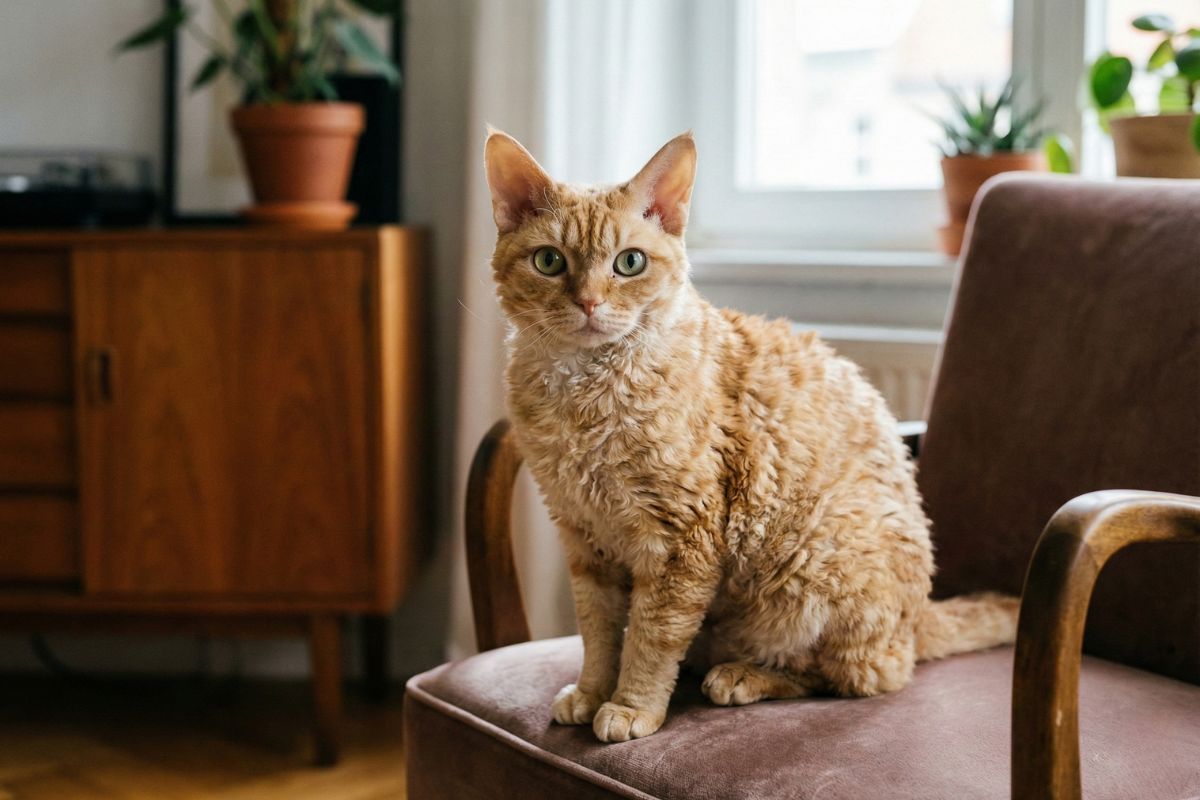
The German Rex stands out for its unique appearance, a result of a rare genetic mutation causing its curly coat structure. These cats are medium-sized, their harmonious build blending musculature with delicate grace, boasting elegant-yet-proportionate bodies – relatively long legs and a well-developed chest. The most recognized element of the German Rex’s image is its coat – as soft as velvet and springy, clearly waved or finely curled. Both the guard hairs and the undercoat are of the same length, so the entire body is covered in dense, plush hair with no bald or sparse patches. To the touch, the coat feels extremely delicate, often compared to plush or a young rabbit’s fur. The coloration of German Rex cats is very varied – almost all colorations are permitted except for those characteristic of Siamese cats. They have characteristically wide-set ears, rounded at the tips and slightly tilted forward, giving an open and alert expression. The eyes are large, expressive, and oval, usually matching the fur color, adding to the breed’s charm. Noses are short and slightly concave; cheeks are full, and the chin is strong but not exaggeratedly heavy.
The distinctive qualities of the German Rex go far beyond outward looks – their temperament and behavior also attract cat lovers worldwide. German Rex cats are extremely sociable, open, gentle, and affectionate towards people. Their intelligence and curiosity make them thrive in both busy households and as companions for single people. They love interacting with humans, often initiating contact themselves, seeking petting, cuddles, or play. They are especially loyal to their caregivers, often picking a favorite family member to shadow. German Rexes tolerate the presence of other animals very well, making them ideal for homes with dogs or another cat – their gentle nature aids the acceptance of newcomers, and their high tolerance ensures household harmony. These cats are also known for their innate vitality – lively, fond of climbing, playing fetch, and exploring household hideouts. They can pick up new tricks quickly, and their sharp minds make them eager to learn routines and house rules. Unlike many other breeds, the German Rex is less prone to destructive behavior when left alone – their confidence and balanced temperament allow them to better handle brief periods of solitude. However, due to their strong bond with humans, they do not cope well with full isolation or constant lack of attention. They are an excellent choice for families with children due to their patience and gentleness – they usually enjoy joining playtime, and if tired, simply retreat without any aggression. German Rexes are also reputed to have soft voices – their meows are delicate, and their communication with humans or animals is primarily through gestures, purring, or presence. The combination of unique, plush looks with intelligence, energy, and a measured temperament makes the German Rex an attractive choice for those seeking an intelligent, affectionate, and at the same time, extraordinary cat with unconventional beauty.
Temperament and Character of the German Rex
German Rex cats stand out for their remarkable blend of personality traits, making them some of the friendliest and most open household companions. From the very first moments in a new environment, the German Rex displays immense curiosity and trust towards people. These are not cats that hide away – they bravely explore their surroundings, being both cautious and prudent. Their intelligence reveals itself in their ability to solve everyday puzzles – like opening doors or finding hidden toys – as well as in astonishing emotional understanding of their caregivers. The German Rex quickly adapts to changes at home, is welcoming to guests, and its gentle temperament means it stays composed even in new, stressful situations. This breed is known for its warm, empathetic approach to people: they often choose human closeness, love to snuggle, and physical contact – purring, licking the caregiver, or sitting on laps – is a daily routine for every German Rex owner. It’s important to highlight that the German Rex also has a strong social interaction need. This breed does not like to be alone for long; it thrives best with family, children, and other animals, forming relationships filled with respect and affection. The German Rex is flexible with human relationships – as happy playing with children as comforting elderly people, bringing joy through its playful, sometimes downright mischievous antics. Notably, the German Rex breaks the stereotype of the solitary cat: they actively participate in daily activities and try to always be close to their caregiver. They are not excessively vocal, but will use meowing, purring, or clear gestures when needed – for example, to announce an empty bowl, the need to play, or the desire for affection.
The German Rex has a well-balanced personality, combining cheerfulness, gentleness, and inquisitiveness. They are naturally cheerful cats, often showing contentment through purring, “headbutting,” or a joyful facial expression. In everyday interactions, they display patience and easily tolerate energetic children, making them ideal for families with little ones. Intense play – such as fetching balls, looking for toys together, or learning tricks – is as appealing to a German Rex as calm times spent on its owner’s lap. This breed forms strong bonds with its caregiver, showing loyalty and attachment, and separation may negatively affect the cat – so if absences are frequent, it’s best to provide another animal companion or leave interactive toys for them to expend energy. Importantly, the German Rex also shows high tolerance towards other pets, so it can thrive as either the only pet or as a member of a larger animal household. With other cats, they’re usually peaceful, not prone to dominance, which minimizes conflict risks. Individuals of this breed are also exceptionally agile and dexterous, appreciating climbing and exploring new spaces, so it’s worth providing scratching posts or observation shelves. Despite their activity, the German Rex can adjust its energy levels to the household’s rhythm, is not pushy, and their behavior respects human space and mood. Their balanced temperament, sharp wit, learning readiness, and exceptional gentleness make this breed a wonderful family member, open to new challenges and friendships.
Coat Care and German Rex Maintenance
The German Rex is a breed that requires special attention regarding grooming, but this doesn’t mean care is especially difficult or time-consuming. The German Rex’s fur is soft, springy, and gently curled or wavy, due to its unique genetic mutation. Unlike other curly-haired breeds like the Devon Rex or Cornish Rex, the German Rex’s coat is denser and evenly distributed across the body, with no bald areas. Regular brushing – ideally once or twice a week with a soft brush or special grooming glove – is enough to remove loose hair and prevent tangles. German Rexes rarely shed intensely, making them suitable for people seeking cats that shed less. It’s crucial, however, to be gentle – too frequent or harsh brushing can damage the delicate fur and skin. Baths are only necessary occasionally, particularly if the coat becomes greasy or dirty, and only very mild cat-friendly shampoo should be used to protect the skin’s natural lipid barrier. The German Rex has no undercoat, making it somewhat more sensitive to cold – do not allow it on cold floors or leave in drafts. Attention should also be paid to ear hygiene, which should be regularly checked and gently cleaned to prevent infections or excessive wax build-up. Similarly, eyes should be regularly monitored and nails trimmed to maintain both pet and household comfort and safety.
Caring for a German Rex also involves matters of health, diet, and general well-being, all of which are as important as coat care. The breed is generally healthy and long-lived, but due to its limited gene pool, regular vet visits, vaccinations, and checkups including blood and urine tests are important. German Rexes are not burdened with typical genetic diseases, but their fur and unique skin can make them more susceptible to contact allergies and irritations – they react quickly to environmental changes, detergents, poor-quality cosmetics, or overly dry air. Feeding should rely on high-quality wet or dry food, or a homemade diet under veterinary nutritionist guidance. It’s crucial to provide plenty of fresh water, as every cat, including the German Rex, needs constant hydration for healthy kidneys and skin. Thanks to their intelligence and energy, German Rexes need daily mental and physical stimulation – owners should provide scratching posts, interactive toys, and time for play. Ignoring this need can lead to boredom and problematic behavior. German Rex kittens learn quickly, adapt easily, and thrive in apartments, but windows and balconies should be secured against escape. It’s also important to recognize this breed’s great emotional sensitivity – they form strong bonds with people, need much attention, affection, and companionship. Prolonged loneliness may harm their wellbeing. German Rexes adapt well to travel and visitors, but introductions to new situations or people should be calm and gradual. With regular grooming, a proper diet, focus on emotional needs, and preventive health care, the German Rex will reward its owner with longevity, health, and amazing loyalty.
Price, Breeding, and Adoption of the German Rex
Buying a German Rex comes with costs that reflect the breed’s uniqueness and the difficulties involved in its breeding. The price for kittens from reputable breeders usually starts around 2500-3500 PLN, but depending on bloodline, breeder reputation, sex, coat color, or show potential, some individuals may cost up to 5000 PLN or more. This price includes not only the kitten itself but also expenses the breeder incurs for genetic testing, deworming, vaccinations, microchipping, proper nutrition, and kitten socialization. Breeders registered with legal feline organizations focus on litter quality, selecting parents for both physical type and health and temperament. This ensures the buyer receives a healthy, well-prepared pet. Unfortunately, because there are few catteries in Poland and the breed is rare, interested parties often face longer waiting periods for litters and must reserve kittens well in advance. Anyone considering buying this breed should avoid backyard breeders selling “unpedigreed” cats at low prices – this often leads to health problems, little breeder support, and mentally or physically undeveloped kittens. Professional German Rex breeders carefully select parents, test for disorders related to limited gene pools, and consciously expand the breed, ensuring proper socialization, early learning, and human contact. This affects the price but also guarantees you receive a healthy, emotionally stable, breed-typical cat.
Adoption is an alternative to buying from breeders, but due to the German Rex’s rarity, this is extremely rare. Occasionally adult cats end up in the care of foundations or associations dealing with purebred animal rescue or running foster homes. In adoption cases, fees are much lower and mainly cover deworming, vaccinations, possible spaying/neutering, and foundation support. Prospective adopters should familiarize themselves with the breed’s characteristics and requirements, and the adoption process often includes home checks, interviews, and signing contracts to ensure animal welfare. German Rexes require appropriate care not only as kittens but throughout life – nutrition, exercise, mental stimulation, and regular vet visits. When choosing a German Rex, remember the ongoing monthly costs – high-quality food, regular grooming, healthcare, and toys and accessories for exercise and stimulation. For breeders, professionals strive to broaden the gene pool, cooperating with foreign catteries and international breeding programs. Getting a kitten isn’t just about taking the cat home, but involves thorough discussions with the breeder about expectations, kitten temperament, and buyer obligations to ensure proper care and happiness. The broader aspect of German Rex breeding is not just propagation, but responsibility, knowledge, and involvement in the breed’s future – so choose honest breeders and transparent sale or adoption conditions.
German Rex at Home – Who is this Breed Ideal For?
The German Rex is an exceptional cat breed whose gentle, open, and friendly temperament suits a wide range of households. These cats seek human closeness and involvement in everyday life. The German Rex is perfect for families – with both young children and seniors. Their patient, balanced disposition allows them to easily accept children’s curiosity and mischief, joining play willingly while remaining gentle in contact. Singles and working professionals will also appreciate the breed for its balanced independence: the German Rex can occupy itself quietly or nap for hours without destructive behavior. Their sociability appears as strong attachment to owners, and sometimes to other animals as well – be they people, dogs, or other cats. German Rexes rarely show aggression, rather trying to avoid conflict and win affection, and with proper socialization, thrive in large families or bustling homes. This breed is often recommended for seniors seeking a gentle, emotionally responsive companion, because these cats are empathetic and adapt to a calmer lifestyle, providing plenty of joy through their sweet antics and affectionate touch. For elderly or lonely people, the German Rex can be not just a pleasant companion, but a genuine household member on whom you can always rely – thanks to their loyalty and sensitivity.
The adaptability of the German Rex makes them perfect residents of both spacious houses with gardens and small city apartments. This breed does not have a strong need to go outside, and its activity can be fully satisfied with indoor toys, scratching posts, and regular human interaction, so they fit very well in cities and among busy people. German Rexes are a great choice for people seeking everyday contact with a cat – they require some attention, conversation, and affection, but are not clingy and can entertain themselves when caregivers are busy. Sociability, curiosity, and intelligence make them quick learners, tolerant of change and travel – though it’s best to gradually accustom them to new situations to limit stress. They thrive when not left alone for too long and are happiest in homes where they have the company of humans or other animals. The German Rex is neither demanding to groom nor problematic healthwise, so even less experienced owners will manage, provided they ensure proper care and regular play. The key to this cat’s happiness is a balance between closeness and freedom – making the German Rex an excellent choice for families, singles, remote workers, or seniors wanting a loving and loyal everyday companion.
Summary
The German Rex cat is not only remarkable for its looks and soft, curly fur, but also for being an energetic, affectionate, and gentle companion. Thanks to its friendly temperament, it fits perfectly into families and active homes. The German Rex doesn’t require complicated grooming, and being robust and healthy, is relatively easy to maintain. It’s an ideal pet cat – for both singles and families with children. Choosing a German Rex guarantees daily joy, love, and an extraordinary bond with a truly unique feline.

