
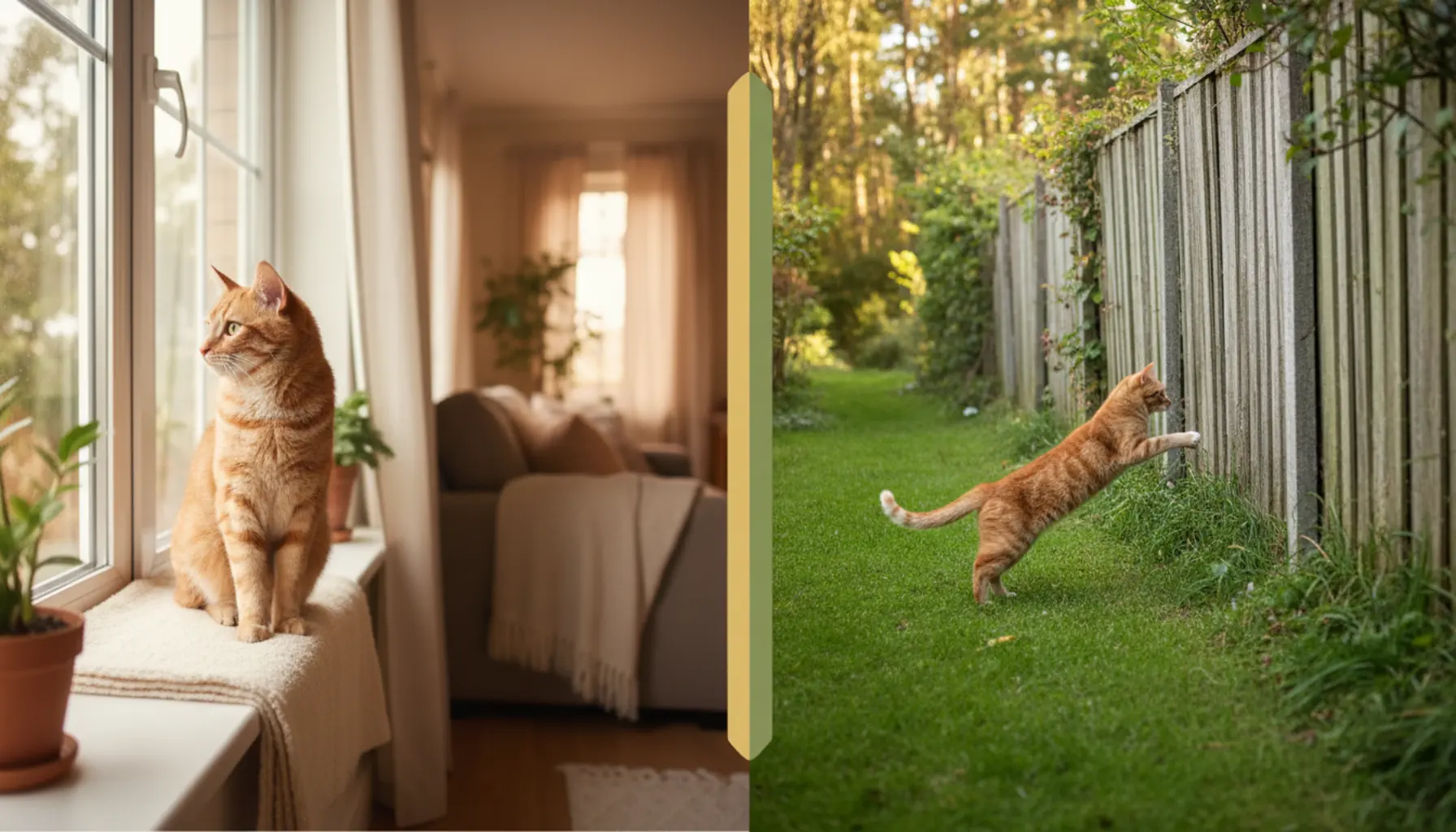
Should a cat go outside is a subject that evokes many emotions among cat guardians. This decision can have a significant impact on the pet’s health, behavior, and safety, as well as the natural environment. Discover the most important arguments for and against letting cats outdoors, plus practical tips regarding their protection.
Table of Contents
- Benefits of Letting Your Cat Go Outside
- Risks for Outdoor Cats
- Behaviorists’ Opinions on Cat Behavior
- The Cat’s Impact on the Natural Environment
- How to Ensure Safety for Outdoor Cats
- Alternatives to Letting Your Cat Outside
Benefits of Letting Your Cat Go Outside
Allowing a cat to go outside gives many felines the opportunity to fully utilize their natural instincts and inborn behavioral needs. Above all, the outdoors provide a huge array of stimuli: scents, sounds, textures, and movement that can’t be matched by even the most perfectly arranged apartment. A cat has a chance to explore new territory, climb trees, watch birds and insects, and even hunt small prey, directly fulfilling their hunting instinct. This natural activity often leads to improved well-being, a higher level of satisfaction, and a lower risk of compulsive behaviors at home, such as excessive meowing, chewing cables, or destroying furniture. Many caregivers also notice a difference in their cat’s energy level: after an intense, stimulating walk or self-directed “patrol,” the animal is calmer, more relaxed, and keener to rest peacefully indoors. Outdoor activity also helps maintain a healthy weight, as the cat has the chance to run, jump, and climb naturally, instead of being limited to short bursts of activity within a few square meters. This, in turn, can lower the risk of obesity, diabetes, or joint problems in later life. For some cats—especially very energetic ones or those from working lines (e.g., former rural mousers)—having outdoor time is almost a prerequisite for good mental well-being; complete confinement indoors can increase frustration and stress. Another important advantage of letting a cat outside is the enrichment of their living environment. A cat who has access to a garden or secure enclosure is less likely to get bored, since each day brings new experiences: a different smell, a new bird in the tree, traces of another animal, or changing weather conditions. This constant influx of environmental stimuli works as a natural “brain fitness,” stimulating the nervous system and helping maintain mental agility even in older age. Many caregivers observe that outdoor cats are more confident and adapt better to change, since they already have to adjust to a variable environment daily. At the same time, the cat has a chance to follow its natural mode of functioning—dividing its day between hunting, exploration, rest, and grooming—in a rhythm closer to its wild ancestors, which may promote emotional stability and a lower susceptibility to household stressors.
Another important benefit of letting a cat outside is improvement in overall physical fitness and immunity, although this, of course, depends on the individual animal’s health and the outdoor conditions. Contact with natural sunlight supports the hormonal balance and circadian rhythm of the cat—exposure to daylight during the day and darkness after dusk helps regulate sleep, appetite, and activity. Daylight also influences vitamin D synthesis (though it is not the only source for cats), and exercise outdoors promotes better circulation, oxygenation, and muscle strength. All this can affect vitality and stamina, which is especially relevant for animals prone to being overweight or leading a sedentary lifestyle. It’s also worth noting that, for many cats, going outside has emotional and social aspects: they can get to know other cats in a controlled way, observe people or dogs through a fence, which may be a form of “entertainment” and social skills training. Under favorable conditions—e.g., a quiet neighborhood far from busy streets—a cat can establish its own stable territory outdoors, which gives it a sense of agency and control over its surroundings. For the caregiver, an indirect benefit is often a better relationship with the cat itself: a pet that can fulfill its needs outdoors is more balanced at home and seeks human contact more willingly, as the person is not perceived as the only source of stimuli or energy release. Walking a cat on a leash or using a special enclosure (the so-called catio) can also become a shared activity, building a bond and trust between pet and owner. Some cats also show improved appetite and sleep quality after regular outings—after a day full of experiences, the cat comes home, eats, and then sleeps peacefully instead of rampaging through the apartment at night. The open environment also provides contact with natural surfaces, such as grass, soil, or tree bark, which act as natural “massages” and exfoliators for paw pads, as well as encourage scratching in natural places instead of only the sofa or armchair at home. All these elements mean that, for many cats, the possibility of controlled access to the outdoors truly enriches their daily life and can positively influence both their physical and mental state—as long as the caregiver simultaneously ensures their safety and proper preparation for such a lifestyle.
Risks for Outdoor Cats
Although outdoor excursions can bring many benefits to a cat, they also involve a range of real dangers that shouldn’t be ignored. One of the most serious risks is traffic accidents—a cat moving unsupervised near roads can be hit by a car, bicycle, or motorcycle, often with little chance for quick veterinary help. Additionally, cats are exposed to attacks from other animals: aggressive dogs, foxes, martens, and also territorial cats. Fights between cats not only result in bite and scratch wounds but also spread infectious diseases, such as FIV (the feline equivalent of HIV) or FeLV (feline leukemia). Humans also pose a danger—sadly, acts of cruelty, deliberate scaring, throwing objects, and even poisonings occur, so it’s vital to realistically assess how cat-friendly a neighborhood is. Another group of risks are diseases and parasites that an indoor cat has only limited contact with. Outdoor cats are particularly exposed to ticks carrying babesiosis, Lyme disease, or hemobartonellosis, as well as fleas, lice, and ear mites. Contact with soil, other animals’ droppings, and stagnant water increases the risk of infection with internal parasites (roundworms, tapeworms, hookworms) and diseases such as toxoplasmosis or panleukopenia (feline typhus). Many of these diseases develop insidiously, and the first symptoms may be nonspecific; thus, the owner must be prepared for more frequent checkups, preventive treatments (deworming, vaccinations, external parasite repellents), and higher medical costs. Another risk is poisoning with chemicals or plants—outdoor-roaming cats may encounter pesticides, rodenticides, plant care chemicals, and ornamental plant species toxic for them. Also dangerous are spilled automotive fluids (e.g., antifreeze containing ethylene glycol), cleaning agents discarded outside, or food scraps that are moldy or spiced with onions and garlic. A cat is not always able to instinctively distinguish between harmful and harmless substances, so the caregiver cannot be certain what the pet will eat or lick during solo wanderings. Don’t forget environmental hazards: sharp objects, broken glass, barbed wire, deep pits, basements, or garages from which the cat may not be able to escape. There are situations when an animal is unintentionally locked in a shed, shelter, or utility room, leading to dehydration, hypothermia, or heat stroke—depending on the season and weather. An additional risk, especially in cities and dense housing areas, is the possibility to climb roofs and high structures. Although cats are famous for their balance, a fall from a great height—so-called “high-rise syndrome”—can result in serious fractures, internal injuries, or even death.
Outdoor cats are also more in danger of getting lost or being stolen. A pet may wander outside its familiar territory, be frightened by a loud sound (e.g., fireworks, storms, noisy construction) and lose orientation—especially in unfamiliar or newly changed surroundings (new buildings, blocked pathways, new fences). It often happens that a friendly, well-cared-for cat is taken in by someone believing it is stray, especially if it lacks a collar with an ID tag. For purebred or exceptionally friendly animals, there is a real risk of intentional theft. Even microchipping does not eliminate the problem, as many finders do not scan the chip at a clinic. A cat’s presence outdoors also affects the environment—cats are effective predators and can significantly reduce the numbers of birds, small mammals, and reptiles in their area. In Poland and many other countries, there is ongoing debate about the role of outdoor cats in the decline of certain songbird species; in some regions, they are even classified as invasive in relation to local wildlife. For a conscientious caregiver, the ethical aspect—namely, the pet’s impact on wild animals—may be an important argument in deciding whether to let them outside. Another significant threat is lack of reproduction control. Unneutered cats contribute to the birth of more unwanted kittens, often born in the wild and doomed to hard, short lives. Males vastly expand their territory in search of females in heat, increasing the risk of accidents, fights, and infections, while females may return home already pregnant—an issue for any owner not planning to breed. Outdoor cats can also be a source of neighborly conflict—using neighbors’ gardens as litter boxes, destroying plants, frightening other pets, or making noise at night. All this can lead to tension and, in extreme cases, retaliatory actions against the animal. Thus, the risks facing outdoor cats are multi-dimensional: they concern the pet’s health and safety, but also neighborhood relations and impact on the local ecosystem. Before deciding to let a cat go outside, an owner should take into account the specifics of the area, the cat’s character and age, its health, and their own willingness to accept added responsibilities regarding expanded preventive care and monitoring.
Behaviorists’ Opinions on Cat Behavior
Animal behaviorists emphasize that there is never a simple answer to whether a cat should go outdoors: the personality of the animal, its life history, health, and both the home and external environment are key. According to their observations, some cats show a strong need for exploration and quickly become frustrated when confined to four walls, leading to excessive meowing, scratching furniture, territory marking, or redirected aggression towards the owner. Other cats—especially fearful ones, trauma survivors, or former strays—can feel overwhelmed by outdoor stimuli and clearly prefer the calm, predictable home environment. Behaviorists point out that one of the main mistakes owners make is treating all cats the same and assuming that a “real” cat must hunt outdoors to be happy. From a behavioral science perspective, the key is to offer the cat ways to satisfy core species needs—exploration, movement, hunting, and control over the environment—but not necessarily in an uncontrolled place like the street or an unsecured garden. Increasingly, specialists stress that the home “indoor world” can be designed to imitate the challenges and stimulation found in nature, through cat trees and shelves creating a “third dimension,” hiding treats, interactive toys (like food puzzles), and regular prey-like play with rods or balls. Their experience shows that when these needs are consistently met, many cats do not crave going outdoors, and for those who previously lived outside, there is often a gradual drop in stress and improvement in well-being after adapting to a creatively enriched home environment. Behaviorists also emphasize that, while in controlled environments—such as on a leash, in a catio, or on a safely enclosed balcony—a cat can enjoy the benefits of the outside world, free roaming is a compromise between mental well-being and physical safety, often to the animal’s detriment. Many experts indicate that, while outdoor cats are clearly highly active, they are also more exposed to chronic stress from territorial conflicts, resource competition, and unpredictable surroundings. Such tension may manifest through subtle signals—excessive licking, frequent infections, loss of appetite, or sudden changes in sleep patterns—which owners may disregard, interpreting them as “normal outdoor cat behavior.”
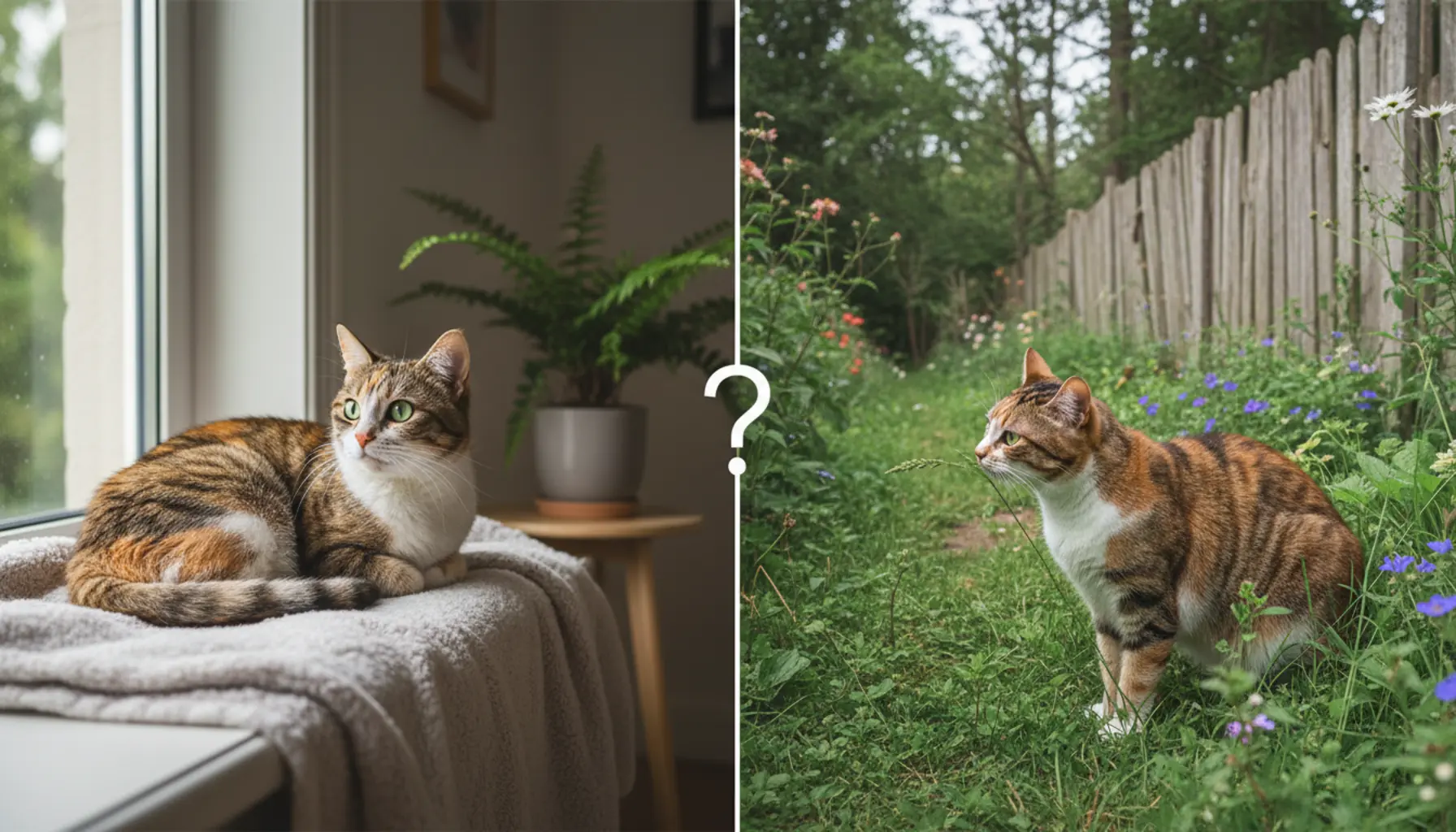
Cat behavior specialists also highlight the aspect of control and a sense of safety, which are crucial for a cat’s welfare. From a behavioral perspective, a cat feels best in an environment that is predictable, where it has access to hideaways, observation points, quiet resting zones, and the option to retreat if frightened. In the wild, this means occupying high, well-sheltered vantage points and avoiding exposed open spaces. However, for a cat allowed to roam “free-range” in a neighborhood or busy area, control over its environment is often an illusion—a dog appearing suddenly, a loud car, an unfriendly neighbor, or another dominant tomcat can cause a chronic sense of threat. Behaviorists point out that a cat allowed outdoors only occasionally, and at irregular times, can become additionally frustrated: on one hand, it learns that the outside world is very attractive and full of stimuli; on the other, access depends unpredictably on the owner’s mood, often leading to persistent meowing at the door, attempts to escape, and biting the handle. Therefore, many experts advise that if walks are offered, they should be systematic—ideally using a harness and leash—and paired with a stimulating home environment so that outings are just one of many daily activities for the cat, not the only highlight of its day. According to behaviorists, gradually accustoming a cat to new experiences and spaces, using positive reinforcement—treats, play, praise—and avoiding forced exposure to frightening stimuli are key. Especially for young cats, regular, well-planned socialization sessions (such as familiarization with city sounds or seeing strangers and animals from a safe distance) help build emotional resilience, which may limit fearful responses in the future both at home and outdoors. Behaviorists stress that a lack of desire to go out is not a “problem,” but information about a cat’s preferences and sense of safety, which should be respected. For individuals obsessed with going out, it’s recommended to first thoroughly assess the enrichment of their home environment and their stress levels before considering controlled exposure to the outside world. In practice, this means there is no universal formula for how every cat should live; the priority is attentive observation of the animal’s signals and flexible adaptation of conditions to its individual needs, maintaining a reasonable balance between stimulation and safety.
The Cat’s Impact on the Natural Environment
Cats, though mainly seen as human companions, also have a significant impact on the natural environment, especially when they’re free to roam outside. From an ecologist’s perspective, the most important aspect is their role as predators—even well-fed, “domestic” cats don’t hunt due to hunger but because of a strong hunting instinct. In practice, this means tremendous pressure on small animal populations: birds, rodents, amphibians, reptiles, and even invertebrates. Many countries have published studies showing cats are among the top invasive predators, responsible for drops in native species numbers. In Poland, especially vulnerable are small songbirds like sparrows, tits, robins, or black redstarts, as well as small mammals—voles, shrews, or young hedgehogs. Even one cat may not seem like a problem, but across the entire population of pets and strays, the number of killed victims can be very high, causing destabilization of local ecosystems, especially in cities and suburban areas where natural habitats are disappearing. Additionally, cats often kill animals they don’t eat, increasing the loss to wild fauna—this is “killing for fun,” part of their ethogram, but ecologically very costly. In many regions of Europe and the world, cats are identified as factors accelerating the disappearance of endangered species, especially where habitats are already weakened by human activity such as deforestation, development, or pollution. Cats roaming protected areas—landscape parks, nature reserves, Natura 2000 sites—may have a particularly destructive impact, disrupting delicate predator-prey balances established in ecosystems without large numbers of domestic pets. There’s also competition with native predators such as martens, weasels, or foxes—cats, benefiting from human-provided resources (food, waste, handouts), may have an advantage in the struggle for food, upsetting natural trophic relationships. Sometimes a cat brings home a weakened bird or rodent—the owner may see this as a sign of a “healthy instinct,” but from a biodiversity standpoint, each such episode is another element in a wider issue for conservationists. It’s important to remember the victims are not just “common” species; as many bird and small mammal populations dwindle, every extra mortality factor—including cat predation—becomes more significant and may speed up local extinction of more sensitive populations. Owners can significantly reduce this negative impact by not letting cats outdoors during particularly sensitive times, such as bird nesting or hedgehog hibernation periods, and by restricting free outdoor access to areas of high natural value, e.g., wildflower meadows, fieldside tree lines, or hedgerows, which are crucial breeding and feeding grounds.
Beyond direct predation, cats also affect the natural environment indirectly. One less obvious but important issue is zoonotic and parasitic diseases they may transmit to wild fauna. For example, the protozoan Toxoplasma gondii, mainly carried by cats, is shed in their feces and can enter soil and surface water, infecting other species—from rodents and birds to hoofed mammals. In urban settings, cat feces often end up in sandboxes, lawns, flowerbeds, or garden plots, and with them parasite eggs and pathogens circulate the local ecosystem. This also applies to rural areas—cats living near farms can spread diseases to livestock, and thus indirectly to humans. Another issue is environmental pollution from litter and cat-related waste—although production and disposal causes the biggest ecological footprint, outdoor cats further “disperse” feces in public spaces, making control of biological contamination harder. The cats’ impact is also seen in gardens and allotments, where they may disrupt the balance between pests and their natural enemies: on one hand, they reduce rodents, but they also eliminate beneficial species, such as hedgehogs, which eat slugs and insects that damage crops. This makes the simple “cat as gardener’s ally” picture an oversimplification—in practice, the effect depends on scale, cat numbers, and local fauna sensitivity. Some municipalities and countries have introduced restrictions on free roaming near protected areas or require neutering to reduce the number of homeless animals, which especially exploit the natural environment. Responsible cat owners should think of their cat as a species impacting the surroundings, not just a “house resident”—their decisions on letting cats out, timing, areas, or use of safeguards (leashes, fences, enclosures) affect not just the cat’s safety, but also the local wildlife populations and overall neighborhood biodiversity.
How to Ensure Safety for Outdoor Cats
Ensuring safety for an outdoor-going cat begins with proper health and identification measures before it even sets foot outside. Basics include up-to-date vaccinations (especially against rabies and feline viral diseases like panleukopenia or feline calcivirus), regular deworming, and using effective flea treatments, for ticks and other external parasites. Choose products with proven efficacy (spot-ons, tablets, collars) after consulting your vet, especially if your cat has chronic diseases or is elderly. Neutering or spaying is also extremely important—not only to prevent unwanted litters but also to reduce the tendency to roam long distances, get into fights, and mark territory, all indirectly affecting safety. Before the first outing, it’s worth performing basic blood tests and a general health check to ensure your cat’s body will cope with extra stimuli and stress. Another pillar of safety is solid identification: a microchip registered in a database and an ID tag with a phone number on a well-fitted safety collar (breakaway type that will snap open if caught). Contact details must be kept up to date, and any change of address or phone should be immediately updated in the registry. Additionally, prepare your home and outside spaces: ideally, the cat should be allowed into a secure garden (catio) or a mesh-reinforced balcony (UV- and claw-resistant). Fences can be fitted with toppers that prevent climbing or jumping over. If full enclosure isn’t possible, at least provide a safe yard free from toxic plants, sharp tools, open drains, or unsecured pools. All chemicals—plant protection agents, rodenticides, oils, fuels, de-icers—must be stored in locked sheds inaccessible to cats.
The way the cat goes outside is just as important as medical and environmental preparations. The safest solution is controlled outings: walks on harness and leash or having the cat in a specially fenced area. Teaching leash walking takes patience and gradual habituation—start by letting the cat get used to the harness indoors, then put it on for short intervals while rewarding with treats, until the cat moves comfortably around the apartment. Only then can you progress to garden, terrace, or quiet backyard training. For many cats, this can combine exploration with a high degree of safety. If you opt for free outdoor access, it is crucial to set rules: allow outings only at specific times (for example, mornings and late afternoons, avoiding dusk and night when traffic is less predictable or predators more active), skip outings during bad weather or noisy events (like New Year’s Eve, nearby refurbishments), as well as consistently call the cat back home overnight. The guardian should know the area well: identify busy roads, places where poison is used for rodents, areas with many dogs or wild animals, and potential escape points from the garden. It’s a good idea to speak with neighbors—agree on feeding rules (to avoid overfeeding or giving unsuitable food), raise awareness of poison use or thorny bushes, and inform them about your cat to avoid conflicts. Equally important is daily observation after the cat returns: sudden withdrawal, obsessive licking, limping, coat odor changes, diarrhea, vomiting, or coughing may indicate an injury, toxin exposure, or infection and require consultation with a vet. Regular veterinary checkups (at least once a year, more often for elderly cats) help detect issues related to outdoor outings, such as infectious diseases, parasites, injuries, or skin cancers. At the same time, remember to enrich the home environment—cat trees, shelves, hideaways, wand toys, hunting for food in interactive toys—so that outside isn’t the cat’s only source of stimulation. The better the hunting, exploration, and social needs are met at home, the shorter and less risky the outside excursions can be, giving the guardian greater control over the pet’s everyday life and safety.
Alternatives to Letting Your Cat Outside
Many owners feel guilty if they can’t or don’t wish to let their cat outdoors, but modern behavioral knowledge shows that a cat’s needs for exploration, hunting, and movement can be met in a safe, controlled environment. The key is so-called environmental enrichment—arranging the space so that the cat can climb, observe from on high, hide, and engage in various activities. Cat trees reaching to the ceiling, shelves and bridges on walls, tunnels, and multiple cardboard boxes or dens all help. Access to a window with a safe sill or hammock allows cats to satisfy their need to observe the outside world without escape risk. Special window meshes are also a good solution, making it possible to air out the home without danger of falls. A well-furnished apartment can become a real cat playground where the animal has plenty to do, even without ever leaving the house. Leash and harness walks are also a very effective alternative to free roaming. They require patience from the owner and gradual training—start by getting the cat used to a harness in the home, rewarding and making the sessions short. Only once the cat moves freely in the harness should you introduce the leash and then first outings to quiet, dog- and traffic-free places. For some cats, such walks become a crucial part of the daily routine, allowing them to explore in a controlled way. For fearful or elderly cats, instead of classic walks, strollers, transparent carriers, or backpacks can allow them to see the world from a safe “base” without walking on the ground.
Another group of safe alternatives are so-called cat yards and secured semi-open spaces. In home gardens, caged “cat enclosures” are increasingly popular: mesh-fenced constructions where cats can freely enjoy the outdoors, climb, bask in the sun, and inhale new scents without being able to leave the property. Even a small but well-designed yard with shelves, branches, scratching areas, and hideaways massively enriches a strictly indoor cat’s life. For those without access to a garden, a caged, netted balcony or loggia is a good compromise, where you can place cat-safe plants, hammocks, scratching posts, even a mini playground—especially valuable in apartment buildings, where cats may see the outside otherwise only through glass. “Catios”—modular, wall-attached combinations of patios and enclosures—are also gaining popularity, which cats can access alone, for example through a window or special flap. These solutions should be combined with appropriate daily activities at home: chasing wand toys, food puzzle toys (treat balls, scent mats, obstacle courses), rotating toys to avoid boredom, and establishing play routines at set times. Such activities mimic the hunting sequence—stalking, chasing, catching—so a cat can fulfill natural instincts and then rest, contented. For especially energetic cats, consider safe insect “farms” (e.g., crickets) or app-controlled interactive toys that encourage movement even in the owner’s absence. An often underrated alternative is companionship—another cat, provided personalities are a good fit and the introduction is gradual and careful. Two compatible cats can play, chase, and groom each other, reducing boredom and the need to seek excitement outside. All these options can be flexibly combined and tailored to a pet’s age, temperament, and health, so that even a “strictly indoor cat” can have a rich, fulfilling life without facing numerous dangers beyond home walls.
Summary
This article analyzes the pros and cons of letting cats go outdoors, including health benefits and environmental risks. It also discusses safety issues, behaviorists’ opinions, and alternative forms of entertainment for cats. Each owner must decide for themselves whether their cat should go outdoors, taking into account the cat’s individual needs and environmental circumstances.

