
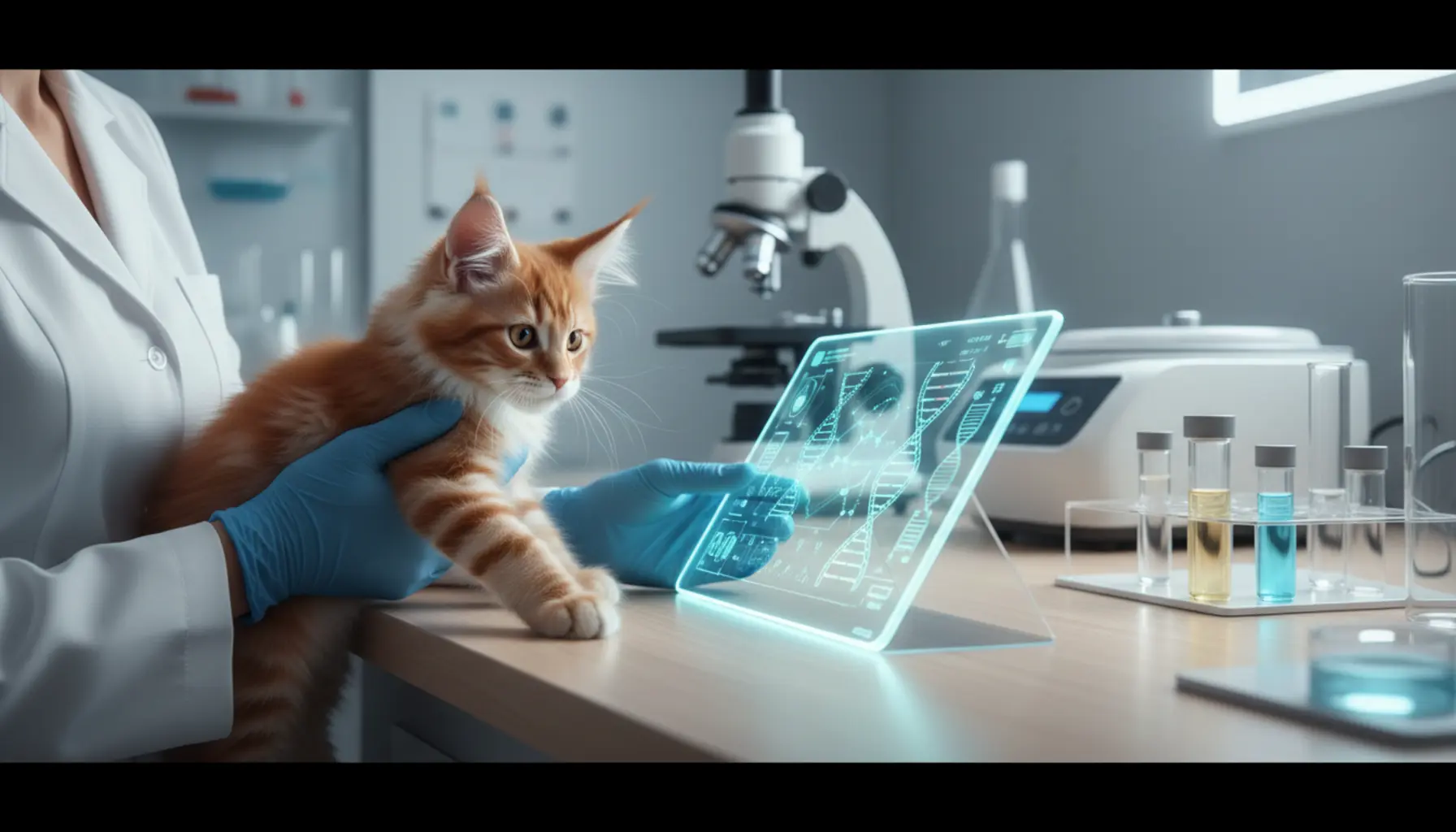
Genetic testing of pedigree cats is the foundation of conscious breeding and preventive health care. It allows for the early detection of hidden disease predispositions, minimizing the risk of costly problems in the future. Thanks to DNA tests, guardians can choose a healthy pet, and breeders can effectively manage the genetic pool.
Table of Contents
- Why genetic testing in pedigree cats is important
- The most common genetic diseases in pedigree cats
- Recommended genetic tests for cats
- Questions to ask cat breeders
- Choosing a cattery: what to pay attention to
- Costs and benefits of DNA testing for cats
Why genetic testing in pedigree cats is important
Genetic testing in pedigree cats is crucial because it allows us to look “beneath the surface” of beautiful fur and the perfect appearance, revealing hidden health predispositions that can’t be seen during standard clinical exams. Many hereditary diseases, such as hypertrophic cardiomyopathy (HCM) in maine coons and ragdolls, progressive retinal atrophy (PRA) in Abyssinians, or polycystic kidney disease (PKD) in Persians and Exotic Shorthairs, can remain asymptomatic for a long time, with the first sign sometimes being sudden deterioration or the death of a young, seemingly healthy animal. DNA tests allow detection of defective genes in carriers who themselves may appear and function completely normally but can pass mutations on to offspring. For responsible breeders, this is a tool for conscious mating planning and avoiding the pairing of two carriers of the same mutation, significantly reducing the risk of producing kittens that will be sick or at high risk of developing diseases in the future. Genetic testing is also important for maintaining the stability and quality of a given breed – it limits the spread of mutations within the genetically restricted pools that many, especially young or rare, breeds have. In practice, this means not only less suffering for animals but also less emotional and financial stress for guardians who won’t have to face sudden, severe diagnoses in the cat’s youth.
The importance of genetic testing is not confined to the breeder’s perspective – it’s also vital for future owners who want to make an informed choice about a healthy kitten. Knowing the genetic status of the parents (clear, carrier, affected) concerning key mutations enables a realistic assessment of health risks before the kitten even arrives in its new home. Buyers who ask for DNA test results gain transparency and proof that the cattery cares not only about appearance, colors, or trendy varieties but prioritizes long-term animal welfare. Genetic testing can also point to predispositions to certain health issues, enabling the veterinarian to plan a tailored prevention program, including more frequent monitoring of specific organs, a suitable diet, limiting physical exertion, or avoiding certain drugs that could exacerbate existing risks. Moreover, DNA testing is vital from an ethical breeding standpoint – it allows exclusion from breeding of affected individuals or those whose use would pose significant risk for the progeny, while still allowing carefully controlled use of certain carriers to avoid excessive narrowing of genetic diversity. It’s a balance between eliminating serious mutations and maintaining gene pool diversity, without which a breed becomes prone to new health problems. Lastly, genetic tests can also be used to verify ancestry and breed conformity – some DNA panels even confirm breed identity or detect outcrosses, relevant not only for prestige but also for practical reasons, since different breeds may face different sets of hereditary diseases. For the entire pedigree cat population, widespread genetic testing is an investment in healthier future generations – the more individuals tested, the more accurately we can measure mutation frequency within a breed, develop recommendations for feline organizations, and create breeding programs focused on systematically reducing hereditary diseases, rather than relying on random matches or hope that “things will work out.”
The most common genetic diseases in pedigree cats
Genetic diseases in pedigree cats result from specific gene mutations that, depending on inheritance patterns, may appear in all, some, or only a small percentage of individuals within a breed. One of the most widely discussed is hypertrophic cardiomyopathy (HCM), particularly well documented in Maine Coon and Ragdoll cats. HCM leads to thickening of the heart muscle walls, which over time impairs normal contraction and relaxation, causing breathlessness, weakness, exercise intolerance, and in extreme cases, sudden cardiac death. Mutations in the MYBPC3 gene in Maine Coons and Ragdolls can now be relatively easily detected via DNA testing from blood or a cheek swab; although a negative result doesn’t offer a 100% guarantee, it significantly reduces the risk of the disease in offspring. Another important group includes hereditary kidney diseases, with polycystic kidney disease (PKD) being best known among Persians and related breeds (e.g., Exotic Shorthair, Himalayan). PKD results in numerous cysts forming in the kidney tissue, gradually disrupting function and leading to chronic kidney failure in adulthood. The disease is autosomal dominant, so even one copy of the faulty gene is enough to cause illness. Therefore, any cat testing positive for PKD should not be used for breeding, and responsible breeders have both parents’ test results available. Juvenile nephropathy in some lines, such as Chartreux cats, also belongs to this group, though it’s less frequently tested and often diagnosed by symptoms or imaging studies. Hereditary eye diseases are also very significant, especially progressive retinal atrophy (PRA) and various forms of photoreceptor degeneration, which lead to gradual blindness. Breeds such as Abyssinian, Somali, Ocicat, or Singapura cats have specific identified mutations causing PRA, enabling carrier detection even when the disease has no early signs. In certain breeds (e.g., Devon Rex, Cornish Rex, Manx), congenital defects of the eyeball or eyelids are also observed; while not always inherited in a simple pattern, these are linked to specific breeding lines and require vigilant monitoring. Another broad category involves metabolic and neurological diseases. Among the best-known is pyruvate kinase deficiency (PK-deficiency), seen in Abyssinians, Somalis, Bengals, and several other breeds. Mutation in the PKLR gene causes chronic hemolytic anemia, i.e., excessive breakdown of red blood cells. Symptoms such as lethargy, weakness, pale mucous membranes, and rapid breathing appear periodically and are often confused with other ailments, which is why genetic testing is key for proper diagnosis and eliminating carriers from breeding programs. Some breeds also experience inherited degenerative disorders of the nervous system, such as GM1 and GM2 gangliosidosis in Korat and other breeds, which lead to progressive neurological impairment, incoordination, and early death; there are now dedicated DNA tests for carriers of these rare but very serious mutations.
Of particular importance to future owners are genetic diseases that affect quality of life or give breeds their characteristic appearance. One of the biggest challenges in modern feline breeding is hip dysplasia (HD) and joint disease, especially in larger breeds like the Maine Coon, Norwegian Forest Cat, Ragdoll, or British Shorthair. Although dysplasia has a multifactorial basis (genes, environment, diet), hereditary predisposition is significant, and current genetic panels are beginning to include risk markers, which, combined with regular X-rays, help reduce incidence in breeding lines. Skeleton-related diseases caused by mutations affecting cartilage or bone formation create another challenge. In Scottish Folds, the signature folded ears are the result of a mutation in the FOCD gene, affecting cartilage development, but this also predisposes to painful bone and joint deformities (osteochondrodysplasia). Having two copies of the mutation (homozygotes) results in severe disability, making it unethical to mate two Fold cats; DNA tests are used in practice to prevent this and distinguish single-copy carriers from mutation-free animals. Other examples include skin and coat diseases, such as genetic baldness in certain Devon Rex lines or congenital hair fragility, which, while rarely life-threatening, may require special care and expose cats to secondary skin infections. Polydactyly (extra toes) occurs in some Maine Coon lines – it’s usually not a disease itself, but poor selection can lead to deformities, so responsible breeders monitor this trait and consult veterinarians. Genetic background also plays a large role in respiratory and tear duct problems in brachycephalic breeds (e.g., Persian, Exotic Shorthair), though extreme selection for shortened muzzles is a major factor. The increasing availability of panel tests means that dozens of mutations for heart, blood, kidney, nervous system, or skin diseases can be tested at once, as well as blood group and other clinically relevant traits. This enables future owners to realistically evaluate health risks by breed, compare cattery results, and choose a kitten based not only on appearance or coat color but – importantly – on reliable health information.
Recommended genetic tests for cats
The choice of appropriate genetic tests for a pedigree cat should always be tailored to the breed, health history of the line, and testing goals (breeding, prevention, disease suspicion confirmation). The basis consists of breed-specific panels – sets of tests covering the most common mutations for the breed in question. For many popular breeds, specific tests are recommended: in Maine Coon, Ragdoll, or Norwegian Forest Cats, detection of hypertrophic cardiomyopathy (HCM) – most often mutations in the MYBPC3 gene – is essential. Breeders should test both studs and breeding queens, regularly update results, especially if new cases are reported in the line. Persians, Exotics, and their mixes should routinely be tested for polycystic kidney disease (PKD) – a mutation in the PKD1 gene that leads to progressive kidney damage and failure in young or middle age. In Oriental, Siamese, Abyssinian, or Somali breeds, special attention should be paid to eye diseases, such as DNA testing for progressive retinal atrophy (PRA) and other eyesight-impacting mutations, since these often remain silent for years and only cause visible issues in advanced stages. Many labs offer extended general panels that aren’t limited to one breed but cover dozens, even over a hundred mutations responsible for various diseases: metabolic disorders (e.g., gangliosidosis), muscle diseases, neurological disorders, blood coagulation issues, congenital immune deficiencies, and rare enzymatic disorders. Such comprehensive testing is especially useful for less common or newly emerging breeds with limited knowledge bases and for cats with unknown ancestry, making it hard to predict which genes may be involved. It’s also worth noting tests confirming the genetic basis of phenotype traits – coat color and type, hair length, white spotting, or “colorpoint” gene – which don’t affect health directly, but help with mating planning and predicting offspring looks, important for breeding purposes. Increasingly, identification tests (the cat’s “genetic fingerprint”) are recommended to verify origin, confirm pedigree conformity, and prevent kitten trade abuse in pedigree cats.
The second main group consists of tests targeted at specific health issues evident within a particular cat’s family or breed. If heart diseases occur in the line, in addition to basic HCM mutations, further gene variant testing (offered by specialized labs) is advisable, along with regular echocardiograms. With breeds prone to skeletal diseases (Scottish Fold, large cat breeds), not only hip joint imaging but also genetic testing for cartilage and bone development abnormalities is recommended, as far as is available for the breed. For brachycephalic cats (Persian, Exotic), testing for mutations linked to skull and airway anomalies is gaining importance and may help reduce extreme features causing breathing problems in the future. Breeders should also pay attention to tests detecting tendencies toward immune and coagulation disorders, as cats with hidden predispositions may appear healthy until surgery, pregnancy, or a serious infection. Combined panels detecting hereditary diseases, blood group, and Mik antigen are increasingly popular, crucial for transfusion safety and mating (serological incompatibility risk between queen and kittens). When selecting a DNA panel, always use recommendations from international feline organizations (FIFe, TICA, CFA) and breed clubs, which update test lists based on the latest scientific evidence. It’s vital to use accredited veterinary genetic labs – this ensures reliable results, correct interpretation, and the possibility of consulting a geneticist. Test results should never be considered in isolation from the clinical and pedigree context: they are a tool for supporting breeding and preventive decisions, used together with veterinarians and responsible breeders to plan matings that minimize disease risk while preserving breed genetic diversity.
Questions to ask cat breeders
Dialogue with a breeder is key for verifying whether the cattery truly cares for the genetic health of its cats or relies on attractive marketing alone. Start by asking about specific genetic tests carried out on the parents: “What DNA tests have the queen and stud had?” and “Can you show the original laboratory results?” A responsible breeder will provide documents from reputable labs, not just verbal assurances or illegible scans. Ask whether the tests concern just one mutation (e.g., HCM or PKD) or a broader panel covering several—dozens of breed-typical diseases. The next question should check result recency: “When were the tests performed and were they repeated?” Since some diseases develop later in life, DNA testing alone may not be enough – hypertrophic cardiomyopathy (HCM) requires periodic echocardiograms, so ask how often the parents are checked by a cardiologist and if certifications are available. Likewise, for hip dysplasia, request X-ray images and the vet’s description. When discussing genetic risk, have the breeder explain the status of the parents: are they “mutation-free”, “carriers”, or “clinically affected” and how does the breeder match pairs to avoid pairing carriers of the same defect. This is also a time to inquire if affected individuals are excluded from breeding and if buyers of previous litters are informed of such cases. Ask about the breeding program: “How often are the same parents mated?”, “Do you introduce cats from other lines to avoid close inbreeding?” Clear answers suggest you’re dealing with a breeder who genuinely cares about the breed’s welfare and avoids inbreeding, not just making fast profit.
The next crucial group of questions covers breeding practices, living conditions, and the health history of siblings and ancestors. Ask: “May I see the kitten’s and parents’ pedigree?” and “Were there cases of serious genetic diseases, such as HCM, PKD, PRA, in the line?” A responsible breeder does not try to hide problems but shows how they’re managed—by removing certain individuals, changing matings, or extending test panels. Also ask about life span of cats in the line: “How long did previous generations live, and what illnesses were common?” Another key question is membership in feline organizations (FIFe, TICA, WCF or others) as well as if the cattery is regularly inspected and the litters are registered. Ask about the contract – does it include clauses about partial refunds or solutions if a major genetic fault is discovered post-sale, and does the breeder provide copies of genetic test results together with the kitten’s paperwork? From a future owner’s perspective, it’s valuable to learn about socialization and health routine: “At what age do kittens leave for new homes?”, “What vaccinations and worming have been done?”, “Are preventive tests performed, e.g. heart ultrasound or kidney screening, on the litter itself?” For at-risk breeds (brachycephalic, large longhaired breeds), ask about typical breed risks and preventive practices—feeding, weight control, managing extreme conformation. Also, inquire about after-sale support: “Can I contact you for advice if health or behavioral problems arise?” “Do you collect health updates about kittens after some years?” Such long-term cooperation helps monitor hereditary disease occurrence and assures you’re not left alone if problems happen. Asking precise, thorough, documented questions is the best filter, separating professional, ethical catteries based on genetic testing from those who merely “declare” health online without providing proof.
Choosing a cattery: what to pay attention to
Choosing a pedigree cat cattery is a decision with decisive impact on the future pet’s health and comfort, so it requires a more analytical than emotional approach. The first, fundamental criterion is the cattery’s membership in recognized feline organizations (e.g., FIFe, WCF, TICA) and registration in a legitimate club. This provides assurance that the breeder follows specific breeding standards, including minimum breeding age, number of litters, and mandatory tests. Check if the cattery’s name and prefix can be found in official databases, and also see how long it has been operating and how many litters they’ve produced – too many per year may indicate a profit-oriented operation. Transparency on genetic and health testing is crucial. A reputable breeder not only shows DNA test results for parents (originals or scans from accredited labs) but clearly explains what was tested and why. If there are diseases in the line, they openly discuss associated risks and how they control them. The breeder should provide updated cardiac (e.g., echocardiogram), kidney, joint, and eye health certificates, according to the breed’s predispositions, and be able to clarify the difference between clear, carrier, and affected cats. The breeder’s response to detailed questions is telling: avoiding answers, downplaying genetic disease (“all this breed have it”), or refusing to show documentation should raise concerns. Conversely, a responsible breeder will also ask the buyer many questions—about living conditions, cat experience, plans regarding spaying/neutering, or possible breeding. This shows that the animal’s welfare is the priority, not just a quick sale. Check the cattery’s reputation with previous buyers—forums, social media groups, veterinarians’ or behaviorists’ recommendations often reveal recurring health issues, or conversely, confirm stable lines and a responsible approach. Be critical of reviews—look for specific, documented cases rather than just praise or baseless complaints.
What you observe at the cattery is as important as the paperwork. Living conditions speak volumes about the breeder’s approach and often correlate with how much effort is put into genetic health. Kittens and adults should live in a clean, well-ventilated home, with access to hiding places, scratch posts, toys, and climbing areas, rather than being confined to cages or small, stimulus-poor rooms. Observe their behavior: well-socialized kittens are curious and respond to people without extremes of fear or aggression – an important sign, since temperament and behavioral tendencies have genetic and environmental roots. The breeder should talk in detail about socialization—whether the kittens experience a variety of sounds, people, maybe other animals, and if they are accustomed to grooming, nail trimming, and traveling in a carrier. Transparency also covers documentation: a full multi-generation pedigree, so you can see breeder names, prefixes, and lineages known for certain diseases or longevity; a detailed contract stating whether the kitten is for breeding or pet, the parties’ rights and obligations, clauses regarding genetic defects and compensation. Responsible breeders specify at what age kittens can leave the mother (usually not before 12 weeks), what vaccinations and worming were performed, and provide a starter kit with feeding and care guidance. When it comes to genetic testing, check if the cattery runs a long-term program: selects breeding cats based on test results, repeats tests at intervals (e.g., echocardiogram every 1-2 years in breeders), withdraws lines with serious illnesses, and also maintains gene pool diversity, avoiding excessive inbreeding. This is reflected in deliberate matings, a broad stud base, and no focus on “fashionable” breedings with the same male just because he wins at shows. Finally, a key criterion is the breeder’s willingness to provide lifelong support – being available for advice after purchase, helping with test result interpretation, recommending trusted specialists (cardiologist, nephrologist, ophthalmologist), and in the event of a serious health issue – collaborating to determine the cause, including testing relatives. Such an attitude, backed by actions and documentation, is what distinguishes an ethical cattery using genetic testing as a management tool from those who do DNA tests just “for the paper.”
Costs and benefits of DNA testing for cats
When deciding on DNA testing for a pedigree cat, a guardian or breeder should consider not only the direct but also indirect costs, as well as measurable long-term benefits. The primary expense is the test itself, with a price depending on the panel scope, the laboratory’s reputation, and the method of sample collection. Simple tests for individual mutations (e.g., one gene variant for PKD or PRA) often fall into the lower price range, but multiple separate tests are required if you want to check for several diseases. Multi-gene panels covering dozens or over a hundred mutations are increasingly popular – their one-time cost is higher, but cost per disease is usually lower. One should also consider the cost of a vet consultation, especially if the results will impact breeding decisions or require wider clinical interpretation. For breeders with extensive testing programs (regularly testing litters, repeating tests when introducing a new line), costs may seem significant, but in terms of cattery quality it is an investment in reputation, buyer trust, and greater long-term health stability. Also consider logistics – shipping samples to foreign labs, waiting for results, and the possible costs of additional clinical or imaging tests if a DNA test reveals elevated risk requiring heart ultrasonography or blood testing. For non-breeding pet owners, spending hundreds of PLN on a DNA panel might seem extravagant at first glance, but compare this to the costs of treating chronic genetic illnesses – monthly medication, special diets, and specialist checkups over years can rapidly outweigh the one-off screening investment. Importantly, the “cost of not testing” isn’t just borne by one cat, but entire breeding lines: each unidentified carrier added to the gene pool increases the risk of sick kittens in future generations, leading to animal suffering, breeder financial losses (treatment, refunds to buyers, damaged reputation), and withdrawal of valuable individuals from reproduction. When viewed as risk management, DNA tests become a means of limiting unforeseen, often major, expenses in the future.
The benefits of DNA testing for cats span health, breeding, ethical and reputational dimensions. From the perspective of an individual cat’s health, the main advantage is early detection of disease risks which may not show clinical symptoms for a long time. Knowing your cat’s genetic status (clear, carrier, affected), the vet can plan custom preventive care – more frequent cardiac checks with HCM mutations, regular kidney ultrasounds with PKD risk, eyesight monitoring in PRA-prone breeds. This allows many problems to be caught at the subclinical stage, when treatment is more effective or the disease slowed, improving comfort and length of life. For breeders, DNA tests are a selection strategy tool: they help avoid pairing two carriers of the same mutation, radically lowering the percentage of affected kittens, while enabling optimal gene pool management – removing all carriers at once would shrink genetic diversity, so a balanced approach, only pairing carriers with clears, is often used. Using DNA tests also boosts the cattery’s transparency and credibility: being able to show prospective buyers documented results (often also for the kitten itself) increases trust and allows for justified, higher pricing for kittens with proven health status. More and more clubs and feline organizations require certain DNA tests as a condition for breeding eligibility or exhibitions, so investing in testing helps meet growing regulatory demands and prevent disqualification from key breeding initiatives. There’s also educational value: test results spur discussions with future owners on responsible care, prevention, possible activity restrictions, and the need for regular checkups. For those buying a kitten with breeding in mind, a complete DNA panel is a real asset – reducing the risk of introducing hidden mutations into their own line, resulting in greater stability and better results in subsequent litters. For the breed as a whole, systematic testing builds large databases on mutation frequency, observes the impact of selection programs, and facilitates responses to new genetic issues – making DNA testing not just a diagnostic tool for individuals, but a vital element of long-term pedigree cat health improvement strategies.
Summary
Genetic testing is crucial for the health of pedigree cats, enabling early detection and prevention of hereditary diseases. When selecting a cattery, pay close attention to the pet’s health documentation and ask breeders questions about the health history and genetic background of their cats. While DNA tests do involve certain costs, they bring many benefits, such as ensuring your pet’s health and supporting a more conscious approach to its care.

