
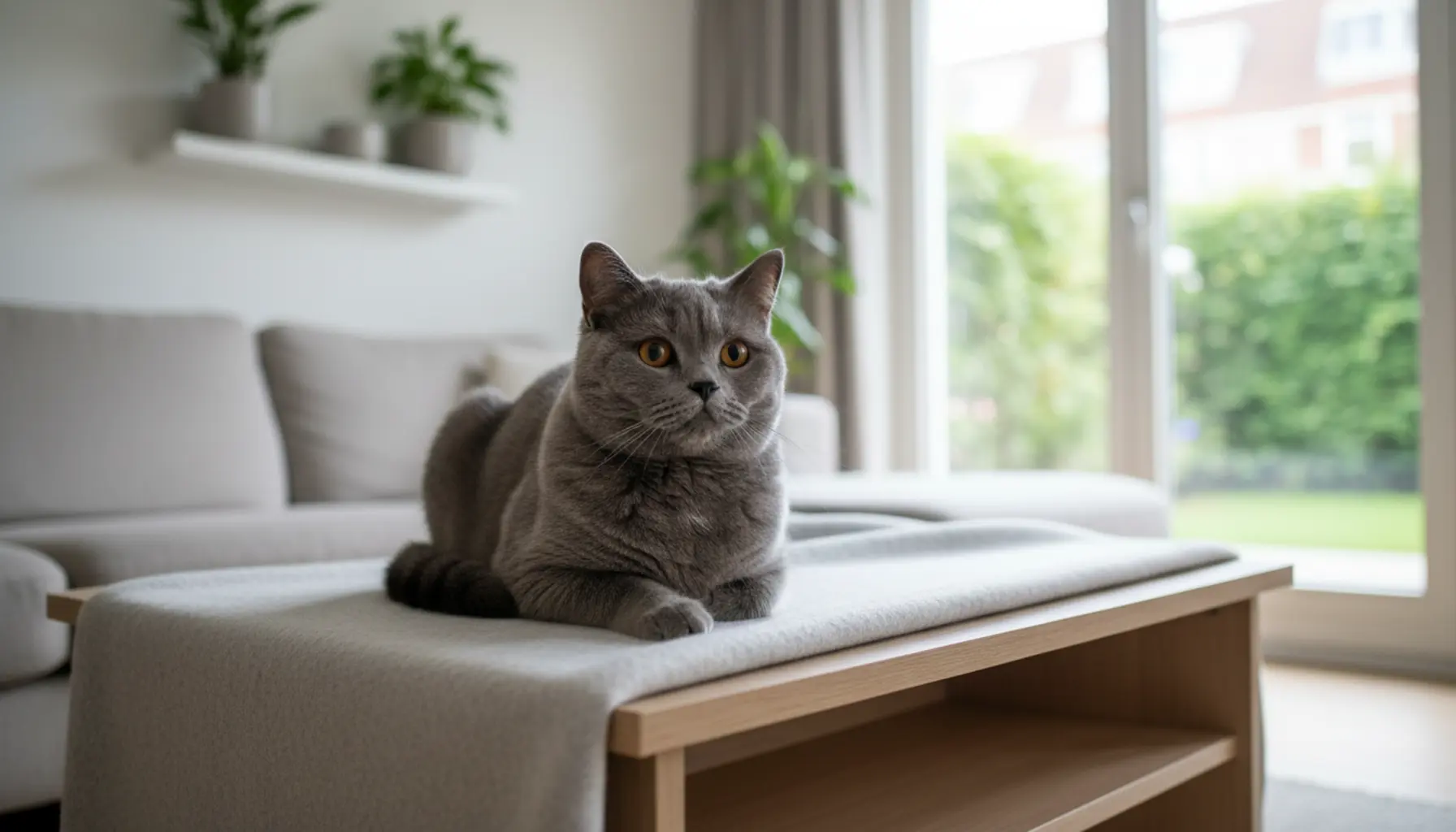
The British Shorthair is a cat distinguished by its calm character, which easily adapts to home environments. Its gentleness and predictability make it an excellent choice for families and those who value harmony. This breed combines intelligence, independence, and affection, which is evident in its daily interactions with its caregiver.
Table of Contents
- Characteristic Features of the British Shorthair
- Why Is the British Shorthair the Ideal Companion?
- Temperament of the British Shorthair
- Adaptation and Home Conditions
- History and Origin of the Breed
- Daily Grooming and Care
Characteristic Features of the British Shorthair
For many years, the British Shorthair has been considered the epitome of feline balance and elegance, with traits that make it one of the most desired breeds in family homes. It is a cat with a balanced disposition, combining calmness, intelligence, and subtle sociability. By nature, it is more composed than impulsive—it is not a typical “troublemaker” that wrecks the house, jumps on the highest shelves, or demands obsessive attention. Instead, it prefers observation from the sidelines, gentle strolls around its territory, and short but intense moments of play, especially if favorite rod toys or balls are involved. One of the most recognizable features of this breed is its independence paired with delicate affection—the British Shorthair is not a “lap cat” who will lie on a human for hours, but it likes to be close to its caregiver, often choosing a spot on the couch next to them, rather than directly on their lap. In relationships with people, it behaves with a certain feline dignity: it decides by itself when and for how long to come for petting, but once it bonds, it can faithfully accompany household members in daily activities—from morning coffee to evening relaxation in front of the TV. It is also characterized by a high tolerance for solitude within reasonable limits; unlike many breeds, it does not easily develop separation anxiety, as long as it is provided with suitable conditions, entertainment, and a sense of security. This makes it ideal for homes of people working outside the home, as well as in city apartments where peace, predictability, and a lack of rowdy behavior are important. Another characteristic is its great emotional stability—the British Shorthair rarely responds hysterically, is not overly skittish, and adapts well to changes in its environment, such as moving house or the appearance of new furniture, as long as these changes are gradual and its daily rhythm is maintained. That does not mean it’s completely indifferent: it can sense its carer’s mood and adapt to it, often behaving empathetically, in its own feline way, when it senses stress or sadness—instead of loud performances, it simply lies nearby, providing a sense of calm presence.
A very important and characteristic trait of the British Shorthair is its natural gentleness and patience, which makes it one of the best breeds for homes with children. Most individuals show great tolerance towards the youngest, do not react violently to slightly awkward movements or louder behavior, provided that children have been taught the basic respect for animals. Instead of scratching or biting, the British Shorthair will usually choose to walk away to a quieter place if it becomes overwhelmed. It also gets along well with other cats and even dogs, especially if it has been socialized in the presence of various species from the beginning. It does not seek out conflict and lacks a strongly territorial, aggressive attitude—it is more the type of calm “home host,” who observes new companions with distance but also curiosity. Characteristics also include its intelligence and analytical approach to its surroundings: the British Shorthair quickly learns household rules, recognizes daily routines, can associate the sound of keys with its caregiver’s return, or the cupboard noise with mealtime. Some individuals do very well with interactive toys or simple treat puzzles, helping keep their minds sharp. At the same time, it is not a breed overly demanding in terms of physical activity—it enjoys playtime but in moderate doses, with breaks for rest, often on its favorite armchair or bed. Moderation is typical of the British Shorthair in everything it does: it is not excessively talkative, though it can surprise with a soft, purring meow when it needs something; nor is it overly insistent, but it will consistently signal mealtime or a moment of attention. Its behavior can be described as predictable and “well-mannered”—with proper socialization, it rarely exhibits destructive tendencies, has no habit of escaping, and its strong attachment to its home makes it prefer to stay in familiar, safe surroundings. All these features—calmness, independent yet loyal nature, high tolerance, emotional stability, and moderate activity—create the unique profile of the British Shorthair as a cat perfectly suited for domestic life, whether it’s a small single’s apartment or a bustling multi-generational family home.
Why Is the British Shorthair the Ideal Companion?
The British Shorthair is considered the ideal companion primarily due to its exceptionally harmonious blend of independence and attachment to people. It is not a cat that requires constant attention, but at the same time, it is extremely loyal to its caregiver—it often chooses “its” person in the home and follows that routine. It tracks its owner with its eyes, discreetly moves from room to room, likes to lie nearby on an armchair or sofa, but typically does not demand to be carried or constantly cuddled. This “distant affection” appeals to many who love a cat’s presence but also value personal space and a lack of pushiness. An additional asset is its stoic calm—the British Shorthair rarely reacts hysterically, does not have sudden outbursts of energy or aggression, making daily life with it predictable and comfortable. It adapts well to changes, if they are introduced calmly and with respect for its needs; new furniture, renovations, or moving house are less stressful for it than for many other breeds, as long as it has its familiar hiding spots and favorite bed. This cat also does not require constant stimulation with hours of play—it will gladly interact several times a day and then be satisfied with window-watching or napping in a quiet corner. This makes it an ideal choice for people who work outside the home, singles, couples, or families with varied daily routines. The British Shorthair can match its level of activity to people’s lifestyles: it is a calm, unobtrusive companion for someone spending long hours at the computer, but will also happily join in a short play session with children or a quick chase before bedtime. Its immense patience is revealed in relationships with children—it usually does not react nervously to loud noises or sudden movements, as long as the child is taught gentleness. Compared to very sensitive, high-energy breeds, the British Shorthair can remain calm even when a lot is happening. At the same time, it does not encourage excessive excitement—it is not the “acrobat” type that jumps on curtains or runs around the apartment at dawn, which means less stress for household members, less damage to furniture, and quieter nights. All of this creates the impression of an “easy” cat that fits into the daily life of the modern family without effort.
Another reason the British Shorthair works so well as a lifelong companion is its high intelligence combined with emotional composure. It learns household rules quickly, but without stubbornness or drama—many individuals easily accept using a scratching post instead of furniture, recognize their bowls, hideouts, litter box, and respond to regular feeding times. This means you can develop a very predictable daily routine with it, providing a sense of security for both the animal and the owner. In practice, this character stability reduces the number of behavioral issues: the British Shorthair rarely destroys objects out of frustration, compulsive behaviors, excessive meowing, or territory marking at home are much less likely, provided its basic needs are met—a litter box, scratching post, hideout, regular meals, and at least some attention. Its curiosity is expressed through calmly investigating new toys and places rather than risky escapades, reducing the risk of injury and dangerous situations. This is also a breed that generally does well with other pets—both cats and calm dogs—if the process of socialization and introducing new household members is gradual. In such arrangements, the British Shorthair becomes the glue of the home ecosystem, a balanced observer who does not escalate conflicts. From the owner’s point of view, it is also very important that caring for this breed is relatively uncomplicated: its short, dense fur requires regular but not time-consuming brushing, and its moderate temperament does not require organizing daily long sessions of intense play as with very active breeds. This “ease of care” makes the British Shorthair a realistic choice even for novice cat owners who are just learning to read feline body language and build a relationship. Thanks to its gentle, predictable character, it is forgiving of small communication mistakes from humans and does not lose trust with every mistake, favoring gradual, mature bonding. Over time, many people discover that the presence of the British Shorthair is soothing—rituals of lying together in the evening, purring, and a calm presence in the background of daily life help reduce stress, and the stability of this cat’s character gives a sense of constancy in a world full of change. As a result, the British Shorthair is not just a “pretty cat with plush fur,” but above all a uniquely compatible partner for long-term, everyday coexistence.
Temperament of the British Shorthair
The British Shorthair embodies feline balance—neither excessively lively nor so phlegmatic as to be motionless. It’s a cat of “stable center,” which in everyday life prefers calm, predictability, and its own pace. Its temperament is often compared to a stoic gentleman: it observes its surroundings with distance, analyzes situations for a long time before responding, and rarely gets carried away by intense emotions. In practice, this means the British Shorthair does not react nervously to unexpected noises, changes in the environment, or the presence of guests—it usually retreats a safe distance rather than fleeing in panic or aggressively defending its territory. This emotional stability means this breed rarely becomes hysterical or prone to sudden outbursts or unpredictable behavior, which is especially important in homes with children or frequent visitors. At the same time, the British Shorthair is not a typical “couch potato” who only sleeps and eats—its curiosity is expressed in calm, methodical exploration: it carefully sniffs new objects, watches birds and street activity through the window, and can spend hours observing what happens at home, remaining mostly quiet but very attentive. This is a cat that does not force contact but discreetly marks its presence; for many, that’s a huge advantage, allowing natural relationship building without the pressure of constant interaction. In relation to humans, the British Shorthair clearly favors “side-by-side companionship”—it likes to lie in the same room as its carer, follows them between rooms, settles close to the desk or sofa, but won’t necessarily seek to be picked up or sit on a lap. Its way of showing affection is subtle: a gentle touch with its paw, a brief head bump, a soft purr when the caregiver is within sight. It is the type of cat that bonds through spatial closeness rather than intense physical contact, which makes it ideal for those who appreciate delicate, unobtrusive affection. Another key aspect of the British Shorthair’s temperament is its balanced activity level. On one hand, this is not a hyperactive breed that requires hours of play or complicated obstacle courses; on the other hand, it cannot be called lazy. The British Shorthair enjoys short but intensive play sessions, especially those that engage its intelligence and hunting instincts: wand toys, stuffed mice on string, balls in tunnels, or interactive puzzle toys for treats are perfect for its needs. When it feels it has had enough, it simply departs and returns to calmly contemplating its surroundings or napping, without immediately demanding more excitement. This predictability and self-regulation of energy mean that it easily fits into a family’s daily routine—it does not require constant involvement but appreciates every opportunity for thoughtfully planned activity. It is also worth noting that the British Shorthair copes well with loneliness to a reasonable degree: it does not belong to breeds that become desperate after a few hours in the owner’s absence. It can calmly entertain itself, sleep part of the day, watch the surroundings from its favorite spot, and patiently wait for the family’s return, making it an appropriate companion for people working outside the home or with irregular schedules.
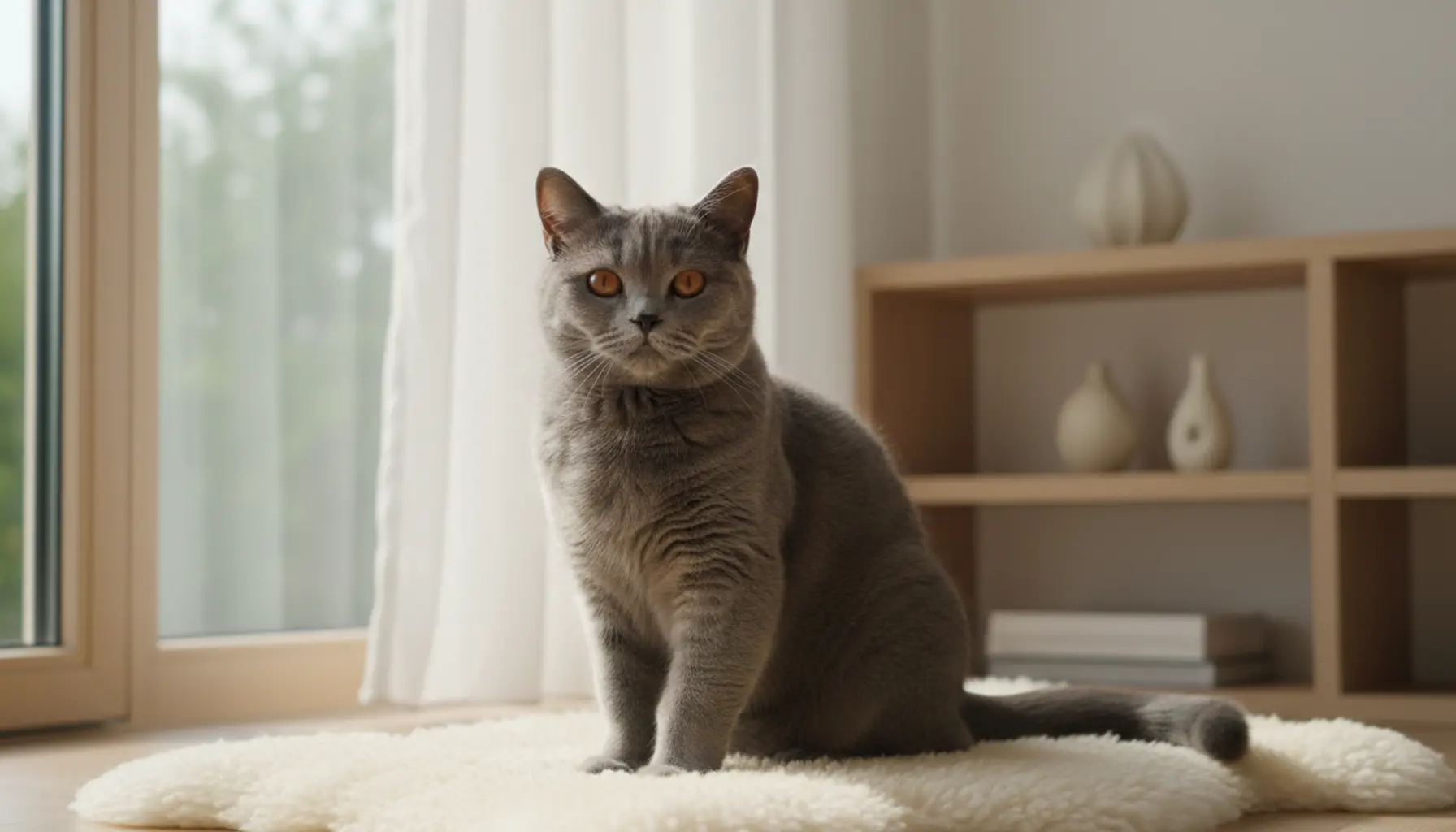
The temperament of the British Shorthair also stands out for its high level of tolerance and ability to live harmoniously with different household members. In relationships with children, it typically displays great patience—it does not react violently to louder sounds or somewhat chaotic movements, though of course children are expected to be taught to handle animals kindly. The British Shorthair prefers to withdraw and find a quieter place when feeling overwhelmed, rather than respond with aggression. This makes it easy to teach family members to read its subtle signals: walking away, turning its head, or half-closed ears usually suffice to signal the need for a moment of peace. Towards other pets, the British Shorthair usually adopts a neutral-tolerant attitude—it doesn’t seek conflict, keeps to its space, and gradually accepts the presence of a second cat or dog, as long as the socialization process is calm and unhurried. It is not a dominant pack leader type; rather, a quiet roommate who, over time, may even form friendly relationships with other four-legged members, sharing a bed or engaging in calm play. Nonetheless, it’s important to remember that its composure does not mean a lack of character—if it feels its boundaries are regularly crossed, it can calmly but firmly distance itself or signal dissatisfaction. Another important element of the British Shorthair’s temperament is its high trainability and attachment to routine. This cat quickly absorbs household rules—learns where the litter box, scratching post, and bowls are, and when certain things typically happen, such as feeding or playtime. As a result, it is less likely to display problematic behaviors like scratching furniture out of frustration or loud meowing if it feels its needs are predictably met. By nature, it is not noisy—it vocalizes sparingly, usually for specific reasons (a meal reminder, a welcome on the owner’s return, a signal of displeasure), and its voice is usually gentle, not piercing. This kind of disposition will be especially appreciated by those who live in apartments or thin-walled buildings, where an excessively loud cat could become a problem. Emotional stability, moderate activity, subtle ways of showing affection, tolerance for household noise, and behavioral predictability create a temperament that many owners describe as “soothing”—the presence of a British Shorthair brings an atmosphere of peace, balance, and discreet sociability, while fully retaining feline independence.
Adaptation and Home Conditions
The British Shorthair is one of the breeds that generally adapts gently to new environments, but it is crucial to provide a calm, predictable environment from the very first days in its new home. This cat deeply values routine, so any changes—moving, new household members, or rearranging the furniture—should be made gradually. During the first days after arrival, it’s best to designate a separate, quiet room for it, stocked with everything it needs: a litter box in a discreet location, bowls with water and food, a hideout like a bed or cardboard box, and a scratching post. The British Shorthair often carefully observes the surroundings before fully relaxing, so it should not be forced into contact—it’s better to allow it time to decide when to emerge, sniff new objects, and build the first bond with its caregiver. For this breed, a sense of security is immensely important, built through predictability: regular feeding times, daily but short play sessions at similar hours, and keeping the key items in the home in relatively fixed locations. Sudden moving of the litter box, bowls, or bed can cause disorientation and even subtle stress, manifested by withdrawal, less activity, or decreased appetite. British Shorthairs usually cope well with typical city environments—apartments in buildings, higher floors, a view of a busy street—provided they have a safe place to observe, such as a stable windowsill with an anti-slip mat, wall-mounted shelves, or a low scratching post by the window. Thanks to their calm and moderate need for movement, they don’t require large living spaces; more important than size is the smart use of vertical space and creating several functional zones: for resting, playing, observing, and decompressing. In a home with children or many residents, it’s worth providing a room or at least a secluded nook where the cat won’t be disturbed—this lets the British Shorthair recharge after an intense day and maintain its characteristic emotional equilibrium.
This breed copes well with solitude but is not completely indifferent to lack of company—rather, it appreciates a calm daily rhythm, where the owner leaves for work and returns at about the same time, rather than a permanently chaotic or irregular home schedule. For people often out of the house, the ideal solution is to enrich the cat’s environment: various scratching posts, cardboard hideouts, wall shelves, cat tunnels, and interactive logic toys with hidden treats. The British Shorthair willingly engages in short, solitary activity sessions if it has choice of stimuli, and the toys sustain its curiosity and provide intellectual stimulation. This cat is not naturally as much of a climber as some oriental breeds, but it will gladly use solid, stable constructions—it’s important that the scratching posts and shelves are wide and comfortable, matching its sturdy silhouette. Adaptation in homes with other animals is usually smooth, provided the introduction is slow and supervised. A good method is initial isolation in a separate room, scent exchanges via blankets or beds, followed by brief supervised meetings through a cracked door or safety gate. The British Shorthair rarely initiates conflicts, but if overwhelmed, it may withdraw, so it’s necessary to provide it with vertical hideouts and places not easily accessible to more temperamental pets. Safety is also very important—while balanced, this breed can be curious, so windows and balconies in apartments on higher floors should be secured with mesh, and tilt-windows fitted with protections that prevent the cat from getting stuck. The British Shorthair is not typically an outdoor breed; it does best as an indoor cat, with access to a meshed balcony or aviary if outdoor space is available. Because of a tendency towards slight heaviness and weight gain in adulthood, home conditions should encourage regular, but not intense, activity—a short “hunt” on a rod toy, a few minutes daily searching for treats on a sniffing mat or ball track suffice to keep it fit. A well-designed home environment combining calm, predictability, and moderate stimulation allows the British Shorthair to fully reveal its gentle nature, intelligence, and flexibility in adapting to different types of households—from quiet single apartments to busy family homes.
History and Origin of the Breed
The British Shorthair is now regarded as one of the most “classic” cat breeds, yet its history is far more complex than it might appear at first glance. Its ancestors are believed to be cats brought to the British Isles by the Romans, who needed effective rodent catchers in military camps and food depots. These cats, mingling for centuries with the local population, developed into a strong, resilient, and well-built domestic cat type, perfectly adapted to the harsh conditions of both the countryside and rapidly growing cities. The British admired their utility as well as their discreet, reserved nature—these were not cats demanding excessive attention but rather quiet allies of humans in their fight against pests. Thus, the archetype of the “British domestic cat” was formed, which only later received definition as a distinct breed. The turning point came in the 19th century, during the Victorian era with the rise of cat shows and intentional breeding. One key figure was Harrison Weir—an artist, animal lover, and the organizer of the first official cat show at Crystal Palace in 1871. Weir, fascinated by the massive, short-haired cats on British streets, decided to select and formalize the breed. The original British Shorthair standard was developed from the strongest, most proportionate, and “most British” individuals, emphasizing a stocky build, round head, broad chest, and dense, plush fur.
The breed’s development was neither simple nor linear—times were particularly turbulent during the two world wars, which almost wiped out British Shorthair breeding. The population of pedigree cats shrank dramatically, and after World War II, breeders had to rebuild the breed from a very limited gene pool. To strengthen health, build, and breed type, crossbreeding was done with Persians and other shorthaired cats of desirable build. These crossings helped entrench the characteristic massiveness and exceptionally dense coat, but also brought challenges—they had to reestablish the standard and separate it from parallel development lines of Persian and European cats. In the following decades, British breeding clubs and others worldwide refined the breed description, aiming to balance mass with elegance and highlight the calm, balanced temperament. Major feline organizations such as GCCF, FIFe, TICA, and CFA gradually recognized the breed, sometimes with slightly different details, but all agreed that the British Shorthair should primarily be a harmonious and psychologically stable cat. As breeding progressed, the breed was exported to continental Europe, North America, and Asia, where it quickly became popular as a family cat. Importantly, selection was always based not only on appearance but also temperament—preferring gentle, sociable but independent individuals who tolerated domestic life and changing civilizational conditions. The historic role as a utility cat—resilient, independent, and unobtrusive—results in the modern character of the British Shorthair: calm, analytical, unaffected by sudden stimuli but loyal to its owner. Today’s global popularity, often featured in commercials, films, and mass culture, has further entrenched the image of the British Shorthair as the “gentleman in fur”: a cat with noble roots, historically grounded in Britain’s cities and countryside, which remains a patient, tolerant household member reminiscent of the traditional feline guardians of stables and granaries.
Daily Grooming and Care
The British Shorthair is considered a relatively low-maintenance breed, but a consistent, well-planned routine translates not only to a beautiful appearance but also to health and emotional stability. Its dense, undercoated fur requires regular brushing—even though it is short, it tends to shed, especially during molting season (spring, autumn). In practice, brushing 1–2 times a week with a soft brush or grooming glove is usually enough to remove dead hair and minimize the risk of hairballs. During periods of heavy shedding, it’s worth brushing 3–4 times weekly and considering anti-hairball pastes as recommended by your veterinarian. Baths are generally not necessary—the British Shorthair cleans itself very well, and too much washing can compromise the skin’s protective layer; bathing makes sense only in certain situations (e.g., strong dirt, skin diseases as advised by a vet), and only special cat shampoos should be used. While brushing, it’s wise to check the skin for dandruff, irritation, redness, or parasites—early detection makes treatment much easier. Daily care also includes regular checks of ears, eyes, and mouth: the British Shorthair’s ears are naturally clean, but wiping them gently once a week with a proper solution and a cosmetic pad (never with cotton swabs deep in the canal) helps prevent inflammation. The eyes usually don’t water excessively, but with lighter coats it’s worth gently cleaning any discharge with a soft cloth moistened with boiled water or a vet-recommended solution. Oral hygiene is extremely important though often neglected: British Shorthairs are prone to developing tartar, so it’s best to accustom them from a young age to having their teeth brushed with pet toothpaste, and use dental treats or water additives for oral health.
Caring for a British Shorthair also means mindful feeding and weight control, as this breed has a tendency to become overweight, especially at home with moderate activity. The foundation should be a high-meat, well-balanced wet food, or a mix of wet and dry, tailored to age, activity, and any potential health concerns (such as overweight or sensitive urinary system). Constant access to fresh drinking water is essential, and many British Shorthairs prefer drinking from a fountain over a traditional bowl, which further supports kidney and bladder function. Due to their stoic character and ease in adopting a peaceful lifestyle, meals should be portioned wisely—ideally as several small meals per day, not a constant “buffet” of dry food. Slow-feeding bowls and interactive feeding toys that combine eating with mental stimulation work very well. Moderate physical activity, supported by daily, short play sessions (2–3 sessions of several minutes each), helps maintain healthy muscles and joints; this breed usually prefers toys mimicking hunting—wand toys, balls, tunnel tubes, as well as simple logic puzzles. For their psychological well-being, it is worth providing cat shelves and scratching posts at various points in the home, where the cat can observe from a safe height—especially important in homes with children and other pets, as it allows the British Shorthair to regulate its own level of social interaction. Regular check-ups at the vet (at least once a year, more often for seniors) allow health monitoring, blood and urine tests, and updating vaccinations and deworming. Since many British Shorthairs are calm observers by nature, it is easy to miss subtle signs of discomfort, such as appetite changes, reduced mobility, or less desire for contact—a vigilant caregiver who knows their cat’s daily habits will quickly spot deviations from the norm. An important element of daily care is maintaining a sense of security and predictability: regular mealtimes, familiar home routines, and a quiet relaxation spot where the cat can retreat help this breed stay emotionally balanced and allow its gentle, even-tempered personality to fully emerge.
Summary
The British Shorthair is a cat breed with an exceptionally gentle character, making it the ideal companion for both families with children and seniors. Its calm temperament and ability to adapt to various home environments make it well suited for apartment living. Knowing its history and traits will help provide the proper care and grooming. Regular understanding of its needs will contribute to a long and healthy coexistence with this pedigree cat.

