

Proper care of Maine Coon fur requires consistency, the right tools, and well-chosen products. Discover the key principles that will keep your cat looking healthy and stunning every day.
Table of Contents
- Choosing the Right Grooming Tools
- Daily Maine Coon Brushing Routine
- How to Remove and Prevent Mats
- Recommended Fur Care Products
- Ear and Eye Care for Maine Coon
- Most Common Coat Problems and How to Solve Them
Choosing the Right Grooming Tools
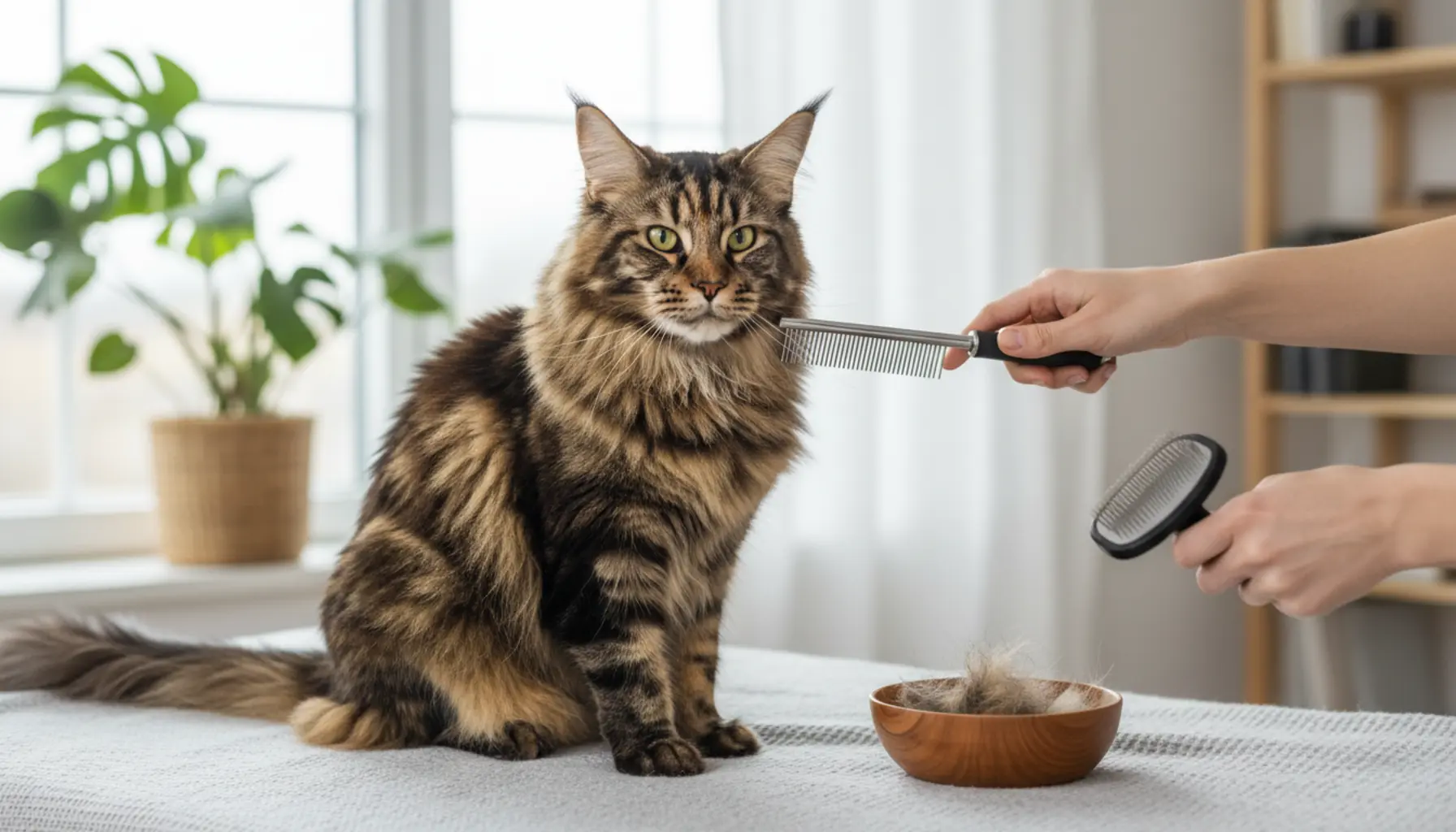
Selecting grooming tools for Maine Coon fur is very important for both the condition of their coat and the comfort of the cat, as well as your own ease during brushing. This breed’s coat is unique: it consists of a thick undercoat and longer, often slightly wavy guard hairs, which easily form mats, especially in the armpit, belly, and behind the ears. That’s why one “all-purpose” brush isn’t enough – a set of several complementary tools best suited for various tasks and hair types works best. The foundation is a high-quality comb with both wide and tight metal teeth, rounded at the ends, which lets you gently detangle longer hairs first and then precisely work through the thick undercoat. Such a comb helps catch small tangles before they become hard-to-remove mats and allows you to check problematic areas that a wide brush might miss. The second key tool is a slicker brush (poodle brush) with soft, flexible wire pins topped with beads or well-ground ends. This type of brush removes dead undercoat and loose hair very effectively, reducing fur on furniture, minimizing the formation of mats, and lessening the amount of ingested hair that can turn into hairballs. For sensitive Maine Coons, it’s crucial the slicker isn’t too stiff or sharp – aggressive tools can irritate the skin, cause micro-injuries, and make your cat avoid brushing sessions. Many cats of this breed also tolerate natural bristle brushes (e.g., wild boar bristles), which smooth the coat, distribute natural sebum along the length of the hair, and add shine without removing too much healthy hair. This kind of brush is a good choice for a quick daily “inspection” and gentle skin massage, which boosts blood flow and may support healthy hair growth. Remember, however, a natural bristle brush alone often can’t handle the Maine Coon’s dense undercoat, so it should supplement – not replace – other grooming tools. Many consider using a furminator or similar shedding blades. With long-haired breeds like Maine Coons, use these tools extremely carefully: overly aggressive blades can damage the guard hairs, pulling out healthy fur and thinning the coat. If you opt for such a tool, choose one designed for long-haired cats, use it sparingly (e.g., during shedding season), and always apply with light pressure, observing your cat’s reaction and the coat’s condition after. Safer alternatives are rubber or silicone shedding blades and gloves, which gently pull loose hairs from the surface while massaging the skin; these work particularly well for cats not used to intensive brushing and can be the first step in getting a Maine Coon accustomed to regular grooming procedures.
Beyond basic brushes and combs, it’s worth having tools for working with mats and accessories that support both safety and convenience while grooming. A special comb or mat splitter (dematter or rake) with teeth concealing blades lets you “slice” a tight mat into smaller chunks instead of yanking it out. This tool must be used extremely carefully, always holding the mat at the base with one hand to avoid pulling the skin when cutting. Used improperly, it can cause cuts or rip out larger chunks of fur by the roots, which is very painful for the cat and may lead to a refusal to cooperate. That’s why, if mats are extensive or very close to the skin, a better and safer option is small, rounded scissors or asking a professional groomer or vet for support. A small, densely-toothed comb is also useful for “precision work” – for checking and detangling around the ears, chin, neck, or tail, and picking out little bits of dirt. When choosing any tool, pay attention to build quality: smoothly finished teeth, a stable handle, and corrosion-resistant materials. Cheaply made accessories bend and break quickly, and sharp edges can irritate skin and damage hair. For your comfort, ergonomics are also important – rubber-coated or non-slip handles and appropriate tool weight reduce wrist fatigue and allow for gentler, more controlled movements during longer grooming sessions. Consider having extras on hand: a soft towel or anti-slip mat for your cat to sit on (for increased confidence) and a large, closable bag or box for storing all tools together, which helps prevent lost accessories and keeps metal parts away from moisture. A gentle, detangling spray formulated for cats makes a great addition – apply sparingly to mat-prone areas to significantly reduce friction between hairs, allowing you to brush gently and painlessly. Avoid products with strong fragrances, alcohol, or essential oils, which may be toxic or irritating for cats. Always check reviews from other Maine Coon owners and, if possible, consult a groomer specializing in longhair breeds before buying new grooming tools and cosmetics – practical experience with a specific hair type is invaluable and helps you choose the accessory set that makes daily grooming easier, not harder.
Daily Maine Coon Brushing Routine
The daily brushing routine of your Maine Coon should be effective and as stress-free as possible for both you and your cat. The most important thing is building a habit: pick a set time of day – many owners opt for the evening when the cat is calmer. Before grabbing the brush, let your pet sniff it and any detangling spray if you use one. Start with a short, pleasant session – just 5–10 minutes – and gradually make it longer, so an adult Maine Coon is eventually brushed 15–20 minutes daily, depending on the thickness of the coat and current shedding. Sit with your cat in a calm spot away from noise and other animals, preferably on a soft blanket or towel that’s easy to wash afterward. Begin with gentle petting and speak to your cat in a soothing voice – this builds positive grooming associations. The first step should be a wide-tooth metal comb or a soft brush to “comb through” the top coat and catch any mats before focusing on the undercoat and areas close to the skin.
When brushing, always go with the natural direction of hair growth, avoiding “against the grain” strokes, which can be unpleasant for the cat and lead to pulling out healthy hairs. Start with the back – usually the least sensitive area. Use the wide-tooth comb or a soft slicker brush to remove loose hair and start loosening tangles. Move gradually to the sides, chest, and belly, taking particular care around sensitive areas like armpits, groin, and tail base – mats form there the most often. If you find a tangle, don’t pull it – hold the fur near the skin between your fingers to avoid pulling, gently spray with conditioning spray, wait a moment, and try to split the mat with your fingers into smaller sections, then use a finer comb or mat splitter tool. Around the neck and “ruff,” use a wider tooth spacing to avoid ruining the breed’s signature collar. Don’t forget the hindquarters: feathering on the legs and the tail area also require daily inspection – loose litter, dust, or plant debris from the garden easily gets stuck there. For some Maine Coons, it’s worth gently brushing the longer hairs between the toes daily, as these can also mat. Throughout the session, watch your cat’s reactions: if they start squirming, tense up, or growl, slow down, switch to gentle stroking, or move to a less sensitive area. Always reward your cat after: with a treat, favorite wand toy, or a long session of petting. This builds the pattern: calm brushing + pleasant reward, so even the more difficult grooming tasks, like detangling or thorough undercoat brushing during shedding, become an acceptable part of your Maine Coon’s daily routine.
How to Remove and Prevent Mats
Mats in Maine Coon fur aren’t just a matter of appearance, but a real health concern – tangled hair can pull on the skin, cause pain, micro-injuries, and even encourage inflammation or the growth of bacteria and parasites in hard-to-reach areas. They form most often behind the ears, under the arms, on the inner thighs, belly, and tail base – wherever the fur is soft, long, and has lots of friction. The first step to successfully preventing mats is regularly checking these zones with your fingers – gently “brushing through” with your hands during daily petting quickly detects small clumps before they become dense mats stuck to the skin. When you find a small knot, never try to rip it out – that almost guarantees pain and loss of your cat’s trust. Instead, gently separate the mat gradually, holding it at the base close to the skin, and carefully loosening it with your fingers, tearing it sideways rather than pulling downward. Only after initial loosening should you reach for a wide-tooth metal comb to work out stray hairs, always starting from the ends and moving short strokes toward the skin. For denser mats, a dedicated detangling spray will help – spritz a small amount on the area (avoiding eyes, nose, mouth), wait a moment for the product to work, and then continue with the comb. Never forcibly rip out mats with a slicker or furminator – these tools are for removing undercoat and loose hair, not working through existing mats. If the mat is right at the skin, hard, or large, you may need a special mat breaker or small rounded scissors – always use caution: isolate the section from the rest of the coat, hold the skin at the base, and slide the blade parallel to the hair growth in short, controlled motions. In many cases, it’s safer and more humane to consult a groomer, who can clip the problem area if necessary, than to risk cutting the skin at home. A cat that is seriously cut by scissors will likely refuse grooming for a long time.
Preventing mats in a Maine Coon relies on three pillars: consistent grooming, proper environmental factors, and a diet that improves coat quality. Systematic brushing according to your routine is key – for most Maine Coons, a minimum of 3–4 thorough sessions per week, and during shedding season, even daily, with special attention paid to those “trouble” spots where fur rubs and tangles. In these areas, gentle metal combs and short, controlled strokes are preferable to aggressive brushing; you can also use light, silicone- and mineral-oil-free detangling sprays a few times a week to help combs glide more easily without weighing down the fur. Regular but infrequent baths (every few months or as recommended by your groomer) with a special longhair shampoos and conditioners reduce dead hair buildup that forms tight mats. After bathing, drying and thoroughly combing each layer is crucial – leaving wet, tangled fur almost always leads to mats. The environment also matters: soft fleece or plush beds can cause static and tangling, so vary fabrics (cotton, linen, microfiber), regularly switch and wash bedding to remove old hairs. Avoid tight harnesses or clothes for your cat – rubbing fabric against long fur leads directly to mats at the neck and between the shoulders. Another vital factor is nutrition: a diet rich in high-quality animal protein, omega-3 and omega-6 fatty acids (from fish, salmon oil, or tested cat supplements), and B vitamins improves hair texture, strength, and resilience to breakage and matting. Always check for other symptoms when mats suddenly worsen – reluctance to be groomed, pain when touched, apathy, or excessive licking can signal health issues (obesity, joint pain, skin disease) that make self-cleaning difficult. In such situations, a veterinarian visit and consultation with a medical groomer are just as important as your home detangling plan – only a holistic approach will keep your Maine Coon’s thick, mat-free, healthy coat intact.
Recommended Fur Care Products
Selecting the right products for Maine Coon fur care is crucial for keeping the coat in excellent condition, reducing mats and shedding, and ensuring your pet’s overall comfort. The gold standard is a high-quality shampoo specifically for longhaired cats – gentle, hypoallergenic, free of harsh detergents (SLS, SLES), silicone, parabens, and with a balanced pH for feline skin. Look for formulas with natural plant extracts like chamomile, calendula, colloidal oat, aloe, or panthenol, which soothe and moisturize the skin, leading to healthier hair. Maine Coons, being sensitive to overburdened hair, respond well to volumizing and lightweight shampoos that don’t leave a greasy film. Important companions to shampoo are conditioners and masks – ideally as lightweight balms or rinse-out foams, enriched with silk proteins, hydrolyzed keratin, evening primrose oil, or borage oil to strengthen hair structure, prevent breakage, and make combing easier. For cats prone to dry skin or dandruff, moisturizing conditioners with added glycerin, low-dose urea, or omega-3 and omega-6 fatty acids work well. If you don’t want to bathe your cat often, consider dry shampoos in foam or powder form for cats – these refresh the coat between baths, absorb excess sebum, and minimize odors, as long as you brush out all product carefully after use. Detangling sprays (detanglers) are especially important – they create a light slippery film on the hair, making the comb glide easier and reducing tugging and hair damage. Opt for alcohol-free formulas with volatile silicones or plant-based polymers that do not weigh down the fur; for sensitive cats, anti-static sprays with rose water, oat proteins, or panthenol are good options. Shine mists, which bring out the Maine Coon coat’s natural gloss, can also be helpful – the best combine smoothing and anti-static effects with a mild or odorless scent that won’t irritate your cat’s nose. Internal “wellness” support is also important – dietary supplements in pastes, oils, or gelcaps containing unsaturated omega-3 and omega-6 fatty acids (from salmon, krill, or algae oil), biotin, zinc, and vitamin E, which support the skin, coat, and the body’s natural protective barrier, and with regular use reduce coat dullness and excessive shedding.
The next group of recommended products, tightly linked to coat condition, are specialist hairball pastes and treats for hairball control. Maine Coons, with their abundant fur, spend a lot of time licking themselves, and ingested hair can form balls in the digestive tract, impacting both digestion and coat appearance – an overworked digestive system may “save” energy on coat quality. Pastes with vegetable fiber, oils, and prebiotics help naturally expel hair and often contain coat- and skin-supporting ingredients. Always choose cat-specific products with no unnecessary sugars or artificial colors. In daily care, beyond cosmetics, consider cat grooming wipes – unscented or delicately scented, soaked with soothing extracts, which quickly clean dirt, dust, or food residue from around the mouth without a full bath. Micellar solutions for pets are great for gently cleaning the tail, paws, or belly after a walk in a harness. For owners preparing for shows or photo sessions, advanced show-only lines exist – shampoos that emphasize color (for red, silver, or black coats), special volumizing powders, or texturizing sprays that shape the neck ruff and tail; use these very sparingly at home, closely following manufacturer guidance and always ensuring the product is fully safe for cats. Regardless of preparation type, always choose products meant exclusively for cats, preferably recommended by groomers or veterinarians; with first-time use, monitor your Maine Coon for allergies, itching, or excessive licking. If in doubt, start with simple composition products without strong fragrances, and always consult a professional who understands longhair breed skin/fur needs for a coherent care set tailored to your particular cat’s age, health, and lifestyle.
Ear and Eye Care for Maine Coon
The Maine Coon, as a breed with thick fur and distinctive anatomical features, requires not just regular coat brushing but also meticulous ear and eye care. The ears are large, often capped with tufted tips, which accumulate dust, debris, and earwax, increasing the risk of irritation and infection. Regarding coat upkeep, this is very important – untreated ear or eye conditions lead to excessive scratching, rubbing the head on objects, or licking fur, causing bald patches, mats, or even hairless spots. Preventative ear checks should happen at least weekly, in a calm, well-lit place. Gently fold back the ear flap and inspect inside: a healthy ear is pink, slightly moist, with a small amount of light wax, and no strong odor. Brown, lumpy discharge, strong odor, redness, noticeable scratches or crusts are warning signs requiring a vet consultation – they could indicate ear mites, fungus, or bacterial infections. Don’t use cotton swabs, which can push wax deeper or harm the ear canal – instead, use special ear cleaning drops for cats and soft cosmetic pads or gauze. Instill a few drops according to product directions, gently massage the ear’s base, then let your cat shake its head so loosened debris comes out, and gently wipe any dirt from the visible part of the ear and ear canal opening. Always associate this procedure with a reward – a treat or quick play – to minimize stress and make regular cleaning easier. Watch your cat’s behavior when touching the ears: sudden flinching, tilting the head, frequent scratching, or rubbing the ear on things are symptoms that should never be ignored. For Maine Coons, who often have dense fur on the ear’s outer part, it’s important to keep this area in good condition – don’t cut deep inside the ear yourself, because those hairs partly block out dust, though you can gently remove single, very matted strands at the edge to reduce the risk of mats and dirt buildup. Regular, gentle ear care supports overall hygiene around the head and minimizes self-injury to the skin and fur from persistent scratching.
Maine Coon eyes, large and expressive, also need routine checks as even minor irritation or excess tearing can quickly affect the coat around the eyes, cheeks, and muzzle. With this breed, occasional mild, clear, or white tearing is normal and may leave traces in the eye corners, especially in light-colored cats. It’s important no dense, yellow or green discharge, constant squinting, red conjunctiva, or severe light sensitivity occurs – these could indicate conjunctivitis, trauma, eyelid issues, or viral infection and require prompt veterinary attention. For daily cleaning, sterile disposable pads and dedicated animal eye cleaning solutions with neutral pH and no harsh fragrances are best. Wipe each eye with a separate pad, from the outer to the inner corner, to avoid spreading microbes and not irritating the skin under the fur. The fur around the eyes is particularly delicate and prone to moist mats if discharge isn’t regularly removed – so after cleaning, gently comb the hair in this area with a small metal comb in the direction of hair growth to prevent matting and discoloration. Show cats sometimes use anti-stain products for tear marks, but for home Maine Coons, cleanliness and healthy skin are key. Also observe your cat during care – a healthy, pain-free cat may dislike being held, but shouldn’t react violently to gentle touching around the eyes. Excessive resistance, hissing, or fleeing when trying to clean the eye corners suggests discomfort or pain and that a specialist check is needed. Proper ear care and eye care are part of a broader focus on the whole coat: clean, irritation-free face and ears make maintaining the fur easier, limit risk of local hair loss, and improve the cat’s overall comfort for routine full-grooming sessions.
Most Common Coat Problems and How to Solve Them
The Maine Coon’s fur is at once stunning for its length and volume, and can also be a source of classic issues if care is inconsistent or poorly matched to the cat’s needs. The most common challenges are: excessive shedding, dull/lifeless hair with no shine, dandruff, mats, and excessive hairballs in the digestive tract. Shedding may be normal seasonally, but if it’s year-round, leaves clumps everywhere, and causes a thin coat, you should examine your cat’s diet and health. Diet lacking omega-3 and -6 fatty acids, infrequent grooming, or chronic stress can make your Maine Coon lose more hair than normal. The solution is systematic brushing – at least 3–4 times a week, ideally daily – using a metal comb and brush suited for their hair length. Alongside, consult a vet or pet nutritionist to change to a high-protein, grain-free food with salmon oil or other unsaturated fatty acids. If shedding remains excessive despite changes, with bald spots, skin redness, or constant scratching, this could indicate allergies, external parasites (fleas, mites), or endocrine disease, which need full medical diagnostics, not just cosmetic fixes. Dull, rough fur lacking shine is another frequent issue, often pointing to nutritional deficiencies, dehydration, or too rare grooming. Besides diet, use leave-in conditioners and moisturizing mists to form a protective film on the hair, aid combing, and give smoothness. Avoid products high in silicone, which overload the coat and clog pores – in time, this worsens fur health. Adequate indoor air humidity (especially in winter) helps too – too dry air encourages static, breakage, and dandruff. Regular brushing removes dead hair while distributing natural sebum, giving glossy, healthy fur without aggressive products. Sensitive areas are those prone to friction and dampness – underarms, groin, neck, behind ears, tail base – where hair loses springiness, felts, and forms tough mats fastest.
The characteristic problem for Maine Coons is tough mats that are not just unsightly but cause pain with every move, pulling the skin, causing micro-injuries and inflammation. If mats happen often, check your routine covers all sensitive spots: belly, inner thighs, tail base, and chest. Neglecting these, using too hard brushes, pulling, or rarely using detangling sprays usually ends in tight mats that can’t safely be removed at home. In early stages when mats remain loose, gentle separation by hand and section-by-section brushing from the ends upward with a metal comb and slip agent helps. If the mat is hard, large, or in a sensitive spot (like the groin), it’s safer to see a groomer who has special de-matting blades and trimmers and knows how to protect the skin. Another persistent issue is dandruff and dry, irritated skin. White flakes may come from dry air, but could signal contact or food allergies, shampoo hypersensitivity, or skin disease like fungus or bacterial infection. First reduce baths, switch to hypoallergenic products, and introduce omega fatty acid supplements in consultation with a vet. If the issue persists or accompanies redness, itching, or sores, see a vet and consider therapeutic shampoos or oral medicines. The Maine Coon’s long fur also increases the risk of hairballs in the digestive tract – after thorough licking, your cat swallows large amounts of hair, which may clump in the stomach and intestines. Signs are frequent retching, coughing, vomiting up hair, or constipation. To minimize risk, aside from brushing, use hairball pastes, high-quality wet food, and always provide fresh water. Cat-safe plants (such as special cat grass) can naturally help pass swallowed hair. Any sudden coat deterioration – rapid thinning, greasy or sticky sections, strong skin odor, or behavioral change (apathy, excessive licking) – should prompt a vet check, as coat often signals systemic problems first, like thyroid, kidney, or diabetes issues and chronic environmental stress.
Summary
Caring for Maine Coon fur requires regular attention and the right tools to keep it in perfect condition. Daily brushing removes dead hairs and prevents mats, and regular ear and eye checks ensure overall body health. Selecting the right products and mastering the way to handle the most common fur issues lets your Maine Coon enjoy a healthy, shiny appearance. By following these simple steps, your cat will have beautiful, healthy fur that is its pride and joy.

