
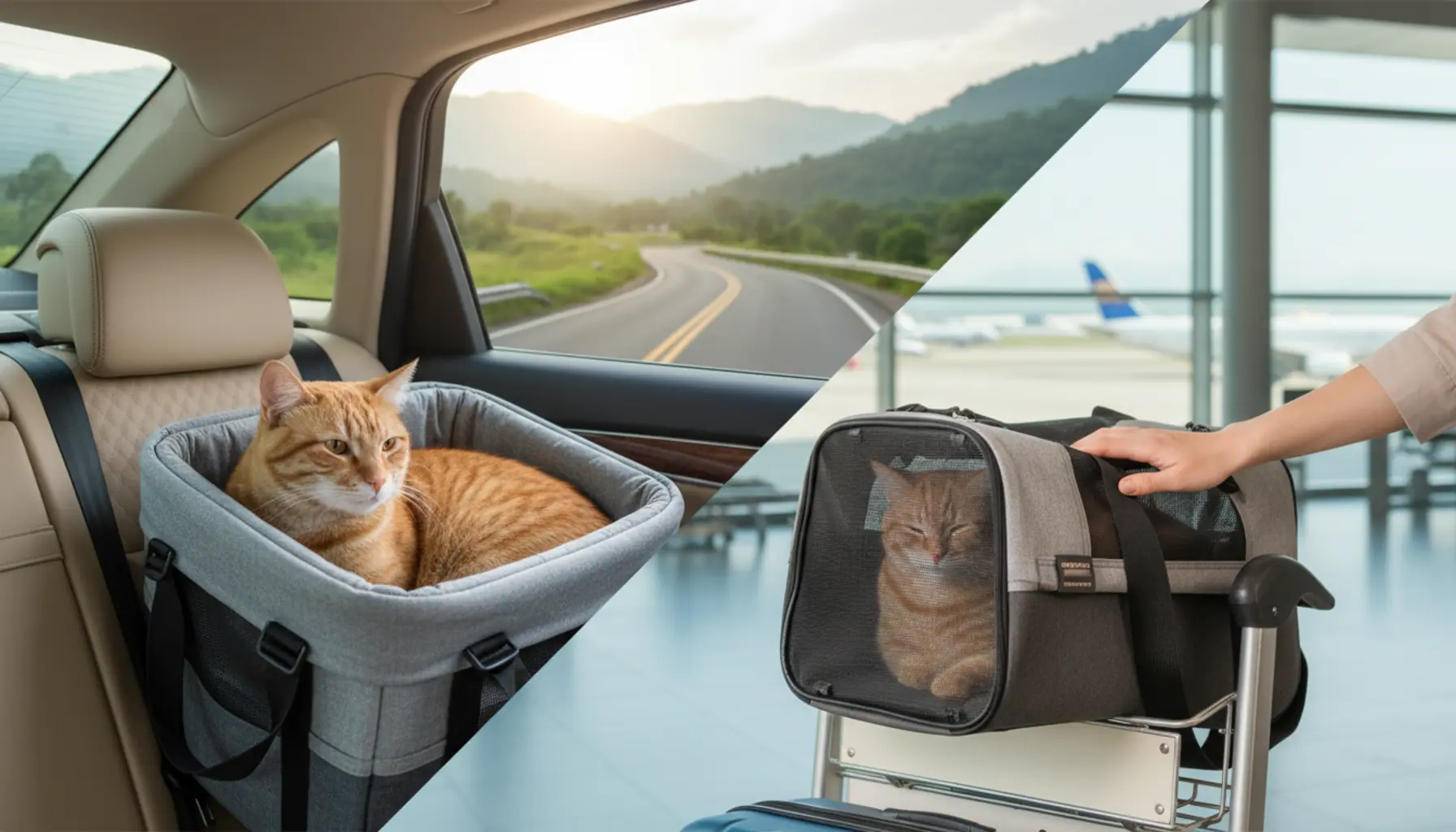
Travelling with a cat by plane may seem like a challenge, but with proper preparation, knowledge of regulations, and practical tips, you can minimize stress for both yourself and your pet. Find out how to plan a safe and comfortable trip with your cat step by step.
Learn how to transport a cat by plane without stress – a guide on preparations, regulations, costs, safety, and practical advice.
Table of contents
- Preparations for travelling with a cat
- Airline requirements and documents
- Choosing a carrier and your pet’s comfort
- Cat’s safety before, during, and after the flight
- Costs and fees for transporting a cat
- Most frequently asked questions and practical tips
Preparations for travelling with a cat
Proper preparations for a plane trip with a cat should start in advance – ideally 4–6 weeks before departure, and even earlier for flights outside the EU. The first step is to check the requirements of both the airline and the destination country: each airline has its own animal transport regulations (weight, carrier size, limits on the number of animals in the cabin, whether reservation is required, documents needed at check-in), while countries have their own veterinary regulations. You need to check if your cat needs a passport, microchip, specified vaccinations (most often rabies), lab tests (e.g., antibody titers), certificates confirming deworming or tick prophylaxis, and whether a specific waiting period after vaccination is required. For travel within the European Union, a passport issued by a veterinarian, up-to-date rabies vaccination, and an ISO-compliant microchip usually suffice, but you should always confirm the current regulations on official government websites. A consultation with a veterinarian is also key—ideally one with experience preparing animals for air travel. During your visit, your cat’s health should be assessed, any contraindications for flying excluded (such as serious cardiovascular or respiratory conditions, advanced age, pregnancy), vaccinations updated, and a strategy for minimizing stress discussed. This is also the time for getting the passport, registering vaccinations and microchip in documentation, and obtaining any additional certificates required by the airline. The vet can also help select safe calming agents—you should never use strong sedatives or sleeping pills on your own, as these can impair an animal’s breathing and circulation during changes in cabin pressure. Milder support is increasingly recommended, such as pheromones (spray or collar), dietary supplements with calming effects, gradual habituation to the carrier, and getting used to noises similar to airports. Simultaneously, contact the airline and add your cat to the reservation—the number of animals allowed in the cabin is usually limited, so the earlier the booking, the greater the chance for a place in the cabin rather than in the hold.
Once the formalities are handled, it’s time for practical preparation, including selecting the appropriate carrier and acclimating your cat to travel. The carrier must meet the requirements of the airline and—for cargo hold travel—IATA (International Air Transport Association) standards. In the cabin, soft carriers of certain maximum dimensions are generally allowed—must fit under the seat; for cargo hold, rigid carriers with proper ventilation, a sturdy lock, the possibility to attach food/water dishes, and space for the animal’s documents and a contact tag are required. Wash the carrier with a mild, unscented detergent and line it with your cat’s familiar blanket or bed with the scent of home. Start the acclimatization process several weeks in advance: leave the carrier open where the cat likes to be, toss in treats, food, or favorite toys so the animal will voluntarily enter. Gradually start closing the door for a few minutes at a time, then extend this duration and add gentle movements—lifting the carrier, short walks, car rides—to minimize anxiety from rocking/noises. Also, proactively reduce surrounding stressors—maintain a steady feeding and playing schedule, offer more hiding spots and elevated places, and avoid major changes just before departure (moving, renovations, new pets at home). A few days ahead, prepare a “travel kit” for your cat: printed and digital documents (passport, vet certificates, lab results if any), a list of phone numbers (destination vet clinic, airline contact), a supply of familiar food for several days after arrival, a collapsible box or tray with a small amount of familiar litter, an extra blanket, paper towels, waste bags, and wet wipes. Plan feeding for the travel day: most vets recommend an easily digestible meal 6–8 hours before departure and minimal food right before, to reduce the risk of vomiting; water can be freely offered, remembering that access to the bowl during check-in and security procedures will be limited. The day before, trim your cat’s claws to reduce the risk of injuring themselves or you by nervous scratching, and equip their collar (if tolerated) with an updated phone number and, where possible, an email address. The last step is airport logistics: arrive early for check-in, always keep your cat on a leash or in a harness when they must leave the carrier for security, and remain as calm as possible—cats pick up on their guardian’s moods, so your composed, predictable presence is the best support at every stage of travel.
Airline requirements and documents
Airline requirements for traveling with a cat are surprisingly varied, so it’s absolutely crucial not to rely on general rules but to check the latest policies for your specific carrier and the route you plan to fly. Each airline sets its own maximum number of animals per flight, allowable cat weight with carrier (most often 6–8 kg in the cabin), and the detailed dimensions/types of accepted carrier (soft or rigid, fitting under the seat ahead). Usually, cats must also be registered for transport—ideally right after booking your ticket—since spots are limited and offered on a first-come, first-served basis. Confirm whether your airline allows animals in the cabin at all, or only in the hold, and what breed restrictions exist (e.g., some airlines refuse to accept brachycephalic breeds—short-nosed cats—because of increased risk of respiratory issues). Some carriers also restrict destinations—certain countries may have outright bans on animals from specific regions, or only allow import through complicated quarantine procedures. Layover rules are their own category: if you have a transit through a country with stricter laws, those may become decisive even if the departure and final destination are more liberal. Always check if a special animal transport form needs to be filled out before flying, or if the cat’s passport and veterinary certificates suffice; some carriers require a declaration the cat will not receive strong sedatives. On a practical level, costs are significant—transport is usually subject to a separate one-way fee; the amount depends on the carrier and whether your pet flies in the cabin, as checked baggage, or as cargo. When booking, ask about the pricing structure, payment methods (online, at the airport, at check-in), and what proof you’ll receive, to avoid surprises at the counter. Note also the cat’s age requirement (most airlines won’t fly kittens under 10–12 weeks, sometimes 15 weeks) and health status—the cat should be clinically healthy, with no obvious signs of infection or parasites, confirmed by appropriate veterinary documents, often a certificate issued 48–120 hours before departure. Check if you need to inform the airline in advance of special needs (chronic illness, special diet), and how they handle feeding and watering during flights—usually it’s up to the owner to provide, and removing the cat from the carrier in-flight is prohibited.
Besides the airline’s own requirements, travel documents and veterinary laws of the countries of departure, transit, and entry are crucial. In the European Union, the basis is a pet passport issued by an authorized veterinarian; this contains the cat’s identifying information, microchip number, vaccination history (especially rabies), and any entries about tapeworm or tick treatments if the destination requires it. A microchip (ISO standard) is mandatory in most countries and must be implanted before or on the same day as the rabies vaccination—it serves as the pet’s identification at borders; officials may request microchip scanning at the airport. For travel outside the EU, extra documents may be required, such as a health certificate issued on an official form by a state veterinarian and certified by the appropriate authorities, sometimes also an export certificate. Some countries (e.g., in Asia, South America, the Middle East) require advance import licensing (import permit), which must be obtained weeks ahead—plan this into your preparation timeline. Timing is also important: rabies vaccination must be valid and administered early enough (usually at least 21 days before entry), and for some destinations an antibody titer test from a certified lab months in advance is needed; only a positive result allows entry without quarantine. In addition to veterinary documents, carry scans/copies of everything (stored in the cloud or on your phone), a printout of your animal reservation confirmation, and contacts for a veterinary clinic at your destination and 24/7 emergency vet contacts. In some cases, a brief medical history in English (or the destination’s language) is helpful in case of interventions. At the airport, animal documents are usually checked twice: at check-in and again at border or veterinary control; missing paperwork may mean refusal of boarding or—worst—refusal of entry and costly return at your expense, so prepare all documents ahead of time and review them with your vet and current border authority guidelines.
Choosing a carrier and your pet’s comfort
Choosing the right carrier is one of the most important decisions when planning air travel with a cat—it affects both animal safety and your peace during the flight. First, check the requirements of your airline and general IATA standards (International Air Transport Association). Most airlines allow soft material carriers with specified maximum dimensions in the cabin—they must fit under the passenger seat; in the cargo hold and as cargo, rigid plastic kennels with metal doors are usually required. The ideal carrier should allow the cat to stand, turn, and lie comfortably, but not be so large that it slides around during turbulence. Pay attention to build quality—strong locks, stable construction, no sharp edges, certified materials are a must. Ensure the bottom is sturdy and can be easily lined with a mat/blanket. If possible, pick a model that opens both at the top and front—this makes security checks and emergency removal easier. Ventilation is crucial: carriers should have mesh or perforations on at least three sides for air flow and to reduce overheating. On the other hand, fully transparent panels aren’t always best—most cats feel safer in partially shaded/private spaces. One good compromise is a carrier with mesh sides you can cover with a light blanket or special cover to reduce excess stimuli at the airport and on the plane. Remember, airline weight limits usually include the carrier, so the lighter (while still safe) the better. Before purchasing, measure your cat standing and lying, and compare to the carrier’s inner dimensions—not just the listed outer ones. For frequent travel, invest in a premium model with a comfortable handle, shoulder strap and pockets for documents and essentials. For safety, add a label with your cat’s name, your name, phone number (international format), and email; especially on layover flights, this can be crucial in case of lost luggage or transfer mistakes.
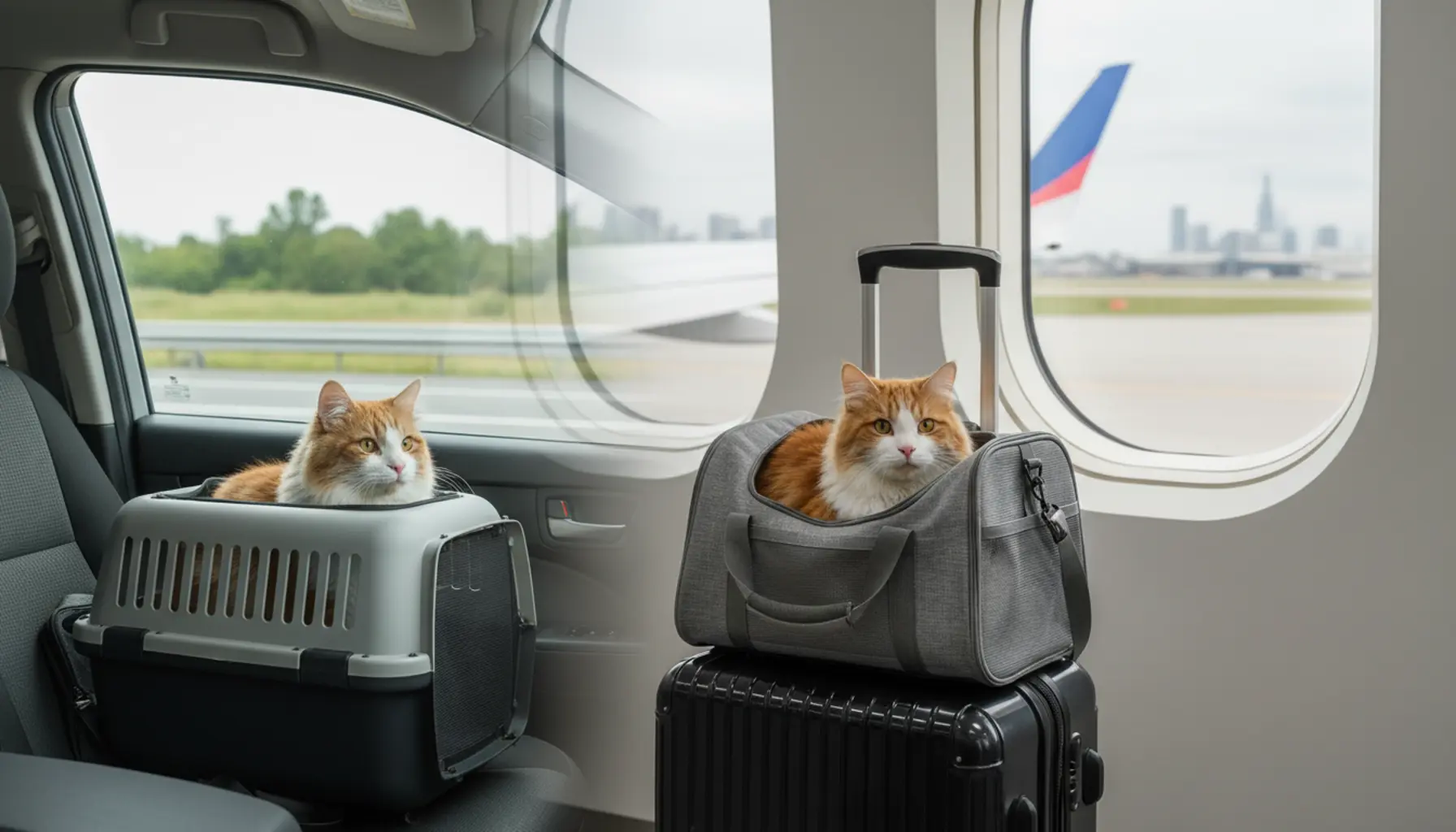
The carrier itself, however, is only half the success—equally important is ensuring your pet’s comfort inside and gradually getting them used to travel. Several weeks before departure, introduce the carrier into your cat’s daily environment: open it in a quiet spot at home, add their favorite blanket or bed and a few treats. The goal is to build positive associations so the carrier is a “safe base,” not just a tool for stressful vet visits. Gradually close the doors for short periods, rewarding your cat with treats and a calm voice, and then begin gentle movement—first carrying it around the home, then short car rides. Inside, use a soft, familiar fabric scented with home/you; avoid new or strongly scented materials as these can stress your cat. Ideal is a thin absorbent pad (in case of bathroom accidents) with a favorite blanket on top—both for comfort and easy cleaning. You can also use synthetic feline pheromones (e.g., spray) inside the carrier 15–20 minutes before placing your cat in. In the cabin, you usually cannot take your pet out, so make the carrier a “safety cocoon”: partial dimming (with a blanket/cover), stable placement under the seat, and minimal interference from others (don’t allow strangers to peek or put hands through the mesh). If allowed, add a small soft toy your cat knows, but avoid anything noisy. For water, use spill-proof dishes attached to the door or wall; for short flights (up to a few hours) it’s often enough to give water just before departure and right after landing, but on longer trips, access in-flight is necessary. Food isn’t usually given just before flight to limit vomiting risk; follow your vet and airline’s recommendations on feeding. Also monitor temperature—don’t let the carrier overheat at the airport, don’t leave in direct sun or near drafty air vents. Your own calmness affects your cat, so speak softly but don’t peer in constantly—repeatedly lifting/opening only increases stress. Before the trip, determine whether your cat prefers reduced stimulus (covered carrier) or being able to observe through the mesh. Every animal is different, so try different options at home/short trips so on flight day, all elements—the carrier, bedding, level of shade—are familiar, predictable, and associated with safety, not an unknown stressful situation.
Cat’s safety before, during, and after the flight
Your cat’s safety on a plane trip begins long before boarding. During preparation, have a full vet check, especially if your cat is very young, senior, has chronic conditions (cardiac, respiratory, kidney) or belongs to a brachycephalic breed, as they tolerate changes in pressure/temperature worse. The doctor will decide if flying is advisable and if extra tests, such as echocardiogram or bloodwork, are needed; this is also the time to discuss safe stress-reduction—pheromones, mild supplements and behavioral prep are now preferred over strong sedatives, which can disturb breathing and circulation. In the days leading up to departure, minimize sudden home changes, visitors or loud renovations, to avoid compounding stress. The day before, keep the normal routine—same feeding, play, rest times—the more predictable the day, the calmer your cat will be about the upcoming change. For safety, make sure your cat has a microchip with current info on the database, a sturdy collar with ID tag (secured not to catch in the carrier), and a label on the carrier with the cat’s name, your contact details and the flight number. Before leaving home, check that the carrier is fully functional: latch closes snugly, zipper doesn’t come apart, vents have no sharp edges, the bottom is stable and lined with an absorbent pad. The risk of cat escape is highest when stressed—secure double latches (e.g., carabiner on the zipper) and have your cat wear a harness for the journey; if it’s necessary to remove your pet from the carrier (at security), you can clip the leash on for greater control. Just before leaving, reduce food offered (not water)—most vets recommend an easy-to-digest meal no later than 4–6 hours before flight, lowering the risk of vomiting or choking. Also, take a small cat first aid kit with basic bandages, absorbent wipes, disposable gloves, any prescribed meds, and a copy of medical documents—this can be important in case of emergency landings or vet consultation en route.
During the flight itself, keeping the environment predictable, and stimuli minimal, is key. If your cat travels in the cabin, the carrier usually goes under the seat in front; be sure handles/straps don’t block ventilation holes and the plane’s air vents don’t blow directly on the carrier—drafts and strong cold airflows are uncomfortable and unsafe. Don’t open the carrier mid-flight, even if your cat cries, as they can bolt and are hard to catch in a tight space; if you must adjust pads or offer water, do it through a small opening or slightly unzip while keeping hold. During take-off and landing, pressure changes can cause ear discomfort—cats usually handle this on their own, but gently tapping the carrier or calmly talking to your cat can help. Some airlines allow a small water dish or ball-type dispenser inside—practice use at home beforehand. For longer flights, crew may be able to refill water, but be clear on how to open/close the carrier to avoid escape. If your cat travels in the hold, their safety depends largely on the airline, but owners can also help: firmly closed kennel, no loose items, securely fastened water dish, clear “Live Animal” and “This Side Up” markings. After landing, don’t rush to remove your cat—instead, move to a quiet space away from noise and crowds (family restroom, parent/child room, secluded airport nook). After travel, your cat may be groggy, scared, either hyper or apathetic; watch their breathing (not too rapid/shallow), movements, reactions and mucous membrane color (should be pink, not pale or blue). Offer fresh water, but don’t rush a meal—let your cat settle their stomach first. On the way to your destination, use the same carrier—dark, secure, and limiting contact with new smells. At your new place, set up a “safe zone”—one quiet room with a hideout, litterbox, water dish and familiar blanket/bed; gradually expand access, giving your cat time to explore without forcing them to interact with new people or pets. In the 24–48 hours after flight, monitor appetite, drinking, urination, stools, vomiting or diarrhea—any concerning symptoms, especially with chronic illness, warrant a vet check. Long-term, observe behavior: persistent withdrawal, fear, aggression or listlessness may be a sign of acute stress/PTSD and need help from a behaviorist, plus gradual acclimatization to the new environment, so any future journey is less stressful.
Costs and fees for transporting a cat
Planning to fly with a cat means realistically estimating your budget, as the final cost is often higher than many pet owners expect at first. The price is not only the airline’s pet fee but also several “related” expenses—from vet visits, through paperwork, to buying a suitable carrier. The main cost is the airline’s fee for transport in the passenger cabin or hold. For European flights, transport in the cabin typically costs about 150–300 PLN one way, but low-cost and full-service airlines may differ significantly. For intercontinental flights, fees might be 70–150 euros or be treated as special extra baggage. Hold transport is often more expensive, as kennels are treated as oversize/overweight—prices can range from around 250–600 PLN for European flights and go into hundreds of euros for long hauls, especially cargo shipments. Remember that some airlines price not per animal but by “weight & size” of the carrier, which can be much higher for a large kennel. Watch for foreign currency conversions (fees often quoted in euros or dollars), as well as seasonal surcharges—during peak holiday periods, some airlines may change their baggage and pet transport policy, indirectly forcing pricier choices.
Another commonly underestimated category is formal and vet costs—without these, your cat won’t even be allowed on board. The basis is permanent ISO-compliant animal microchipping—if your cat lacks one, budget about 50–150 PLN depending on your clinic. Next is the pet passport (needed for EU and many third-country travels), which comes with a document and entry fee, usually totaling 100–250 PLN. Rabies vaccination is also mandatory, and with a first dose remember the waiting period (21 days), which requires early planning. Vaccinations usually cost 70–150 PLN, but for countries with stricter rules, you may need to add further tests—like rabies antibody titer (often several times the price of normal vaccination and requiring a blood sample sent away). Separate are official national/state health certificates—some countries outside the EU require certified veterinary documentation, often involving two visits (to your vet and the authority) and admin fees. Be sure to include in your budget a proper carrier compliant with airline and IATA standards—a good-quality soft cabin carrier is usually 150–400 PLN, while a solid, certified hold kennel can cost 300–800 PLN or more, especially if stricter “cargo” requirements apply. You may also need extra accessories such as door-mounted water bowls, absorbent mats, anti-slip pads, ID tags, or pheromone preparations (sprays, travel diffusers) to help reduce stress—each is an extra expense, from a dozen to several dozen PLN, but in total they add up. Some airlines charge an additional pet registration fee post-booking or require a higher ticket fare (no animals in the cheapest economy), further driving up total ticket cost by several hundred PLN. Don’t forget extras: insurance for your pet, a pet hotel or carer during layovers, or taxi/private transfers to the airport (since public transport may be less animal-friendly). To avoid unpleasant financial surprises, draft a detailed cost checklist before buying your ticket, check current airline and vet price lists, and leave a margin for unforeseen expenses—such as rescheduling due to your cat’s illness, which often brings extra fees or fare changes.
Most frequently asked questions and practical tips
Is it better for a cat to fly in the cabin or cargo hold? In most cases, if your cat with carrier fits the airline’s weight limit, it’s best to choose the passenger cabin—being near you, enjoying more stable temperature and less noise, is safer and less stressful. Pet cargo holds are heated and ventilated, but your cat is out of your control for hours, and noise is more intense. Should I give my cat sedatives? Current vet guidance is cautious: strong sedatives can affect breathing, blood pressure, and balance, and combined with altitude pressure change, may be dangerous. Instead, pheromones (spray/collar), gentle supplements with L-theanine, tryptophan, or herbal extracts (after vet consultation), and gradual acclimatization to the carrier are more common. If your cat has a severe anxiety history, pharmacological support is only under veterinary supervision and after home testing. How long can a cat stay in a carrier without a litterbox? A healthy adult cat can generally manage a flight of up to several hours without needing the litterbox, provided they had a chance to go beforehand. Animals often “hold it in” due to stress/new environments, which is why most airlines don’t require an in-cabin litterbox. For longer journeys with layovers, bring a folding travel litterbox and some litter to offer a toilet break in a calm area (e.g., a “pet relief area” if available). Does the cat need to eat before the flight? Usually, the last major meal should be 4–6 hours before departure; a full stomach increases the risk of vomiting or sickness (especially with turbulence). Provide water right up until check-in but in moderation—drinking too much just before flight can also cause nausea. For long trips, a small easy-to-digest meal during a layover can be offered, allowing a break before the next leg. Is flying very stressful for a cat? For most animals, it’s an unusual and potentially stressful situation, but thorough preparation can significantly reduce anxiety. Key is acclimatization to the carrier, keeping the flight day routine, using familiar scents (blanket, bed, your T-shirt), and minimizing airport stimuli—avoid crowds, don’t show your cat to strangers, and don’t open the carrier in public. Also, acclimatize your cat to airport or plane noises (by briefly playing audio at home), building positive associations with rewards and play.
How to ensure your cat’s comfort during a long flight and layovers? Line the bottom of the carrier with a thick absorbent pad (e.g., a hygienic pad covered by a soft blanket), which protects against accidents. Instead of new toys, use well-known, home-scented ones. Spray pheromones on the inside 15–20 minutes before placing your cat, allowing the alcohol base to evaporate. During layovers, find a quieter spot away from noisy gates and passenger flows; if possible, position the carrier so it’s partly shielded (e.g., behind a bench), minimizing overwhelming stimuli. What to pack in your cat’s carry-on? In addition to documents and passport, bring small amounts of dry or wet food, a collapsible silicone water bowl, pet wipes, spare pads, and waste bags. It’s good practice to carry a printed vet certificate in English and the contact number for the veterinarian who issued the documents—this can speed up border queries. How to minimize the risk of your cat escaping? Safety is not just a good carrier but a well-fitted harness with ID and a sturdy leash. At security checks at most airports, you must remove your cat from the carrier—they must be harnessed to prevent bolting. Additionally secure the carrier with carabiners on the zippers or zip ties (cuttable if required by staff). Will my cat behave “normally” after the flight? Short-term changes—more hiding, less activity, loss of appetite for a few hours—are normal stress/anxiety reactions. Provide a “base” room with litterbox, water, food, and familiar items, and gradually increase their space. If apathy, refusal to eat, vomiting, diarrhea or excessive panting persists beyond 24–48 hours, consult a local veterinarian. How to approach a first trip with a very fearful cat? Start much earlier: gradually acclimate your cat to touch, carrying, car journeys and short stays in the carrier. A multi-week “carrier training”—regular feeding inside, play at the entrance, hiding treats in corners—is a good strategy. For some cats, an advance consultation with a behaviorist is helpful to devise an individual acclimatization and travel plan.
Summary
Flying with a cat can be safe and comfortable for both owner and pet if you prepare properly. Remember to meet airline requirements, book the flight early, choose a suitable carrier, and ensure all paperwork and your animal’s comfort. Consider cost aspects and check whether your chosen airline carries animals. With practical advice and tips, your cat will get through the journey with minimal stress, and you’ll have peace of mind about their safety.

