
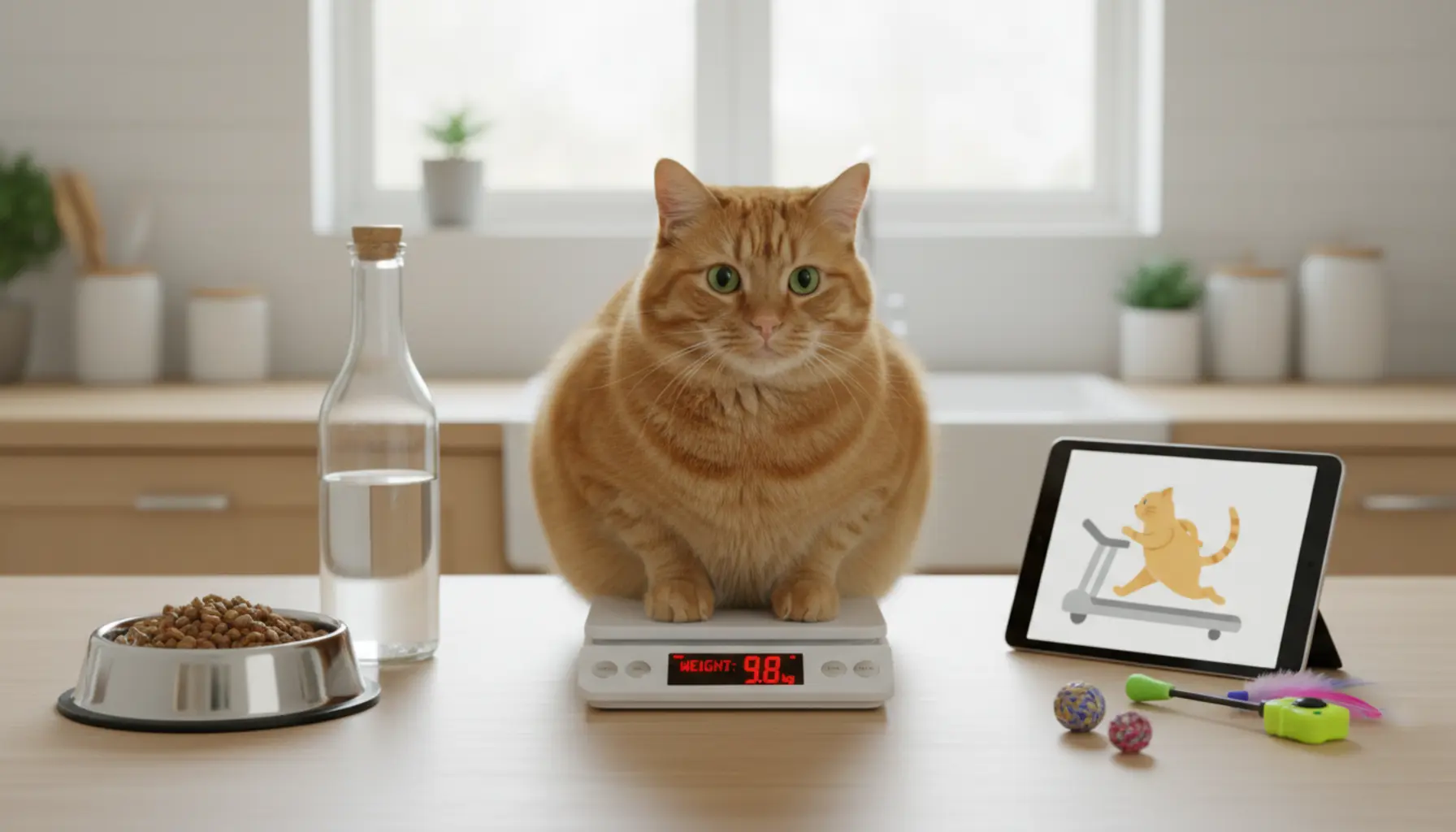
Find out how to help your cat lose weight effectively and safely. Proven tips and an action plan: recognizing overweight, a proper diet, and increasing your pet’s activity levels.
Learn how to help your cat lose weight in an effective and safe way. Practical advice: diet, physical activity, food choices, and obesity prevention in cats.
Table of Contents
- Obesity in Cats – How to Recognize the Problem?
- Why Do Cats Gain Weight? The Most Common Causes of Overweight
- Safe Weight Loss for Cats – Where to Start?
- Diet and Foods for Overweight Cats – What to Serve?
- Physical Activity for Overweight Cats
- Prevention – How to Prevent Obesity in Your Cat?
Obesity in Cats – How to Recognize the Problem?
Obesity in cats often develops gradually and can be difficult for owners to notice because we see our cats only in short “snapshots” during the day – at the bowl, on the sofa, while napping. Meanwhile, even slight overweight in cats greatly affects their health and lifespan, so early recognition is crucial. The first step is an objective evaluation of your pet’s body shape. A healthy cat, seen from above, should have a clearly visible waist – the silhouette resembles an “hourglass” with a gentle narrowing behind the ribs. In overweight or obese cats, the contours round out, the waist disappears, and the torso takes on a “cylinder” shape. From the side, a well-nourished but not overfed cat has a slightly tucked-up abdomen; if the belly hangs down, forming a “fat hammock” that swings when walking, this is a very clear sign of excess body weight. Equally important is the palpation (touch) test of the ribs: in a cat in good condition, ribs are easily felt under a thin layer of fat – simply run your hand gently along the chest. If you have to press hard or can’t feel the ribs at all, this indicates excessive fat. Also, check the base of the tail – in thin cats, the bones are obvious but not sharp; if you feel only a soft “roll” of fat, this is another sign of developing obesity. In veterinary clinics, the so-called BCS (Body Condition Score) is used – typically a 1–9 scale, where 1–2 means underweight, 4–5 is healthy, and 6–9 is overweight or obese in varying degrees. Consult your vet for instructions on how to assess BCS at home to regularly monitor if your cat’s weight is under control. Another pillar in recognizing obesity is objective weight data. Weighing cats is quick and painless – you can use a home bathroom scale (first weigh yourself holding the cat, then just yourself, and calculate the difference) or regularly use the scale at the vet clinic. For a non-neutered, average adult house cat, a typical weight is usually 3–5 kg, but this strongly depends on breed, sex, body structure, and individual predispositions. Therefore, instead of sticking to an “ideal” number, it’s better to set a target weight range with the vet and monitor any deviation above 10–15% of that value – this is considered overweight, and above 20% is considered obesity.
Obesity in cats is not just about looks or numbers on the scale but also a cluster of accompanying behavioral and health symptoms. Noticeable decrease in activity is a very common “silent” signal – a cat that used to play a lot now more often sleeps, no longer chases toys energetically, tires quickly, shuns jumping to higher ledges, scratching posts or windowsills. This could seem like “just laziness” or natural slowing with age, but extra weight makes every movement harder for the cat. Another important sign is impaired grooming – obese cats have trouble reaching their backs, base of the tail, and especially the rear and anal area. The fur in these areas becomes dull, matted, and dirty with feces. With long-haired cats, this might be less obvious, so while petting or brushing, check the coat thoroughly. Obesity may also cause snoring and noisier breathing at rest, especially in brachycephalic breeds (e.g. Persians, Exotics), which already have breathing predispositions. Worrying signs include trouble jumping up or down, avoiding the scratching post, or giving up their favorite observation points – if your cat opts for lower spots “because they are easier to reach,” this may signal joint pain or overload from excess weight. Another noteworthy sign is more frequent urinary issues (e.g. recurrent bladder infections), increased thirst and urination, or sudden appetite changes – these can indicate diseases that co-occur with obesity, such as diabetes or kidney disease. When assessing your cat for obesity, also consider their lifestyle: if the cat is neutered, lives strictly indoors, has constant access to a “bottomless” dry food bowl, and moves little, their risk of being overweight is very high. Just because a cat “constantly asks for food” or “seems always hungry” doesn’t mean their body actually needs that many calories – often it’s a reinforced behavior pattern, not a biological necessity. Carefully checking the silhouette, weight, behavior, and daily food and activity habits helps you catch the early signs of obesity, allowing you to take steps before excess weight leads to serious chronic illnesses.
Why Do Cats Gain Weight? The Most Common Causes of Overweight
Overweight in cats is rarely accidental – it’s usually the result of several overlapping factors, with diet, lifestyle, age, hormonal status, and health conditions playing key roles. The most common cause of weight gain is an excess of calories relative to energy needs. Cats are natural predators whose bodies are adapted to small, high-protein meals eaten after physical effort (hunting). At home, however, many cats are provided with constant access to a bowl of dry food, which is calorie-dense, often high in carbs, and easy to “graze” on all day. Even if a single portion doesn’t seem large, continuously topping up the bowl leads to regularly exceeding the daily energy limit. Owners often overlook the caloric content of snacks, table scraps, or “rewards” for good behavior – a few treats a day can add 20–30% extra calories above the basic requirement. As a result, the cat consumes more calories daily than they can expend, leading to fat accumulation. Diet quality is another issue – foods with lots of cereals, sugars, or fillers increase the risk of weight gain since they are high in calories and low in protein, thus less satiating. The feeding routine matters too: frequent meals, no set feeding times, “extra” portions from various family members, and not weighing portions all contribute to overfeeding far beyond what’s recommended by the food producer or veterinarian.
The other major factor is low physical activity, mainly due to the indoor lifestyle. Indoor cats often have limited opportunities for exploration, hunting, or climbing, and their day revolves around sleeping, eating, and short play episodes. Natural hunting instinct is not engaged as intensively as in free-roaming cats, who need real effort to find food. Lack of environmental enrichment (few scratching posts, shelves, hideouts, interactive toys) and minimal mutual play with the owner promote passivity and apathy – a bored cat frequently turns to food. The pace of weight gain worsens after neutering/spaying. The procedure lowers sex hormone levels, decreasing energy needs by about 20–30%, while often increasing appetite. If food amounts aren’t adjusted and activity doesn’t increase after neutering, most cats begin to gain quickly. Age also matters – young, active cats burn many calories, but as they age, activity decreases naturally, while food portions often stay the same. Finally, health and genetics play a role: some breeds (e.g. British Shorthair, Ragdoll, Persian) are more prone to fat accumulation, and some diseases like hypothyroidism, insulin resistance, chronic pain (e.g. osteoarthritis), or side effects of medications can reduce activity and slow metabolism. A frequently underestimated factor is the owner’s psychology – overfeeding as an expression of love, using food as the main reward or compensation for lack of time, ignoring portion guidelines, and not weighing the cat regularly all mean that extra weight creeps in almost undetected. All these elements interact, creating an environment conducive to weight gain where even small but consistent “caloric surpluses” eventually lead to serious obesity.
Safe Weight Loss for Cats – Where to Start?
Safe cat weight loss always begins with a visit to the veterinarian, not by arbitrarily “cutting” food portions. Overweight and obesity can be just symptoms of diseases such as diabetes, thyroid disorders, joint issues, or heart problems, so the first step is a full health check: clinical exam, dietary history, often blood and urine tests. The vet evaluates the cat’s condition using the BCS scale, determines the degree of obesity, and suggests a safe rate of weight reduction – usually targeting a loss of about 0.5–2% of body weight per week, depending on the starting weight and health status. Weight loss that’s too rapid is dangerous for cats and can cause hepatic lipidosis, a potentially fatal illness that develops if a cat suddenly starves or loses a lot of weight quickly. Another initial element is to determine the current diet – how much and what kind of food the cat is really eating, including treats, leftovers, and “feeders” in the household. It’s worth tracking everything in a feeding diary for a few days for a real problem overview. Only then, with professional help, can you calculate individual caloric needs, set a target weight, and choose food that allows weight loss, while still meeting the cat’s nutritional requirements – primarily high animal protein and appropriate fat to maintain muscle mass and target mostly fat for reduction. In practice, safe weight loss usually means switching food to a low-calorie, weight-loss (veterinary or high-quality “light”) product, which makes portion reduction easier. The number of calories is important, but so is the feeding method – for many cats, switching from a “bottomless bowl” to carefully measured portions at set times each day, usually as several small meals, works best – mimicking natural hunting cycles. A good tactic is to use a kitchen scale to weigh portions, rather than relying on “eye-balling” or cups, which are very imprecise. It’s also essential to limit or completely eliminate high-calorie treats – if you can’t give them up, replace them with part of the daily food ration set aside as “rewards.” Family involvement is crucial from the start: set clear rules (who feeds the cat, at what times, which foods are forbidden) and agree that showing “love” means playing and spending time together, not piling up food.
A very important and often overlooked initial step is reorganizing the cat’s environment and daily routines to support weight loss, not undermine it. Cats don’t eat just when hungry, but also out of boredom or to seek caregiver attention, so from the start, plan alternatives – more toys, activating playthings and interactions instead of food as a universal response to every “request”. Great solutions include slow-feeder bowls, snuffle mats, and “food puzzle” toys that require the cat to use its paws and brains to extract food – this prolongs mealtimes and provides a sense of “hunting” and effort. Also plan the first simple forms of activity: brief but regular play sessions with feather rods, string wands, balls, or toy mice, ideally 2–3 times daily for a few to several minutes, adjusting intensity to your cat’s abilities. Initially, avoid dramatic changes and strenuous exercises, especially with severely obese cats or those with joint issues – for these, exercise plans should be extra cautious. Simultaneously, be mentally prepared for the cat to loudly demand more food at first, meow at the bowl, or “beg” at the table – this isn’t cruelty, but a natural reaction to habit changes. Using a fixed daily schedule with rituals not linked to food, such as petting at set times, play sessions before bed, or fur grooming, helps. Also, plan regular progress monitoring early on: weigh your cat every 1–2 weeks on the same scale, preferably at the same time of day, and record results in a notebook or app. This allows you and your vet to adjust daily calories if needed – if weight drops too fast, increase food; if stagnant, further restrict calories or increase activity. The key to a safe start is combining professional health evaluation with a realistic feeding plan and small but consistent lifestyle changes for the cat and whole family, so the process is as stress-free and effective as possible.

Diet and Foods for Overweight Cats – What to Serve?
An overweight cat’s diet must be designed to limit calories, provide fully balanced nutrition, and be palatable enough that the cat doesn’t reject it at the outset. The key is to choose a wet food with reduced calorie content but high animal protein, since cats are obligate carnivores and shouldn’t lose muscle mass during weight reduction. Good weight loss foods (veterinary or “light”) feature higher protein, lower fat, and added dietary fiber, which increases the volume of meals and feelings of satiety. Check labels – animal meat or offal should be high on the ingredient list, while starch sources (wheat, corn, rice, potatoes) and simple sugars should not dominate. Wet foods, especially those with low fat, are particularly beneficial for overweight cats, offering fewer calories per 100g than most dry foods and more water, thus supporting hydration and urinary tract health. Wet food also appears like a larger meal, helping to reduce the “protest” of a hungry cat. That doesn’t mean dry food is always forbidden – some veterinary weight-loss diets come in dry form and are precisely balanced, but portions must be strictly measured, ideally with a kitchen scale, not “by eye.” One of the most common mistakes is simply reducing the amount of high-calorie food, instead of switching to a diet product – this makes the portion so small the cat is always hungry, and the food lacks key micronutrients. Another mistake is “starving” the cat. In cats, especially obese ones, too great a reduction in calories can cause fatty liver disease (hepatic lipidosis), a potentially fatal condition. Therefore, the type of food, portion size, and weight-loss pace should always be consulted with a vet, who can recommend the right diet – often a specialist veterinary diet strictly for the slimming period. With cats who have comorbidities (e.g. diabetes, kidney disease, digestive problems), the diet must also support management of those illnesses and weight loss, reinforcing the need for highly individualized feeding plans.
Besides choosing the right food, the way it’s served is vital. Instead of two large meals, offer several smaller ones – 3–5 portions daily – more akin to natural cat feeding and helping stabilize blood sugar. The daily ration calculated by the vet should be divided over the day and closely followed – every “extra teaspoon” adds up over the month to sabotage weight loss. Calories must include treats, which should be minimized for an overweight cat, or best replaced by part of the main ration as “rewards.” If you want to reward your cat, measure out, e.g., 10–15% of the daily dry food allowance for use as snacks during play or training. Also, implement “work for food” – snuffle mats, treat balls, food mazes, or slow-feeder interactive bowls require effort to get food, force slower eating, quicker satiety, and more activity. Absolutely exclude table scraps and human foods such as cold cuts, cheese, sauces, or baked goods – these are highly caloric, often salted or seasoned, and don’t provide what your cat really needs. If you have several cats, consider feeding them separately so the overweight cat can’t steal others’ food; use separate rooms at mealtimes, automatic feeders keyed to microchips, or direct supervision. Switch new food in gradually, over 7–10 days, mixing with the current diet to avoid gastrointestinal issues or food rejection by a picky cat. During weight loss, regularly monitor body weight (weekly, at the same time, on the same scale) and observe fur condition, energy levels, and bowl behavior – sudden lethargy, refusal to eat, or severe diarrhea are red flags needing immediate veterinary attention. The right diet and feeding method, combined with sensible activity increases, make weight loss safe, less stressful, and most importantly, effective in the long run.
Physical Activity for Overweight Cats
Physical activity is the second – alongside diet – pillar for a cat’s successful weight loss, but unlike dogs, cats rarely react to a simple “let’s go for a walk.” Understanding feline nature and planning movement so it’s both attractive and safe for the cat are key. In overweight cats, the cardiovascular, joint, and spinal systems are already stressed, so all activity increases should be gradual, starting with short, low-intensity play sessions. Start by observing current behavior: does the cat occasionally play spontaneously, or sleep most of the day? Does it prefer certain times of day (morning or evening) to be active? Work with this rhythm when planning playtimes at moments of natural alertness. The rule of thumb is several short play sessions daily for 3–5 minutes, gradually increasing to 10–15 minutes depending on the cat’s condition, instead of one long, exhausting bout. Watch closely during play for breathing and body language – if your cat starts panting, suddenly lies on its side, excessively licks itself, or shows discomfort, stop and let it rest. For obese cats, ensure a safe environment: remove slippery rugs, provide stable furniture, and only gradually increase height challenges, e.g., from a low stool before jumping directly to a windowsill. This minimizes the risk of joint and spine injury.
Effective activation for an overweight cat is primarily hunting play – movement should imitate natural hunting, where the cat stalks, chases, pounces, and “catches” prey. The most universal are feather rods or string wands, which can be dragged low over the ground, moving like fleeing prey, letting the cat successfully “catch” the toy at the end. For very heavy cats, begin with games that involve short sprints and stalking; only later add jumping. Balls and toy mice can also work, but many cats respond much better to toys operated by a human than ones that move “by themselves.” Accessories like snuffle mats, tunnels, cardboard hideouts, and food puzzle toys all help – compared to a regular bowl, puzzles and treat balls make cats move and think; part of the daily ration can be given this way, so there’s less idle snacking. For cats in small apartments, consider vertical enrichment: shelves, scratching posts, multi-level constructions that allow jumping and climbing tailored to ability. If the cat’s condition allows, gradually encourage climbing higher, e.g., move the favorite bed one level up, to gently increase energy expenditure without obvious “training.” Some cats also take to harness walks, but acclimatization must be very slow, with positive reinforcement, and only if the cat accepts it; many animals feel fear outdoors, not pleasure, which is counterproductive. Regardless of activity mode, consistency and positive associations are key: rather than forcing the cat to play, offer short, regular, attractive sessions matched to temperament – some cats love dynamic chases, others prefer more relaxed stalking. The activity plan should align with the feeding plan: play before meals works best, following the natural “hunt–eat–groom–sleep” cycle, which also helps appetite and daily routine. All household members should apply the same rules: instead of rewarding with hand-fed treats, use the “toy instead of snack” system and regularly monitor daily movement time. Thoughtful play, an enriched environment, and gradual increases in intensity make physical activity a normal part of cat life, supporting weight loss without stress or coercion.
Prevention – How to Prevent Obesity in Your Cat?
Preventing obesity in cats is much easier than later, long-term weight loss. That’s why it’s vital to implement healthy feeding and activity habits already with kittens or as soon as the cat joins your home. Awareness in feeding is crucial – instead of an “always full bowl,” strictly measured portions suited to body weight, age, activity level, and physiological status (e.g., post-neutering or with chronic illnesses) work best. Use measuring cups or a kitchen scale and follow the food producer’s advice, then, in consultation with your vet, adjust the amount while monitoring your cat’s shape and weight. “On demand” feeding (“because it meows”) encourages boredom eating, so establish a routine of 2–5 small meals per day, spaced evenly. Food quality also matters: balanced, complete nutrition with appropriate protein and moderate fat helps maintain healthy weight, while cheap foods with high cereal content, simple carbs, and flavor enhancers often promote overeating. Prevention also means a sensible approach to treats: they should be at most 10% of daily energy intake – it’s best to pick low-calorie products or use part of the main food ration as “reward” during play or training. Never give table scraps, especially fatty meats, sauces, deli meats, sweets, or foods toxic to cats (onion, garlic, chocolate) as these pack huge calories and disrupt the diet’s balance. A fundamental part of prevention is monitoring weight and body shape: don’t rely on “just looking” – weigh your cat monthly on a bathroom scale (hold the cat, subtract your own weight) and assess the Body Condition Score, checking for a waist, ease of feeling the ribs, and fat at the belly or base of tail. Even a small, repeat monthly weight increase is an alert to cut food or boost activity. Prevention starts especially early with neutered cats, since after surgery their energy needs drop while appetite rises – switch to a neutered cat food or lower daily calories right after castration instead of waiting for visible overweight. Education of every household member makes a difference: anyone in contact with the cat must know the feeding rules and never secretly overfeed, as even a few extra kibbles or “bites” daily can add up to over 10% more calories per day for a cat.
Beyond food control, obesity prevention is based on daily exercise and the right living environment that allow natural predatory and exploratory instincts. Rather than just leaving out a food bowl, introduce an element of “hunting” for food – use treat balls, food mazes, scent mats, or interactive feeders that make your cat move and think for the meal. This not only burns calories but also curbs boredom eating and boosts mental well-being. The second pillar of prevention is regular play with your cat – short, 5–10 minute sessions several times a day with rods, balls, or toy mice are much more effective than rare, intense exercise. For naturally calmer or older cats, take it gently: extend play sessions gradually and choose less strenuous activities, e.g., slow stalking with a rod on the floor, not just high jumps. The home should encourage spontaneous activity: scratching posts with shelves at various heights, tunnels, wall shelves, or cardboard hideouts that motivate climbing, jumping, and exploring, even if the owner doesn’t always have time to play. Emotional well-being matters too – stress, boredom, and lack of stimulation encourage so-called “emotional eating,” where food is sought for comfort or companionship. Establish a steady, predictable daily rhythm, with places for retreat and rest, and an adequate number of litter boxes, bowls, and vantage points (especially in multicat homes) to avoid tension and rivalry, which can lead to nervous overeating or, conversely, too little activity. Regular check-ups at the vet – at least annually, more often for older cats – help spot early weight changes, diseases encouraging weight gain (hormonal disorders, pain limiting movement), and allow ongoing diet corrections. In periods of increased weight risk (after diet change, surgery recovery, or clear activity reduction – e.g., after moving from a house with a garden to an apartment), increase feed scrutiny, add extra play, and watch your cat’s behavior more closely. A conscious approach to daily decisions – how much food to put in the bowl, whether to respond to each meow with a snack, or whether to spend a few minutes playing – determines in the long run whether your cat keeps its shape and avoids disease linked to obesity.
Summary
Obesity in cats is a serious issue requiring a comprehensive approach. The keys to success are early identification of overweight, understanding causes of weight gain, and consistent application of proper diet and increased physical activity. Regular monitoring, vet consultations, and appropriate prevention can effectively combat obesity and prevent its recurrence. Providing your cat with healthy feeding and activity habits is the guarantee of better health, longer life, and improved well-being for your pet.

