
Table of Contents
- Fleas in Cats – Symptoms and First Signs of Infestation
- Flea Life Cycle – Why Are They So Hard to Eradicate?
- How to Effectively Recognize Fleas in Cats?
- Treatment Methods: From Medications to Home Remedies
- Flea Prevention – How to Protect Your Cat and Home from Parasites?
- What to Do If Flea Infestation Recurs?
Fleas in Cats – Symptoms and First Signs of Infestation
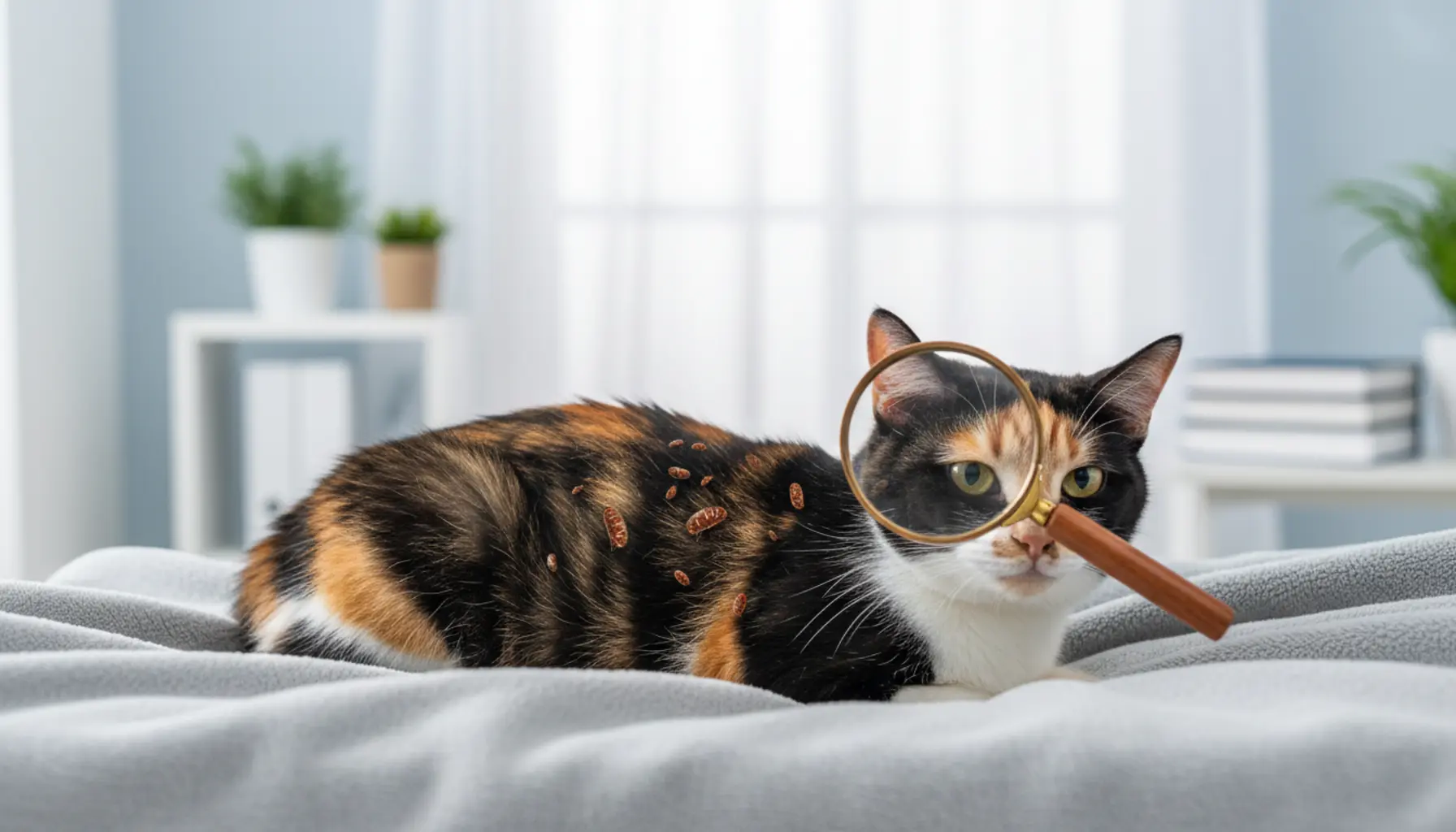
The first signs of flea presence in cats can be very subtle and easy to overlook, especially if your pet regularly grooms itself and has dense fur. The most characteristic sign is intense scratching and biting at the fur, especially around the base of the tail, along the back, the flanks, and the neck. A cat may suddenly interrupt its rest to scratch vigorously or nibble the fur in a specific spot. Often, this is accompanied by nervous shaking of the paw or tail, as if something suddenly pricked it. In some cats, the itching is so severe that the cat cannot focus on playing, eating, or resting, becoming irritable, withdrawn, or, conversely, overly stimulated. When petting your cat, you may feel small scabs on the skin, particularly along the spine and neck. These occur due to scratching and the skin’s inflammatory response to flea saliva, which is a strong allergen. Early and very important symptoms also include changes in the coat’s appearance – localized thinning of fur, dullness, hair breakage, and scaling resembling dandruff. In long-haired cats, sometimes the only visible sign is loss of shine and the appearance of mats caused by more frequent and anxious grooming.
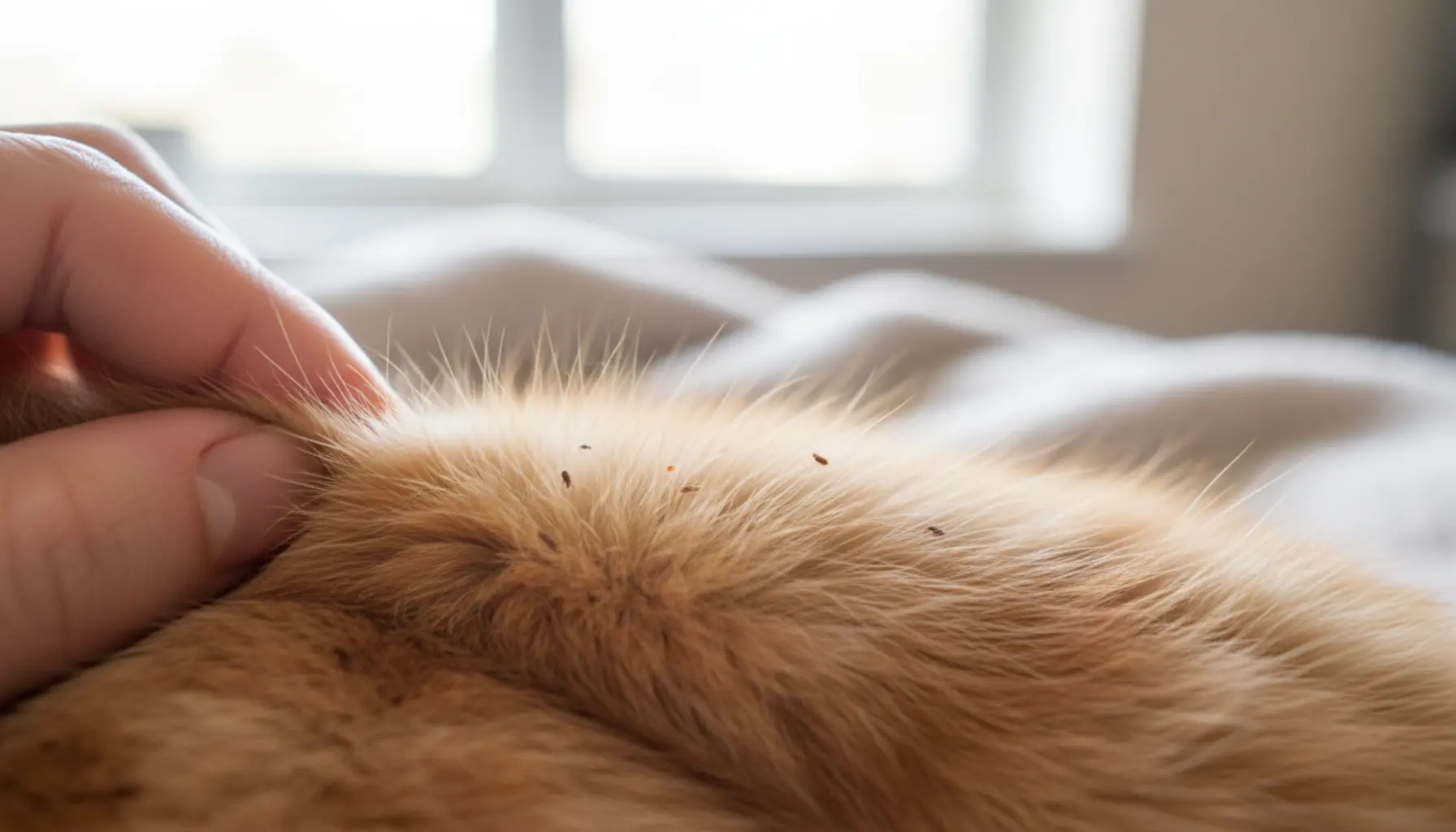
A typical but not always obvious sign is the appearance of so-called “black specks” in the fur – flea feces, made mainly of digested cat blood. The easiest way to spot them is while combing your cat over a white sheet of paper or a sink: after vigorously combing with a dense flea comb, tiny dark granules fall from the fur. If you moisten them with a little water, they begin to dissolve, leaving reddish-brown stains – confirming these are flea droppings, not ordinary dirt. Adult fleas are very small (1–3 mm), laterally flattened, move very quickly, and can jump impressively far compared to their size. Sometimes you may see them “running” across the belly, inner thighs, or around the cat’s neck, especially where the fur is lighter and sparser. The longer the infestation lasts, the more pronounced the skin changes. The skin can become reddened, covered with numerous bumps, scratches, and even oozing wounds. Sensitive cats may develop allergic flea dermatitis (AFD, FAD), where even a few flea bites trigger intense itching and extensive lesions – often on the back, lumbar region, neck, around the tail, and the backs of the thighs. Numerous small scabs appear, the fur may be chewed nearly to the bare skin, and due to constant licking, there may be patchy hair loss. An important, though often underestimated, sign are also general symptoms: apathy, less willingness to play, weight loss despite apparently good appetite, and in kittens – obvious weakness and poor development. Fleas feed on the host’s blood, so in cases of intense infestation, particularly in young, elderly, or weakened cats, anemia may develop – mucous membranes in the mouth and eyes become pale, the animal tires easily, sleeps much, and is reluctant to move. Some cats also experience digestive changes, such as diarrhea or vomiting, though these are less specific and may have other causes. Another early signal may be the sudden worsening of skin problems or recurrent “allergies” previously difficult to link to any factor – fleas are often the missing piece of the puzzle. Remember, your cat does not need to go outdoors to catch fleas – parasites can be brought into the house on clothing, shoes, or survive in stairwells, basements, or garages. That’s why any sign such as itching, skin changes, “black dots” in the fur, sudden licking of a particular area or deterioration in your cat’s condition should prompt the owner to carefully examine the cat’s skin and surroundings and perform the simple white paper test while combing. Early detection of these first, often underestimated symptoms allows you to respond before the infestation develops to the point where lengthy and more complex treatment and decontamination of the entire home are needed.
Flea Life Cycle – Why Are They So Hard to Eradicate?
Effectively eliminating fleas in cats is such a challenge mainly because of the parasite’s very complex and highly efficient life cycle. Fleas do not spend all their lives on the animal – the cat is primarily a “restaurant” and “breeding ground” for them, while most developmental stages (eggs, larvae, pupae) are found in the environment: in bedding, carpets, cracks in the floor, on the couch, in a blanket in the carrier, or even in owners’ clothes. An adult flea that finds a cat feeds almost constantly, consuming blood and laying huge numbers of eggs – one female can lay several dozen eggs per day, and during her life hundreds, even over a thousand. These microscopic, white, oval eggs do not stick firmly to the fur; they easily fall off the cat and scatter around the home, especially where the cat sleeps or passes by. This means just days after the first fleas arrive, you can have a “biological bomb” of eggs at various stages of development scattered throughout the house, invisible to the naked eye. Under suitable conditions – moderate temperature and humidity – eggs develop rapidly. Usually within 2–5 days, larvae hatch from the eggs. These do not stay on the cat but hide deep in textiles, crevices, and corners, seeking dark, quiet places. Flea larvae are active, but avoid light; they feed on organic crumbs, skin flakes, and above all on the feces of adult fleas, i.e., the so-called “black pepper” seen in the fur and bedding. This closes the “small loop” of dependence – adult fleas on the cat produce droppings that are the perfect food for larvae developing in the environment. At home, the larval stage may last about a week to several weeks, depending on the temperature, humidity, and food available. Once the larva reaches the right stage, it spins a cocoon and enters the pupal stage. The pupa is one of the main reasons fleas are so hard to eradicate – the cocooned pupa is extremely resistant to most chemical agents and can “wait out” adverse conditions. The cocoon attaches to fabric fibers or dust, and its surface quickly covers with debris, making it nearly invisible. Pupae may remain dormant for weeks or, under favorable conditions, even longer, waiting for signals indicating a host is near: floor vibrations, warmth, carbon dioxide from breath, air movement. When such stimuli occur, an adult flea hatches from the cocoon and can jump onto a passing cat within minutes, starting to feed intensively almost immediately. This explains why carers often feel that “fleas come out of nowhere” – in reality, they were maturing as pupae in the carpet or under the baseboard, and only the movement of a piece of furniture, vacuuming, or the cat returning to a favorite spot triggered their emergence. An additional problem is that all stages – egg, larva, pupa, adult – may exist simultaneously in the home. When you notice adult fleas on the cat and begin treatment, there may be thousands of eggs and larvae of varying ages present in the environment, which will continue to mature into new fleas over subsequent days or even weeks. Even a highly effective medication that kills adult fleas will not end the problem right away, as new generations will hatch from the surroundings. That’s why fighting fleas requires a system approach and patience: not only treating the cat with a product effective against adult fleas (ideally one that also limits egg fertility or development), but also regularly and thoroughly cleaning the whole house – vacuuming carpets, sofas, mattresses, washing blankets and bedding at high temperatures, and in the case of large infestations using insecticides safe for the pet’s environment. By mechanically removing eggs, larvae, and some pupae, you support the action of medications used on the cat. Remember, the flea life cycle may progress faster or slower depending on temperature – in warmer months, with underfloor heating or well-heated homes, fleas reproduce quickly and the whole cycle can take as little as 2–3 weeks. Meanwhile, in cooler conditions, it slows down, but the pupal stage lasts longer, creating a reservoir from which parasites “spring” once conditions improve. Understanding this mechanism is key to not discouraging yourself by a lack of immediate results – even with effective treatment and thorough cleaning, time is needed to break the flea cycle at all stages and prevent their recurrence.
How to Effectively Recognize Fleas in Cats?
Effective identification of fleas in a cat requires careful observation not only of the animal itself but also its behavior and home environment. The first and most frequently noticed signal is a change in the cat’s behavior – the pet starts to scratch more intensely, bite at its fur, or suddenly “jump up” and react violently to bites, as if something suddenly bit it. Particularly characteristic is persistent licking and scratching of the base of the tail, inner thighs, back, and neck. Many cats also obsessively lick their bellies. Although cats care for their hygiene daily and may groom themselves often, during a flea infestation, grooming becomes obsessive and interrupts normal activities such as playing or eating. Sensitive animals show irritability, hyperactivity, mood deterioration, and even avoidance of contact – the cat may hiss or spit when touched on itchy areas. Observant carers should also note sleep changes: the cat wakes more often, switches positions, nervously shakes paws or flicks its tail. Another helpful sign is the state of the coat – in the case of fleas, you may see thinning of the hair in bitten areas and small scabs and redness. Especially dangerous is allergic flea dermatitis (FAD), where even a single bite triggers a vigorous immune response: scattered bumps, redness, and the cat may self-mutilate due to intense scratching and biting. For young, small, or chronically ill cats, long-term presence of fleas can lead to anemia – pale gums, weakness, lethargy, reduced playfulness, and general decline become noticeable.
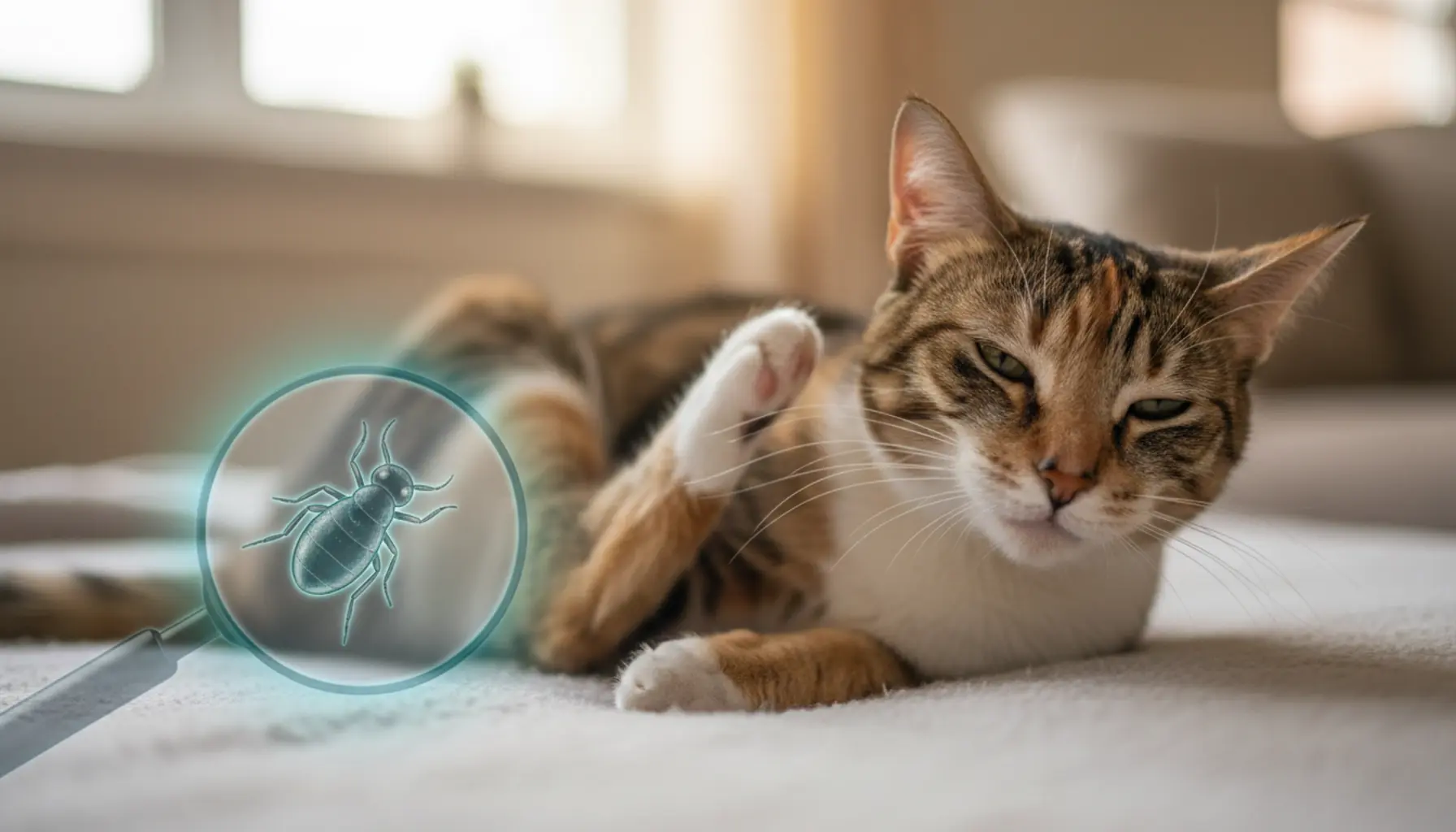
The key component of effective recognition is thoroughly examining your cat’s fur and skin, best done in good, natural light or using a lamp. To check if fleas are indeed present, you should use a special dense flea comb – combing against the fur, especially on the back, base of the tail, around the neck, and belly. Adult fleas are small (about 2–3 mm), dark brown, fast, and difficult to catch, but with proper lighting, you can see them move quickly along the skin or sometimes literally jump from place to place. A very helpful test is searching for so-called flea dirt, which looks like tiny black spots resembling ground pepper, easiest found at the base of the tail, between hairs, or on the cat’s bedding. You can do a simple home test: the “black crumbs” combed from the fur should be placed on a damp white paper towel or cotton pad – if reddish-brown streaks appear after a moment, that means you are dealing with digested blood, i.e., flea feces. This is a very reliable signal of flea presence, even before spotting adult fleas themselves. It’s also worth checking places where your cat likes to rest: bedding, blankets, favorite armchairs, or window sills. On light materials, it’s easier to see both flea dirt and stray fleas that have fallen from the animal. In advanced cases, tiny whitish eggs or thin, worm-like larvae may appear in cushion seams, near baseboards, or near bedding, though they are hard to see with the naked eye. Remember, some cats, especially the most dedicated groomers, may not present classic itching symptoms yet still carry fleas; in these, fleas and their droppings are harder to detect, so at every unexplained skin change, persistent hair loss, or worsening condition, parasitic infestation should be considered. In case of doubt, visiting a veterinarian for a lamp examination, combing, and dermatological analysis can help determine the severity and rule out other skin diseases resembling flea signs, such as mange or ringworm. The sooner fleas are correctly identified, the faster you can implement targeted treatment and, in parallel, decontaminate the environment, reducing the risk of further spreading parasites at home.
Treatment Methods: From Medications to Home Remedies
Effective flea treatment in cats should always be based on tested and approved products for animals, with home remedies serving only as a supplementary role. The first step after recognizing a flea infestation should be consultation with a veterinarian to select the appropriate medication depending on the age, body weight, health condition, and any comorbidities. The most popular products are spot-on drops applied to the skin at the nape of the neck, oral tablets, sprays, and anti-flea shampoos. Spot-on drops contain insecticidal or insect growth regulators (e.g., fipronil, imidacloprid, fluralaner, selamectin), working systemically or locally to kill adult fleas and, in some cases, interrupt the development of larvae and eggs. The advantage of drops is their long-lasting effect (usually 3–4 weeks), easy application, and relatively low frequency of administration. It’s essential, however, to follow instructions: do not bathe the cat for several days before and after application, apply the product directly to the skin and not just the fur, and do not let the cat or other animals lick the treated area. Oral anti-flea tablets are increasingly popular, especially for cats who resist topical applications or who live with young children (less risk of a child touching the medicine on the fur). They work systemically – active substances circulate in the cat’s body, killing fleas that bite. Some tablets provide protection for several weeks or even months, but precise dosing according to body weight is mandatory. Anti-flea sprays can be used both on the animal and in its environment, though most vets recommend them as a supplement rather than the primary solution. Flea shampoos can help remove parasites both mechanically and chemically, but their effects are short-lived – without simultaneous use of drops or tablets, fleas quickly return. Sensitive groups, such as kittens, pregnant, nursing, elderly, or chronically ill cats (e.g., with kidney or liver conditions), require very careful product selection; under no circumstances should “off the cuff” products be used or those intended for dogs. Some substances that are safe for dogs are toxic to cats (e.g., permethrin), so never use dog drops or collars “out of desperation.” Experimenting with pet medications or using smaller doses of dog products can result in severe poisoning, seizures, or even death. A very important treatment component is simultaneous protection of all animals in the household – if one cat has fleas, in practice all cats and dogs are at risk. They should be treated together, not “one at a time,” to avoid the vicious cycle of reinfestation. Supplementing pharmacologic treatment is intensive flea control in the environment. This means frequent vacuuming of carpets, upholstery, and places where the cat sleeps, washing blankets, beds, covers, and toys at high temperature, and for severe infestations, using professional-grade room insecticides. Many require removing animals from the home during use, so choose products recommended by veterinarians or professional pest-control companies. Simply combing your cat, although helpful, is insufficient – it only removes part of the adults and “flea dirt” but does not reach larvae and eggs hidden in gaps, fabrics, and carpets. Using several methods at once – products for the cat, environmental hygiene, and regular vacuuming – significantly increases the chances of quick and long-lasting control.
Many people seek home remedies for cat fleas, but it must be stressed that natural methods do not replace professional treatment, and some may be dangerous. The most common home approach is regular combing with a dense flea comb over a white card or tub – this not only removes some adult fleas and their droppings but also helps monitor treatment effectiveness. This is a completely safe and useful method as an adjunct, but demands system and patience, especially in long- or dense-coated cats. Some carers bathe their cats in lukewarm water with gentle pet shampoo (never household soap or detergents!), which may temporarily remove some parasites, but most cats dislike baths, making it highly stressful. Importantly, washing alone without subsequent anti-flea treatment will not stop an infestation – fleas from the environment will quickly return to the host. As support, more frequent cleaning and washing fabrics should be introduced, not as an “alternative” but as a core pillar of effective therapy. Powerful vacuuming, especially around baseboards, under furniture, and on sofas and chairs, helps remove eggs, larvae, and some pupae. After vacuuming, the bag or dustbin should be emptied outside the home to avoid redepositing parasites. Online, many “natural remedy” recipes circulate using essential oils (e.g., tea tree, lavender, eucalyptus, peppermint) or vinegar, but these are particularly risky for cats. Cats have sensitive nervous systems and unique liver metabolism, making many essential oils toxic even in small doses – they may cause vomiting, drooling, neurological disorders, and, with greater exposure, liver damage. Applying vinegar, spraying with mixtures from the internet, or rubbing garlic on the skin is a pathway to irritation, contact allergies, and poisoning rather than treating fleas. Folk methods such as garlic collars, rubbing fur with lemon, or using table salt on the fur are ineffective at best, harmful at worst. Even over-the-counter flea collars should be chosen carefully; some contain substances that irritate cats or work very poorly. If a collar is to be used for protection, it should come from a reputable manufacturer and be recommended by a veterinarian. Be critical of advice from online forums and social groups – something that “helped the neighbor’s cat” is not always safe or effective. The key to wisely using home remedies is seeing them only as additions to therapy based on approved preparations, not as substitutes. Combing, cleaning, washing, and frequent fur checks speed up recovery, reduce the parasite population, and make your cat more comfortable, but the foundation remains an appropriately chosen product and consistent protection of both the cat and its living environment for the full duration needed to break the flea life cycle.
Flea Prevention – How to Protect Your Cat and Home from Parasites?
Effective flea prevention in cats is based on three pillars: consistent protection of your pet, maintaining a clean environment, and attentive monitoring by the owner, who can quickly catch early warning signs. The most important element is regularly using veterinarian-recommended flea prevention products – even for strictly indoor cats. Fleas can be brought indoors on shoes, clothing, from other animals, or even by small rodents or pigeons on the balcony, so an “indoor lifestyle” does not mean your cat is safe. The vet chooses the product based on age, body weight, health status, and lifestyle. The most common preventive products are spot-on drops applied to the nape of the neck, long-acting tablets, and insecticidal collars – each with its own benefits and duration of action. Spot-on drops typically protect the cat for about 3–4 weeks, tablets may work from a few hours (for rapid clearance of infestation) up to a month, while modern collars often stay effective for several months, which is convenient for busy owners. Strict adherence to reapplication or replacement schedules is key – missing even a few days can create a “window” in which newly emerged fleas quickly multiply. To avoid forgetting doses, many people use smartphone reminders or special veterinary apps. Preventive protection should cover all animals in the home: if a dog, rabbits, or ferrets also live with your cat, each should receive a safe, species-appropriate product. Using canine products on cats is dangerous, especially those containing permethrin; labels should always be checked, and never split one product between species. Prevention also involves routinely checking your cat’s fur – combing with a flea comb, observing the skin near the tail, neck, and belly, checking bedding and favorite sleeping places for black specks of flea dirt. Even with pharmaceutical protection, periodic fur examination helps catch any breakthrough in protection or mistakes in application (for example, if the cat licked off part of the substance after applying drops). Another preventive element is maintaining the cat’s general immunity – a balanced diet, maintaining healthy weight, reducing stress (e.g., by providing hideaways, scratchers, shelves), and regular veterinary check-ups reduce the risk of severe allergic reactions and complications should flea contact occur. A well-nourished, cared-for, and less stressed cat has healthier skin, less prone to secondary bacterial or fungal infections after bites.
The second, equally important pillar of prevention is environmental control, since most of the flea population (eggs, larvae, pupae) develops away from the host – in carpets, floor cracks, cat blankets, beds, upholstered furniture, or even car interiors. Regular vacuuming of the entire home, especially places where the cat likes to rest, is one of the most effective everyday ways to minimize the risk of infestation. Use a vacuum cleaner with strong suction, preferably with a HEPA filter or disposable bags you can quickly throw out – ideally in an outdoor dumpster to prevent larvae and adult fleas from reentering the house. Additionally, beds, blankets, pillows, or mats your cat sleeps on should be washed at high temperature (min. 60°C) as often as practical, and, if possible, dried in a tumble dryer, where heat and mechanical movement help destroy eggs and larvae. Homes with lots of carpeting and upholstered furniture should be deep-cleaned or steam cleaned at least every few months, reducing potential hiding spots for parasites. During high-risk seasons (warm spring, summer, early autumn, and also winter in heated homes), specialized environmental sprays with insecticides and insect growth regulators may be used to prevent larvae from reaching adulthood. Such products must be used strictly according to instructions, airing out rooms, and preventing cats from contact with residue until surfaces are completely dry. Prevention also means restricting your cat’s contact with potential “carriers” – if friends visit with dogs, or your cat goes out to an enclosed yard, make sure all interacting animals have up-to-date flea protection. Owners of outdoor cats should note that these cats face higher parasite exposure risk and thus are commonly advised to use year-round prevention. You can also adopt habits such as hanging outer clothing in an easy-to-clean area, taking off shoes at the door, washing blankets and throws where your cat sleeps more often, or avoiding bringing used textiles like rugs and blankets into the home without washing first at high temperature. Combined effort here – consistent product use, careful observation, and environmental hygiene – drastically reduce the likelihood and extent of flea infestations, even if one occurs despite best efforts.
What to Do If Flea Infestation Recurs?
Recurrent flea infestations are one of the most frustrating problems for cat owners – it may seem the medications “don’t work” or the parasites are extremely resistant. In practice, it is usually due to interrupted protection cycles, insufficient environmental disinfection, or failing to treat all animals at home. The first step in case of recurrence should be to carefully confirm the issue – check your cat’s fur again in good light, use a dense flea comb, and place any “flea dirt” found onto a damp tissue. If the specks turn reddish-brown, it indicates digested blood and confirms a flea presence. New symptoms such as intense scratching, biting at the base of the tail, formation of scabs, or licking paws often mean that eggs, larvae, and pupae are still present in the environment and continue to “fuel” the infestation. Therefore, it is crucial to return to basics and analyze whether all actions so far were consistent: was the product used every few weeks (per the leaflet), was it suited to the cat’s body weight and age, and was it prematurely removed by bathing or excessive grooming? For recurring cases, it’s essential to contact the veterinarian, ideally describing used products and frequency. The vet might advise switching product types (e.g., from spot-on drops to tablets, or combining approaches), since some act faster on adults, others also block egg development. Sometimes combination therapy is needed – a one-off tablet killing fleas quickly plus a longer-acting product maintaining protection for weeks. Remember, all dogs and cats in a home must be treated simultaneously – if even one is left untreated, it becomes a reservoir continuously reinfesting others. In severe recurrences, the vet may suggest blood tests or fecal exams for tapeworms, since ongoing flea infestations lead to anemia and intestinal parasites; these complications require concurrent treatment, as flea removal alone won’t fully restore your cat’s health. It’s also important to check if your cat suffers from allergic flea dermatitis (FAD) – even single bites can cause intense itching and lesions, which the owner may mistake for massive infestation, even if actual flea numbers are now low. In such cases, the veterinarian may introduce antipruritic and anti-inflammatory therapy, improving the cat’s comfort and reducing self-inflicted skin injury and secondary bacterial infections.
The second, equally important action in the case of recurring fleas is intensive and consistent environmental intervention. Remember, only a small percentage of fleas live on the animal itself – most developmental stages are hidden in carpets, floor cracks, upholstery, bedding, or blankets. If you previously focused mainly on the cat’s treatment and only “symbolically” cleaned the home, recurrence is almost inevitable. During a new outbreak, implement an intensive cleaning plan covering daily vacuuming for several weeks, with particular focus on where the cat spends time – beds, favorite chairs, under the sofa or bed. Immediately dispose of vacuum bags, or if it’s bagless, empty and wash the container with hot water and detergent; keeping a full bag in a warm place invites hatching fleas. Fabrics such as blankets, beds, covers, and towels used by cats should be washed as hot as safely possible (ideally 60°C) and, if possible, tumble dried – high heat kills larvae and eggs. Additional home hygiene can include environmental sprays or foggers, ideally chosen with veterinary advice for cat and human safety; follow manufacturer instructions, remove animals while spraying, and air thoroughly. If the home is large, multi-level, or carpeted, it may be worth considering professional pest control if fleas recur despite your efforts. At the same time, review possible “external” sources – outdoor cats pick up fleas in basements, yards, stairwells; indoor cats may be exposed through pet dogs, visiting guests’ animals, or even owners’ clothes (flea eggs can come in on shoes or pants). In such cases, restricting contact with outside carriers, like avoiding animal visits or also protecting any dog that goes out, can help. If infestations regularly recur, check how consistently you apply treatments – many products need to be administered exactly on schedule (e.g., every 4 weeks, not “about every two months”), or else the protection period shifts and fleas can multiply again. Set calendar or app reminders, and consider long-acting products if you tend to forget. For cats with persistent recurrences, year-round prevention, not just “seasonal,” may be sensible – fleas can survive and reproduce indoors even in winter. Lastly, ensure your cat’s overall health: well-balanced nourishment, stress reduction, regular check-ups, and vaccinations support the immune system, which doesn’t eliminate fleas directly but helps your cat better withstand infestation and recuperate after treatment, minimizing risks of skin and systemic complications.
Summary
Fleas in cats are a common problem that should never be ignored – prompt symptom identification and effective therapy are key to your pet’s health. By understanding the flea life cycle, you can more effectively combat them and prevent future infestations. Proper prevention, regular skin checks, and appropriate, high-quality products are essential for protecting not only your cat but your whole home. If the problem recurs despite all efforts, consult your veterinarian and ensure comprehensive treatment and home hygiene so your cat feels comfortable and safe.

