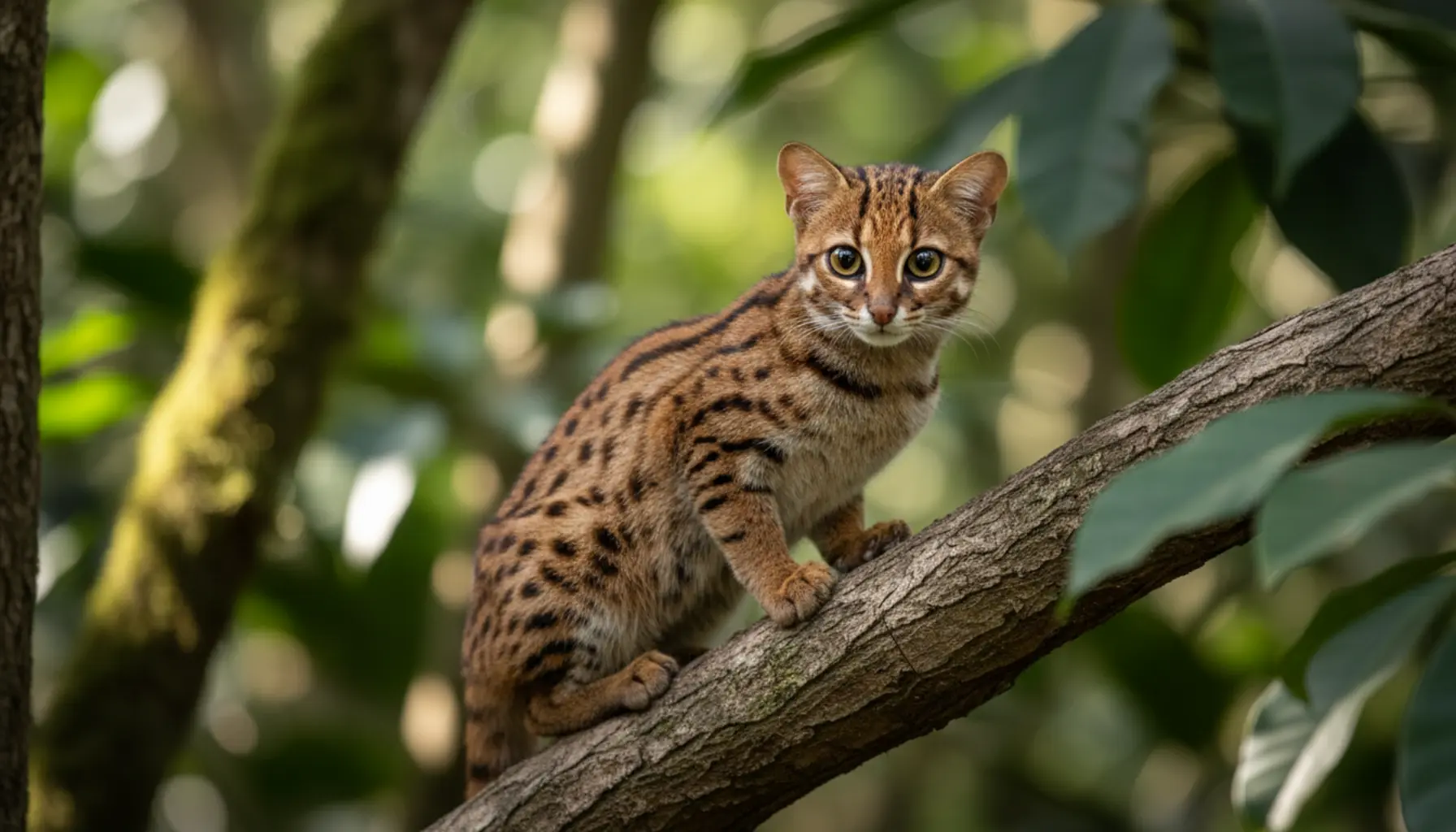
The rusty-spotted cat is the smallest wild cat in the world, captivating with its rusty fur and unique hunting habits. Its natural environment extends from India to Sri Lanka, where it perfectly camouflages itself among dense thickets. Discover intriguing facts about the life, diet, and threats of this extraordinary and little-known creature.
Table of Contents
- Introduction to the Rusty-spotted Cat
- Characteristics and Appearance of the Rusty-spotted Cat
- Habitat and Geographical Distribution
- Diet and Hunting Habits
- Interesting Facts about the Rusty-spotted Cat
- Threats and Species Protection
Introduction to the Rusty-spotted Cat
The rusty-spotted cat, also called Prionailurus rubiginosus, is a true gem in the world of wild cats and simultaneously the smallest representative of this family in the entire world. An adult often weighs only 0.8–1.6 kg, which is less than an average domestic cat, yet it remains a full-fledged, perfectly adapted predator. Its name derives from its distinctive rusty-brown fur, covered with small spots and flecks forming a unique mosaic of colors, excellent for camouflaging in its natural habitat. In nature, the rusty-spotted cat is found primarily on the Indian subcontinent and Sri Lanka, inhabiting both dry forests and dense thickets, mosaic farmlands, and rocky areas overgrown with shrubs. For many people seeing photos or videos of this cat for the first time, it is shocking that such a tiny animal leads a completely wild life and has nothing in common with domestic “mini cats” bred for their looks. The rusty-spotted cat is a secretive species—preferring nocturnal and crepuscular activity, and spending days in hideouts such as dense shrubs, tree hollows, rock crevices, or abandoned burrows of other animals. Thanks to its small size, it can use even the smallest nooks as shelters, which not only offers protection from predators but also aids in launching surprise attacks on prey. Despite its petite build, the rusty-spotted cat displays exceptional agility and speed. Studies and camera trap observations show that it can travel considerable distances at night in search of food, and its diet is surprisingly varied: eating small rodents, birds, lizards, insects, and sometimes amphibians or the young of other small mammals. It combines a delicate, almost “plush” appearance with highly effective hunting tactics—often surprising those used to seeing wild cats as large, fearsome predators. In popular culture, the rusty-spotted cat started appearing relatively recently—its recognition has increased thanks to social media, wildlife camera photos, and educational materials from conservation organizations. As a result, it has earned a reputation as the “smallest tiger in the world”—a term referring to both its spotted fur and its predatory nature. Although it looks unassuming, it is very territorial and can be surprisingly brave towards its own species and potential threats, emitting loud hissing and growling sounds, much louder than its stature would suggest.
From a scientific perspective, the rusty-spotted cat is extremely interesting because it displays a unique set of adaptations for living in mosaic environments where fragments of natural habitats are interlaced with farmland and areas near human settlements. It is thought that this species was once widespread across diverse Indian and Sri Lankan forest ecosystems, but has gradually been driven out by agricultural expansion, urbanization, and habitat fragmentation. Despite this, the rusty-spotted cat shows some ecological flexibility—it can be found in both dry deciduous forests and moister tropical forests, on the edges of rice fields, tea plantations, or on lower mountain slopes, provided there are enough shelters and small prey. Modern field research methods—such as camera traps, GPS telemetry, and DNA analysis from scat—play a key role in understanding its ecology, enabling researchers to track its movements, breeding behavior, and diet without excessive interference. The rusty-spotted cat has several subspecies differing slightly in coloration and size, resulting from geographic isolation and adaptation to local climates and food sources. Unfortunately, despite growing interest from scientists and nature enthusiasts, much about its biology remains unknown—many areas of occurrence are poorly studied, and its nocturnal lifestyle and tiny size make observation difficult. The cat is often mistaken for juveniles of other wild cats or feral domestic cats, thus skewing field observation statistics. Effective conservation planning—such as designating protected areas, migration corridors, or educating local communities—requires reliable data on population size, trends, and threats. Consequently, recent years have seen increased engagement by NGOs and local authorities in inventories and monitoring projects for the rusty-spotted cat. There is also growing awareness that conserving this small species can bring wide ecosystem benefits: by securing its habitats, many other less-known but equally important species of plants and animals are protected in the process. The rusty-spotted cat is thus not only an object of fascination but also a sort of “flagship species” for biodiversity conservation in one of the world’s most populated and human-altered regions.
Characteristics and Appearance of the Rusty-spotted Cat
The rusty-spotted cat, also known as the spotted rusty cat or rusty-spotted wildcat, is a real miniature predator with a silhouette resembling that of a domestic cat, though even more delicate and fine-boned. Adults usually reach a body length of 35–48 cm, with a relatively short tail measuring about 15–25 cm, giving their shape compact proportions. Weight typically ranges from 0.8 to 1.6 kg, with females being slightly lighter and smaller than males. The body is slender but well-muscled, and the short, agile limbs allow for fast movement through dense thickets, rocks, or cluttered areas near human settlements. A distinctive feature is the relatively large head with a rounded skull and broad forehead. The snout is not elongated—short and rounded, with a subtly marked muzzle, giving the cat a “youthful” appearance that enhances its charm in social media. Ears are medium-sized, rounded at the ends, and set relatively high on the sides of the head, visually widening its upper part. The inner side has soft, light fur, while the outside is usually a uniform, darker color without distinct spots or stripes. The eyes are large, round, forward-facing—typical for predators hunting mainly at dusk or night; their color ranges from yellowish to golden-brown, sometimes with an olive tint. Large pupils can expand significantly to efficiently use low light, and the glow seen in night photos is due to the tapetum lucidum, improving night vision. The whiskers (vibrissae) are relatively long and contrasting—white or cream—located on both sides of the muzzle and above the eyes, playing an important role in spatial orientation in darkness and dense vegetation. The tail, though not as bushy as that of some other wild cats, is densely covered in hair and flexible; it aids in balance during jumps over rocks, branches, or unstable terrain. Paws are small but extremely dexterous, with fully retractable claws, enabling both silent stalking and agile climbing. Movements are smooth and flexible—the cat can move almost soundlessly, which greatly increases its hunting efficiency and ability to avoid larger predators at such small sizes.
The most distinguishing feature is the fur—from which it took its Polish name—a warm, rusty-brown color dominates the back and sides. The coloration varies regionally and individually: some cats are lighter, more beige-gray, others intensely reddish, strongly referencing the color of leaves, dry grass, or reddish-brown soil in its habitats. Against this background, small, round or slightly elongated spots are scattered, usually darker than the base—brown, chestnut, sometimes almost black. On the flanks, these spots form an irregular yet dense pattern, effectively breaking up the animal’s outline among the shadows and light under the tree canopy. The back may be somewhat darker and less clearly marked, while the shoulders and thighs have short stripes. The head is marked with fine yet clear features: usually two or three darker streaks run toward the back from the forehead, and lighter or darker lines run from the eye corners toward the ears and cheeks, emphasizing the facial shape. The snout and chin are lighter, white-creamy, as are the lower neck, chest, and belly, which show markedly paler tones, with subtle, blurred spots or none at all. Legs often have small dots or short, irregular stripes, fading toward the paws. The tail typically has several darker rings at the end and a dark tip. This fur pattern and coloration are the result of long evolution adapting the species to mosaic environments—from dry wooded lands to plantations and village edges; in each of these places, the rusty-spotted coat keeps it almost invisible. The fur is relatively short but dense and soft, providing good insulation during cool nights and monsoon rains. Unlike some other small wild cats, there’s no pronounced seasonal change in fur length, though local populations may have subtle climate adaptations. Subtle differences in shade, spot size and arrangement, and facial details allow researchers to recognize individual cats from camera trap photos—crucial for monitoring populations. All these traits—delicate build, big eyes, rounded ears, and spotted rusty-brown fur—combine kitten-like “cuteness” with perfectly functional nocturnal predator morphology.
Habitat and Geographical Distribution
The rusty-spotted cat has one of the most restricted, yet surprisingly diverse in habitat, ranges among wild cats. Naturally, it is found primarily on the Indian subcontinent—mainly in India and Sri Lanka—with a few confirmed records from Nepal and possible ones from Pakistan. In India, it has been recorded in both dry and semi-arid zones, as well as in mosaic agricultural landscapes—from the plains of Rajasthan and Gujarat to the moist regions of central and southern India. In Sri Lanka, it inhabits both lowlands and higher elevations, but is more frequently found at lower altitudes, where a mosaic of forests, fields, and shrubby thickets provides optimal conditions for hiding and hunting. Unlike larger felids often associated with vast primary forests, the rusty-spotted cat prefers finely fragmented habitats—the edges of forests, dense thickets, small woodlots, riverside vegetation clumps, and traditional agricultural land with hedgerows, field margins, and small tree stands. Such a mosaic favors an abundance of small vertebrates—the cat’s main prey—as well as countless hiding places, such as dense grass tufts, tree roots, or rock crevices. In many places, it is recorded near human settlements—on the peripheries of villages, plantations, even the outskirts of small towns, where large populations of rodents associated with agriculture and grain storage occur. This proximity to humans is a double-edged sword: on one hand, it provides food, on the other, it increases collision, persecution, and accidental poisoning risks from crop protection chemicals. Camera trap studies show the rusty-spotted cat eagerly chooses areas with dense vegetation but does not completely avoid open mosaics—hunting at the edges of fields, orchards, or pasture borders, as long as a safe hiding place is within a few to a dozen meters, offering quick escape from predators and people. The key element of its habitat is spatial structure—not so much the type of vegetation as the diversity and fragmentation of microhabitats, allowing it to effectively avoid confrontations with larger predators and dogs, as well as successfully ambush prey.
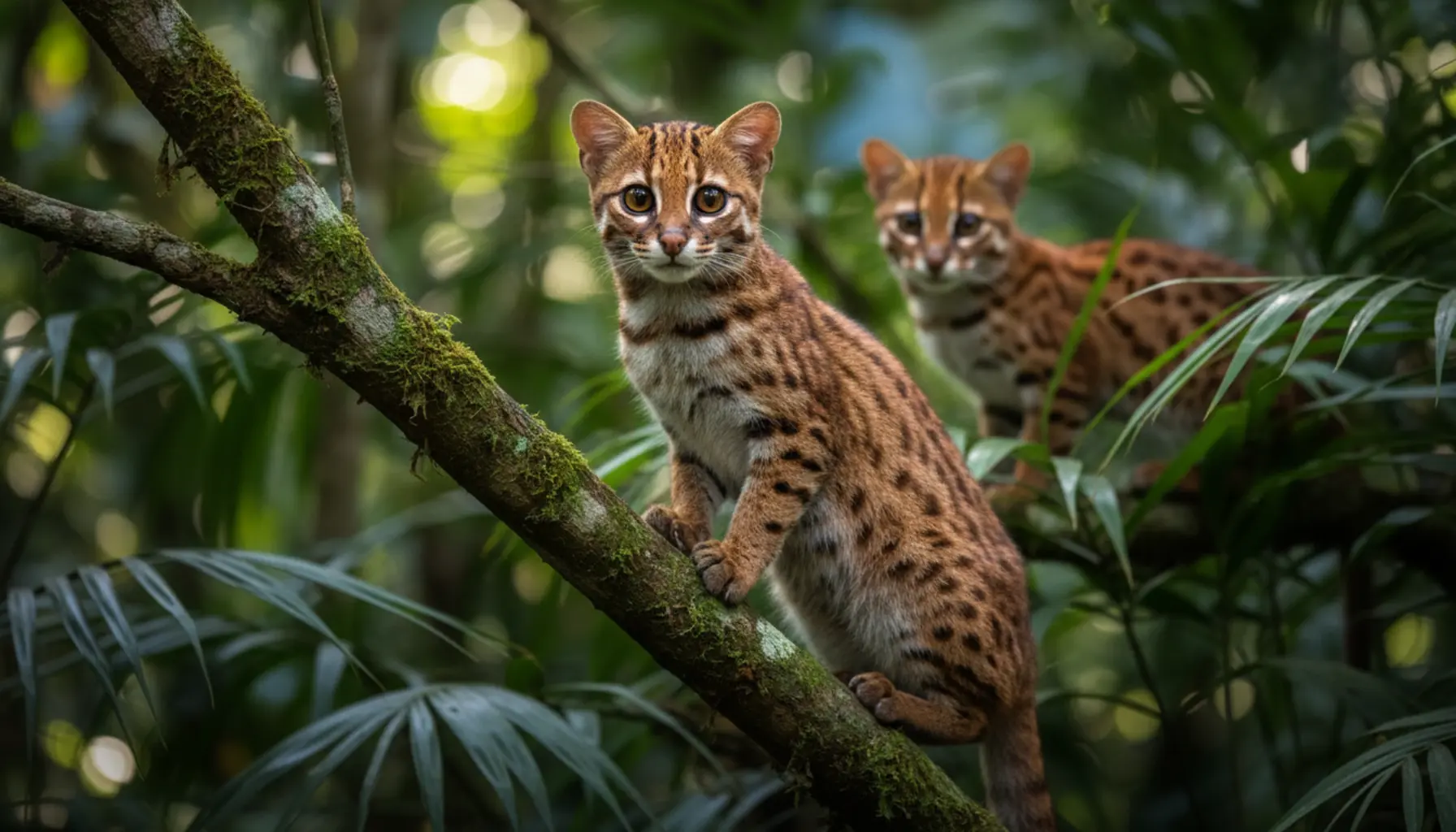
In Sri Lanka, the rusty-spotted cat often occurs near dry monsoon forests, in thickets of thorny bushes, as well as in home gardens and farmlands, where traditional agriculture leaves strips of fallow land and shrubbery. In more urbanized regions, it has been found in small, isolated patches of vegetation—for example, city woodlots, temple grounds with old trees, or green belts along irrigation canals. In India, its habitats are extremely diverse: from dry, stony western states, grassy plains and overgrown river valleys, to a mosaic of field crops and forest fragments in the country’s central part. Importantly, many known locations for the rusty-spotted cat are outside large, classic protected areas—it is recorded on private land, in agricultural landscapes, and around small nature reserves, which makes traditional conservation models based solely on national parks ineffective. The species shows a clear connection with mosaic agro-forest landscapes, where fields are interspersed with treed margins, field woods, and hedgerows, serving as both migration corridors and key daytime hiding places. The distribution of the rusty-spotted cat is still not fully understood due to its secretive, nocturnal lifestyle and small size, which hinder field detection. In recent years, camera traps have led to new records from community forests, plantations, and near small watercourses. This suggests the species may be present in more scattered populations than previously thought, but its habitat is very vulnerable to fragmentation—removal of field woods, intensified agriculture, destruction of green strips, and development of rural areas. For long-term survival, maintaining small-scale landscape structure—preserving ecological corridors linking patches of woodland and shrubs, protection of riverside vegetation, and promotion of wildlife-friendly farming practices—is crucial.
Diet and Hunting Habits
The rusty-spotted cat, despite its miniature size, is a fully specialized predator, and its diet reflects the mosaic habitats it lives in. Its main food source is small mammals, especially rodents such as field mice and small rats, which are abundant on farmland and near human settlements. The menu is supplemented with small birds, chicks, and eggs, with the cat able to hunt both at ground level and low thickets. In many locations, regular consumption of reptiles—lizards and small snakes—and amphibians has been confirmed, especially near water bodies and rice fields. Large insects, especially grasshoppers, crickets, and beetles, are also important, providing an essential protein source when bigger prey is less available. The rusty-spotted cat’s diet is thus flexible and dependent on local conditions—in drier, more open regions, rodents and reptiles dominate, while in mosaic agricultural-forest landscapes, birds and small mammals connected with shrubby habitats are more frequently recorded. Analysis of stomach contents and scats has shown that the rusty-spotted cat can consume prey amounting to a significant percentage of its own body weight, underlining its predatory efficiency and high energy requirements. Occasionally, it may scavenge if fresh carrion is available, but this is not a primary feeding strategy. Thanks to this varied diet, the species can survive in habitats with a dynamic structure and seasonal prey availability, making it an important regulator of small vertebrate populations in agroecosystems and forest edges.
The rusty-spotted cat is typically nocturnal and crepuscular, which directly affects its hunting habits. Its peak activity occurs just after sunset and before dawn, when small mammals leave burrows to feed, and birds are less alert. During the day, it hides in dense thickets, hollow trees, rock piles, or abandoned animal burrows, conserving energy and avoiding high temperatures. Hunting is mainly based on stalking and a short, sudden attack from close range—much like bigger cats, the rusty-spotted cat moves quietly, body close to the ground, using landscape cover. Large eyes adapted to low light and sensitive vibrissae allow it to spot even the slightest movement at night, while excellent hearing aids prey localization in ground cover. Field studies have shown that the rusty-spotted cat patrols a relatively small territory, regularly visiting the same hunting paths and using spatial memory to locate prey-rich spots, such as field edges, irrigation ditches, or stony and shrubby clusters. Depending on prey density, it may use active search or patient ambush, especially near rodent burrows or regular prey trails. Despite its small size, it is not afraid to attack relatively large prey—including young rabbits or bigger ground birds—using the element of surprise and precise throat or neck bites. Rusty-spotted cats are also skilled climbers, enabling them to access a wider range of prey, including nesting birds. Camera trap observations suggest that in landscapes heavily transformed by humans, the species can partially shift its activity to later at night to avoid humans and dogs, while still benefiting from abundant rodents around farms and settlements. The combination of agility, excellent senses, and behavioral flexibility makes the rusty-spotted cat a successful hunter even in quickly changing environments, although intensified agriculture, pesticide use, and declining prey populations may limit food sources for this world’s smallest wild cat in the long term.
Interesting Facts about the Rusty-spotted Cat
The rusty-spotted cat immediately draws attention with its size—comparable to a large hamster or a small house cat, but in terms of temperament and hunting prowess, it is more like a larger feline. An adult can catch prey nearly as heavy as itself, and camera trap observations reveal it surprisingly often takes risks to attack birds almost matching its size. Despite its seemingly “plush” look, this is a fully wild predator that has never been domesticated or bred in stable captive populations—zoos hold only a few individuals, and breeding programs are limited due to the species’ sensitivity and the small known numbers. Fascinatingly, the rusty-spotted cat’s voice includes both soft meows reminiscent of domestic cats and harsh, warning growls. During the breeding season, specific high-pitched trills have been noted, probably for communication between males and females. Compared with other small cats, the rusty-spotted cat is surprisingly bold—local testimonies from India and Sri Lanka describe individuals that do not immediately flee at the sight of humans, but rather stay hidden, observing the intruder from safety. Scientists stress this is not “tameness” but a strategy relying on camouflage rather than flight. Of ecological interest is its flexibility in choosing daytime shelters—besides natural burrows, rock crevices, and dense grass clusters, it utilizes human infrastructure such as wood piles, field margins, rock stacks, or even abandoned farm buildings, allowing it to persist in cultivated landscapes but also increasing the risk of human conflict, as well as exposure to dogs and vehicles. According to traditional beliefs in parts of India, the appearance of a rusty-spotted cat near home is considered a good omen—especially to farmers, who appreciate its role in controlling rodent populations in fields and grain stores. Because of its discreet lifestyle, the animal remained nearly “invisible” to science for a very long time; even in the late 20th century, very few observations were documented, with most knowledge coming from hunters or locals. The explosion of camera trap technology in recent decades has greatly increased data—showing that in some regions, this cat is more widespread than previously thought, though still highly scattered. Many video materials from these studies have reached social media, rapidly increasing the species’ global fame and resulting in memes and clips calling it the “smallest but deadliest kitten.”
An intriguing aspect of the rusty-spotted cat’s biology is its energy and movement strategy—though an active predator by nature, telemetry studies suggest it moves relatively economically, using dense vegetation and existing animal trails instead of pushing through tough terrain. The small body means high surface area to weight ratio, affecting thermoregulation: its fur must provide good insulation without overheating the animal in India’s or Sri Lanka’s hot climate. Researchers are also interested in differences between subspecies: Sri Lankan individuals are often darker and more heavily spotted, and their coat patterns differ from continental ones, allowing experts to recognize origins from photographs. Despite its small size, the rusty-spotted cat can hunt prey as agile as itself—some observations confirm successful attacks on swift land birds and lizards, requiring precise timing and excellent coordination. In nature, interactions between rusty-spotted cats and other predators are rare, but tracks and recordings indicate these cats avoid direct conflict, ceding ground to larger species like jackals or bigger cats, in favor of exploiting temporal and spatial niches with less competition. Scientifically, attempts to assess population numbers are fascinating—because of its secretive nature, classic direct counting methods are virtually useless, so advanced statistical models based on camera trap registration frequency and environmental DNA analysis from soil or scats are used. Results are still preliminary but suggest the rusty-spotted cat may exist in more micropopulations than was believed, though each typically comprises only a few individuals, leaving the entire species vulnerable to local extinctions. In popular culture, the rusty-spotted cat has become an “ambassador” for lesser-known small predators—used in educational materials for comparisons with higher-profile species like tigers or leopards, to show that nature conservation involves not only large, charismatic animals but also the smallest whose presence indicates healthy ecosystems. More and more information campaigns—especially online—make use of the rusty-spotted cat’s image as a cute but wild inhabitant of South Asia’s forests and mosaic farmlands, in order to raise awareness about complex relationships among land use, agricultural practices, and biodiversity conservation.
Threats and Species Protection
The rusty-spotted cat, despite growing popularity on social media, remains one of Asia’s most threatened small cats, primarily due to habitat loss and human activity. The most serious threat is ongoing landscape fragmentation on the Indian subcontinent: monsoon forests, thickets, and mosaic farmland—its natural habitats—are being converted into monocultures, plantations, residential developments, and road infrastructure. For such a small predator, reliant on cover and short movements, fragmented landscapes mean not just loss of shelter but also “barriers” preventing free movement between habitat patches. Isolated small populations can face reduced genetic diversity and heightened vulnerability to disease or local environmental catastrophes like fire or prolonged drought. Agricultural intensification—use of pesticides and rodenticides—also limits the rusty-spotted cat’s food base by reducing rodent numbers and exposes it to secondary poisoning by eating contaminated prey. Additionally, farm mechanization and burning of grass/brush destroy shelter and nest sites for both the cat and its prey. In some regions, the rusty-spotted cat faces direct persecution—viewed as a threat to poultry, some farmers may kill it, although its real impact on livestock is usually tiny. Significant problems also come from vehicle collisions on roads crossing its habitat—especially since, being nocturnal and small, the cat often goes unseen by drivers. Indirect risks include climate change, which modifies vegetation, water availability, and rainy season patterns. Transforming diverse, mosaic habitats into dry, uniform landscapes may force the rusty-spotted cat to rely even more on human-altered areas—increasing conflict risk, disease transmission, and competition with synanthropic species such as stray cats and dogs. The latter not only compete for food but also can transmit infectious diseases—especially rabies and feline viruses—to which wild populations are especially susceptible.
In response to these numerous threats, the rusty-spotted cat is legally protected in most of its range—in India and Sri Lanka it is on the list of protected species, and internationally it is recorded on the IUCN Red List as a species with increasing extinction risk, which has attracted conservation organizations’ attention. A key focus is protecting and restoring mosaic landscapes, including small thickets, hedgerows, field woods, and natural vegetation strips, which serve as migration corridors, refuges, and foraging sites. More and more, “green infrastructure” is considered in planning—vegetation strips along waterways, planting of shrubs and trees at field edges, and wildlife crossings under roads—to enable safe movement of small predators and reduce road deaths. Many projects led by NGOs and local communities focus on working with farmers: promoting less invasive crop and poultry protection, reducing toxic rodenticide use, and educating on the ecological role of the rusty-spotted cat as a natural pest regulator. Monitoring measures—camera traps, telemetry, and genetic studies—help estimate numbers, range, and population structure, and identify key areas for strict protection or inclusion in protected areas. This data is then used to create management plans merging conservation needs with infrastructure and agricultural development. Educational activities for local residents and school groups stress that, although the rusty-spotted cat “looks like a miniature pet cat,” it is a wild species that should not be tamed or kept in captivity. This is crucial, especially given the rising popularity of the species online—photos and videos are sometimes misinterpreted as encouragement to trade exotic animals. Wild cat conservation organizations therefore undertake information campaigns and lobbying to prevent illegal capture for commercial purposes and to strengthen enforcement of existing laws. Increasingly, international collaboration among scientists, national parks, and local communities—data sharing, joint research, and financial support for wildlife-friendly farming—helps develop long-term strategies giving the rusty-spotted cat a chance to survive in the rapidly changing, highly transformed landscape of South Asia.
Summary
The rusty-spotted cat is a fascinating, tiniest wild cat in the world, noticeable for its rusty spots and petite size. It inhabits mainly India and Sri Lanka, where agility makes it an efficient hunter. Little is known about its life, which makes it mysterious for researchers. However, habitat changes threaten its survival, placing it among species that need protection. To preserve this extraordinary animal for future generations, conservation action and public education about threats are essential.