

Table of Contents
- Nebelung Cat – Origin and Breed History
- Appearance and Distinctive Features of the Nebelung Cat
- Character and Personality of the Nebelung Cat
- Coat Care and Health of the Nebelung Cat
- Breeding, Price, and Buying Conditions for the Nebelung Cat
- Is the Nebelung Cat the Right Breed for You?
Nebelung Cat – Origin and Breed History
The Nebelung is a relatively young breed that captivates breeders and cat lovers with its mysterious appearance and elegant, long, blue-grey coat. The history of the Nebelung dates back to the 1980s, directly rooted in the famous Russian Blue cat. The name “Nebelung” comes from German and means “dweller of the mists” (from “Nebel” – mist), perfectly reflecting the breed’s ethereal look. The Nebelung’s beginnings can be traced to the United States, where in 1984 the first male, Siegfried, was born—a descendant of a domestic long-haired blue tomcat and a Russian Blue female. Shortly after, his sister Brunhilde was born, and, like Siegfried, had the same silky, blue coat. Their owner, Cora Cobb from Denver, Colorado, was so enamored with their appearance and gentle temperament that she began a breeding program focused on preserving these unique traits. Using Siegfried and Brunhilde as the foundation, she bred them with Russian Blues and other cats with a similar coat type. As a result, Nebelungs were recognized as a distinct breed, with their official status granted first by the American federation TICA (The International Cat Association) in 1987. Prestigious feline organizations such as FIFe recognized the Nebelung as a long-haired variant of the Russian Blue, but in some regions, it remains part of the same breed family as the Russian Blue, with the distinguishing feature of a semi-long, misty coat. This distinction underlines the Nebelung’s uniqueness among blue-coated cats and contributes to its growing popularity worldwide, especially in Europe and North America.
Although genetically closely related to the Russian Blue, the Nebelung is gaining recognition as an independent breed mainly due to its unique triple coat and slightly elongated silhouette. The breed’s phenotype was carefully developed through crossings between Russian Blues and domestic long-haired cats, resulting in an extraordinary combination of elegance, slimness, and fluffiness. Nebelungs thus incorporate not only the aesthetic legacy of the Russian Blue but also represent an interesting evolution of cat breeds, influenced by controlled selection and responsible breeding. Within just a few decades, the Nebelung has become a prized companion cat in many countries, with an ever-growing fan base. It’s worth noting that, due to a limited breeding pool in the early days, great care was taken to select animals for breeding, preventing genetic defects and preserving the breed’s signature characteristics: its coat type, subtle physical features, and balanced temperament. Today, Nebelungs are considered a true jewel among cat breeds—a testament to how the dedication of one breeder and the support of the feline community can create a globally recognized and loved breed with a distinctive look and friendly, family-oriented nature. The breed’s further development is supervised by international cat organizations, which ensure the health and standard of the Nebelung while promoting it as a unique family cat with a noble, slightly mysterious aura and fascinating origin story.
Appearance and Distinctive Features of the Nebelung Cat
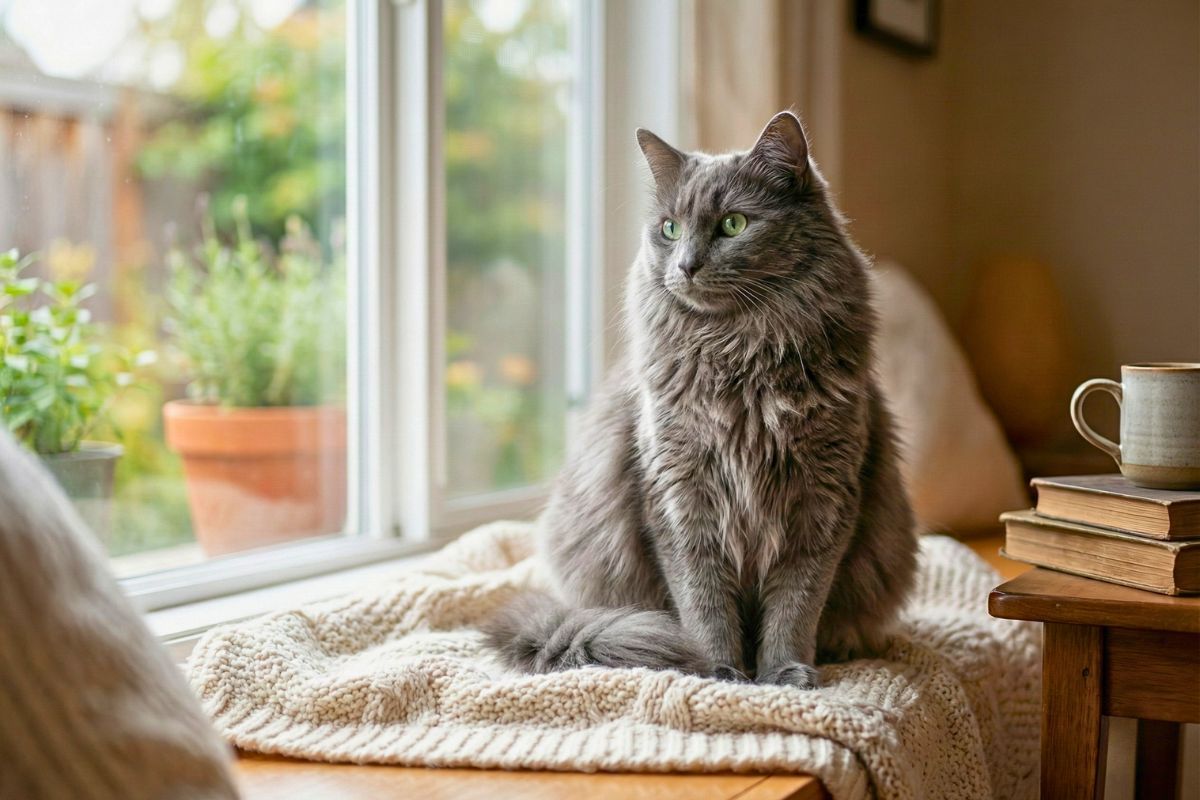
The Nebelung cat enchants not only with its aura of mystery, but above all with its extremely distinctive appearance that makes it one of the most recognizable cat breeds. Its standout feature is a dense, long-haired coat in a unique silvery-blue shade, which, depending on the light, can shimmer from deep navy blue to steel gray. The Nebelung’s coat is notable for its unique, triple-layer structure: the undercoat is short and very soft, providing natural insulation, while the topcoat is longer, delicately silky, lying smoothly against the body and glossy—this is what produces the “misty” effect the breed is named for. Nebelungs are characterized by a “ruff”—a fluffy collar around the neck, especially pronounced in males—and a fabulously furry, plume-like tail. The backline is straight, the shape slender and harmoniously built, with relatively long legs and fine, tapering feet. The skin is light, and males are generally a bit larger than females while still maintaining an elegant lightness in movement.
The Nebelung’s eyes are mesmerizing in their intense green—in adults, they take on a deep emerald hue, while kittens are born with yellowish-blue eyes that turn green over time. The standard requires almond-shaped eyes, with an alert, lively, and intelligent expression. The ears are large, broad at the base, set high, and slightly rounded at the tips, with delicate internal hair that emphasizes the cat’s grace. The Nebelung’s facial expression is another trait reminiscent of its “ancestor”—the Russian Blue: the head is a gentle wedge shape with a softly defined stop, rounded cheeks, a straight, relatively long nose, and a strong but not blunt chin. Notably, the Nebelung won’t have a massive, broad muzzle—their beauty lies in their subtle and proportional features. Also distinctive are the whiskers, which are lush and stand out against the darker fur around the nose. The cat’s originality is highlighted by its movements—soft, fluid, full of grace; watching a Nebelung, you get the impression of lightness and silence, as if they are walking on clouds.
The Nebelung is the epitome of harmony and aesthetics blended with practical body structure. Its average weight ranges from 3 to 6 kg (males can weigh a bit more, up to 6 kg; females are usually lighter) yet always appear slim and athletic. Despite having long fur, the coat clings to the body and does not tend to mat, as is common among typical long-haired breeds; it’s delicate and easy to maintain. The breed should have an almost uniform, “clean” color—any stripes, spots, or discolorations are eliminated from breeding programs. The tail fur is the longest, fanning out beautifully, while the hair on the shoulders and front torso is shorter, emphasizing a muscular silhouette. Among special individuals, a silvery “tipping” can be observed, especially at the tips of the hair, which combined with the green shine of the eyes creates an exceptionally noble and elegant effect. All these features mean the Nebelung is sometimes called a “fairy-tale cat” or a “cat of the mist,” thanks not only to its name but also to its almost fantastical looks. Kittens are born with fluffier fur and a lighter shade that darkens and becomes more lustrous with age; only by their second or even third year do Nebelungs sport their fully-developed, characteristic coat and all breed-typical traits. A gene unique to this breed determines not only coat length but also its texture and color, and strict selection in terms of health and phenotype ensures Nebelungs are consistent in appearance worldwide. Among all their special qualities, Nebelungs are admired for their balanced appearance—not overly large, fluffy, or muscular; they maintain an admirable lightness both in looks and demeanor. For this reason, the breed attracts not only fans of unique coats but also those who appreciate natural elegance and sophistication, making the Nebelung one of the most beautiful long-haired cats of our time.
Character and Personality of the Nebelung Cat
The Nebelung is a breed that impresses not only with its appearance but also with its extraordinary, harmonious temperament. The Nebelung’s personality can be described as balanced and gentle, enriched with curiosity, intelligence, and a deep bond with its humans. Nebelungs are famous for their attachment to their household—they can be devoted companions, enjoying gentle physical contact and subtly accompanying their humans in daily activities. They’re extremely loyal and attached to their family, often showing a special fondness for one particular person in the home. They’ll follow this person everywhere—not with excessive intrusiveness, but with a discreet presence that offers a sense of safety and calm. For Nebelungs, human relationships are very important; at the same time, they keep a certain distance from strangers—sometimes they’re a bit shy or reserved, needing time to build trust. Their delicate, somewhat introverted nature means they’re not as pushy as other breeds, but develop relationships based on mutual respect, loyalty, and trust. The Nebelung does not handle loneliness well; despite moderate independence, a lack of companionship may affect its mood and sense of security – so they’re recommended for those able to devote regular attention.
One of the most prized traits of Nebelungs is their high intelligence and strong need for mental stimulation. They quickly learn new things and enjoy logical, interactive play, excelling with scent mats, intelligence toys, and obstacle courses. They easily remember the layout of the house and the routines of their owners, and are capable of opening doors, cupboards, or performing simple commands like retrieving small objects. This means playing or training tricks with a Nebelung is highly satisfying for both sides. However, a key trait of the breed is its need for peace and harmony—loud, chaotic environments or constant noise can stress them, so they do best in homes with a calm, predictable atmosphere. In relations with other pets—both cats and dogs—Nebelungs are quite tolerant, provided socialization has been handled properly. They are curious, eager to make contact, but not dominant—they often prefer to observe from a distance before actively engaging in play. They thrive with other gentle cats and balanced dogs and are patient and gentle with children, provided boundaries are respected and noise is kept to a minimum. Nebelungs are also communicative—they’re not excessively “talkative,” but they make soft, subtle sounds to express their needs. Instead of loud meowing, they often communicate with gentle purring, chirping, or nasal noises, making their presence in the home unobtrusive and balanced. They love rituals—enjoying routines and easily adapting to regular activities like feeding or evening play and may feel uneasy with sudden changes. Nebelungs are moderately active—they love to play, climb, and explore, but are just as happy relaxing in secluded spots from which they can observe the world. Their keen perception is a significant strength: they notice even the smallest changes at home and can give the impression of “reading minds.” All these qualities make the Nebelung a perfect companion for those seeking a calm, intelligent, graceful, and charming cat that quickly becomes a true family member and reliable, if not very vocal, housemate.
Coat Care and Health of the Nebelung Cat
The Nebelung cat is renowned for its dazzling, long, silvery-blue coat, which is not only beautiful but has a specific structure that requires proper care. Although the breed’s fur is dense and double-layered (with a soft, thick undercoat and silky guard hairs), it poses no major challenges in daily grooming. Regular brushing, preferably two to three times a week, keeps it in excellent condition: removing dead hair, preventing mats, and spreading natural skin oils to enhance the coat’s shine. A slicker brush or a wide-toothed comb is the best choice, but special attention should be paid to the ruff and tail areas—these have the longest hairs and are most prone to tangling. The Nebelung sheds only moderately, so even during seasonal changes, keeping hair under control is easier than with many other long-haired breeds. Because of their undercoat, regular brushing is still essential; neglect can lead to tough mats and, in extreme cases, skin problems. Too frequent bathing is not recommended for this breed—occasional baths are sufficient, and only if needed, using gentle shampoos designed for long-haired cats. Regular ear cleaning, trimming claws, and monitoring oral hygiene are all important daily care steps. Since Nebelungs are sensitive and dislike stressful situations, all care procedures should be done calmly, without rush, and paired with positive reinforcement. Grooming sessions not only benefit the cat’s health but also build a stronger bond with the owner.
When it comes to health, the Nebelung is regarded as a resilient and long-lived breed, provided it receives proper care and a balanced diet tailored to a cat with a low tendency to overweight. High-quality, protein-rich, low-carb food supports both the coat’s appearance and overall health. Regular veterinary checkups and monitoring the cat’s condition allow any potential problems to be spotted early, although Nebelungs are not commonly affected by genetic diseases—selective breeding largely eliminates unwanted mutations. Still, as with other breeds, attention should be paid to dental health, as neglect may lead to complications. Immunization, regular deworming, monitoring weight, and protecting against external parasites like fleas and ticks are also recommended. It’s important to note that, because of their calm, sensitive nature, Nebelungs don’t tolerate changes in their environment, long-term loneliness, or excessive noise very well—these situations may reduce immunity, cause behavioral issues, or trigger stress-related hair loss. Creating a safe, stable home environment and providing appropriate physical and mental activity (interactive toys, scratching posts, and shelves or tunnels) will keep your cat in top shape for years. Nebelungs are naturally hardy and have low disease susceptibility, but an owner’s awareness of preventive health care and grooming is crucial for the quality and length of their unique pet’s life.
Breeding, Price, and Buying Conditions for the Nebelung Cat
Choosing a Nebelung as a companion cat requires thought, thorough knowledge, and contact with responsible, legal breeders who meet high ethical and health standards. Although increasingly popular, the breed remains relatively rare, which affects adoption procedures, the number of available kittens, and the price. Professional Nebelung breeders focus on maintaining purity, health, and early socialization from their first days of life. Renowned breeders emphasize regular genetic testing to minimize hereditary diseases such as kidney problems or cardiomyopathies, and they broaden the genetic pool through international cooperation. Kittens spend at least 12–14 weeks with the breeder, learning to interact with people, other pets, and getting used to household noises—which guarantees emotional stability and easier adaptation in new homes. Before being handed over to a new owner, young Nebelungs are dewormed, vaccinated, and fitted with a microchip. Transparency is key—buyers should have the opportunity to meet the litter’s parents, see the conditions in which the kittens are raised, and receive complete documentation, including a pedigree certificate issued by a respected feline organization (e.g., FIFe, TICA). This guarantees that the animal comes from a legal source and does not support illegal breeding practices.
The price of a Nebelung in Poland typically ranges from 4000 to 8000 PLN, and even higher in the case of kittens from prestigious lines or intended for breeding and shows. The price reflects the high costs of maintaining a cattery, veterinary care, premium food and supplements, litter registration, and parental genetic testing. By buying from a legal, reputable breeder, the buyer can be assured the animal is free from genetic defects, has proper temperament, and has received good basic socialization. Lower prices may indicate cost-cutting on health, vaccinations, or poor living conditions, so never be guided solely by an attractive offer. Legal kitten sales come with a detailed contract, specifying the new owner’s rights and obligations, as well as post-sale breeder support and conditions for animal return in specific cases. Some breeders also require an initial interview and a home visit to assess the cat’s future environment. Purchase criteria also include verifying that the animal will go to a responsible caregiver—breeders often ask about prior experience, breed knowledge, arrangements for the cat’s care during absences, and home safety (e.g., securing windows or balconies). If a kitten is sold as a pet only, the contract will specify non-breeding restrictions, and some breeders require neutering before the cat leaves. Buying a Nebelung responsibly is not just a financial investment but a conscious decision to take on a long-term commitment—providing a suitable diet, regular veterinary care, and daily well-being and mental stimulation. The final decision should always be to choose a breeder who cares for animal welfare and offers full transparency and post-sale support, making the whole purchase process one of mutual respect and responsibility toward the animal.
Is the Nebelung Cat the Right Breed for You?
When considering adopting a Nebelung cat, you should thoroughly assess your expectations and lifestyle, because this breed is not suitable for everyone. Above all, Nebelungs are very attached to their humans — sensitive to their mood, requiring regular contact and clear signs of affection. This is not a breed for people who spend most of their time away from home or travel frequently. Nebelungs do poorly with long-term loneliness — left alone, they may become stressed or develop destructive or apathetic behaviors. Families, singles, or couples able to spend time on play, cuddling, and daily contact will gain a devoted friend in the Nebelung. Due to their high intelligence and need for mental activity, it’s best to provide interactive toys, scratching posts, or cat tunnels to help them expend their energy and stimulate their minds. Despite their gentle and introverted nature, Nebelungs appreciate routine, predictability, and a stable home environment. They are an ideal companion for those seeking a calm, dignified animal that enjoys daily rituals and appreciates a predictable rhythm of life. On the other hand, they’re not suited for those seeking an extremely expressive, demanding cat, as seen in some oriental breeds.
The Nebelung does well in homes with children and other pets—provided there is gentle socialization and mutual respect. This breed does not like noise, intense stimulation, or sudden changes. Their sensitivity means that overactivity or chaos can cause stress and even contribute to behavioral or health problems. So, calmer households with a regular daily rhythm and balanced atmosphere are a natural fit. People with children should teach them respect for animals, encouraging gentle contact and patience. A big advantage of the breed is its subtle communication—Nebelungs are never intrusive, rarely vocalize loudly, but can express affection through purring, eye contact, and proximity to their beloved owner. Grooming demands are moderate, but shouldn’t be ignored: regular brushing keeps the coat healthy and beautiful, and a proper diet and preventive care support a long, active cat life. Prospective owners must be ready not only for the costs of purchasing a kitten from a legal breeder but also for ongoing care, vet visits, and buying high-quality food. The Nebelung is a great choice for connoisseurs who appreciate the beauty and refinement of rare, harmonious breeds and cat lovers willing to invest time and patience in developing a deep emotional connection. At the same time, it’s important to remember that despite low disease susceptibility, the breed requires conscious keeping and systematic care for their mental and physical well-being—neglect can negatively impact their health and happiness. A responsible owner is someone who understands these unique needs, can provide peace, security, and regular contact, rather than seeing the cat as mere home decoration or a pet needing little engagement.
Summary
The Nebelung cat is a unique, rare breed with elegant looks and a gentle temperament. Thanks to its long, silvery-gray coat and balanced nature, the Nebelung has won the hearts of cat lovers worldwide. However, it requires regular grooming and attentive health care. Those interested in breeding should ensure they choose a reputable breeder. The Nebelung cat is an excellent companion for those who value peace and desire a remarkable, elegant friend with an extraordinary personality.

