

The Bengal cat captivates with its wild look and remarkable vitality. If you’re wondering how to channel Bengal cat energy and ensure a fulfilled life at home, explore these expert strategies. This breed combines activity, intelligence, and a strong need for interaction, requiring a committed owner.
Table of Contents
- Bengal Cat Characteristics: Your Little Leopard at Home
- Bengal Cat Energy & Activity: A Living Volcano
- Why Does the Bengal Cat Need Attention and Engagement?
- How to Meet a Bengal Cat’s Energy Needs?
- Best Fun & Accessories for Bengal Cats
- Bengal Cats & Other Pets: Creating a Harmonious Environment
Bengal Cat Characteristics: Your Little Leopard at Home
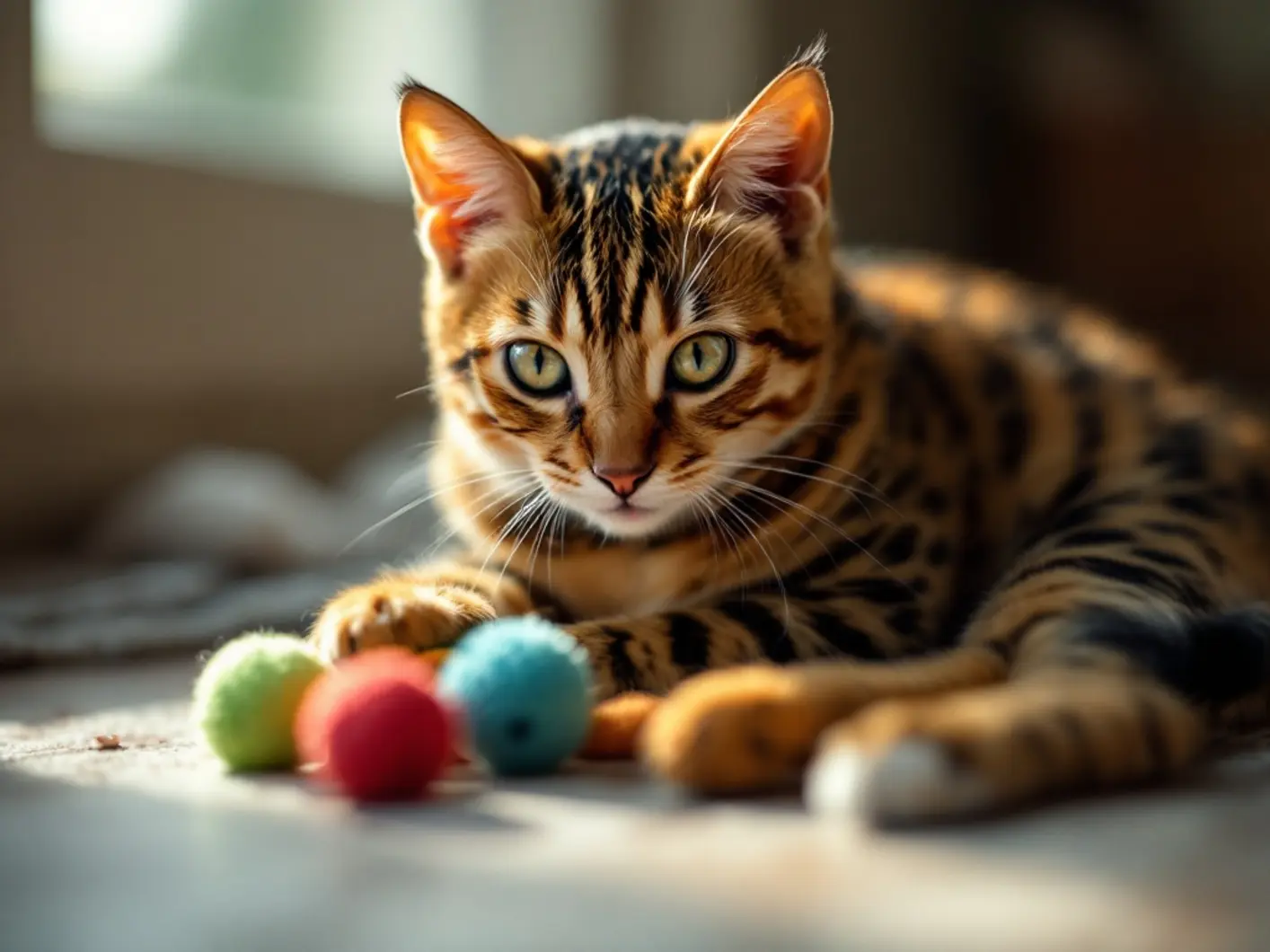
The Bengal cat is one of the most fascinating and “wild-looking” breeds you can welcome into your living room. Its appearance—spotted or marbled coat reminiscent of a leopard, athletic build, long limbs, and a springy gait—make it clear you’re dealing with an animal packed with athletic potential and strong character. Medium to large, muscular, broad-chested, and built for leaping and climbing, the Bengal rarely comes across as a “lazy lounger.” Even at rest, you can sense its readiness for action and alertness, much like a small leopard that could spring into motion at any moment. Its eyes—large, often bright green or gold—are expressive and constantly scan the room for new stimuli. The Bengal’s temperament is a blend of high intelligence, a hunter’s instinct, and a desire for constant interaction. This is not a cat that will passively observe: it wants to participate, explore, and interact with both people and its environment. Their curiosity stands out: Bengals love nosing through cabinets, joining unboxing sessions, “helping” with chores, and are quick learners when it comes to opening doors and drawers. If their minds aren’t challenged, they quickly get bored, which may lead to unwanted behaviors—excessive meowing, destruction of objects, or attention-seeking antics.
But their energy isn’t just physical; it’s also mental—intense emotions and a strong bond with their person. Many Bengals are extremely “talkative,” with a wide range of sounds: typical meows, chirps, purrs, and the signature Bengal “chatter” as they comment on what’s happening at home. Bengal cats often behave more like dogs: they retrieve toys, respond to commands, come when called, and can learn to walk on a harness and leash. This unique, “dog-cat” temperament makes them ideal for homes where the owner has time and enthusiasm for daily, active relationship-building—not just petting, but training, play-hunting with wands, learning tricks, or navigating obstacle courses. Despite their wild looks, Bengals are often people-oriented: they like to join daily routines, nap nearby, follow their person, and enjoy rituals like morning play or evening cuddles. They often choose a “favorite person,” but are generally social and curious about all household members—though their intensity can be overwhelming for those used to more reserved cats.
At home, the Bengal is an untamable force: lounging in sunny spots one moment, then suddenly dashing after a fly, toy, or imagined prey. Their ancestry—Asian Leopard Cat (Felis bengalensis) crossed with domestic cats—gives them a powerful hunting instinct, which translates into a need for intense, regular play that mimics hunting. Light play with a wand for a minute or two isn’t enough; Bengals thrive on play sessions planned like a real “hunt,” with warm-up, climax, and a cool-down. Their high activity matches their physical capability—they can jump incredibly high, run at breakneck speed, and utilize all vertical space, turning your home into a three-dimensional playground. Wall-mounted shelves, tall scratching posts, tunnels, bridges, and hideaways provide the ideal landscape to burn off energy. Bengals love heights, so expect them to claim the highest shelves, wardrobes, and windowsills. A distinctive Bengal trait is their fascination with water: many watch running water, dip their paws in bowls, and some even jump into the tub or shower. This adds a sensory exploration dimension other cats may avoid. With other pets, Bengals can be dominant or rowdy, which may be tough for shy roommates, but if properly socialized, they can bond strongly, even with a dog—especially an active one. For caretakers, it’s crucial to understand—their “leopard” nature is not a problem; it’s the core of the breed’s personality. When channeled and respected, a Bengal becomes a dynamic, engaging companion, bringing home that sense of a lively, private “jungle” every day.
Bengal Cat Energy & Activity: A Living Volcano
The Bengal is a true livewire—its energy is intense, multifaceted, and lasts throughout the day. Unlike more laidback breeds, a Bengal rarely naps for hours in one spot; instead, they alternate power naps with explosive bursts of activity, sprinting, climbing, and investigating every nook. Bred from crossing domestic cats with the wild Asian Leopard Cat, that love of movement and restlessness is encoded in their DNA. The Bengal’s strong, flexible body demands activity—and if you don’t provide stimulation, they’ll find (or invent) it, often in ways less welcome for the owner. Just a scratching post and a few balls won’t cut it. Bengals need daily, regular play that mimics the hunt: chasing wands, feathers, lying in ambush for moving toys, or navigating dynamic obstacle courses. They’re usually the first cat to jump atop a wardrobe, open a cupboard, climb doors, or even curtains—not out of mischief, but pure energy and curiosity. Bengals especially love heights: they travel across shelf edges, over-the-door perches, cat bridges, and shelves that reach the ceiling. Vertical space is vital, so the perfect “Bengal house” has multi-level scratchers, wall shelves, tunnels, and climbing structures. Without these, your Bengal may “claim” any available space—including kitchen counters, fridge tops, and even door frames.
Bengals are famous for their “zoomies”: sudden sprints around the house, leaping from couch to window and back, dashing and climbing at breakneck speeds. For less-experienced owners, it might look like hyperactivity, but it’s just a young predator burning through energy. This “turbo mode” isn’t just for kittens—adult Bengals remain athletic and agile well into later life, although play intensity may mellow slightly with age. Bengal energy is tightly entwined with intelligence: it’s not just running, but constant “engineering”—figuring out how to open new doors, get to new shelves, or wrangle more playtime from their owner. Without mental stimulation, behaviors like chewing cords, scratching furniture, opening cupboards and scattering contents, or excessive vocalization may arise. That’s why Bengal owners should plan several daily play sessions of 10–20 minutes, using a variety of toys: wands, balls, track toys, interactive gadgets, and food puzzles. Fetching is great for Bengals—they learn quickly to return balls or toy mice and act more like a dog than a typical cat.
Bengals also need tasks that engage their mind and hunting instinct in a safe, controlled way. Try using food-dispensing toys, treat mazes, or scent mats that challenge their brain and senses. Unlike many cats, Bengals work well with people and pick up on commands: coming when called, sitting, giving paw, or jumping through hoops. Many Bengals even enjoy walks on a harness and leash—after gradual training, it’s an excellent way to burn energy and explore new environments. Remember, though, Bengals are highly excitable: walks should be in calm, quiet areas, and gear (harness, leash) must be secure and comfortable. Another Bengal quirk is their love for water—many jump in tubs, play in water bowls, or are mesmerized by a running faucet. Harness this by providing cat fountains, floating toys, or shallow containers for splashing. A well-structured day including play, vertical exploration, trick training, and water fun helps burn energy constructively, strengthen your bond, and protect the home from mischief. If your Bengal is an only pet, interactive play should be longer or more frequent, and you might consider adding another energetic cat companion. But remember—even with a playmate, Bengals need regular human attention, because their energy comes with a strong need for social relationships and engagement at the center of home life.
Why Does the Bengal Cat Need Attention and Engagement?
The Bengal is not a typical “couch potato” satisfied with a few minutes of play before bed—this is a breed engineered for high gear most of the day. Its wild roots and active selective breeding mean it craves ongoing engagement, both physical and emotional. High energy translates to a need for movement: Bengals must run, climb, jump, and hunt (even if just after toys) to feel content and calm. Without a healthy outlet, they’ll become frustrated, which may result in kitchen counter leaps, plant destruction, object-knocking, or compulsive chewing and scratching. Bengals are also intensely social and deeply attached to their humans: they often follow you from room to room, join every household activity, “comment” with meows, and insist on shared playtime. This blend of boundless energy and need for contact means a Bengal doesn’t handle long solitude well; left alone for many hours, they may develop troublesome behaviors like excessive vocalization, furniture destruction, or obsessive grooming. Their intelligence is just as crucial: they learn fast but tire of repetition even faster, so one toy mouse won’t suffice—Bengals need toy rotation, a variety of activities, and regular changes in their surroundings.
Owners of Bengals must be not just caretakers, but “directors” of daily attractions—guides in a world of constant stimulation that the breed requires for mental equilibrium. Even the best scratcher or tallest cat tree can’t replace active interaction: Bengals thrive on a play partner, someone to make the wand “prey” come alive, hide treats for them to hunt, teach tricks, or take them on walks. This level of involvement is necessary to fulfill their needs and avoid undesired behaviors, which often aren’t “badness” but signals of unmet needs or boredom.
Another key reason Bengals need so much attention is their emotionality and strong need for social bonding. Unlike more independent breeds, Bengals seek active relationships—they communicate vocally, crave petting, initiate contact, bring toys for rounds of fetch, and even learn tricks just to keep you involved. They see humans as flock members and want to collaborate, not just be “served.” If they don’t get enough attention, they may become clingy, excessively meow, or claim your keyboard, desk, or countertop—even through behaviors people consider undesirable. Bengals require a specific training approach—because of their smarts, simply saying “no” or ignoring isn’t effective. Positive reinforcement works best: redirecting energy toward approved activities, consistently rewarding desired behaviors, and creating a daily routine with regular play. The breed also has a strong exploratory instinct: Bengals are fascinated by every new sound, scent, or object. This means you must cat-proof your home (windows, balcony, toxic plants) and provide controlled means of discovery—like harness walks, cardboard mazes, tunnels, or window perches to observe the world. Owning a Bengal requires creativity, patience, and time, but in exchange they offer deep relationships—engaging more intensely than average cats, spending long sessions at play, and accompanying you at work and rest. Meeting their needs means consciously structuring your day for active bonding from kittenhood to adulthood, because Bengals stay energetic and stimulation-seeking throughout life—not just when young.
How to Meet a Bengal Cat’s Energy Needs?
Bengals need a thoughtfully structured day where movement and mental stimulation are key parts of routine—not left to chance. The foundation is regular, intense play that mimics hunting—at least two, ideally three sessions every day, each lasting 15–20 minutes. Use wands with feathers or strings, bird- or mouse-like toys moved to mimic prey (slow stalking, sudden bursts, hiding under furniture). Make sure your Bengal “catches” its prey to satisfy its hunting instinct. Bouncy balls, lightweight mice, and tunnels for sprinting and ambushing enrich their spatial experience. Rotate toys—don’t leave all out at once; hide some and reintroduce after a few days to keep your living room leopard interested. Vertical territory is also vital: tall, sturdy cat trees with several perches at varying heights, ceiling bridges, wall shelves, and even “cat climbing walls.” Bengals naturally seek high vantage points—so the more vertical options for climbing, jumping, and surveying, the better they’ll use their energy. Offer different textures (sisal, wood, soft beds on the cat tree) and place structures strategically—by a window, near the couch, or central in the room, so Bengals can stay in the heart of family life. To protect your furniture, provide multiple scratching surfaces (vertical and horizontal, in several rooms) so your Bengal can stretch, relieve muscle tension, and expend energy without harming your sofa.
But physical activity is only half the story. Bengals thrive on intellectual challenge and daily rituals that engage their mind. Food-based work is a great way to focus their energy—swap the food bowl for treat puzzles, treat balls, scent mats, or interactive feeders. These tasks tire them mentally and satisfy their need to “earn” food. Many Bengals quickly learn basic commands and tricks—fetch, coming when called, jumping up at your signal, “high five,” or even navigating mini agility courses. Positive reinforcement with treats, praise, or affection is exciting for Bengals and forges a close bond with you as their “work partner,” not just an observer. Harness their odd love of water—a fountain, a shallow bowl with floating toys, or even controlled play by the tap can be great energy outlets. Particularly active Bengals may enjoy harness and leash walks (after careful training and acceptance of gear); new smells, sounds, and textures outside greatly enrich their world beyond what your home can provide. Remember: Bengals dislike monotony and loneliness—get them involved in daily routines, talk to them, and initiate brief interactions throughout the day. In some homes, introducing another equally active cat as a playmate can meet their social and energy needs. A fixed schedule (meal times, regular play, nighttime winding down) channels their energy into a predictable rhythm, minimizes midnight “zoomies,” and ensures your Bengal lives harmoniously indoors, wild nature and all.
Best Fun & Accessories for Bengal Cats
A Bengal cat needs play and accessories that let them unleash their volcanic energy, intelligence, and strong hunting drives. A simple plush mouse tossed on the floor won’t do—Bengals thrive on dynamic, multi-step activities that engage both body and mind. The “must-have” is a wand toy with a long cord and interchangeable tips you can move over floors, furniture, or cat trees to mimic real prey. For a Bengal, it’s all about the hunt sequence: stalking, creeping, chasing, pouncing, catching—so play so they get to “catch” and “conquer” the toy. Feathers, ribbons, or faux fur tips work well, and rotating attachments keeps boredom at bay. Supplement with bouncing balls or spring toys that your Bengal can chase, bat, and carry in their mouth—many love fetch, so teach them to retrieve in exchange for treats and praise. Tunnel toys offer interactive play: hideouts, ambushes, and “peekaboo” windows combine hide-and-seek with hunting games. Laser toys can be exciting if used wisely—end each session by directing the dot onto a tangible toy your Bengal can catch to avoid frustration. Track toys and spinning ball mazes stimulate curiosity but should complement, not replace, play with you. Bengals’ “dog-like” learning can be tapped into by clicker training—basic tricks like “sit,” “paw,” “jump,” or hoop-leaping double as play and a perfect way to tire them out after active sessions.
Equally important are environmental accessories that meet their vertical and territorial needs. Tall, sturdy scratching posts or cat trees (ideally reaching to the ceiling), with shelves, cubbyholes, and hammocks are essentials; thick sisal posts let Bengals “hang” their whole body and stretch muscles, which is vital for this athletic breed. Set up several lookout points—wall shelves, bridges, and perches at various heights for unique climbing routes and upper-level vantage points that give them a sense of safety and control. Interactive food bowls and puzzles are also great—Bengals need to figure out how to get the kibble or wet food, from treat balls to scent mats or puzzle boards. These combine food motivation, mental work, and movement, encouraging energy use constructively. Remember the water zone too—many Bengals love fountains, bowls with floating toys, or supervised play in a shallow tub. For Bengals comfortable with a leash, safe outdoor walks are hugely rewarding: secure “H” or “guard” harness, lightweight and strong leash, and gradual exposure lets them explore new smells and surroundings safely. At home, simple but engaging props like cardboard boxes, paper bags (no handles), crinkle mats, or “scent stations” with catnip or valerian keep your Bengal entertained during solo adventures. Rotate playthings and move structures every few days to keep things fresh; by doing so, your Bengal always feels like there’s something new to discover, channeling their boundless energy and maintaining a balance between excitement and calm.
Bengal Cats & Other Pets: Creating a Harmonious Environment
With their big energy, intelligence, and bold personality, Bengals can coexist wonderfully with other pets—but conscious management is essential. Remember, a Bengal isn’t a “typical” calm cat; it’s a little leopard needing space, movement, and clear rules. When introducing Bengals to other cats, dominant or very active play is common. This can be intimidating to quiet or elderly cats; best matches are equally energetic companions—another young Bengal or active breeds that love running and interactive play. Introduction should be gradual: start with scent swapping (blankets, brushes, swapping spaces), then short “barrier” visits, only progressing to full contact under supervision. Watch animal body language—a tense tail, hissing, flattened ears, or growling means slow down. Resource management matters: each cat needs their own litter box, bowls, resting space, and several elevated observation points—so they can retreat if necessary. Bengals can get frustrated if there’s competition over food or attention, so feed in different spots and create safe zones where cats aren’t disturbed. Bengals often form strong bonds with people, and can be jealous, so owners need to balance time among all pets, creating individual play and cuddle sessions, so no one feels left out.
Success with dogs depends on both animals’ temperaments and past experiences. Bengals, being active and playful, usually get along best with energetic dogs who respect cat body language and aren’t too pushy. Initial meetings should be controlled: dog on a leash, Bengal with an escape route (up a cat tree, shelf, or “cat-only” zone), so they’re not cornered or scared by the dog. Scent is essential—swap bedding, blankets, or use cloths rubbed on fur so both species get used to the new companion before visual introduction. Reward both for calm behavior—treats, soothing words, and brief sessions build positive association. Properly managing Bengal’s energy helps prevent conflict: tire your cat with play and exercise before first meetings so excitement is lower. If you have small pets (rodents, birds, fish), Bengal’s strong hunting instinct must be taken seriously—secure cages, covered aquariums, and place habitats out of reach of climbing posts and shelves. Bengals will attempt to climb, watch, or “hunt” smaller pets, causing stress—even with no direct contact. Best practice: set up a separate area or room where the Bengal cannot access vulnerable pets. Synchronize activity times—Bengal during active play, other pets during “calm” time. In a multi-pet home, maintain flexibility: prepare to move cat trees, use barriers, or create separate rooms as needed to maintain peace. This way, the Bengal’s energy is directed toward play and discovery, not conflict, making the home a sanctuary for your animal family.
Summary
The Bengal cat is a unique companion whose energy can surprise you. To meet its needs, you must provide ample activities and personal involvement. From understanding its traits and energy needs to accessories and playful routines—every element contributes to a happy life with a Bengal. In the right environment, this little leopard can become the ideal family member—even with other pets around.

