

Cornish Rex is a cat with an exceptional character and a unique appearance. Its delicate, wavy fur and lively temperament make it an extraordinary companion every single day. Discover the advantages, care, and preferences of the Cornish Rex to better understand this unique breed.
Table of Contents
- Origin of the Cornish Rex Breed
- Unique Appearance and Body Structure of the Cornish Rex
- Temperament and Characteristics of the Cornish Rex
- Cornish Rex Care and Health
- Cornish Rex Nutrition and Activity
- Why Choose Cornish Rex Cats?
Origin of the Cornish Rex Breed
The origin of the Cornish Rex cat is extremely well-documented and – for a breed with such an exotic look – surprisingly “young.” It all began on July 21, 1950, in Cornwall, south-west England, at the Ennismore farm owned by Nina Ennismore. In a litter of ordinary short-haired house cats, a male kitten was born that stood out from its siblings with completely different fur: it was short, delicate, dense, and wavy, reminiscent of rex rabbit fur. He was named Kallibunker, and he is considered the progenitor of the entire Cornish Rex breed. The mutation responsible for the characteristic wavy hair appeared spontaneously and was at first regarded more as a curiosity than the beginning of a new breed. However, breeders and feline experts quickly saw the uniqueness of this cat—in both appearance and its delicate, slender body—prompting controlled breeding to establish these traits. The first breeding attempts involved mating Kallibunker with his mother as well as other local cats. Offspring didn’t always inherit the wavy fur, which allowed researchers to determine that the gene responsible for this trait is recessive—kittens must receive the gene from both parents to have the characteristic Cornish Rex coat. At that time, breeding was challenging because the genetic base was very narrow, but over-inbreeding, which could lead to health issues, had to be avoided. For this reason, various short-haired cats, and later other breeds, were included in breeding plans to widen the gene pool without losing the wavy coat and slender build.
Interest in this new cat quickly spread beyond Cornwall. As early as the 1950s, Cornish Rex started appearing at British cat shows, astonishing audiences who had never before seen a cat with such a coat texture and such a “Gallic” profile. In 1957, the first Cornish Rex specimens were brought to the United States, where the breed gained strong breeding and marketing support. American breeders not only helped stabilize the breed type but also gave it a more striking, elegant appearance—with even longer body lines, a distinctly slender waist, and large, high-set ears. At the same time, the USA began genetic research that ultimately distinguished Cornish Rex from the seemingly similar Devon Rex breed. Although both cats have wavy coats, the gene mutations responsible for this effect differ, and when crossed, litters only produced straight-haired kittens. This confirmed that Cornish Rex is a distinct development line with its unique rex gene. In the 1960s and 1970s, most major feline organizations began granting the breed official status. CFA (Cat Fanciers’ Association) in the US granted Cornish Rex full championship status in 1964, and soon after, other federations, including FIFe in Europe, developed standards describing the desired body type, coat structure, and head pattern. Since then, the breed has consistently developed, with carefully planned breeding lines to preserve its slender, athletic build, extremely delicate, velvety hair, and lively, sociable temperament that originally distinguished Kallibunker. Today, although the Cornish Rex is considered relatively rare, it has a strong, well-organized breeder base in the UK, continental Europe, North America, and Japan. Modern breed standards and genetic testing help maintain a healthy population while preserving all the characteristic traits that stem from one extraordinary Cornish tomcat.
Unique Appearance and Body Structure of the Cornish Rex
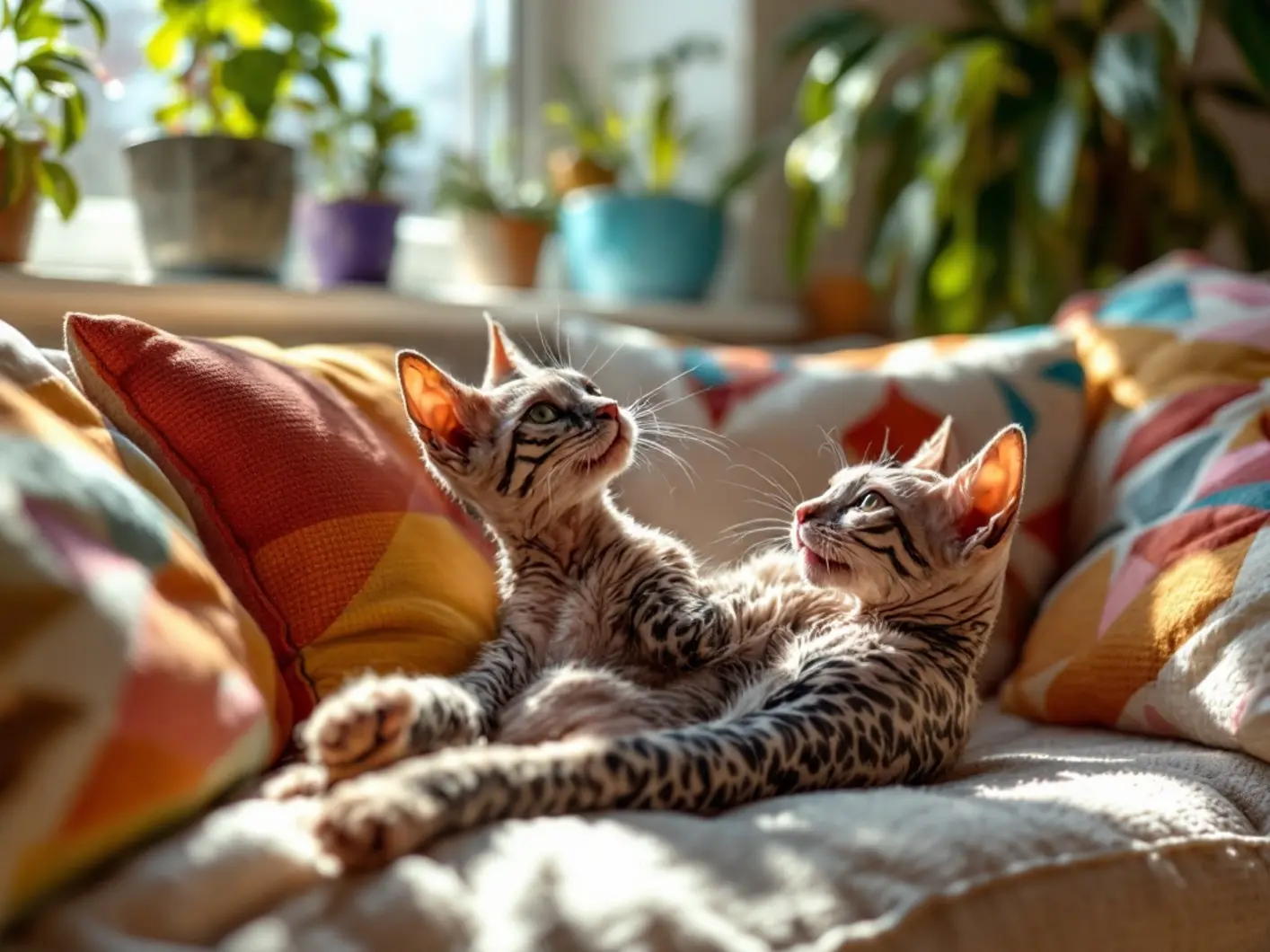
The Cornish Rex is a breed that is immediately recognizable—primarily thanks to its incredibly delicate, wavy coat and a slim silhouette reminiscent of a miniature greyhound. Its fur is unique in the cat world: short, plush-soft, and lacking the hard guard hairs typical of most breeds. It consists nearly entirely of the undercoat, which forms distinct waves and ripples over the entire body, from the head, along the back, to the tail. The curls can be gentle and lightly wavy or deeper and springier, creating a “velvet fur” effect that many owners compare to the feel of suede. The Cornish Rex’s fur is very thin and close-fitting, emphasizing its athletic, striking silhouette. Virtually every color is accepted by breed standards—from classic black, white, and gray, to tabby, tortoiseshell, bicolor, and rarer colorpoint varieties. However, in this breed, it is the structure and texture of the coat that are distinguishing features, not the coloring itself. Interestingly, Cornish Rex kittens show curled fur from the earliest weeks, though the waves may temporarily “smooth out” during adolescence, with the final curl forming after maturation. The Cornish Rex’s head has a characteristic, somewhat “exotic” appearance—it is small, wedge-shaped, with a slightly rounded forehead and clearly defined nose break. The nose is straight and relatively long, which, paired with a slender muzzle, creates an elegant profile. The eyes are large, oval, widely set, and slightly slanted, giving the cat an alert, intelligent, and somewhat playful expression. Eye color depends on the coat color, but the standard prefers intense, saturated hues—from yellow and gold to green; in colorpoint or white varieties, blue eyes are possible, and heterochromia (different colored eyes) can sometimes occur. The Cornish Rex’s ears are particularly striking: very large, high-set, with a broad base and rounded ends. The ears visually enlarge the head, giving the cat an almost “elfin” or “bat-like” look—one of the breed’s most recognizable features. The whiskers, if present, can also be wavy or even partially curled, further emphasizing this cat’s uniqueness.
The Cornish Rex body is refined yet not fragile—this is an athletically built cat, reminiscent of a long-distance runner’s physique. The torso is slim, elongated, with a clearly marked waist and a well-muscled back, which in typical breed representatives forms a gentle, elegant arch. The chest is deep but narrow, giving the silhouette an aerodynamic shape. The legs are long, thin, yet strong, ending in small, oval paws. This physique allows the breed to move with extraordinary grace, agility, and speed—Cornish Rex jumps well, runs, and loves climbing, especially visible in the home when enjoying scratchers and shelves. The tail is very long, thin, and flexible, also covered with wavy fur, often tapering at the end, completing the “cat greyhound” effect. The body mass is usually not large—adult males typically weigh around 3–4.5 kg, females are a bit lighter—but Cornish Rex often feels heavier than it looks, due to its dense musculature beneath the thin fur. It’s important that despite its lightness and grace, the breed should not be petite or rickety—a proper Cornish Rex is a strong, proportional, well-muscled cat, without any appearance of obesity or excessive boniness. The body structure directly affects daily life: the slim build and minimal thermal insulation make this cat sensitive to cold and drafts, and it cools down faster than breeds with thick fur. For this reason, it often chooses warm places in the house—radiators, sunny windowsills, its owner’s lap—and may instinctively hide under blankets. At the same time, its light, flexible build encourages a high level of activity—Cornish Rex is a natural acrobat, easily jumping onto tall furniture, running gracefully around the home, and moving almost silently. The delicate fur and thin skin also mean any abrasions, injuries, or skin reactions can be noticed more quickly, requiring careful observation of paws, ears, tail, and back. Overall, it is the combination of the unique coat structure, elongated athletic figure, large ears, and expressive eyes that make the Cornish Rex one of the most distinctive and “designer” visual breeds—hard to mistake for any other cat, even among the seemingly similar rexes.
Temperament and Characteristics of the Cornish Rex
The Cornish Rex is one of the most sociable and interactive breeds in the feline world, which in practice means it’s hard to call it a “typical” pet—it’s rather a fully engaged family member. Most Cornish Rex cats form a strong attachment to their owner and happily accompany them in daily activities: from morning coffee, working at the computer, to evening relaxation on the couch. They often choose a “favorite” person, but usually remain friendly and curious toward all household members and guests. Unlike many breeds which prefer independence, the Cornish Rex does not cope well with prolonged loneliness—a lack of interaction can quickly lead to boredom, vocalization, or seeking attention by any means possible. This breed is truly “contact-oriented”: many individuals like to be carried, perch on their owner’s shoulders like a parrot, sleep under the covers, or cling to warm human skin. They react tenderly to touch, often demanding affection themselves by tapping your hand with a paw or rubbing their face against yours. The affectionate nature of the Cornish Rex goes hand in hand with strong emotions—it can pick up on its owner’s mood and, in stressful moments, often acts as a “cat therapist,” seeking closeness, purring, and snuggling up for reassurance.
Alongside their affectionate side, the Cornish Rex is a cat with very high levels of activity and intelligence. This is an energetic “volcano” in a slender elegant body: it loves running, jumping, climbing shelves, scratchers, or furniture, and all kinds of interactive play, especially those mimicking hunting (wands, balls, toys on strings). Many Cornish Rexes learn to fetch small toys and can tirelessly demand another throw, functioning almost like a small dog. Their inquisitive nature makes them observe their surroundings attentively, open cupboards, peer into bags, and react with interest to new objects and household changes. These cats excel in positive-reinforcement training—with treats and a clicker, you can teach a Cornish Rex simple tricks, responding to its name, coming when called, or jumping onto a designated spot. Mental activity is as important as physical movement, so logical toys, sniffing mats, and rotating accessories are a must to avoid boredom. The Cornish Rex’s friendly disposition works well in homes with other pets: it often accepts other cats, and even dogs, provided they are gentle and properly introduced. This is a cat that readily initiates play, and sometimes can be overbearing for calmer pets, so pairing a Cornish Rex with a cat or dog companion should be well considered. In relationships with children, the Cornish Rex usually displays its cheerful, energetic side—joining in play sessions, often initiating contact itself, though it requires that young children be taught gentle handling, as it won’t tolerate pulling or overly intense cuddling. Cornish Rexes are also known for vocalization—while usually not as loud as some oriental breeds, they like to “talk” using various sounds, from subtle chirping to distinct meowing, especially when seeking attention, food, or an open door. However, with enough stimulation, play, and contact, they can also be balanced and calm, happily napping for part of the day in a cozy spot. Key to a harmonious Cornish Rex personality are: regular interaction with the owner, opportunities to burn energy, and a stable, friendly home environment—then their natural cheerfulness, curiosity, and affection for people fully blossom, making this breed a unique companion for everyday life.
Cornish Rex Care and Health
Despite its elegant, delicate appearance, the Cornish Rex is not especially difficult to care for but does require an approach tailored to the breed’s specifics. The most characteristic feature—the short, wavy coat made almost entirely of soft undercoat—means care is different from that of standard breeds. These cats generally don’t need intensive brushing; brushing too often or too vigorously can actually damage the delicate hair and lead to thinning. In most cases, gentle, occasional combing with a soft grooming glove or very soft brush once every week or two will be enough to remove dead hair and keep the coat in good condition. Some Cornish Rexes are prone to oily fur, especially around the tail and back; in such cases, occasional bathing with a gentle cat shampoo, always thoroughly rinsed to avoid skin irritation, can help. Due to the lack of guard hair, the Cornish Rex has less natural protection from the cold—this is a “radiator” cat that loves warm places, hides under blankets, or jumps into its owner’s bed. At home, ensure beds are away from drafts, provide warm blankets, and access to sunny spots. In winter, some individuals respond well to light cat clothing, especially in cold, unheated rooms—but always monitor that these don’t restrict movement or cause chafing. The Cornish Rex’s skin is more exposed than in densely furred cats, so regular checks for dryness, redness, and scratches, especially after intense play, are important. The delicate fur also means the Cornish Rex may receive more direct heat from the sun, so prolonged sunbathing on the windowsill or balcony can risk skin irritation and, in extreme cases, “sunburn”; thus, exposure to strong sunlight should be limited, especially for white and light-colored cats. Contrary to common myth, Cornish Rex is not fully hypoallergenic—though some people with milder allergies tolerate it better, it still produces allergens present in saliva and skin, so the choice of this breed should be preceded by trial contact with a specific cat. Daily care also includes routine ear hygiene, as Cornish Rexes’ ears are large and open, which promotes wax and dust build-up; once a week or two, gently wipe the ears with a soft cotton pad moistened with a special ear product for cats, never inserting anything deep into the canal. Eyes usually require no special care, but some individuals may have mild tearing—excess discharge should be cleaned with a sterile pad, always moving from the outer to the inner corner, using a separate pad for each eye. Remember to trim claws regularly; the Cornish Rex is active and climbs a lot, but indoors, claws may not wear down enough, so trim them gently every 2–4 weeks, cutting only the transparent tip and taking great care.
The health of the Cornish Rex largely depends on responsible breeding, veterinary prevention, and a suitable diet matching its high activity. Generally, this breed is regarded as relatively healthy and long-lived, but as with every breed, there are some predispositions you should know about. The most common is hypertrophic cardiomyopathy (HCM), a heart muscle disease seen in many cat breeds; responsible breeders regularly screen their cats via echocardiography, and prospective owners should request the parents’ health documentation. Some Cornish Rexes show a tendency towards orthopedic problems, such as kneecap diseases, and isolated cases of inherited neurological disorders, which is why reputable breeding and genetic testing are so important. The delicate skin and unusual fur structure mean the Cornish Rex can be more sensitive to environmental factors—overly dry air, frequent bathing, or aggressive cleaning agents may cause irritation, so gentle cleaning products are recommended at home, and perfumed sprays should not be used near the cat. Due to its lively temperament, the Cornish Rex often burns more energy than the “average” house cat, which should be reflected in diet selection. A good diet should be high in quality animal protein, have a moderate fat level, and low in grains and fillers; premium class foods or complete wet diets are recommended, which also support proper hydration. It’s also important to keep a Cornish Rex’s weight in check—though the silhouette should be slim, it shouldn’t be emaciated; ribs may be gently felt under your fingers but should not stick out. Preventive care is vital: regular vaccinations as set by your vet, routine deworming, use of anti-flea and tick treatments (especially for cats with access to secured gardens or balconies), and annual—older cats every six months—check-ups, including blood tests and dental exams. As a highly sociable cat, Cornish Rex reacts strongly to stress—home changes, prolonged solitude, or no energy outlet may affect immunity, appetite, or even lead to behavioral problems. For this reason, “psychological hygiene” is also an element of health: daily play, scratchers, climbing shelves, hideouts, and a calm routine are key. Special attention should be paid to dental health—some Cornish Rexes are prone to tartar buildup, so daily or at least several weekly brushing with a cat toothpaste is advisable, possibly supplemented by dental treats recommended by your vet. Regularly monitoring your cat’s behavior—activity level, appetite, coat and skin quality, bowel movements—allows for early detection of abnormalities and timely diagnosis, which is crucial for maintaining wellbeing in the sensitive, human-oriented Cornish Rex for many years.
Cornish Rex Nutrition and Activity
Due to its specific body structure and lack of guard hair, the Cornish Rex has slightly different nutritional needs than many other cat breeds. Its faster metabolism helps maintain a steady body temperature, which often means a slightly higher caloric requirement, yet it remains slim and muscular. The Cornish Rex diet should be based on high-quality wet and/or dry food with a high meat content, preferably with clearly labeled sources of protein (e.g., turkey, chicken, rabbit, lamb). Too many carbohydrates in cheap, grain-based foods can lead to excess weight, blood sugar spikes, and digestive problems. For Cornish Rexes, which can be particularly greedy, it’s important to control portions and avoid offering dry food ad libitum. The optimal approach is portioned feeding 3–4 times a day in smaller meals, supporting stable metabolism and reducing the risk of overfeeding. The right amount of dietary fat is also essential—a fat-deficient diet can result in dull fur, dry skin, and low energy, but excess fat without adequate exercise will promote obesity. High taurine content is crucial for heart and eye health—especially important for a breed at risk for cardiomyopathy. When choosing food for a Cornish Rex, it’s worth choosing products aimed at active breeds or cats with high energy needs; for spayed/neutered cats, use food for sterilized cats but still with a solid protein profile. Well-balanced BARF or home-cooked diets also suit Cornish Rex cats, but these require close cooperation with a pet nutritionist or veterinarian to avoid deficiencies (e.g., calcium, vitamin D, or microelements). Fresh water should always be available, preferably in several spots at home; many Cornish Rexes love fountains, which encourage drinking and help maintain kidney and urinary health. Training treats can be used for teaching tricks and interactive play but should account for no more than 10% of daily calories. Choose high-meat snacks, freeze-dried meats, or small pieces of cooked, unseasoned meat, avoiding human products (ham, cheese, luncheon meats) which usually contain salt, spices, and preservatives.
Activity is one of the key elements for a Cornish Rex’s wellbeing and is crucial for maintaining proper body weight. This breed is naturally energetic, curious, and loves to be on the move, so it needs a stimulating environment. The Cornish Rex does not thrive as a “couch potato”—a lack of movement and mental stimulation leads to boredom, frustration, destructive behaviors, and obesity, which with its slender build quickly strains joints and the cardiovascular system. An ideal day for a Cornish Rex should include several active play sessions lasting 10–15 minutes each, spaced throughout the day. Feather toys, balls, string mice, obstacle courses, and toys that “run away” and trigger prey instinct are all hits. Thanks to high intelligence, the Cornish Rex easily learns to fetch, respond to its name, or commands such as “sit” or “jump.” Positive reinforcement training—with treats and praise for the right behavior—helps burn energy and build a bond. Vertical space is also vital—tall scratchers, wall shelves, cat “bridges,” and platforms by the window where the Cornish Rex can observe its surroundings. Thanks to its light, springy build, Cornishes are master climbers and jumpers, so shelves and fragile decorations should be secured. The breed—due to cold sensitivity and delicate skin—should be kept mainly indoors; outdoor excursions without supervision pose a risk of hypothermia, injury, and infectious diseases. For safe outdoor experiences, consider a netted balcony (catio), garden enclosure, or leash walks, provided you gently train the cat for them. The activity level varies among kittens, adults, and seniors—young Cornish Rexes can be nearly unstoppable, while adults moderate slightly with age, though many enjoy play well into old age. In older age, daily calorie intake and exercise type should be adapted to the cat’s fitness level to maintain muscle without overloading joints—shorter but more frequent gentle play sessions and simple interactive games (like searching for hidden treats) are useful. Mental stimulation is also highly important for the breed—puzzle toys, sniffing mats, feeding toys, and even simple “brain teasers” out of boxes and cardboard tubes, where you can hide food. By combining a well-balanced, meat-rich diet with daily physical and mental activity, Cornish Rex owners help the cat maintain a lean, athletic silhouette, support heart and joint health, and minimize behavioral problems stemming from boredom and under-stimulation.
Why Choose Cornish Rex Cats?
The Cornish Rex is a perfect choice for people who want something much more than just a calm “couch cat.” This breed combines elegance, a striking personality, and a very close bond with humans, creating a unique type of companion at home. Most importantly, the Cornish Rex stands out for its intense need for contact with its owner—these are cats that truly live the lives of their families. They often follow their humans from room to room, sleep in bed, sit on their owner’s shoulder or lap, and many enjoy keeping company even during computer work or bookreading. Their attachment is often compared to that of a dog, but with unmistakable feline charm: they can be independent, but strongly prefer closeness and interaction. For many, a big plus is that the Cornish Rex is rarely “invisible”—this isn’t a cat that hides under the bed all day; on the contrary, it actively participates in daily life, which is especially valuable for people living alone or families seeking an engaged, cheerful pet. At the same time, despite being very lively, the Cornish Rex usually has a gentle, friendly character, so in a properly managed home, it gets along well with children, elderly people, and other animals, as long as relationships are built gradually and with mutual respect.
Another important reason why many choose Cornish Rexes is the combination of their extraordinary looks with practical utility traits. The velvety, wavy fur appears luxurious but is short and relatively easy to maintain—it doesn’t require daily brushing, doesn’t mat like long fur, and usually sheds less than many traditional breeds. It’s important to clarify that the Cornish Rex is not fully hypoallergenic, but some allergy sufferers may have milder reactions thanks to its unique coat and lower amount of shedding; even so, it is always advisable to interact with the breed before adoption. In addition to being easy to groom, the Cornish Rex has a reputation for intelligence and willingness to cooperate. Many quickly learn to walk on a leash, fetch toys, respond to their name, or perform simple commands, making them attractive for those who enjoy active interaction with their cats and seek an animal that will not just watch life from the sofa, but participate in it fully. With their slender build, high physical ability, and love of movement, Cornish Rexes are easy to keep fit if provided with enough stimuli—scratchers, shelves, tunnels, wand toys, or play hunting for balls. For many lovers of the breed, their expressive, almost theatrical facial expressions and broad vocal repertoire are a huge bonus: Cornish Rex cats can “talk” about their needs through gentle meows, purring, and coos, giving owners the sense of a real dialogue. All this makes the Cornish Rex a deeply satisfying choice for anyone seeking a cat of strong personality, high intelligence, remarkable appearance, and deep human bond—offering a feline life companion experience hard to match with other cats.
Summary
The Cornish Rex cat is a unique feline, known for its elegant, muscular figure, slender legs, and short, wavy coat. This friendly, sociable cat is ideal for active people and those who enjoy bonding with their pet. Thanks to its intelligent, curious nature, the Cornish Rex is a wonderful companion in life. Proper coat care, a balanced diet, and attention to health guarantee a long, healthy life for this fascinating cat. Choosing a Cornish Rex is an investment in a loving, joyful relationship with a furry friend.

