

Choosing the right food for a cat suffering from kidney disease is a key aspect of therapy and improving the animal’s quality of life. In this article, we discuss in detail the differences between dry and wet food, the principles of a renal diet, and tips for optimal feeding based on the latest veterinary knowledge.
Find out which food—dry or wet—is best for cats with kidney disease. A practical guide on renal diets and your cat’s renal health.
Table of Contents
- Renal diet for cats – key principles
- Dry vs. wet food – differences for kidney health
- Impact of phosphorus and protein on sick kidneys
- Hydration: how to choose food that supports kidney function?
- What to avoid in the composition of cat food for kidney disease
- How to choose the right diet with a veterinarian’s help?
Renal diet for cats – key principles
A renal diet for cats is much more than just choosing between dry and wet food—it’s a well-thought-out feeding plan aimed at easing the burden on the kidneys, slowing disease progression, and improving the cat’s daily comfort. The main principle is to properly adjust the quantity and quality of protein: cats are obligate carnivores and need animal protein, but in chronic kidney disease, protein should be neither excessive nor of poor quality. In a renal diet, protein is usually moderate but highly digestible and has high biological value—coming from good sources such as muscle meat, eggs, or high-quality offal, not cheap plant fillers. Too much protein can increase the amount of toxic metabolic waste (e.g., urea), which the sick body struggles to excrete, while a drastic restriction of protein risks muscle loss, weakness, reduced immunity, and so-called renal cachexia. Therefore, experimenting with a “low-protein diet” on your own is risky—the food’s composition should be developed by the manufacturer according to clinical nutritional guidelines, and the exact amount of protein should be verified by the veterinarian based on blood tests, urine analysis, and the cat’s general condition. Another key principle concerns phosphorus: too much phosphorus speeds kidney damage and worsens uremic symptoms, so phosphorus is intentionally reduced in a renal diet, often while ensuring an appropriate calcium intake so the Ca:P ratio is beneficial. Pay attention to the phosphorus content on the label (on a dry matter basis)—the lower, the better for a cat with kidney failure; in advanced disease, the vet may also recommend the use of phosphorus binders, but always alongside a renal diet. Another pillar is electrolyte control, especially sodium—renal food usually contains moderately reduced sodium, which helps to control blood pressure, a very common issue in cats with CKD (chronic kidney disease). Some cats need additional blood pressure medication and regular monitoring, but a diet rich in omega-3 fatty acids (e.g., from fish oil) and limited in sodium may also support the cardiovascular system and kidneys. Balanced potassium content, B vitamins, and antioxidants (vitamin E, beta-carotene, sometimes taurine and L-carnitine) are also important—these ingredients, present in good renal foods, help protect cells from oxidative stress, which is intensified in CKD cats.
The practical side of a renal diet is, above all, attention to high water intake, palatability, and meal regularity. Cats with kidney disease often drink more, but are naturally poor water drinkers—therefore, the diet should maximize hydration. The consistency of the food matters: wet renal food provides a lot of water, but even then, it’s worth encouraging extra drinking with water fountains, multiple bowls around the house, or offering lukewarm water or unsalted broths made for cats. If dry food must also be included in the diet (for practical reasons or on vet recommendation), consider soaking it or combining it with wet food to maximize fluid balance. Vital rule: a cat with kidney disease must not go hungry. Appetite loss is a common symptom of CKD, but long-term undereating leads to weight loss, weakness, and faster disease progression. Introduce a renal diet gradually, mixing new food with the previous one, observing the reaction and palatability; sometimes, it’s necessary to try several flavors and brands, choose a preferred texture (pâté, chunks in gravy, mousse), or serve smaller, more frequent meals throughout the day. CKD cats usually tolerate several small meals better than two large ones, and lightly warming up wet food to body temperature (about 30–37°C) can enhance its aroma and encourage eating. Regardless of whether using commercial or (under strict veterinary supervision) homemade diets, the meal plan must be fully balanced—containing all necessary amino acids, fatty acids, vitamins, and minerals in amounts tailored to the cat’s condition, age, and weight to prevent deficiencies. Renal diet principles also include avoiding uncontrolled treats: tasty but “normal” snacks for cats, cured meats, cheese, or table scraps are often high in phosphorus, sodium, and inappropriate protein, which negates the benefits of specialist food. For rewarding, it’s best to use treats dedicated to renal disease or elements of the same diet (e.g., a portion of wet food presented as a “treat” or on a licking mat). Regular follow-up at the vet is essential—test results (creatinine, urea, SDMA, phosphorus), body weight, and muscle condition will determine whether the current diet is effective or if the composition, quantity, or form needs adjusting.
Dry vs. wet food – differences for kidney health
In the context of feline kidney disease, the main difference between dry and wet food is their water content and resulting impact on hydration. Wet food usually contains 70–80% water, while dry food has only 5–10%, meaning a cat eating exclusively dry food must drink much more to meet its needs. As a species descended from desert animals, cats naturally have a low thirst drive and often don’t compensate for lost fluids by drinking. For a cat with chronic kidney disease (CKD) or another kidney disorder, proper hydration is crucial: it maintains normal blood pressure in the kidneys, aids toxin filtration, lowers the risk of dehydration, and can alleviate symptoms like apathy or appetite loss. For these reasons, wet food is typically preferred as the basis of a renal diet—it provides a large quantity of fluids “imperceptibly” to the cat. Dry food can be more difficult to balance with kidney needs, especially for cats who naturally drink little or have concentrated urine, but it doesn’t always have to be completely excluded. In some cases, when a cat refuses wet food, a controlled amount of specialist dry renal food with reduced phosphorus and adjusted protein is better than fasting or consuming inappropriate products; the key is to increase water intake through other means (water fountains, diluting food, flavoring water supplements). Another important difference is in mineral concentrations—dry food, due to low water content, has higher concentrations of phosphorus and sodium per portion, which, in kidney disease, can matter because excess phosphorus accelerates kidney damage and increases CKD symptoms. Renal specialty foods, both wet and dry, have reduced phosphorus, but wet food is usually gentler on kidneys as it is naturally less concentrated. Wet food is also often better tolerated and more digestible—many CKD cats have sensitive digestive tracts, nausea, or periodic diarrhea, and the soft consistency of wet food is easier for them to eat and digest. Wet food’s strong smell can also stimulate appetite, which is often diminished in kidney failure. Dry food, meanwhile, is logistically more convenient (doesn’t spoil quickly, easy to portion), which matters for owners away from home, but from the kidney health perspective should not outweigh medical considerations. Traditional beliefs that dry food “cleans teeth” are largely unfounded; most cats do not chew kibble intensely enough for dental benefit, and for cats with kidney disease ease of eating and hydration should be prioritized above mechanical scraping effects.
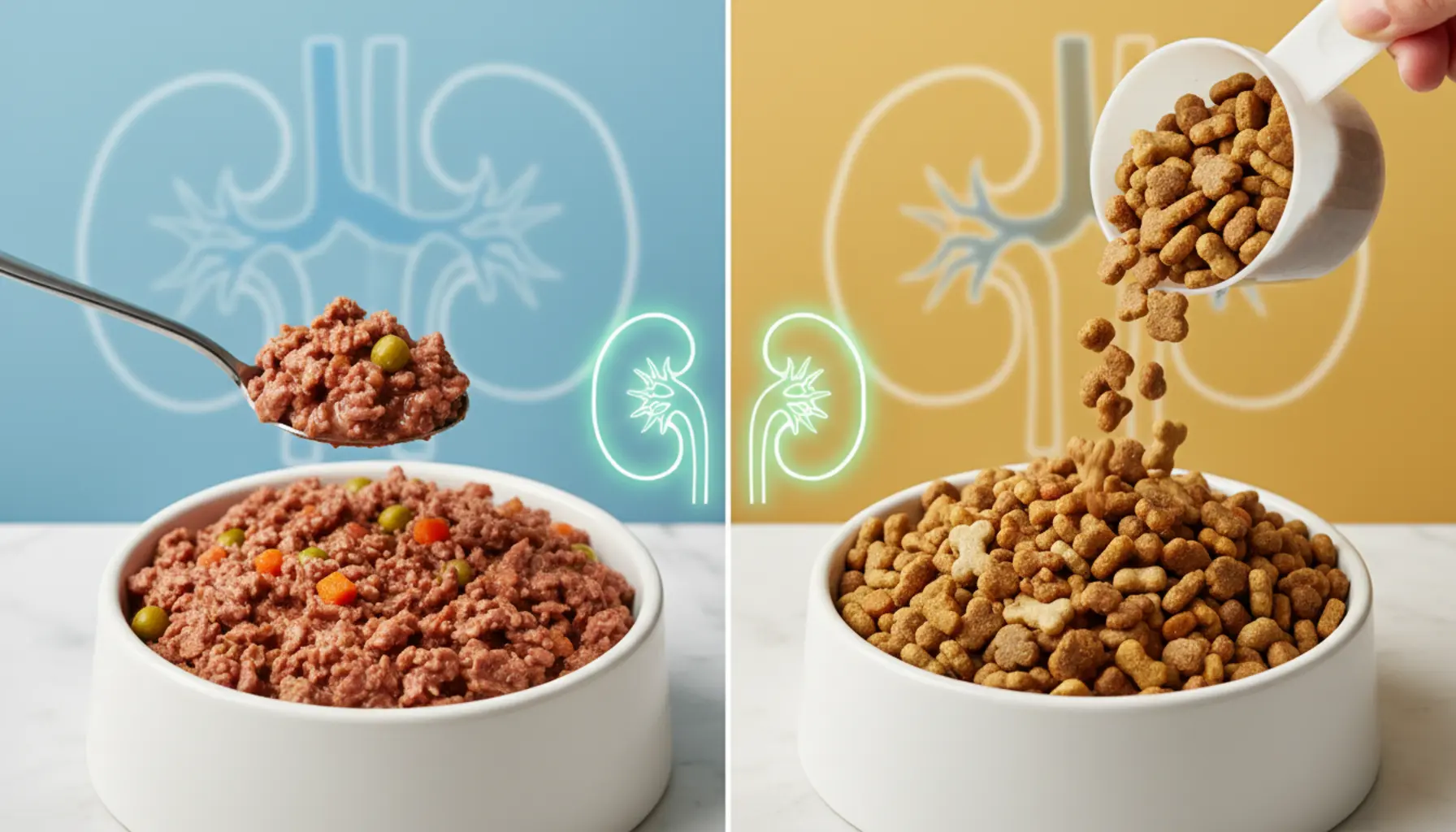
When choosing between dry and wet food for a cat with kidney disease, protein and energy content should also be considered. A renal diet aims for high-quality protein in moderate quantities, while providing enough calories to prevent muscle and weight loss. Wet food has a lower caloric density per gram compared to dry food (due to high water content), which can be a challenge for cats with a poor appetite—they must eat a larger portion to get the same calories. For some animals this is an advantage, as meals seem “larger” and stimulate appetite; for others who eat little, it may help to add some dry or more concentrated wet food to provide more energy in a small portion. Dry food is much more caloric, supporting weight maintenance with small portions, but its composition needs very careful control—standard dry foods for healthy cats usually have protein and phosphorus levels too high for a renal patient. If choosing dry food, use only products clearly labeled “renal”, “kidney”, or “renal diet”, preferably recommended by your veterinarian. Another difference is flexibility: it’s easier to supplement wet food for kidney support—diluting with water or unsalted broth, adding prescribed supplements (e.g., phosphorus binders), mixing flavors within the same brand to avoid boredom. Minerals and special functional ingredients (omega-3, antioxidants, B vitamins) in renal wet foods are often tailored to the kidneys’ specific needs, and the soft consistency helps mix them evenly. Dry kibble is harder to modify—topping with powders may be rejected, soaking does not suit all cats. In practical terms, the difference between dry and wet food is not only water content, but how easily core therapeutic goals are achieved: proper hydration, phosphorus and sodium control, supplying high-quality protein, and maintaining body weight at an acceptable palatability and texture for the cat. For many, a mixed model is optimal—mainly wet food (the base and main fluid source) with carefully chosen, limited dry renal food as a supplement, especially if the cat strongly prefers kibble and it helps maintain appetite.
Impact of phosphorus and protein on sick kidneys
Phosphorus and protein are the two most critical dietary elements for cats with chronic kidney disease; they can slow the disease or significantly worsen it. Healthy cat kidneys efficiently filter excess phosphorus and excrete it through urine, but in kidney disease, this filtration ability is reduced. Excess phosphorus in the blood (hyperphosphatemia) leads to secondary hyperparathyroidism, calcium-phosphorus imbalances, mineral deposits in tissues (including in the kidneys), and faster scarring of nephrons. In practice, a diet high in phosphorus—especially from easily absorbed, inorganic sources (like phosphates in cheap foods)—may significantly shorten the period of residual kidney function. That’s why both dry and wet renal foods have reduced phosphorus and use meat/offal sources with controlled phosphorus. Importantly, phosphorus is closely linked to protein, since protein-rich ingredients (meat, bones, animal by-products) are the main dietary phosphorus source. The more protein in the food, usually the more phosphorus as well, so you cannot look at one without considering the other. Vets aim to keep phosphorus in the lower or central part of the reference range; if a renal diet alone is insufficient, phosphorus binders (taken with food to bind phosphorus in the digestive tract) are added. Carefully reading all food labels—especially dry, often “concentrated” in phosphorus—is especially important, as even foods marketed as “for seniors” may not have sufficiently low phosphorus.
Protein in a diet for cats with kidney disease is a complex topic—cats are obligate carnivores and need protein to maintain muscle, immunity, and normal metabolism. Too much protein causes increased nitrogenous waste (e.g., urea, creatinine), which struggling kidneys cannot excrete, worsening uremic symptoms: nausea, vomiting, appetite loss, and weakness. On the other hand, too little protein results in muscle breakdown, cachexia, and reduced immunity, which is also dangerous as the body becomes weaker. Therefore, the goal is not a “protein-free diet,” but one with moderate, highly digestible, high-quality protein—meaning a dominance of well-absorbed animal sources (muscle meat, quality offal) over low-quality by-products or a lot of plant protein (which has lower biological value and can cause digestive issues for cats). Renal foods are formulated to reduce overall protein but maximize its efficacy, so the cat may receive fewer grams of protein per meal but utilize it better. Owners should monitor several parameters: bloodwork (urea, creatinine, phosphorus), body and muscle condition (e.g., sunken back/thigh muscles), as well as appetite and wellbeing. If switching to a renal diet causes rapid weight loss, either the portion is too low in calories or protein restriction is too severe for the cat’s current state—a dietary correction with the vet is needed. Remember, wet food is naturally less dense in protein and energy per gram, but its high moisture content supports kidneys through hydration; dry food may have concentrated protein and phosphorus, which will burden the kidneys if the wrong product is chosen. Therefore, it’s not just the “renal” label but the actual analytical values for protein and phosphorus, their ratio, and the type of food relative to how much the cat eats daily and the disease stage that matter.
Hydration: how to choose cat food that supports kidney function?
Proper hydration is one of the most important factors in slowing the progression of kidney disease in cats, so food selection should always consider water content and its effect on overall fluid intake. Cats originate from arid environments, have a poorly developed thirst reflex, and naturally obtain most water from food. In cats with chronic kidney disease (CKD), this feature is problematic—the kidneys cannot concentrate urine efficiently, leading to greater water loss and higher dehydration risk. Wet food, containing about 70–80% water, is usually more beneficial than dry (5–10% moisture). Even with a cat that “drinks well,” it’s difficult to compensate for the lack of water in food by drinking, especially in older, weaker cats, or those reluctant to approach the water bowl. When selecting food to support hydration, consider not only declared moisture, but also consistency (pâté, chunks in gravy, mousse), since each cat has different preferences. Some prefer delicate mousses, others clear chunks in sauce or jelly—the more the cat enjoys the food, the more likely it will get the “hidden” water. Adding extra warm, boiled water or pet-safe broth (without salt, spices, onion, or garlic) to wet food is a practical tactic. Often, this quietly increases daily fluid intake by tens of milliliters, which matters in CKD. However, do this gradually to avoid drastically changing the meal’s texture—some cats dislike a watery mush and may refuse to eat. If cats are attached to dry food and it’s hard to quit, minimize its use as “motivation” and provide most energy and protein via wet renal diet, topped up with water. Also, note that some dry renal foods have more fat to boost caloric density—meaning the cat can eat a small volume, feel full, but receive virtually no water. In such cases, strict limitation of kibble to small “treat” portions is key, and wet food must form the foundation. For cats fixated on kibble, gentle soaking in warm water or broth may help at first, but should not permanently replace good, complete wet renal food with reduced phosphorus and adjusted protein.
When choosing food for hydration, its mineral composition also matters, as it directly affects water-electrolyte balance and kidney load. Excess sodium can cause water retention, high blood pressure, and further stress the kidneys, so good renal diets—both wet and dry—have controlled, reduced sodium and phosphorus; this also matters in how the body manages water. High-salt foods (including some snacks/flavored foods) may temporarily increase thirst but are harmful long term for renal patients and should never be used as a “trick” to make cats drink more. Therefore, “do it yourself” treats should be minimized and always consulted with a vet or pet nutritionist. When reading the label, look for clear information that the product is formulated for cats with CKD (veterinary diet, renal, kidney), but also check moisture content—some “renal” foods are only dry, which is not optimal for many cats. In practice, it works well to offer several small portions of wet food throughout the day (supporting stable hydration and better digestive tolerance), with dry kibble, if any, only as a minor supplement. Hydration is also supported by managing the environment: multiple water bowls in the home, ceramic or glass dishes that don’t absorb odors, and water fountains that encourage many cats to drink more thanks to moving, fresh water. Some prefer slightly warm, others very fresh water; observing individual habits is as important as food selection. Also monitor lab parameters—urine specific gravity, creatinine, urea, and electrolytes. If, despite a wet diet and hydration strategies, dehydration persists, the vet might recommend extra support, such as administering fluids subcutaneously at home. Then, a properly selected diet—high in moisture, reduced in phosphorus and sodium, with moderate, highly digestible protein and a flavor accepted by the cat—becomes the foundation of stable hydration, lowering toxic overload, and slowing kidney disease progression.
What to avoid in the composition of cat food for kidney disease
When choosing food for a cat with chronic kidney disease, it’s vital to focus not only on what it should contain, but especially what it should avoid. The first and most important group of ingredients are highly bioavailable sources of phosphorus—those that are easily absorbed and quickly raise phosphorus in the blood. This refers mainly to mineral additives such as “sodium phosphate,” “calcium phosphate,” “phosphates,” “monopotassium phosphate”—the higher they are on the ingredient list, the worse for the sick cat’s kidneys. Large amounts of high-phosphorus offal (e.g., hearts, poultry gizzards, spleen) can also be problematic unless the recipe’s total phosphorus is balanced low. CKD cats should also avoid foods based on “meat meal” and “dried animal protein,” which often contain concentrated phosphorus and are less quality-controlled. Pay attention to excess protein from low-quality sources—generic terms like “animal by-products” or “meat and animal derivatives, 4% beef” imply mostly slaughterhouse waste, cartilage, tendons, feathers, which are less digestible and more taxing on the body. The goal isn’t zero protein, but rather avoiding cheap, hard-to-utilize forms that generate more toxic metabolic waste. Sodium content matters, too: in foods for healthy cats, table salt (sodium chloride) is often used as a flavor enhancer, but for kidney patients, excess sodium makes blood pressure control harder and burdens the cardiovascular system. If the ingredient list shows “salt” or “sodium chloride” high up, or the food is marketed as “super tasty thanks to added salt,” choose another product. High sodium, especially in cats with hypertension, may accelerate kidney blood vessel damage. Another consideration is cheap, highly processed carbohydrates—dry foods often feature corn, wheat, corn gluten, and rice in large amounts. While not direct kidney disease causes, raising carb content at the expense of protein and fat may promote obesity and metabolic disturbances like diabetes, which in turn strain the kidneys further. Low-value grains and fillers (“plant by-products,” “plant fiber,” “bran” in high amounts) add bulk but little nutrition, meaning cats must eat more to meet energy needs—a problem when appetite is already poor with CKD.
Also, avoid foods with many artificial technological additives that can irritate a sensitive digestive tract. Watch for artificial colors (“reds,” “caramel,” “EU-approved colors”), strong aromas and unknown flavor enhancers labeled “flavorings” or “aromas,” and synthetic preservatives like BHA, BHT, ethoxyquin—some are being phased out in certain countries, but still appear in cheaper foods. Cats with chronic kidney failure often have lowered immunity, are prone to nausea and vomiting, and extra irritants can worsen appetite and comfort. Also be cautious with foods rich in low-quality fats—especially unnamed vegetable oils (“vegetable oils and fats”), or non-specific “animal fat,” as these are prone to spoilage and may contain trans fats. High fat in dry food can hinder digestion and increase the risk of diarrhea or constipation in sensitive cats. Beware of “functional” foods with many herbal/mineral additives not specifically intended for CKD cats—large amounts of seaweed add extra iodine and minerals, and high doses of certain herbal diuretics (horsetail, nettle concentrates) can disrupt electrolyte balance. Avoid all-purpose foods “for every life stage,” which generally have too much phosphorus and protein for renal needs. Foods for kittens, young, “active,” or “outdoor” cats are especially phosphorus and protein dense, so even occasional feeding to CKD cats raises phosphorus in the blood and speeds the disease. Be careful with treats: dried meat, by-product chews, cheese, and dog products can be very high in phosphorus and sodium. Avoid snacks containing phosphates, lots of salt, artificial coloring, and sugar (glucose syrup, caramel), since even small but regular portions can negate the effect of a well-chosen renal diet. In summary, the best guideline is a simple, transparent composition, without unnecessary fillers and aggressive additives, with clearly specified sources of protein and fat, and low in phosphates and salt—the fewer vague ingredient terms, the safer for the kidneys.
How to choose the right diet with a veterinarian’s help?
Choosing a diet for a cat with kidney disease should always begin at the vet’s office, not at the store or on the internet. The veterinarian—ideally with nephrology or animal nutrition experience—will first order basic tests: blood count and biochemistry (including creatinine, urea, phosphorus, calcium, electrolytes), SDMA, general urinalysis including specific gravity, and often an abdominal ultrasound. Based on this, they will determine the stage of chronic kidney disease (CKD) according to IRIS classification and check for complications such as hypertension, anemia, dehydration, or electrolyte disturbances. This comprehensive diagnosis is the foundation for food selection: one diet is needed for a cat in CKD stages I–II, another for advanced disease with severe symptoms, appetite loss, vomiting, and significant weight loss. During consultation, the vet will take a detailed feeding history: what the cat has previously eaten (brands, flavors, ratio of dry to wet food, homemade meals), in what quantities, and how it reacted to various products (diarrhea, vomiting, bloating, food refusal). This helps select renal food that both meets medical criteria (reduced phosphorus, moderate, highly digestible protein, suitable fat and energy, balanced sodium, potassium, omega-3 fatty acids) and has the greatest likelihood of being accepted by the specific cat—considering taste and texture preferences (pâté, chunks in gravy, mousse, dry food).
It’s vital to discuss the process for introducing the renal diet—the vet’s guidance doesn’t end with just prescribing “some” food. A gradual transition plan should be proposed—usually over 7–14 days—starting with 10–20% new food mixed with the old and successively increasing the portion of renal food to minimize rejection and skipping meals. For particularly picky cats or those with severe appetite loss, the vet may recommend appetite stimulants, anti-emetics, or gastric protectants to facilitate the diet change. Together with the owner, a practical feeding model should be established: how many meals per day, whether scheduled meals or ad libitum is better, whether to combine wet renal food with a limited amount of dry, and if so, in what proportions and with what water intake. The vet can suggest specific brands and lines of veterinary foods, compare labels, or even recommend rotating several flavors of the same renal diet to minimize boredom. Regular checkups are essential: typically, after 4–6 weeks of the new diet, repeat basic blood and urine tests, weigh the cat, assess muscle condition (BCS, MCS), hydration, and general well-being. Based on results, the diet often needs minor corrections—increased or decreased calories, another food with lower phosphorus, extra supplements (e.g., phosphorus binders, omega-3s, B vitamins), or adjusted ratio of dry to wet food. Well-managed cooperation with the vet is continuous: the owner observes the cat at home—how much and willingly it eats, how often it drinks, if vomiting, diarrhea, constipation, or behavioral changes appear—the vet interprets this in context of test results and disease progression. Diet is thus not a rigid “food recipe,” but a flexible therapeutic tool, continuously customized to the needs of the cat with kidney disease.
Summary
Choosing the right diet for kidney disease in cats is crucial for their health and quality of life. The most important aspects are phosphorus restriction and caring for proper hydration, which usually means prioritizing wet over dry foods. Food composition and caloric value should be individually adjusted, ideally with a veterinarian’s help. By avoiding kidney-straining ingredients and providing the right amount and type of protein, we can slow the disease and improve our pet’s wellbeing. Selecting the right food and monitoring renal parameters are the foundation of effective support for a cat with nephrological problems.

