

The Iriomote cat is an extremely rare and endangered species of wild cat found exclusively on a single island in Japan. The distinctive features of the Iriomote cat set it apart from other felines, and its role in the local ecosystem is invaluable. Discover fascinating facts about its life, habitat, and unique adaptations.
Table of Contents
- Characteristics of the Iriomote Cat
- Habitat and Distribution
- Diet and Feeding Traits
- Threats and Conservation
- Unique Traits of Iriomote Cats
- Significance for the Ecosystem
Characteristics of the Iriomote Cat
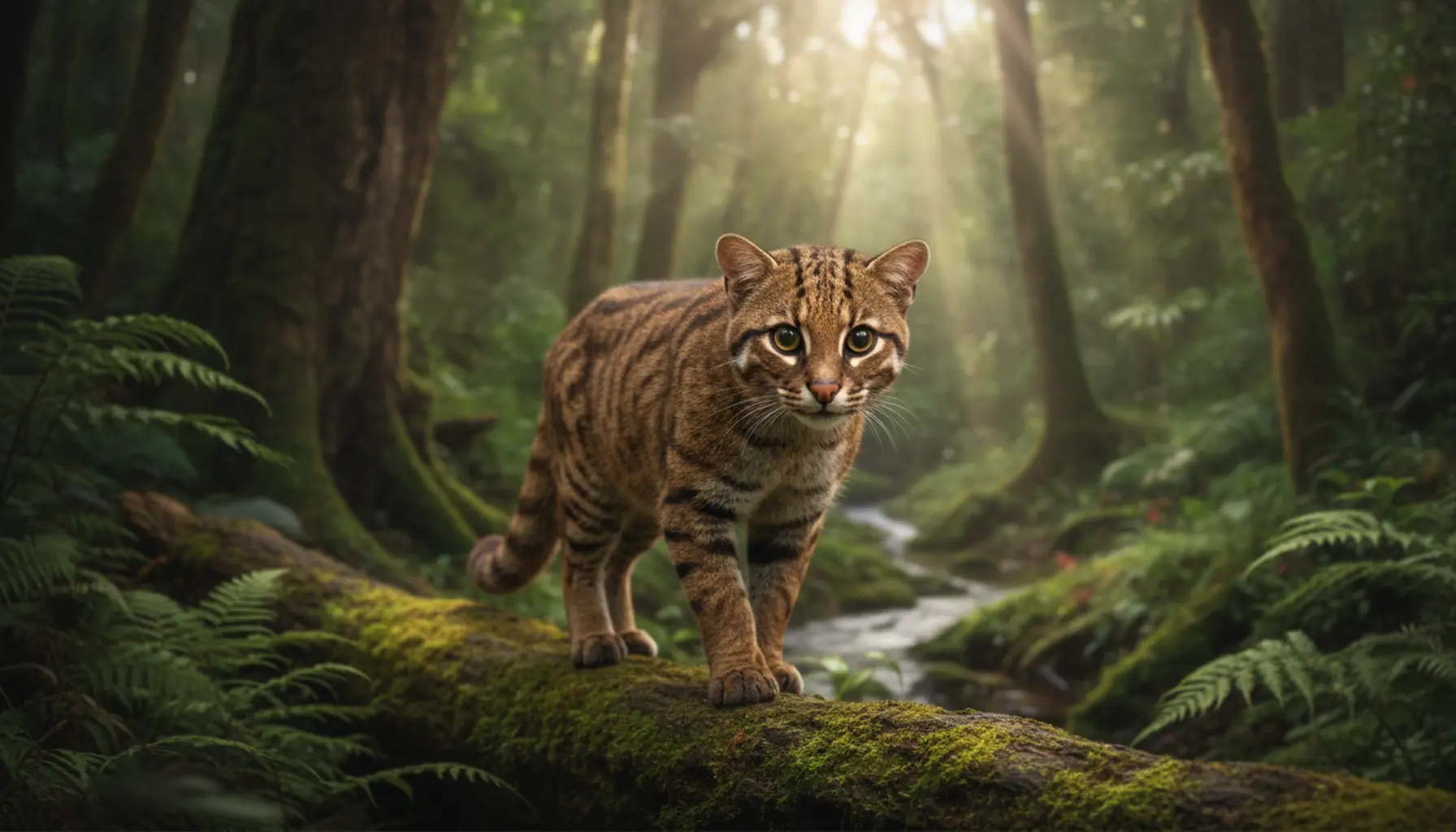
The Iriomote cat (Prionailurus bengalensis iriomotensis) is a small, endemically occurring subspecies of the leopard cat, but in terms of appearance and behavior, it differs significantly from typical wild cats known from the mainland. Adult individuals usually reach a body length of 50 to 60 cm, with a relatively short, sturdy tail measuring about 20–25 cm. The shoulder height is on average about 25–30 cm, and the weight of Iriomote cats ranges between 3 and 5 kg, with females generally being slightly smaller than males. The body build is stocky and muscular, giving these cats a more “grounded” look rather than a slender one—an adaptation to dense, humid forests and the need to move efficiently on the ground and in trees. The Iriomote cat’s head is relatively broad, with a short muzzle, prominent cheeks, and sharply defined brow bones, which, together with large, yellowish or golden-brown eyes, gives its gaze an intense and alert look. The ears are short, rounded at the tips, and dark in color, often with a delicate, lighter spot on the inner side, functioning as a signal to other cats and young. The Iriomote cat’s fur ranges from dark brown to brownish-gray and is noticeably denser and coarser than that of domestic cats, providing protection from moisture, heavy rainfall, and thicket vegetation. Across the body, darker spots and irregular patches are visible, sometimes forming strip-like outlines—this camouflage works perfectly in the semi-darkness of the forest and among leafy vegetation. On the legs and tail, the pattern is more striped, while the belly is lighter, often cream or light beige. The tail, though short, is thick and bushy, which helps maintain balance while climbing and jumping. Compared to domestic cats, the Iriomote cat’s limbs are relatively shorter and more robust, with wide paws and strong claws, increasing traction on wet ground, mud, roots, and rocks. Distinct vibrissae are also characteristic—long, stiff sensory hairs on the muzzle and above the eyes, allowing the animal to “sense” the surroundings in darkness and dense undergrowth, assessing distances to obstacles or prey.
In terms of behavior, the Iriomote cat is a typical loner, showing high territoriality and caution toward strangers and humans. Its daily activity is mainly nocturnal and crepuscular: its peak hunting times are early evening and dawn, though field observations have shown that during rainy seasons or with less human movement, these cats can be active during the day as well. Male territories are generally larger than those of females and may overlap, but animals avoid direct confrontations, relying on scent marking, scratching tree trunks, and leaving droppings at strategic points. The Iriomote cat’s vocal repertoire is quite rich—from quiet purrs and communicative grunts to warning hisses and growls during threats or mating disputes. Although this species has retained strong hunting instincts, its diet is surprisingly diverse: it includes small mammals (rodents, bats), birds, amphibians, reptiles, large insects, and even crabs and fish, which the cat can catch in shallow streams and coastal waters. Thanks to this, it is an excellent example of an opportunistic predator able to exploit almost any available food niche in the limited island space. Iriomote cat breeding typically occurs once a year; estrus appears most often between February and April, although in the subtropical climate it can shift slightly. After a gestation period of about 60 days, the female usually gives birth to one to three kittens, which remain with their mother for several months, learning hunting techniques and orientation in the terrain. A particular feature is the very low natural increase and high juvenile mortality, which, combined with the restricted range, makes the population extremely sensitive to any environmental change. Although the Iriomote cat is formally a wild species, local communities often consider it a “spirit of the forest”—a secretive animal, rarely seen, extremely intelligent and perfectly adapted for life at the meeting point of dense forests, mountains, and coastal valleys, with a range of specialized physical and behavioral traits that make it one of the world’s most unique felids.
Habitat and Distribution
The Iriomote cat is one of the most locally restricted predators in the world—its entire natural range is confined to a single, small Iriomote Island in the Yaeyama archipelago in southern Japan. The island, covering just over 280 km², is largely covered with dense, subtropical forests and mangrove river valleys, creating a complex mosaic of microhabitats. This landscape diversity has led the Iriomote cat to develop remarkably flexible habitat preferences, though always closely tied to areas with relatively low human impact. It is most numerous in transitional zones between evergreen mountain forests and river valleys, where it has easy access to both shelter and abundant food sources. It readily uses overgrown stream banks, dense bamboo undergrowth, and shrubs growing near rice fields and small pastures where human activity is low. Its presence is recorded from sea level up to higher parts of the island’s interior, though the highest densities are found near lowland river valleys and mangrove regions, where prey is most abundant and the terrain structure provides perfect camouflage and numerous hiding places. Iriomote’s climate—humid, with abundant rainfall and warm temperatures year-round—favors lush vegetation but also poses a challenge: frequent typhoons and seasonal floods periodically alter habitat patterns, requiring the cat to be highly mobile while searching for calmer territories. Telemetry observations show that individuals of this subspecies willingly move along natural corridors—dry ridges, animal forest paths, and overgrown service roads—which let them minimize contact with open spaces and human structures.
The distribution of the Iriomote cat on the island is patchy and highly dependent on habitat quality, food availability, and human pressure. Field studies indicate the population is mainly concentrated in the central and northwestern parts of the island, where relatively undisturbed forests and a developed network of rivers and streams dominate. In these areas, protected areas have been designated, further supporting the maintenance of suitable environmental conditions. Nevertheless, the Iriomote cat is also observed near human settlements, especially where cultivated fields, small irrigation ponds, and household grain stores attract rodents and other potential prey. Such proximity to humans, however, brings risks of road collisions and conflicts with pet owners. Individual territory ranges are relatively large compared to the island’s surface area: males can occupy territories of up to several dozen square kilometers, while females usually patrol smaller areas partially overlapping with male territories. The structure of these areas is dynamic—during periods of low prey availability, cats expand their territories, exploring new fragments of forest or abandoned fields, while in seasons of food abundance, they limit activity to key foraging spots. Particularly important are natural buffer zones such as tree belts between roads and forests or narrow vegetative corridors along watercourses, enabling relatively safe movement between habitat patches fragmented by infrastructure. Landscape fragmentation caused by road construction, tourist resorts, and port infrastructure is making the island start to resemble an archipelago of isolated “habitat islands” within Iriomote itself. For such a rare and spatially restricted species, this is hugely significant: limited exchange of individuals between subpopulations increases the risk of inbreeding, while blocked migration corridors can prevent the recovery of local groups after natural disasters or periods of increased mortality. That’s why modern conservation strategies focus not only on preserving the most valuable forest or mangrove patches but also on maintaining habitat continuity and functional ecological corridors that allow Iriomote cats to retain their natural, dispersed island-wide distribution.
Diet and Feeding Traits
The Iriomote cat is a specialized yet flexible predator whose diet reflects the complex subtropical ecosystem of the island. Field studies using scat analysis and direct observations show that small mammals, such as rodents and bats, dominate the menu, but birds, amphibians, reptiles, and aquatic organisms—fish and crustaceans—also play a significant role. Compared to many other small felines, the Iriomote cat utilizes aquatic resources much more frequently, hunting animals in streams, irrigation channels, and the coastal mangrove forest zone. This dietary versatility allows it to survive in an environment subject to seasonal changes in prey availability and also makes it an important regulator of various animal group populations on the island. The Iriomote cat’s food preferences change with the season: during rainy months, the proportion of amphibians and water-associated species increases, while in cooler, drier periods, small land animals dominate the diet, including rodents inhabiting fields and settlement edges. However, this flexibility has its limits—the cats avoid plant-based foods and remain obligatory carnivores, whose digestive systems are adapted to process high-energy animal proteins and fats. Another characteristic is their ability to hunt in diverse microhabitats: in dense undergrowth, on wet meadows, in tree canopies (after birds and bats), and in riverbeds, where they can submerge their paws or even their whole body to catch fish or crabs. Unlike many felines that avoid water, the Iriomote cat uses it as an important food source, marking one of its key ecological adaptations. The timing of hunting activity is also crucial: most hunts occur at night and during dusk, when many prey are least alert and the temperature and humidity support silent movement in the forest litter and mangrove thickets.
The Iriomote cat’s feeding traits are closely tied to its morphology, behavior, and territory structure. Its stocky build and relatively short limbs favor stalking over short distances, which is crucial for hunting prey in dense undergrowth and on slippery, muddy riverbanks. A broad head and strong jaws allow them to efficiently grasp and quickly kill prey of varying sizes, from small amphibians to larger birds or hard-shelled crabs. Due to the small and scattered population, Iriomote cats rarely directly compete for food, but their territories must contain sufficiently rich hunting resources to ensure stable survival. Males usually have larger individual ranges than females, partly due to the need to cover more potential hunting sites. High flexibility in prey choice is both an asset and a risk: on the one hand, the Iriomote cat can exploit prey associated with anthropogenic habitats, such as rodents in crop fields; on the other, approaching human settlements increases the risk of vehicle collisions and contact with zoonotic diseases carried, among others, by domestic cats. Bioaccumulation of toxins and pollutants, such as agricultural pesticides, can also be a potential problem, entering the food chain through rodents or aquatic organisms eaten by the cat. The small population size means that any reduction in key prey availability—e.g., due to wetland drainage, dam construction, or mangrove degradation—can translate to reduced breeding success and further population decline. For this reason, conservation efforts increasingly focus not just on the species itself, but on the entire food web it is part of: maintaining small mammal diversity, protecting amphibian breeding habitats, river restoration, and reducing water pollution. Only by ensuring a stable food base in various island environments—from mountain forests to coastal zones—can we realistically secure the long-term survival of the Iriomote cat and preserve its highly specialized feeding traits.
Threats and Conservation
The Iriomote cat is one of the world’s most endangered wild cats, and its survival depends on a delicate balance between nature’s needs and human development on the island. The most serious threat remains habitat loss and fragmentation linked to infrastructure expansion—primarily roads, residential buildings, and tourist facilities. Iriomote Island, promoted as “wild Okinawa,” is attracting more and more visitors, leading to the expansion of road and parking networks and the conversion of natural areas into recreational zones. For the Iriomote cat, this means the once-continuous forests are being cut into smaller patches, between which moving is difficult and dangerous. Habitat fragmentation disrupts population structure: small subpopulations are more vulnerable to inbreeding, reduced genetic diversity, and local extinction. Additionally, land conversion for agriculture, especially sugar cane plantations and other crops, limits access to natural foraging grounds and hiding places. Another key threat is diseases carried by domestic animals—including cats and dogs living in human settlements. Pathogens such as feline leukemia virus (FeLV), feline AIDS (FIV), or parasitic diseases can enter the wild population and cause weakened immune systems, reduced fertility, and high young mortality. The appearance of invasive species in the ecosystem, such as rats, mongooses, or feral domestic cats, creates extra food competition and can also lead to predation on Iriomote kittens. Climate change is another, less obvious but long-term threat—stronger typhoons, longer droughts, or disrupted rainfall cycles can affect prey availability (amphibians, birds, small mammals), as well as vegetation structure in forests and mangroves, indirectly changing habitat quality. A significant risk is also posed by potential conflicts with humans—although the Iriomote cat rarely attacks livestock, sporadic cases can lead to attempts to eliminate the predator or negative attitudes among locals toward conservation efforts. Underpinning all these factors is the fundamental problem—a tiny and scattered population, so every road accident, disease, or local habitat loss disproportionately impacts the entire species.
Protecting the Iriomote cat is a complex process combining legal actions, spatial management, scientific monitoring, and cooperation with local communities and the tourism sector. The species has been recognized in Japan as a natural monument with the highest protection class, and Iriomote Island is partially designated as a national park and protected area. This creates formal frameworks to restrict development in key habitats, ban hunting, and control infrastructural investments. On many road sections, speed limits have been implemented, especially at night when cats are most active, and warning signs have been erected to alert drivers of possible wild cat presence. In critical locations, such as crossings between river valleys, special underpasses and green corridors are built to allow animals to cross roads safely. Simultaneously, monitoring cameras are installed, and all collision cases are registered to constantly improve preventive measures. An important foundation of conservation is controlling the number and health of domestic animals—neutering programs for cats and dogs, mandatory vaccinations, and owner education minimize the risk of disease transmission to wild populations and limit the spread of feral individuals. Conservation organizations, in cooperation with local authorities, conduct awareness campaigns, educating residents and tourists about why they should not feed stray animals or let domestic cats roam freely. Scientists employ non-invasive monitoring methods such as camera traps, scat analysis, or radio collars on selected individuals to monitor territory sizes, population dynamics, and Iriomote cat health. Data collected help identify key areas that must remain untouched or be restored as ecological corridors. Active conservation actions are also considered, such as mangrove habitat restoration, rehabilitating degraded forest lands, and reducing agricultural chemical usage, which all contribute to the ecosystem’s biodiversity. A crucial component is developing the concept of sustainable tourism: establishing nature trails with limited admission, introducing quotas for visits to the most sensitive spots, certifying “nature-friendly” accommodation, and training guides who teach tourists about responsible conduct on the island. This way, visitors can enjoy Iriomote’s nature while minimizing their impact on the cat’s habitat. Simultaneously, educational programs are run for schools and local communities, stressing the cultural and ecological importance of the Iriomote cat as a symbol of the island. Building pride in the local “treasure” encourages acceptance of development restrictions and willingness to engage in conservation initiatives, from local patrols to volunteering in scientific projects. In the long run, saving the Iriomote cat requires maintaining habitat coherence, further refining legal protection, and continuous dialogue between administration, scientists, residents, and the tourism industry, so every aspect of the island’s socio-natural landscape harmonizes with the needs of this unique predator.
Unique Traits of Iriomote Cats
The Iriomote cat stands out with its set of morphological, behavioral, and ecological traits, making it one of the world’s most remarkable wild cats. At first glance, it resembles a chunky domestic cat, but its body is clearly adapted for life in dense, humid forests and the coastal zone. It has a strong, elongated torso, short but very strong limbs, and a relatively long tail that acts as a “balance” when moving across steep slopes and through dense vegetation. The Iriomote cat’s head is broader than that of most leopard cat subspecies, with clearly marked cheekbones and large, rounded eyes providing excellent twilight and night vision. The ears are short, rounded, and lack prominent tufts, reducing the risk of snagging on branches and vines while stealthily approaching prey. Its fur is dense, relatively coarse, and highly protective against rain and moisture—ranging from dark brown to grayish-brown with irregular spots, which sometimes blend into faint stripes on the body sides. This atypical masking pattern perfectly blends it into the mosaic of leaves, shadows, and tree limbs of Iriomote’s subtropical forests. The unique hair structure includes an especially dense undercoat, enabling survival during both heavy monsoon rains and cooler, foggy nights in mountain valleys. Compared to other Asian wild cats, its claws are relatively short but very sharp and strong, ideal for climbing slippery tree trunks and capturing prey in challenging, wet terrain. Another distinctive feature is the widely spaced paw pads that provide extra grip on muddy ground and in mangrove zones; combined with a partially webbed structure between toes, this makes it easier to move through marshy terrain and even shallow water.
The uniqueness of the Iriomote cat is also manifested in its behavior and adaptive strategies for the limited space of the island. Unlike many other wild cats, which are specialists in hunting, for example, in tree canopies or open grasslands, the Iriomote cat is an outstanding “environmental generalist.” It can move with equal efficiency across steep, forested slopes, dense bamboo thickets, and mangrove zones, where during low tide it hunts crabs, fish, and small invertebrates. This “amphibious” ecology is one of its most peculiar distinguishing features: few wild cats in the world so consistently explore both terrestrial and aquatic environments. Its flexibility in daily activity is also unique—although generally considered a nocturnal and crepuscular species, field observations show that it can shift its activity peak depending on human traffic, weather, and seasonal prey. During overcast or rainy periods, it may be more active during the day, taking advantage of reduced human presence in the forest; during the tourist season, it shifts to late-night hours. Socially, the Iriomote cat is a classic loner, but its territoriality is specific; male territories may overlap with several females, increasing breeding chances in a small population while limiting intense resource competition. Its vocalizations differ somewhat from the typical domestic cat “meow”—they are short, hoarse sounds similar to a cross between a purr and a squawk, used for territorial and mating communication in the dense forest where visibility is low. Locally, the Iriomote cat is seen as having an “invisible presence”: it is rarely seen directly, being revealed more often by paw prints in mud, scat on forest paths, or leftover prey remains. This discretion stems not only from innate shyness but also from unusual caution—the species is very sensitive to noise and light, thus avoiding illuminated roads and buildings. Compared to other felines, it is also notable for the relatively long period in which its young remain dependent on the mother; kittens learn complex hunting strategies in various microhabitats and ways to avoid dangers like roads or humans. This set of traits—from morphology to behavior—makes the Iriomote cat perfectly suited to the specific conditions of its small, subtropical island, while being extremely sensitive to any changes in its ecosystem.
Significance for the Ecosystem
The Iriomote cat plays a crucial role in the subtropical ecosystem of the island, acting as an apex predator in the local food web. Despite its small size, it is one of Iriomote’s few native medium-sized predators, making it the main regulator for many small vertebrate species. By preying on rodents, small mammals, birds, reptiles, amphibians, and aquatic organisms, it balances herbivores and vegetation, preventing excessive grazing of undergrowth and young trees. As a result, it indirectly influences forest structure, vegetation regeneration, and preservation of biodiversity in river valleys and mangrove forests. As an opportunist species that adapts its diet to seasonal prey, it helps stabilize the dynamics of various animal groups—during the rainy season it heavily reduces amphibians and semi-aquatic animals, while in dry periods it focuses on rodents and birds. This dietary flexibility is an important “buffer” against rapid fluctuations in lower-order species’ numbers, which matters in a relatively small and isolated island ecosystem. By utilizing both terrestrial and aquatic habitats, the Iriomote cat links the mosaic of habitats—forests, swamps, crop fields, mangrove river mouths, and rocky coasts—into one functional whole. As it moves between them, it transfers nutrients and energy and also influences the behavior of its prey, which modify their activity and movement paths to avoid the predator. The so-called “landscape of fear” created by the Iriomote cat’s presence reduces excessive browsing in sensitive zones, such as young woodlands or watercourse banks, aiding soil protection and limiting erosion. Its indirect impact is visible in aquatic ecosystems as well: regulating the numbers of invertebrate and small fish-eating species can affect water clarity, aquatic plant structure, and the living conditions of other organisms dependent on these habitats.
Ecologically, the Iriomote cat is also an indicator and umbrella species. As a high-level predator in the food chain, it quickly reacts to changes in available prey, habitat quality, and pollution—the cat’s condition and behavior thus mirror the overall state of the ecosystem. A decline in Iriomote cat numbers can signal a depleted food base, degraded forests, altered river valleys, or loss of connectivity in ecological corridors. Protecting this cat, in turn, requires preserving extensive, diverse, and undisturbed habitats—from primary subtropical forests and secondary woods to mangrove coasts—which automatically translates to the conservation of dozens of other, less publicized plant and animal species. This “umbrella effect” includes both rare and endemic species (such as local amphibians, marsh birds, and mangrove forest invertebrates), as well as those with vital ecosystem functions, including pollinators and seed dispersers. The presence of the Iriomote cat also affects entire animal assemblages. By reducing the numbers of dominant rodents, it may lower competitive pressure on other, weaker species, allowing stable populations. It also reduces seed and seedling predation by small mammals, aiding in forest renewal and increasing tree species diversity, which shapes the island vegetation mosaic in the long run. For local communities and protected area managers, the Iriomote cat is also a crucial link between nature protection and sustainable tourism. Its status as the “island’s symbol” draws attention to the need to preserve natural ecological processes, prevent habitat fragmentation, and limit anthropogenic pressure. The island functions as a complex system, where the disappearance of a single key element—such as an apex predator—could trigger a trophic cascade, leading to unpredictable changes in forest structure, animal populations, and the quality of ecosystem services such as flood protection, carbon storage, or local climate stabilization. For this reason, the Iriomote cat is not only a biological treasure of Japan, but also a living indicator of the ecological integrity of the entire island.
Summary
Iriomote cats are exceptional creatures inhabiting a limited area of the Japanese island. Their adaptations to wild environments and the threats they face make them key to understanding the local ecosystem. Due to their critically endangered status, conservation actions are extremely important. Cooperation among scientists, local communities, and international organizations is essential to ensure the survival of this species. It is worth continuing to study these fascinating cats to better understand their role in nature and promote their conservation.

