
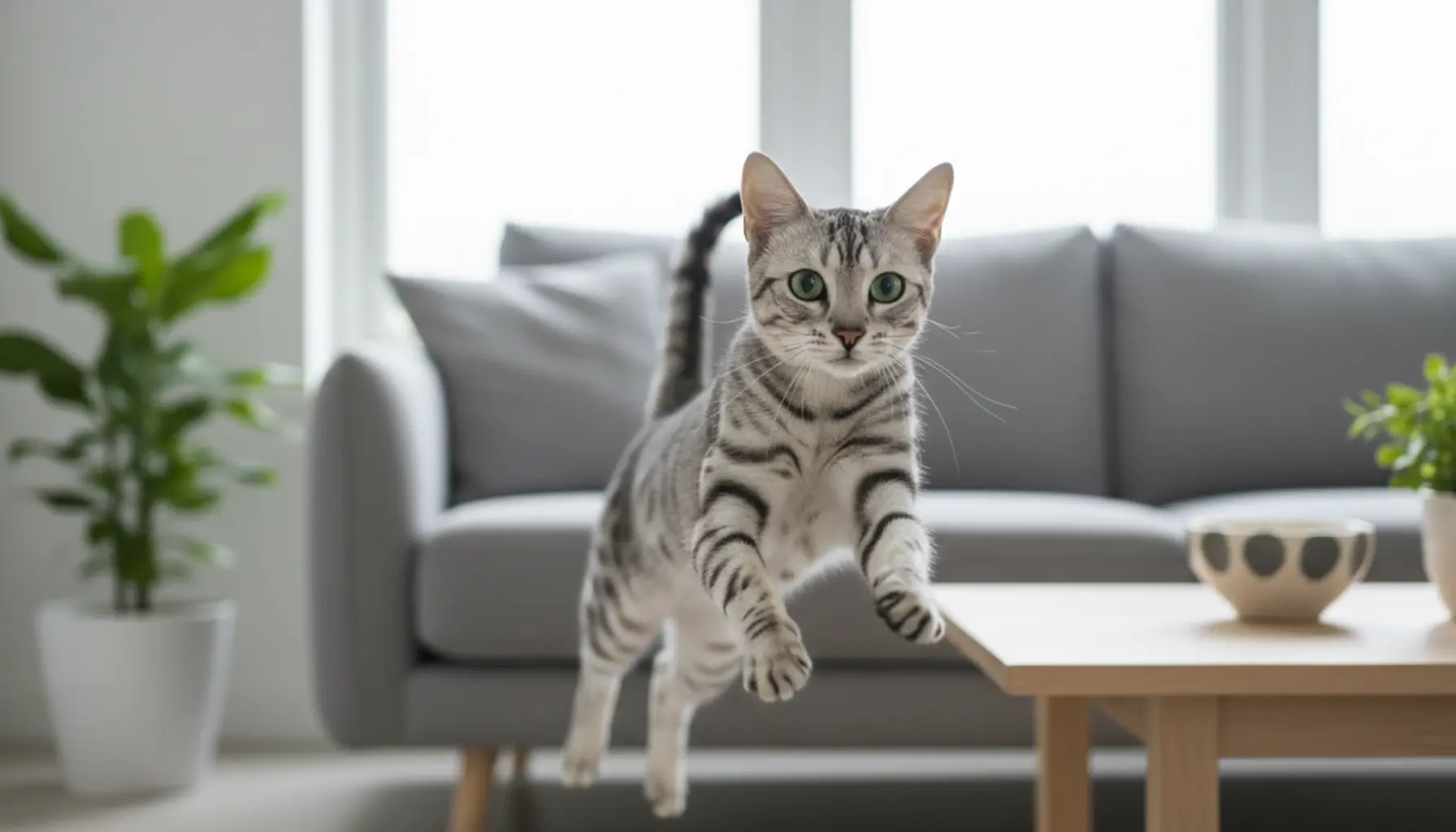
The Egyptian Mau cat is an exceptionally rare domestic cat breed with a distinctive appearance and a lively, devoted temperament. Read about the history, appearance, grooming, and living conditions of this exceptional breed and find out if the Egyptian Mau will be a good choice for you.
Egyptian Mau Cat – learn more about the temperament, price, appearance, and grooming of this unique cat breed. Find out if this is the perfect cat for you!
Table of Contents
- Egyptian Mau Cat – history and origin of the breed
- Appearance and coat pattern – what makes the Mau stand out?
- Character and temperament of the Egyptian Mau
- Grooming, health and life expectancy of the Egyptian Mau cat
- Egyptian Mau at home – who is this breed for?
- Price and choosing an Egyptian Mau cattery
Egyptian Mau Cat – history and origin of the breed
The Egyptian Mau cat is one of those breeds around which an exceptionally large number of legends and romantic stories have grown. It is often claimed to be “the oldest cat breed in the world” and a direct descendant of the sacred cats worshipped in ancient Egypt. Indeed, on wall paintings, reliefs, and papyri several thousand years old, we see slender, spotted cats with large, almond-shaped eyes and the characteristic “m” on the forehead, bearing an amazing resemblance to the modern Mau. Cats in Egypt were given almost divine reverence – they were associated with the goddess Bastet, the protector of the home, fertility, and joy, and killing one could be punished by death. There are accounts of funeral ceremonies where a cat was mourned like a family member, and mummified animals were buried in special necropolises. This historical and cultural context led to the modern breed being named “Egyptian Mau” (from the Arabic “mau” – simply “cat”) and surrounded by an aura of uniqueness. Modern feline geneticists are more cautious – although it is impossible to conduct a direct “DNA test” of ancient paintings, genetic analysis indicates that the Mau truly belongs to the more primitive types of domestic cats, close to natural populations of the Middle East and North Africa. It is believed that the ancestors of this breed have inhabited the Egyptian region for a very long time, and their present appearance is largely a continuation of a naturally developed phenotype: a medium-sized, muscular cat with a short, spotted coat and an athletic figure. However, it is crucial to distinguish between the historical “Egyptian cat” as a phenomenon in ancient culture and the modern registered breed “Egyptian Mau”, whose standard emerged only in the 20th century.
The modern story of the Egyptian Mau cat begins in the 1950s and is primarily associated with one person – Russian Princess Nathalie Troubetskoy, who lived in Italy after World War II. According to the most frequently cited version, the princess came into possession of a unique, spotted female cat from the Middle East or Egypt (depending on the source, it was a diplomatic gift, a cat found at an embassy, or an animal brought by friends from Cairo). Fascinated by the animal’s appearance and lively temperament, she began searching for similar cats among natural populations in the Mediterranean and North Africa. Thus, a small but unique founding group was created, from which the princess started planned breeding. In 1956, Troubetskoy emigrated to the United States, taking her cats with her and establishing the “Fatima” cattery, which played a key role in shaping the modern breed standard. The first American Mau litters drew tremendous interest – until that time, there had not been an official breed of naturally spotted, shorthaired cat with such a slender, “wild” silhouette and exceptional expression in the feline world. Thanks to consistent breeding work, attention to balanced temperament, and maintenance of a natural, unexaggerated type, the breed was gradually recognized by various feline associations. In 1968, the Egyptian Mau received preliminary recognition in the USA, in 1977 the American CFA (Cat Fanciers’ Association) granted it full show privileges, and then the breed was accepted by TICA and European federations, including FIFe. Initially, the population was very limited, posing a risk of a narrow gene pool – for this reason, over the following decades, individuals from Egypt and other regions of the Middle East that matched the desired type were carefully incorporated into breeding programs. Thus, the modern Egyptian Mau is a relatively young breed in terms of formal feline breeding, but deeply rooted in the natural cat populations of Egypt and its surroundings. Its contemporary image – a cat with short, shiny fur marked with distinct, randomly arranged spots, large, slightly slanted “gooseberry green” (green-yellow) eyes, and a distinctive facial expression – is the result of a blend of tradition and modern breeding selection. This distinguishes the Mau from other spotted breeds, such as the Bengal, whose appearance is the product of more intensive breeding and crosses, as well as from typical European domestic cats. At the same time, many breed fans point out that when looking at the modern Mau, it’s easy to see a “shadow” of the ancient temple and palace cats of Egypt, further strengthening its unique, almost mythical image in the eyes of owners.
Appearance and coat pattern – what makes the Mau stand out?
The Egyptian Mau is one of those breeds you recognize at first glance – mainly due to its natural, distinctly spotted coat. Its silhouette is medium-sized, but strongly muscled and supple, immediately betraying the presence of an extremely agile and fast cat. The body is slightly elongated, with a deep chest, slender yet strong torso, and well defined shoulder blades. The hind legs are somewhat longer than the front ones, giving the Mau a characteristic “ready-to-pounce” stance – it often looks like a cat about to burst into action. The head is wedge-shaped with rounded contours, lacking a sharply marked triangle; cheeks are gently full, and the muzzle is softly outlined. Its ears are generally medium to large, broad at the base, slightly rounded at the tips, often with obvious “tufts” or shading, further emphasizing the predatory, “wild” character of the breed. One of the most captivating features of the Mau is its eyes – large, slightly almond-shaped, set a bit obliquely, with a distinctive, “worried” expression. The breed standard prefers an intensely green eye color, often described as “gooseberry”. In young cats, the eyes can be yellowish or amber and gradually turn green with age, usually by around 18 months. Above the eyes, there is the so-called “eyeliner” – dark outlines and extended lines running from the outer corners, creating the impression that the cat is delicately “made up”, just like cats depicted in ancient Egyptian art. On the Mau’s forehead, there is often a distinctive pattern resembling the letter “M” or a scarab – this is common in many spotted and tabby cats but is particularly desired and prominent in the Mau, reinforcing the breed’s “mythical” reputation. The tail is of medium to long length, thicker at the base, tapering towards the end, and finished with a strongly defined dark tip; there are darker rings along the tail, the number and clarity of which vary by individual. The Mau’s body structure is harmonious – it is neither overly delicate nor heavy like larger semi-long haired breeds; it rather resembles a miniature wild cat: strong, springy, and ready to move, while still maintaining elegance and smooth lines.
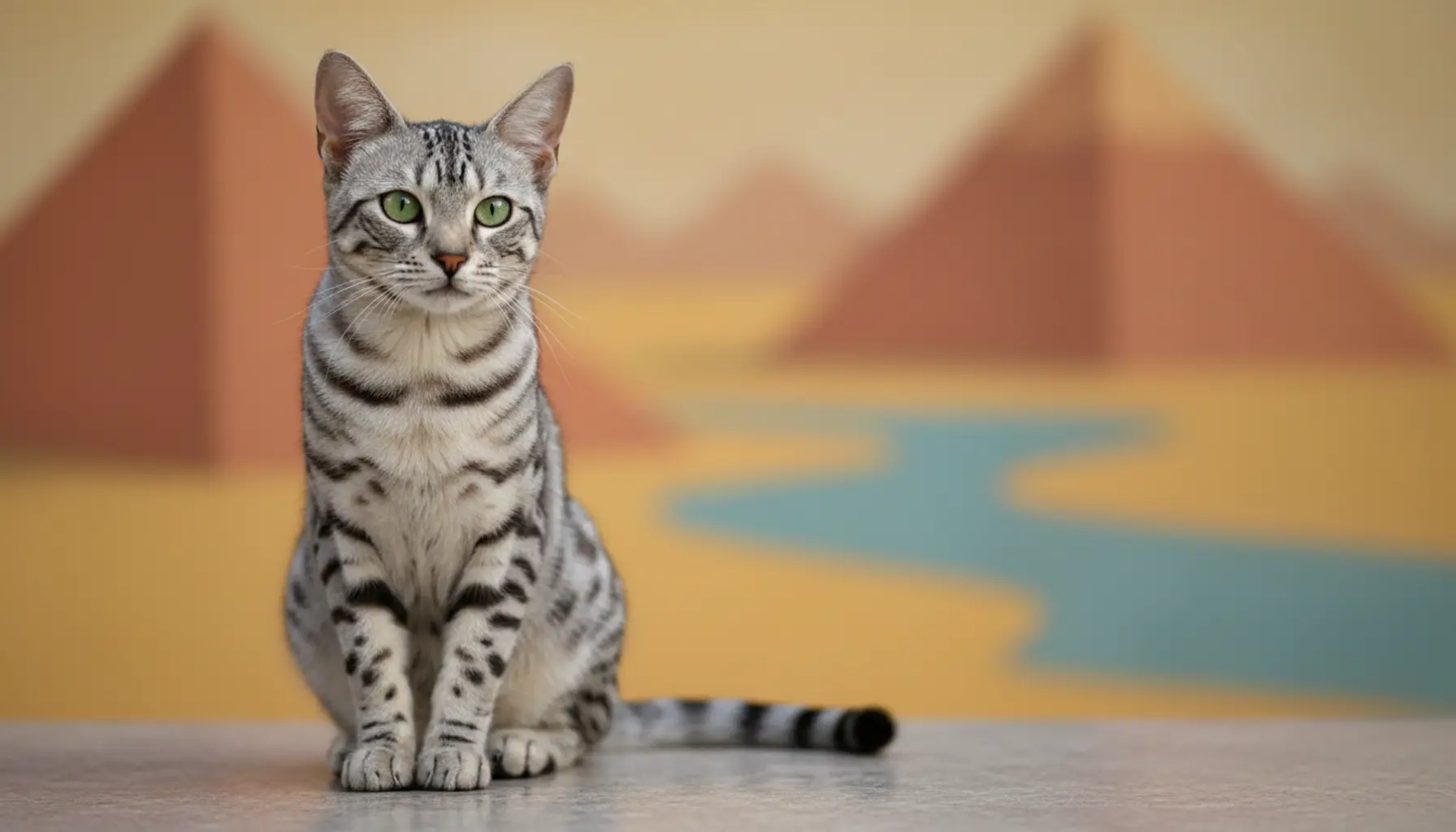
The breed’s most recognizable feature, however, is its fur and its spots. The Mau has a short to medium-length, delicate-to-the-touch coat that lies closely to the body with a silky, smooth texture. The coat is of the so-called “spotted tabby” pattern, where the spots must be clearly separated from the background and are ideally small, irregular spots or “tear drops” irregularly distributed on the sides, legs, and tail. Importantly, Mau spots are natural, not the result of experimental breeding with wild cats as is the case with, for example, Bengals. The background coat is lightly ticked – meaning each hair has several alternate pigment bands, giving a subtle, shimmering effect and deepening the three-dimensionality of the pattern. Official cat associations recognize three main Mau colors: silver, bronze, and smoke. Silver is the best known variety: a white-silver background contrasts with distinct graphite or black spots, giving a “metallic sheen” – a feature often highlighted by breeders and show judges as a hallmark of the breed. Bronze has a warmer, more “wild” feel: a golden-brown background with darker, brown or black spots that can vary in size but should be well defined. In the smoke variety, one of the most intriguing, the hair has a light base and a dark tip, with even darker spots visible against this — the effect is subtler than in the silver or bronze, more “misty”, making the cat look as if shrouded in a light halo. In some countries, rarer varieties such as black (solid black, with barely visible spots) are accepted, though often not permitted in full at shows. Besides spots, the Mau also features the characteristic pattern of stripes on the legs and tail, and a dorsal band – the so-called “striped belt” reminiscent of its wild ancestors. The lower parts of the body, including the belly, are lighter in color, often with clear round spots, further differentiating the Mau from other shorthaired breeds. The nose leather is brick red, outlined with a dark line, and the paw pads are dark, matching the coat color. All these details – from the spot layout through the fur’s shine to the eye expression and head shape – make the Egyptian Mau look like a living reference to images of cats from ancient temples: elegant, slightly “wild” animals with a remarkably noble yet natural appearance.
Character and temperament of the Egyptian Mau
The Egyptian Mau is a fascinating blend of wild appearance and an extremely attached, family-oriented personality. This breed is known for its lively temperament, high intelligence, and a strong bond with its owner. The Mau usually chooses “its” person and follows them around the house, participating in almost everything you do – from working at your desk to relaxing on the couch in the evening. However, this doesn’t mean the cat is clingy; most representatives of the breed have a natural elegance and a sense of boundaries, so they can seek affection yet respect human space. Compared to many other breeds, Maus are more alert and attentive to their surroundings – they easily memorize the apartment’s layout, react to sounds, movement outside the window, or changes in the daily routine, arising from their strong territorial and hunting instincts. These are cats that like having control of their environment so they may regularly patrol the entire apartment, watch from atop shelves or scratching posts, and investigate every new object that appears at home. With family, Maus are usually loyal, affectionate, and very sociable – they are happy to play with children as long as they know how to handle an animal gently, and they get along well with other cats, especially if raised together from kittenhood. At the same time, they are not typically “lap cats” in the sense of constantly wanting to be carried – many prefer to decide themselves when to seek cuddles, by rubbing against legs, jumping onto laps, or lying right next to a person. By nature, Maus can be wary of strangers and new people; they often observe them from a distance before deciding whether to approach. In some breeding lines, shyness or gentle reserve with guests is typical – the cat may hide in a favorite safe spot until it feels fully in control. With proper socialization from kittenhood, however, the Mau can grow into a cat that accepts frequent visitors and gradually overcomes its distance, especially if the new person keeps calm and lets the cat initiate contact. It is not a “busybody” breed like some Orientals that befriend everyone in minutes – Maus choose relationships more cautiously, but once they trust, they are extremely faithful and loving companions for years. Many owners also notice a distinct emotional sensitivity in this breed – Maus can respond to their person’s moods, sense stress or sadness, and in such cases, actively seek contact by purring, touching with a paw, or quietly “watching over” nearby. Their attachment can sometimes also manifest as a slight tendency towards separation anxiety, particularly if the cat is the only animal in the household and spends long hours alone; in such cases, it is helpful to provide daily intensive interaction, a stable routine, and plenty of environmental enrichment to let the cat burn off energy and satisfy its need for mental stimulation.
The Egyptian Mau’s activity level is definitely above average – this breed is made for running, jumping and hunting, so it will not do well in a home that expects only a calm, low-energy lap cat. Maus love dynamic play with fishing rod toys, balls or mice, as well as all sorts of interactive logic toys that engage their intelligence and hunting instinct. They often display phenomenal agility and speed – performing impressive jumps onto high furniture, making lightning-fast turns, or climbing scratching posts like little cheetahs. As such, it’s worth providing sturdy, tall structures at home, wall shelves, tunnels and other 3D elements to enrich the environment, so the cat can fully expend its energy. Lack of adequate exercise and stimulation can lead to boredom, which in turn leads to undesired behaviors like scratching furniture, excessive meowing, or “hunting” the owner’s ankles. Thanks to their high intelligence, Maus are relatively easy to teach simple commands and tricks – they can learn to fetch favorite toys, respond to their name, or even walk on a harness, perfectly matching their need for exploration. Many individuals really enjoy water: they love to watch running water from the tap, sometimes dip a paw in the bowl or bathtub, and some accept gentle soaking during baths. In terms of vocalization, Maus are usually not as loud as Siamese cats, but they can be chatty and communicative – using a wide range of sounds, from chirps and purrs to soft meows, to attract attention or “answer” their owner’s voice. Importantly, this is a breed sensitive to chaos and noise – chronic stress, frequent domestic quarrels, or sudden environmental changes may make the cat more withdrawn, irritable or overactive. Maus feel best in a home with a relatively steady daily rhythm, where the owner spends time playing and cuddling, yet also respects their need for quiet retreats and “private territory”. With the right approach, the Mau’s nature shines – as a well-balanced, highly intelligent, loyal and graceful cat that has retained sharp senses and energy from its wild looks and, from home life, a deep bond with people and readiness for daily closeness.
Grooming, health and life expectancy of the Egyptian Mau cat
The Egyptian Mau is considered a breed that is relatively easy in everyday grooming, but due to its high activity level and sensitive character, requires well-thought-out care. Its short or medium-length coat does not mat easily, but regular brushing – once a week, with a soft bristle brush or grooming glove – helps remove dead hair, limits hair in the home and reduces the risk of hairball formation in the digestive tract. During shedding periods (spring/autumn), it’s worth brushing the Mau more often, even every 2–3 days. Cats of this breed are often curious about water, and some individuals enjoy playing at the tap or in a bowl of water, which can be used when gently getting them used to occasional bathing, though baths are generally not necessary if coat and skin are healthy. Oral hygiene is an important aspect – like most pedigree breeds, the Mau may be prone to tartar; regular tooth brushing with a special cat toothpaste and prophylactic vet checks significantly reduce the risk of periodontal disease. Don’t forget to check the ears (especially in individuals with large, wide-open auricles), which can be gently cleaned every few weeks with a vet-recommended liquid, and trimming claws every 3–4 weeks, especially for indoor-only cats. Proper vertical and horizontal scratching posts are important not just for nail and joint health but also to satisfy the natural need for territory marking and muscle stretching. The Mau is a highly active breed, so mental care – providing enough stimulation and activities – is just as important as coat care. Well-organized space (wall shelves, tall scratchers, tunnels, climbing places) lets the cat fulfill its hunting and exploring instincts, minimizing stress and the risk of destructive behaviors. Diet is also crucial – preferably meat-rich, high in animal protein, low in cereals, tailored to activity level and cat age. Overfeeding with treats may lead to overweight in this energetic breed, putting strain on joints and the circulatory system, so treats should be included in the daily calorie quota. Choose high-quality food and consult diet with a vet or pet nutritionist, especially for kittens during rapid growth and older cats. Thanks to their intelligence and sensitivity, Maus respond well to daily play sessions with lures, balls or treat toys that engage both body and mind, reducing both stress and boredom.
From a health perspective, the Egyptian Mau is regarded as a relatively robust and long-lived breed, but, as with all pedigree cats, there are some potential predispositions that a responsible owner should be aware of. The average lifespan of a well cared-for Mau ranges from 13 to 16 years, with many reaching 18 if they receive appropriate veterinary preventive care, balanced diet and daily physical activity. The origin of the cat plays a key role here – reputable catteries conduct screening tests on the parents to reduce the risk of hereditary diseases. Health issues that may appear in this breed include, among others, a tendency to heart disease (such as hypertrophic cardiomyopathy – HCM), kidney function disorders, and in some lines, skeletal and joint problems. Thus, it is important to conduct periodic heart and abdominal ultrasounds, monitor kidney parameters in the blood, and have regular urine tests, especially for cats over 7–8 years old. Maus are also sensitive to stress and sudden changes, which may translate into digestive issues (e.g., diarrhea, stress vomiting) and urinary problems – in some individuals prolonged psychological tension predisposes to bladder inflammation. Minimizing stressors, gradual household changes, providing hiding places and access to elevated spots helps maintain the cat’s psychological balance. A complete preventive program is essential: vaccinations (against panleukopenia, cat flu, as needed also rabies and FeLV), regular deworming, anti-tick and flea products (if using a secured catio or in contact with other animals), as well as annual health check-ups, including blood tests. Early detection of even minor abnormalities allows for quick intervention and keeps the cat in good shape for years. Mau cats usually retain juvenile energy until advanced age, so particularly as seniors care should be taken not to overestimate their capacity – adjust play session length, facilitate access to litter trays and favorite resting places (e.g., steps, lower shelves), and pay more attention to subtle behavioral changes, such as a lower drive to play, increased sleep, or appetite fluctuations. This breed, due to its strong bond with a person, great emotional sensitivity, and vitality, especially thrives in homes where the owner has time for active engagement, responds quickly to warning signs, and has regular veterinary check-ups, which, together with proper grooming, lets the Egyptian Mau reach its full health potential and longevity.
Egyptian Mau at home – who is this breed for?
The Egyptian Mau is not a typical “couch potato”, so before deciding to bring one home, it is important to carefully consider your lifestyle, expectations for a pet, and living conditions. This is a breed for people seeking not a decorative companion but a very engaged, intelligent, and demanding friend. Maus do best with owners who like to spend time at home but are also active, enjoy play, and are patient enough to build a relationship consistently. It’s a cat for someone wanting to be “the chosen person” – the Mau can form an exceptionally strong bond with one or several people, following them from room to room, narrating events with its characteristic melodic voice, and demanding attention when it feels ignored. It is perfect for people who value cats with vivid personalities who are not indifferent to their environment – the Mau is interested in absolutely everything going on at home, and its curiosity and vigilance often make it the “boss” of the household territory. For this reason, it’s ideal for people who enjoy observing complex feline behaviors, are ready to invest time in the cat’s development (hunting games, learning simple commands, interactive toys, obstacle courses), and do not treat their pet as a static companion to just pet. At the same time, this is an emotionally sensitive breed – it is not recommended for people who travel often, live in frequent chaos, or cannot guarantee a predictable daily routine for the cat. Prolonged solitude, frequent changes of caregivers, or a constant flow of strangers may cause growing stress in the Mau, which in turn can lead to behavioral issues such as excessive meowing, territory marking, or compulsive over-grooming. Therefore, they do best in homes where at least one person spends most of the day at home, can create a calm, stable atmosphere, and maintain a regular daily rhythm – fixed feeding, play, and rest times. Living conditions also matter: although the Mau does not require a large house, it needs vertical space and opportunities for exploration – tall scratching posts, shelves, places to observe and hide when it seeks solitude. Apartments are absolutely suitable provided windows and balconies are secured and the space is thoughtfully arranged so the cat can run, climb, and hide when it wishes. People who prefer quiet, less active cats that sleep most of the day may be surprised at the Mau’s intensity – they need entertainment, and a bored Mau will find it for itself, which doesn’t always go hand in hand with intact curtains and potted plants.
The Egyptian Mau can be an excellent choice for families with children, provided the children understand how to safely interact with animals and are taught to respect the cat’s boundaries. Maus usually enjoy play, like interacting, but do not tolerate forced contact – they are not stuffed animals for carrying around. In families with young children, they are suitable if adults supervise interactions and make sure the cat can always retreat to a quiet, child-free spot. Well-socialized Maus can get along with other cats and also with dogs, especially calm, well-balanced ones; however, future owners must consider the breed’s strong territorial instinct – introducing a new animal into a home with a Mau (or vice versa) should always be gradual, with separate spaces at first and controlled introduction of shared experiences. On the other hand, elderly people or those less physically able may greatly appreciate the Mau’s emotional sensitivity and attachment, but should carefully assess whether they can provide enough activity – if independent, intense play is difficult, consider help from household members or investing in automatic toys, cat trees, and environmental features that will partially “work off” the need for movement. The level of noise and stimuli at home is also important. The Mau functions better in quieter, orderly environments; constant parties, loud music, lots of guests or frequent renovations can be a major psychological strain. For this reason, the breed is rarely suitable for people who live a very party-oriented lifestyle or in apartments where there are many strangers daily. On the other hand, they are perfect for people working from home, freelancers, introverts who value the closeness of a loyal pet, and families capable of combining activity with a warm, predictable atmosphere. The Egyptian Mau is ideal for those wanting to build a deep, partnership-based relationship with their cat – ready to listen to its signals, respond to its needs, respect its boundaries, and at the same time provide lots of exercise, intellectual stimulation, and daily attention.
Price and choosing an Egyptian Mau cattery
The Egyptian Mau belongs to the rare breeds, which directly affects its price and availability in reputable catteries. In Poland, a kitten with a pedigree from feline associations (e.g. FPL/FIFe, WCF, TICA) typically costs around 4000 to even 8000 PLN, while breeding or show quality cats (“show/breed quality”) can cost even more. The price depends on several key factors: the lineage and achievements of the parents (show titles, genetic testing, rare foreign lines), coat color and type (distinct spots, proportional build, eye color), as well as the reputation of the cattery itself. Be mindful that a lower price should raise a red flag – maintaining high breeding standards, regular testing, vaccinations, good nutrition, and kitten socialization all generate costs that a responsible breeder cannot “cut” without impacting care quality. Besides the purchase price, the initial expenses should be considered: starter kit (carrier, litter box, scratcher, bed, bowls, toys), first vet check-ups, possible sterilization/neutering, and later – high-quality food, regular vaccinations, deworming, and checkups. As an active and sensitive breed, the Egyptian Mau may also require more frequent vet consultations in stressful situations or with environmental changes, which should be thought of in long-term budgeting. Sometimes, catteries offer kittens at a lower price due to minor exterior faults (e.g., less ideal spotting), which do not affect health or character – these cats are excellent household companions, although they may not win at shows, which for many owners is of little importance.
Choosing the right Egyptian Mau cattery is crucial both for your future pet’s health and your comfort as an owner. A reliable cattery is registered with a cat club or association, has an official registration number, and can show up-to-date documents proving organizational membership (e.g., FIFe, WCF, TICA). The breeder willingly shares the parents’ pedigrees, results of genetic and cardiology tests (e.g., for HCM), vaccination records, and the kittens’ preventive health schedule. Kittens raised at home rather than isolated “catteries” are better socialized – they are used to the sounds of daily life, contact with people, and often children and other animals. When visiting the cattery, pay attention to living conditions: litter box cleanliness, fresh water, the coat and eyes of the cats, their behavior towards people (excessive fear or apathy may signal problems). Good breeders do not let kittens go before at least 12–13 weeks old, deliver them doubly vaccinated, dewormed, microchipped, with all documents (pedigree, health book or passport) and a purchase contract containing health status, rights and obligations of both parties, and often a clause on sterilization at a specified age. A professional breeder will ask many questions about your lifestyle, experience with cats, and home conditions – this is not nosiness, but responsibility for the kittens’ welfare. Avoid “pseudo-catteries” offering kittens without a pedigree or with fake documents from fictitious organizations that do not meet standards; frequent warning signs include: very low price, refusal to visit where cats live, lack of health documentation, pressure for a quick decision, the possibility of collecting the kitten at any age (e.g., 6–8 weeks). When choosing an Egyptian Mau cattery, recommendations from other owners, reviews in specialist groups and forums, checking with a feline club to verify registration, as well as observing breeder’s presence on social media can be helpful – trustworthy breeders proudly show their cats’ lives, share knowledge and stay in touch with owners for years after delivering a kitten, offering support and advice in nutrition, grooming and choosing the right preventative health tests.
Summary
The Egyptian Mau cat is a breed of extraordinary appearance and character. Its origins, unique spotted coat and dynamic, intelligent personality make it an exceptional companion for active people and families. Proper grooming and care will provide this cat with a long, happy life. Before choosing this breed, it is essential to get to know the Egyptian Mau’s traits and requirements to provide it with the right conditions. Choosing the right cattery and being aware of the costs is key for the owner’s satisfaction and the future pet’s well-being.

